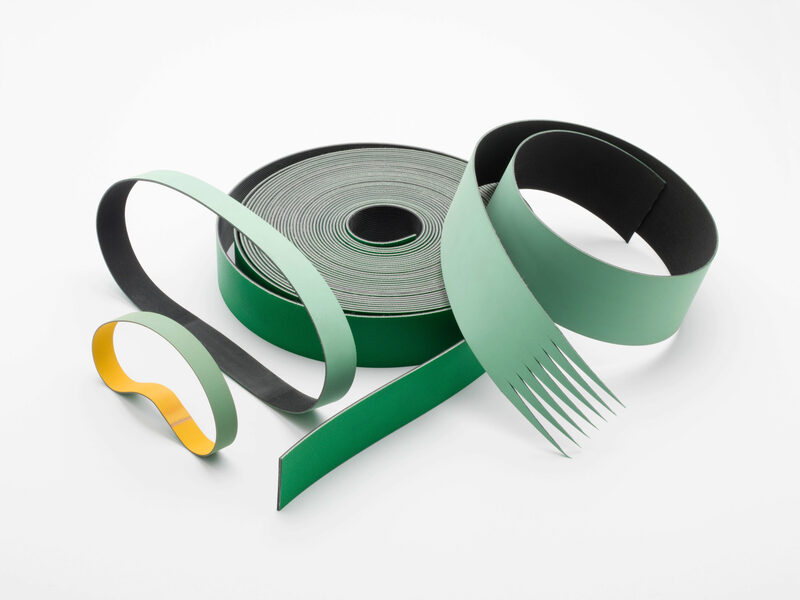
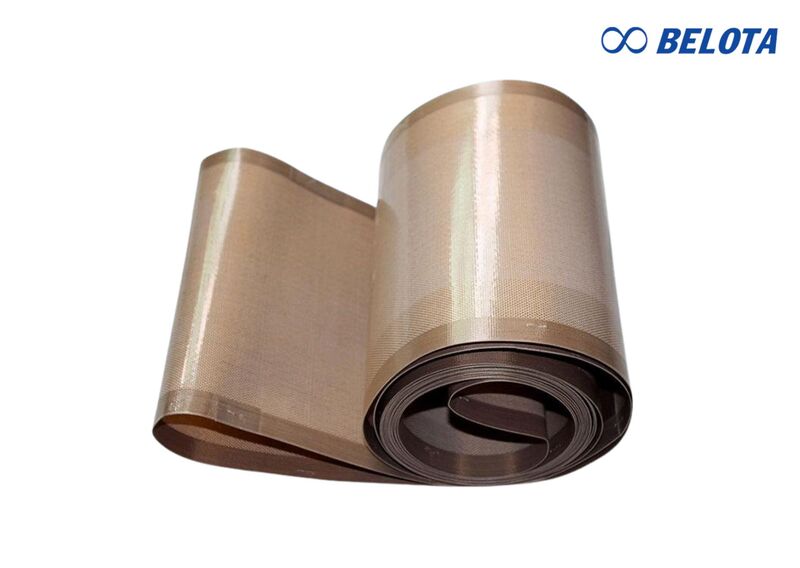
Smooth Teflon conveyor belts (also known as smooth PTFE conveyor belts) are conveyor belts featuring a flat, smooth surface with excellent non-stick properties. They are typically made from PTFE-coated fiberglass fabric and are suitable for heat pressing, heat sealing, industrial drying, heat transfer printing, and material processing applications. Available in various thicknesses, widths, and fabrication options, smooth Teflon conveyor belts can meet different operating requirements in industrial facilities.
What Is a Smooth Teflon Conveyor Belt?
A smooth Teflon conveyor belt is a type of heat-resistant conveyor belt made from fiberglass fabric or heat-resistant fiber coated with PTFE (Polytetrafluoroethylene). It features a flat, smooth, and non-porous surface that helps prevent materials from sticking during transportation or heating processes.
Thanks to its heat resistance, chemical resistance, and low coefficient of friction, smooth Teflon conveyor belts are commonly used in heat presses, bag sealing machines, adhesive fusing machines, laminating lines, and industrial drying equipment.
Unlike mesh Teflon conveyor belts, which have an open mesh structure that allows hot air to pass through, smooth Teflon belts feature a solid surface. This makes them more suitable for applications requiring continuous surface contact and stable material support.
Structure of Sheet-Type Teflon Conveyor Belts
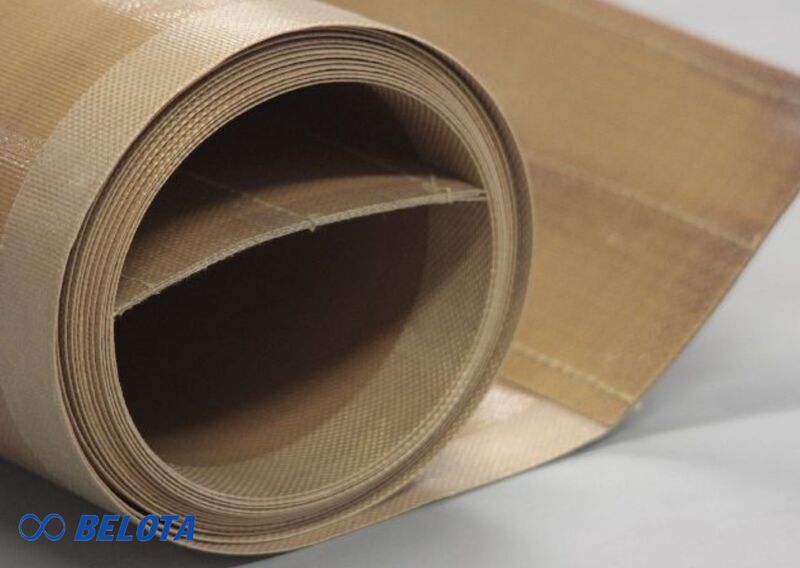
Sheet-type Teflon conveyor belts generally consist of two main components: a fiberglass fabric base and a PTFE coating. Each layer serves a specific function, and together they create a material suitable for high-temperature operating environments.
- Fiberglass base layer: Provides structural support and dimensional stability. Fiberglass offers good mechanical strength, helping the material maintain its shape under suitable operating conditions.
- PTFE coating: Applied to the surface of the base fabric to provide non-stick properties, low friction, and resistance to many chemicals. This coating helps prevent adhesives, molten plastics, and other processing materials from sticking to the belt.
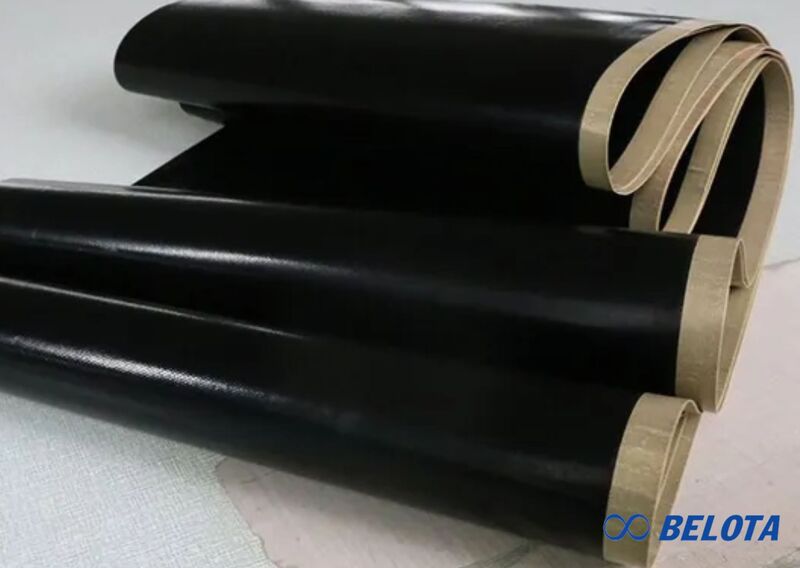
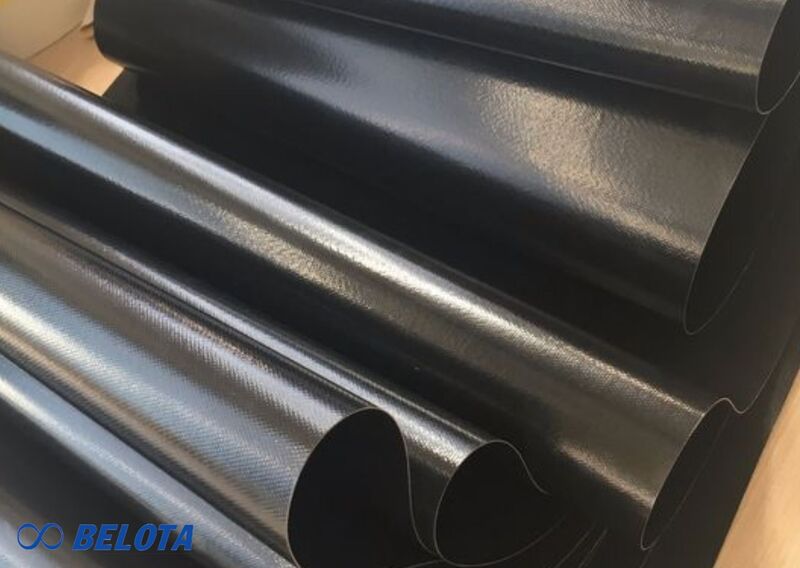
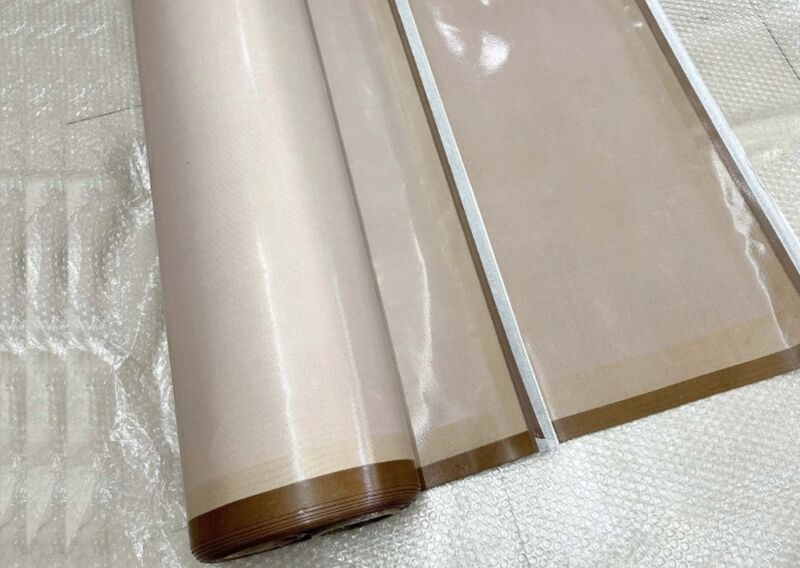
- Finished surface: Flat, smooth, and non-porous, without open mesh gaps. Depending on the product type, the surface may be brown, white, or black.
For applications requiring an endless conveyor belt, the material must be joined using a suitable splicing method based on its thickness, base fabric, and roller diameter. Not all PTFE-coated fabrics are suitable for endless splicing or the same tensile loads.
Key Features of Smooth Teflon Conveyor Belts
- Non-stick properties: PTFE has a low coefficient of friction, helping prevent materials from adhering to the belt during heat pressing, adhesive processing, plastic processing, and food production.
- High-temperature resistance: Smooth Teflon conveyor belts can operate in high-temperature environments. Many PTFE-coated fiberglass products have a typical temperature range of approximately -73°C to +260°C.
- Low friction: The smooth surface reduces resistance as materials move along the belt, supporting stable operation and minimizing product dragging.
- Chemical resistance: PTFE offers good resistance to many acids, alkalis, and solvents.
- Continuous, non-porous surface: Without open mesh gaps, smooth belts are suitable for sheets, thin films, and small materials that require continuous support.
- Custom fabrication: The material can be cut into strips or sheets, or fabricated into endless belts depending on machine design and operating conditions.
Technical Specifications of Teflon Heat-Resistant Fabric Conveyor Belts
- Product name: Smooth PTFE Teflon conveyor belt / Sheet-type Teflon belt / Teflon fabric
- Base material: Fiberglass fabric reinforcement.
- Coating: PTFE resin coating.
- Surface structure: Smooth, flat, and non-porous, without open mesh gaps.
- Thickness: Approximately 0.13–0.25 mm.
- Colors: Common options include brown, white, and black.
- Operating temperature: Approximately -73°C to +260°C.
- Width: Available according to manufacturer specifications or custom requirements.
- Supply forms: Available in rolls, cut sheets, or fabricated endless belts.
- Applications: Used in heat presses, packaging sealing machines, drying systems, and industrial material processing applications.
Note: The specifications above are for reference only. Tensile strength, thickness tolerance, continuous operating temperature, and flexibility around rollers should be confirmed based on the specific material grade.
Industrial Applications of Smooth Teflon Conveyor Belts
Thanks to their non-stick surface, heat resistance, and solid construction, smooth PTFE conveyor belts are used in various heating equipment and production lines.
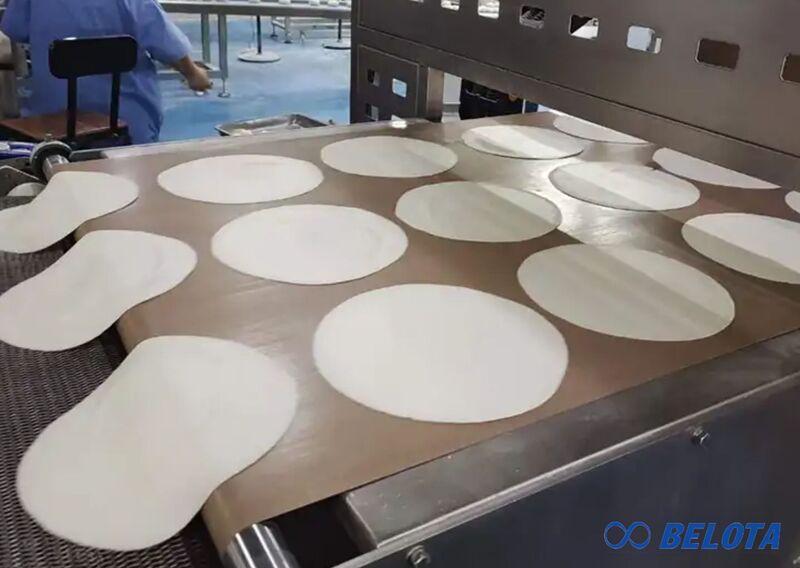
- Packaging and heat sealing: These belts are used in certain bag sealing machines, packaging machines, and heat pressing equipment. PTFE can serve as a non-stick contact layer in heating areas, helping prevent molten plastic or packaging films from adhering to equipment surfaces.
- Garment manufacturing: In fusing presses, interlining presses, and fabric processing equipment, conveyor belts for fusing machines made from smooth Teflon are used to transport materials through heating sections while providing a non-stick contact surface. The PTFE coating helps prevent hot adhesive from sticking to the belt and supports material release after heating.
- Printing and heat transfer: Smooth PTFE conveyor belts are used in certain heat transfer printing machines, heat presses, and printed material processing equipment. Their non-stick surface helps materials separate more easily after heating.
- Industrial drying: Some drying systems use smooth PTFE belts to transport products along a continuous surface. However, if the process requires hot air to pass through the belt for improved heat transfer, mesh Teflon conveyor belts are generally more suitable.
- Plastic and rubber processing: Smooth Teflon belts can be used in heating, bonding, or material transportation stages involving substances that tend to stick. Operating temperature, pressure, and material compatibility should be checked before selection.
Differences Between Smooth and Mesh Teflon Conveyor Belts
Both types use PTFE-coated materials and offer heat resistance and non-stick properties. The main differences lie in their surface structure and ability to allow air to pass through the belt.
|
Criteria |
Smooth Teflon Conveyor Belt |
Mesh Teflon Conveyor Belt |
|---|---|---|
|
Structure |
Flat, solid surface |
Open mesh structure |
|
Air permeability |
Restricts airflow through the belt |
Allows air to pass through the mesh openings |
|
Support for small products |
More suitable for small materials |
Requires an appropriate mesh opening size |
|
Contact surface |
Continuous and smooth |
Contact follows the woven mesh structure |
|
Applications |
Heat pressing, packaging sealing, film laminating |
Convection drying, moisture removal, and processes requiring airflow |
|
Selection criteria |
Thickness, surface density, flexibility, and tensile strength |
Mesh size, air permeability, and load capacity |
If a production line requires a continuous conveying surface, prevents small materials from falling through, or needs a non-stick layer in a heating section, smooth Teflon belts are worth considering. In contrast, for drying systems that require hot air to pass through the belt or moisture to escape, mesh Teflon belts are generally the preferred option.
Tips for Using and Maintaining Smooth Teflon Conveyor Belts
During operation, belt tension should be adjusted appropriately to prevent stretching, tearing, or damage to the splice. The belt must be installed straight and should not rub against the machine frame or sharp components.
Regularly inspect the PTFE surface, belt edges, and splice to detect early signs of coating peeling, frayed edges, or cracking. When cleaning, use methods and chemicals compatible with the material. Avoid sharp tools or excessive scrubbing.
If a sheet-type Teflon conveyor belt frequently shifts, wrinkles, or becomes damaged in the same area, inspect the entire roller system, shaft alignment, belt tensioning mechanism, and heating conditions. Identifying the root cause can help prevent repeated belt replacements without resolving the underlying operating problem.
Belota - Supplier of Custom Smooth Teflon Conveyor Belts
When selecting a smooth Teflon conveyor belt, businesses should prioritize suppliers who can provide recommendations based on machine specifications and actual operating conditions. In addition to thickness and width, factors such as base fabric, heat resistance, tensile strength, and splicing method should also be checked before ordering.
Belota supplies smooth Teflon fabric conveyor belts with various thicknesses, widths, and fabrication options to suit different machines and operating conditions. Customers can provide belt dimensions, operating temperature, load requirements, and photos of the existing belt to receive material recommendations, quotations, and custom fabrication support.
Conclusion
Smooth Teflon conveyor belts are suitable for applications requiring a flat, non-porous, non-stick, and heat-resistant surface. They are used in various processes, including heat pressing, packaging sealing, heat transfer printing, drying, and industrial material processing. To select the right belt, businesses should consider thickness, operating temperature, load, speed, and splicing method. Choosing the correct specifications from the outset helps maintain stable operation and improve production efficiency.