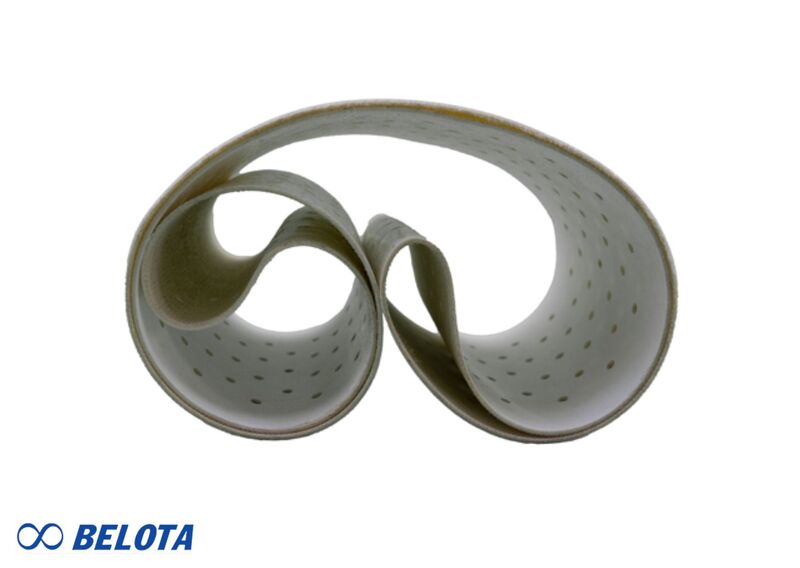
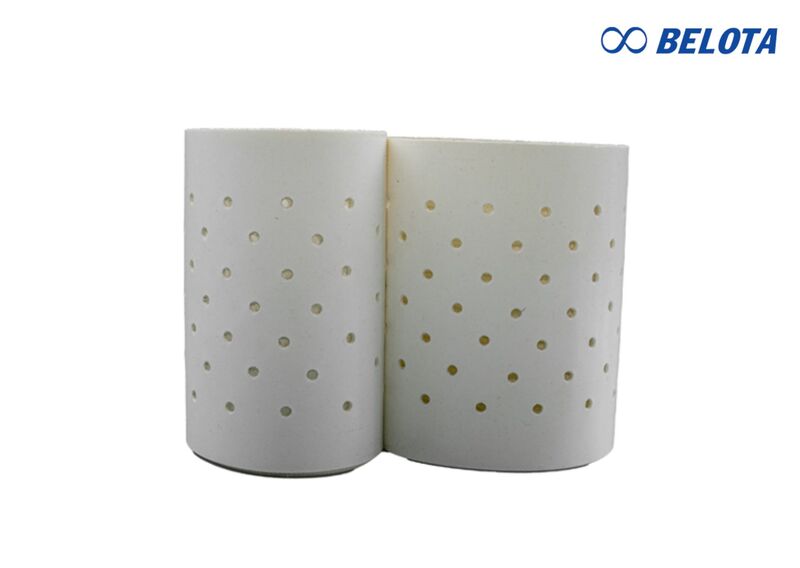
In production lines handling film, paper, solar cells, and dough, keeping materials stable during processing directly affects the quality of the finished product. Perforated silicone conveyor belts combine a vacuum-hole system with a silicone-coated surface to meet material conveying and positioning requirements. This article covers their construction, technical specifications, applications, and key selection criteria for industrial equipment.
What Is a Perforated Silicone Conveyor Belt?
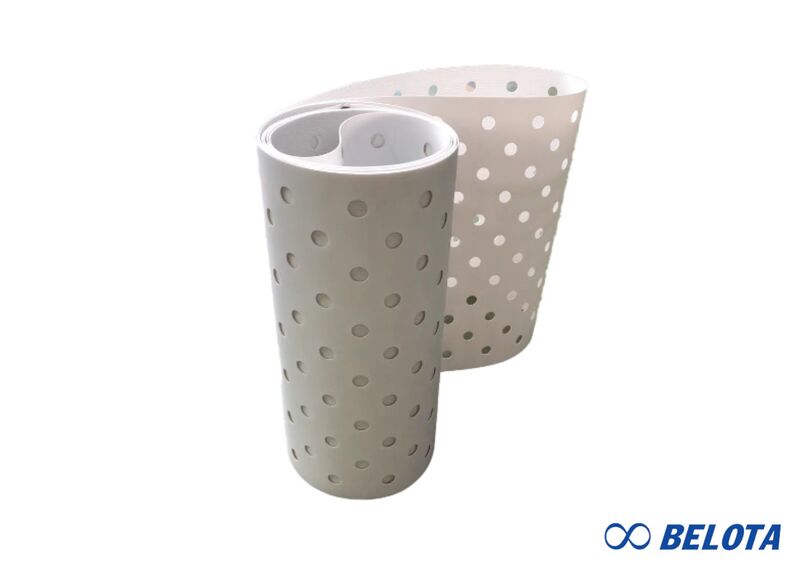
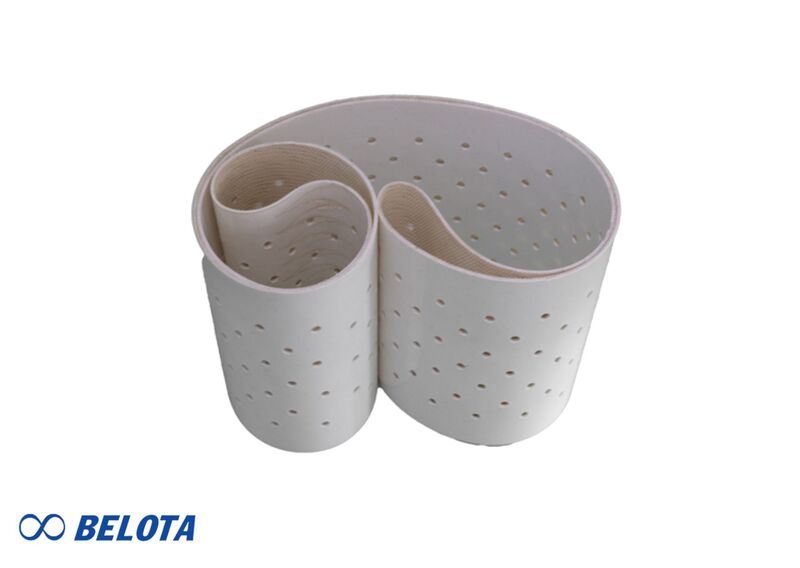
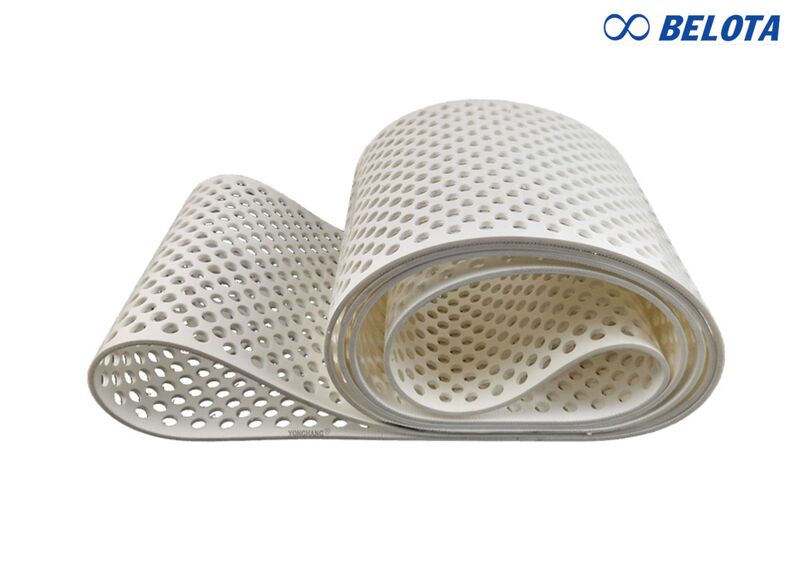
A perforated silicone conveyor belt is a type of silicone conveyor belt featuring specially machined vacuum holes on its surface. These holes work with a vacuum system to hold products in place and keep them stable during conveying.
This type of belt is commonly used to transport lightweight, thin, flexible, or difficult-to-position materials, such as plastic films, packaging materials, and sheet products. The silicone surface can also be customized with different hole patterns or grooves to match the machine design and specific conveying requirements.
Construction and Working Principle of Perforated Silicone Conveyor Belts
Belt Construction
- Reinforcement layer: Made from heat-resistant fiberglass or polyester fabric to improve tensile strength and maintain belt stability.
- Silicone layer: Coated and bonded to the fabric through a high-temperature manufacturing process, providing an elastic, non-stick surface.
- Multi-layer construction: Depending on application requirements, the belt may feature two fabric layers with two silicone layers or three fabric layers with three silicone layers.
- Perforation system: Holes are machined according to the required diameter, spacing, and layout. Designs may include blind holes or through-holes.
Vacuum Working Principle
The belt features a series of vacuum holes or suction slots distributed across its surface. A vacuum platform or vacuum box is installed beneath the belt. As the belt moves across the suction area, negative pressure is transmitted through the perforations to the belt surface.
The resulting suction force holds materials against the belt, preventing them from slipping or shifting during operation, even at high conveying speeds. This allows thin, lightweight, or flexible materials to move accurately through printing, cutting, laminating, and packaging processes.
Technical Specifications of Perforated Silicone Conveyor Belts
- Surface finish: Smooth, matte, or textured.
- Base fabric: Polyester, fiberglass, or aramid.
- Vacuum hole diameter: Approximately 1–5 mm; customizable.
- Hole spacing: Approximately 5–30 mm, depending on the suction zone layout.
- Overall thickness: Approximately 1.5–6.0 mm, depending on belt construction.
- Surface friction: Relatively high, providing anti-slip properties.
- Available colors: White, blue, transparent, or gray.
- Operating temperature: Approximately -50°C to +230°C.
- Non-stick properties: Excellent, helping prevent material buildup on the belt surface.
- Splicing options: Endless construction or other joint configurations based on machine requirements.
Note: These specifications are for reference only and do not represent universal standards for all products. Hole diameter, spacing, and belt thickness should be confirmed against the manufacturer's datasheet and machine design.
Additional Customization Options
Depending on machine configuration and operating requirements, perforated silicone conveyor belts can be customized with the following features:
- Perforation: Round holes machined according to the specified diameter, spacing, and layout.
- Slotting: Suction slots manufactured in suitable shapes and dimensions to match the material contact area.
- Guide bar installation: Guide bars added to the underside of the belt to help prevent belt misalignment.
- Backside customization: Additional fabric layers or reinforcement structures can be incorporated to improve durability and running performance.
Advantages of Perforated Silicone Conveyor Belts
- Non-stick surface: Silicone helps release materials with adhesive properties, such as dough, glue, and laminated films, while reducing residue buildup. Combining non-stick properties with vacuum perforations provides an advantage over conventional PU, PVC, or rubber conveyor belts in applications requiring both features.
- Food-contact suitability: Certain silicone grades meet FDA requirements and can be used in food processing and baking applications, subject to the relevant material certification.
- High surface friction: Helps prevent materials from shifting during conveying, including when the belt accelerates or stops.
- Good surface flatness and thickness consistency: Supports more uniform suction distribution, particularly when handling thin materials.
- Resistance to moisture and selected chemicals: Helps reduce dirt buildup and withstand exposure to oils, grease, and mild chemicals. The surface can be cleaned by wiping or washing, depending on the application.
Industrial Applications of Perforated Silicone Conveyor Belts
Electronics and Photovoltaic Industries
Perforated silicone conveyor belts are used in selected electronic component and solar panel manufacturing processes. Vacuum suction helps hold thin, fragile solar cells in position during handling and processing, reducing unwanted movement and surface damage.
Printing, Labeling, and Laser Cutting
In industrial printing machines, labeling equipment, and laser cutting systems, vacuum conveyor belts hold paper, plastic films, and sheet materials in place. This helps prevent material displacement during printing, cutting, and surface treatment.
Food Processing and Bakery Production
Silicone-coated conveyor belts are used to transport dough and baked goods through processing and heating stages. Their non-stick surface helps prevent products from adhering to the belt, making product release and equipment cleaning easier.
Meat Processing
Silicone conveyor belts can be used to transport meat and processed food products through different production stages. The non-stick surface helps reduce food residue and simplifies cleaning. For direct food contact, the selected belt material must meet the applicable food-contact requirements.
Hygiene Product Manufacturing
In production lines for diapers, sanitary pads, tissue paper, and nonwoven materials, vacuum suction helps hold lightweight material layers in position during conveying, cutting, folding, and lamination processes.
Heat Pressing and Laminating Machines
Silicone conveyor belts are used in heat pressing and laminating equipment that requires a non-stick surface and heat resistance. Depending on the machine design, perforations can be added to work with a vacuum system and hold materials in place during processing.
Comparison of Perforated Silicone, Teflon, and Felt Conveyor Belts
|
Criteria |
Perforated Silicone Conveyor Belt |
Teflon Conveyor Belt |
Perforated Felt Conveyor Belt |
|---|---|---|---|
|
Material |
Silicone + reinforcement fabric |
PTFE + fiberglass fabric |
Polyester or nylon fibers |
|
Construction |
Silicone coating on a fabric base |
PTFE coating or mesh structure |
Woven or compressed felt fibers |
|
Key properties |
Soft, flexible, non-stick |
Smooth, highly non-stick |
Soft, cushioning, breathable |
|
Chemical resistance |
Good against oils, grease, and mild acids and alkalis |
Excellent resistance to many chemicals |
Limited |
|
Temperature resistance |
Approx. -60°C to +230°C |
Approx. -70°C to +260°C |
Depends on fiber composition |
|
Abrasion resistance |
Moderate |
Good, but the coating can be scratched |
Moderate; may fray or tear |
|
Applications |
Food processing, electronics, film conveying |
Drying, heat pressing, packaging, printing |
Printing, textiles, conveying scratch-sensitive products |
|
Price range |
Medium |
High |
Low to medium |
How to Choose the Right Conveyor Belt
- Perforated silicone conveyor belt: Recommended when a soft, flexible, non-stick surface is required, particularly for applications with food hygiene requirements.
- Teflon conveyor belt: Suitable for production lines requiring heat resistance, excellent release properties, and chemical resistance.
- Perforated felt conveyor belt: A suitable option when cushioning, impact reduction, scratch prevention, and smooth material handling are important.
In addition to material properties, consider the operating temperature, load, vacuum hole dimensions, and characteristics of the conveyed product. These factors help determine the most suitable belt configuration.
Key Factors When Selecting a Perforated Silicone Conveyor Belt
When ordering a perforated silicone conveyor belt, businesses should identify the machine specifications and operating conditions to ensure the correct belt configuration.
- Material characteristics: Determine the weight, thickness, and surface condition of the conveyed product to select the appropriate belt thickness and hole arrangement.
- Operating temperature: Check both the continuous operating temperature and the maximum temperature reached along the belt path to select suitable reinforcement and silicone materials.
- Vacuum system: Provide details of the vacuum platform, negative pressure, and suction area to determine the appropriate hole diameter, spacing, and positioning.
- Belt configuration: Specify the required width, length, thickness, and splice type according to the machine design. For replacement orders, an existing belt sample can be provided for reference.
- Application requirements: For food processing or electronics manufacturing, verify material-contact requirements, cleanliness standards, and relevant certifications.
Providing complete technical information helps the manufacturer determine the correct belt specifications, reduce installation errors, and ensure reliable operation.
Frequently Asked Questions (FAQ)
Can perforated silicone conveyor belts be customized to fit machine dimensions?
Yes. The belt can be manufactured to the required width, length, hole diameter, and spacing. When placing an order, businesses should provide a technical drawing or an existing belt sample to ensure accurate specifications.
When should a perforated silicone conveyor belt be replaced?
The belt should be inspected when cracks, coating separation, deformation, or reduced suction performance occur, especially if the vacuum system is still functioning normally. Damage around the perforated areas can affect the belt's ability to hold materials securely.
Are perforated silicone conveyor belts suitable for food processing lines?
Yes, provided the selected silicone material meets the applicable food-contact requirements. Businesses should check the material certification and operating conditions specified by the manufacturer before use.
Conclusion
Vacuum conveying systems perform effectively when the conveyor belt is selected according to the correct specifications. Businesses should consider belt dimensions, vacuum hole layout, operating temperature, and material characteristics to ensure compatibility with their equipment. Belota provides custom perforated silicone conveyor belts manufactured according to technical drawings or existing belt samples. Contact Belota for technical consultation and a quotation based on your application requirements.
- Hotline: 0917 657 946
- Email: info@belota.com.vn
- Website: belota.com.vn
- Address: B74 Le Thi Rieng Street, Thoi An Residential Area, Ho Chi Minh City, Vietnam