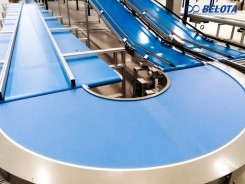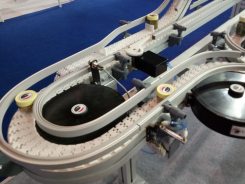
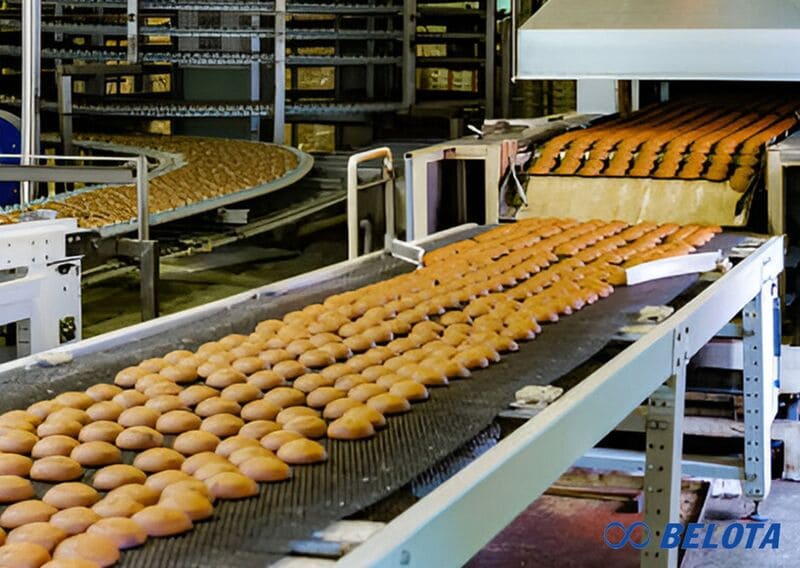
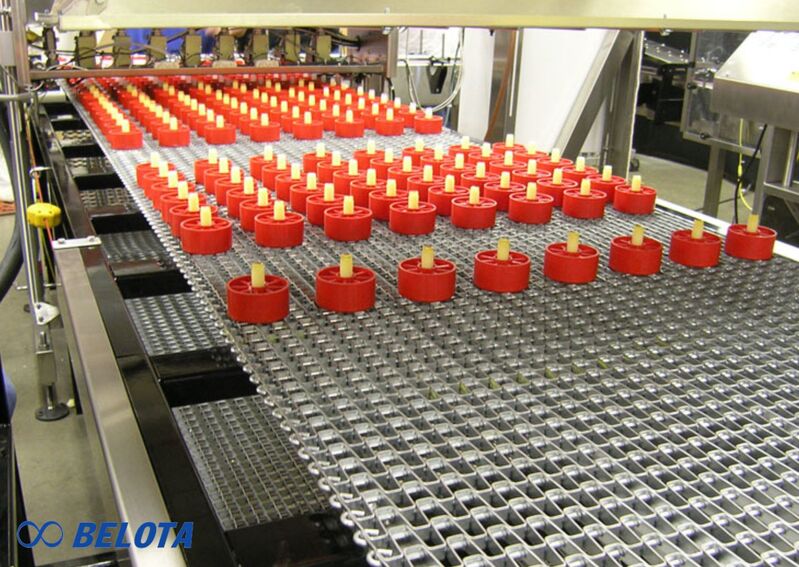
Cooling conveyor is used to transport and cool products after cooking, baking, casting, pressing, or heat-processing operations. Depending on the product, the system can be equipped with cooling fans, stainless steel mesh, slat chains, or heat-resistant belts to improve cooling performance. This is a suitable conveyor belt solution for businesses that require continuous cooling, product temperature control, and reduced waiting time between production stages.
What Is a Cooling Conveyor?
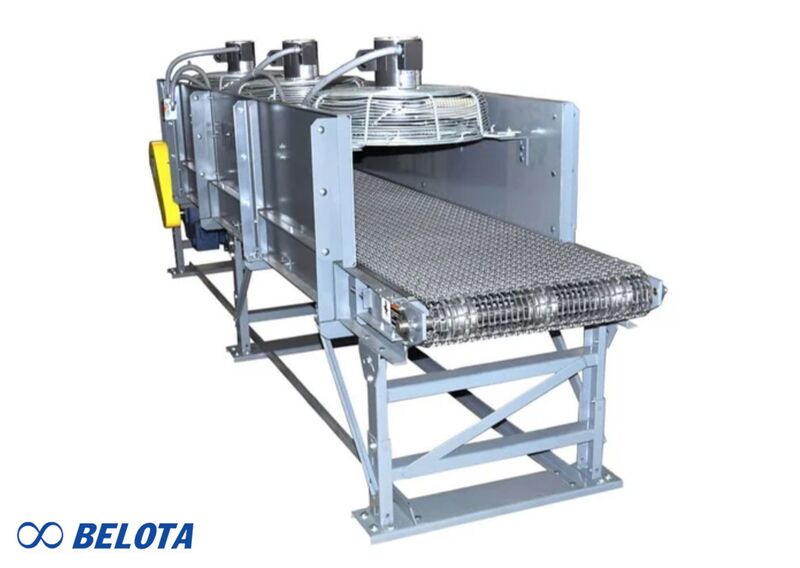
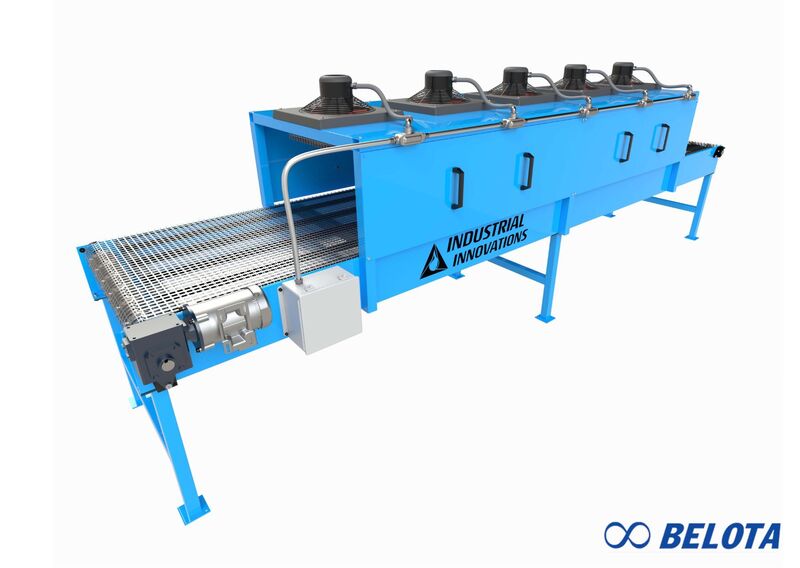
A cooling conveyor is a conveying system equipped with a cooling unit to reduce product temperature while the product moves along the conveyor. Products coming out of ovens, presses, molds, or heating processes are placed onto the conveyor and cooled by natural airflow or industrial cooling fans.
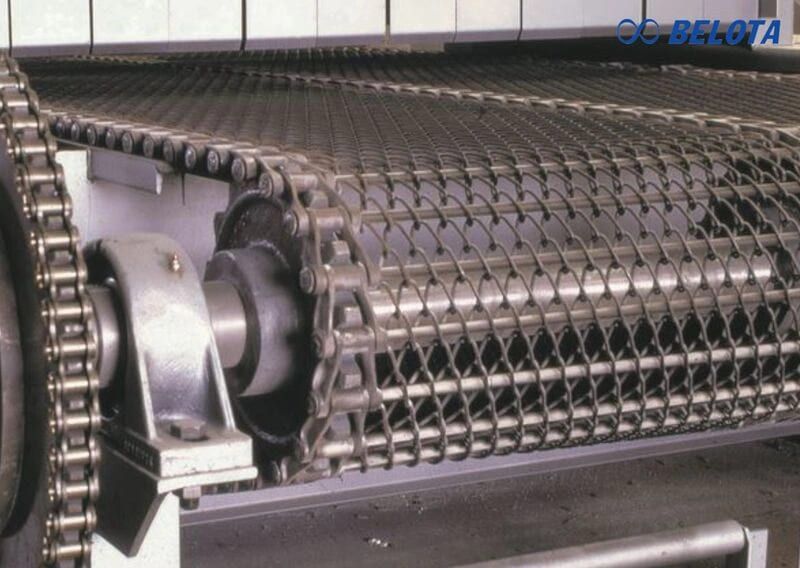
Depending on production requirements, the conveyor can be designed as a slat chain conveyor combined with cooling fans, a stainless steel mesh conveyor, or a heat-resistant conveyor belt. The conveyor length, width, speed, and number of fans are calculated based on the inlet temperature, required outlet temperature, and production capacity.
Cooling Conveyor Structure
- Conveyor frame: Usually made of stainless steel or powder-coated steel to provide structural stability and suit the working environment.
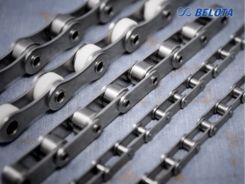
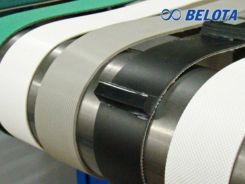
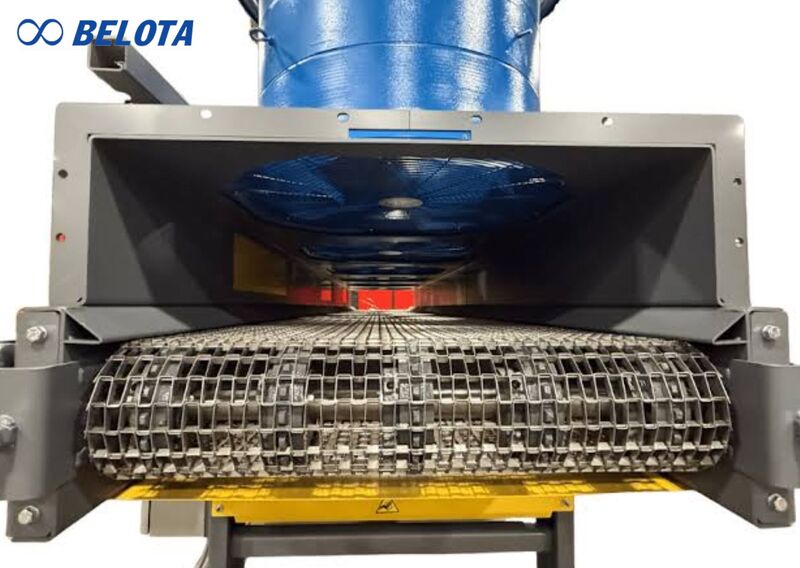
- Conveyor belt: Can use stainless steel slat chains, stainless steel mesh, or heat-resistant belts, depending on the product, load capacity, and operating temperature.
- Cooling fan system: Industrial fans are positioned above, on the sides, or inside the cooling chamber to generate airflow and help reduce product temperature more quickly.
- Motor and drive system: A geared motor is used to operate the conveyor, with a variable frequency drive (VFD) added when conveyor speed adjustment is required.
- Tensioning and adjustment system: Used to adjust chain or belt tension, prevent slack or misalignment, and maintain stable conveyor operation.
- Control system: Can include an electrical control cabinet, VFD, switches, timer, or temperature sensors depending on the automation requirements of the production line.
How Does a Cooling Conveyor Work?
- Loading products onto the conveyor: Products after baking, steaming, drying, pressing, or heating are placed onto the conveyor surface for transportation to the next production stage.
- Moving through the cooling zone: The conveyor moves products at a preset speed while carrying them through an area equipped with cooling fans.
- Airflow reduces product temperature: Industrial fans generate direct or circulating airflow over the products, helping heat dissipate more quickly.
- Adjusting cooling time: Conveyor speed and cooling-zone length are determined based on the inlet temperature, target temperature, and production capacity.
- Temperature monitoring: Temperature sensors can be integrated to monitor the cooling process and adjust conveyor speed or fan operation when necessary.
Technical Specifications
Cooling conveyor specifications are not fixed and should be designed according to the product and production requirements. Typical reference specifications include:
- Length: Custom-designed.
- Width: Approximately 400 – 2,000 mm.
- Height: Approximately 350 – 1,500 mm.
- Belt speed: Approximately 3 – 45 m/min.
- Conveyor surface: Slat chain, stainless steel mesh, heat-resistant belt.
- Frame: Stainless steel or powder-coated steel.
- Cooling system: Industrial fans, forced-air cooling.
- Control system: VFD, sensors, electrical control cabinet.
- Motor: Selected according to load capacity and conveyor length.
Note: The specifications above are for reference only. Actual design should be based on the product inlet temperature, required outlet temperature, product dimensions, production capacity, load capacity, and required cooling time.
Advantages of Cooling Conveyors
- Products are transported and cooled simultaneously, reducing waiting time after heating processes.
- The automated system replaces manual product handling and cooling, making it suitable for continuous production lines.
- Slat chains or stainless steel mesh can be selected for applications requiring high heat resistance and mechanical durability.
- The cooling conveyor can be connected directly to ovens, dryers, presses, molding machines, or downstream equipment such as packaging and sorting machines.
- Conveyor length, width, height, speed, belt type, and number of cooling fans can be customized according to the available space and actual production capacity.
Applications of Cooling Conveyors
Cooling conveyors are used in various industries where products need to be cooled after heating processes.
- Food industry: Used to cool cakes, confectionery, and food products after baking, steaming, or frying before inspection, packaging, or further processing.
- Plastic and rubber industry: Helps cool products after plastic injection molding, rubber molding, or thermal forming, allowing products to stabilize their shape before the next production stage.
- Mechanical and casting industry: Used to transport and cool aluminum, steel, metal castings, or components after heat processing. For heavy and high-temperature products, a metal slat chain conveyor can be selected.
- Agricultural product processing: Installed after drying, roasting, or heating processes to reduce product temperature before sorting, packaging, and storage.
How to Choose the Right Cooling Conveyor
- Identify the products to be cooled, including product type, dimensions, and weight.
- Check the product temperature when it enters the conveyor and the desired temperature after cooling.
- Determine the required hourly production capacity to calculate the appropriate conveyor width and speed.
- Determine the required cooling time to calculate the conveyor length and number of cooling fans.
- Check the available installation area, including the required conveyor length, width, and height.
- Select a suitable conveyor surface, such as a slat chain, stainless steel mesh, or heat-resistant belt, according to the product.
- Based on the actual load and production capacity, select the appropriate conveyor speed, motor, and gearbox.
Belota Designs and Supplies Custom Cooling Conveyors
Belota supplies and manufactures cooling conveyors according to specific requirements, suitable for different products and production processes. Depending on temperature, load capacity, and working environment, customers can choose slat chain conveyors, stainless steel mesh conveyors, or heat-resistant conveyor belts combined with cooling fans.
The conveyor is designed according to the required length, width, height, speed, and production capacity. Belota provides consultation on fan arrangement, cooling chamber configuration, and control systems based on the available production-line layout.
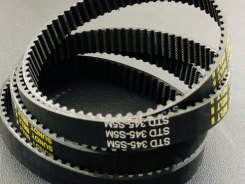
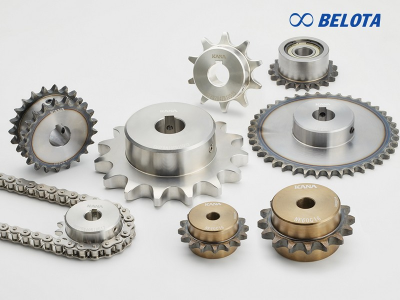
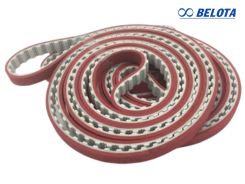
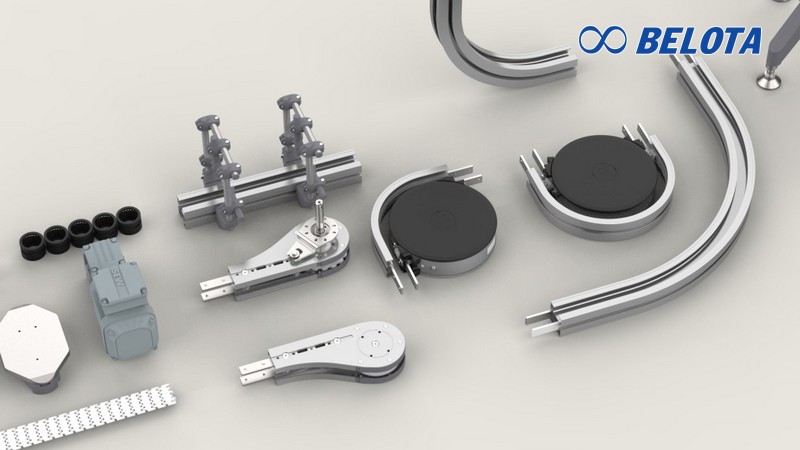
In addition to complete conveyor systems, Belota also supplies various components and materials such as stainless steel mesh belts, heat-resistant mesh belts, polyester mesh belts, flat belts, timing belts, and steel-cord PU belts for replacement and installation requirements in different production lines.
When requesting a quotation, customers should provide the product type, inlet temperature, target cooling temperature, production capacity, product dimensions, required conveyor speed, and photos or layout drawings of the installation area. Based on this information, Belota can recommend a suitable conveyor configuration and cooling solution.
Conclusion
Cooling conveyors help businesses automate product transportation and cooling after heating, baking, drying, pressing, or casting processes. Combining a suitable conveyor surface with a cooling fan system can reduce waiting time and maintain continuous production. Each production line should have its cooling conveyor properly calculated based on temperature, production capacity, load, and required cooling time. Belota provides consultation, design, and custom cooling conveyor solutions based on customer requirements.