Welcome! B74 Le Thi Rieng St., Thoi An Residential Area, Thoi An Ward, Ho Chi Minh City, Vietnam
Email: info@belota.com.vn
Hotline: 0917657946
Plastic Chain Conveyor is a modern conveying solution widely used in food, beverage, pharmaceutical, packaging, and many other industries. With advantages such as smooth operation, high durability, easy cleaning, and flexible design, plastic conveyor chains help optimize performance, reduce maintenance costs, and ensure stable production. Belota.Co., Ltd will help you better understand the structure, classification, applications, pricing, and reliable suppliers of plastic conveyor chains today.
What is a Plastic Chain Conveyor?
A plastic chain conveyor is an industrial conveying system made from interlocking plastic modules using engineering materials such as POM, PP, or PE. These modules are securely connected to form a flexible, lightweight, and corrosion-resistant conveyor surface.
Thanks to its easy installation and stable operation, this type of conveyor is widely used in industries requiring hygiene, durability, and high efficiency, such as food processing, beverages, pharmaceuticals, and packaging.
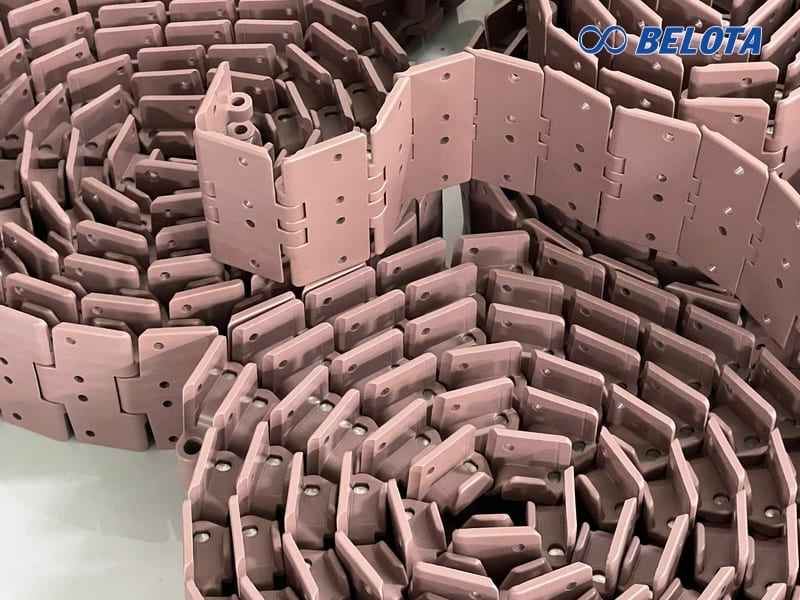
Structure of Plastic Chain Conveyor Belt
Plastic chain conveyor are designed with a modern chain structure, optimized for durability, smooth operation, and hygiene. The system includes:
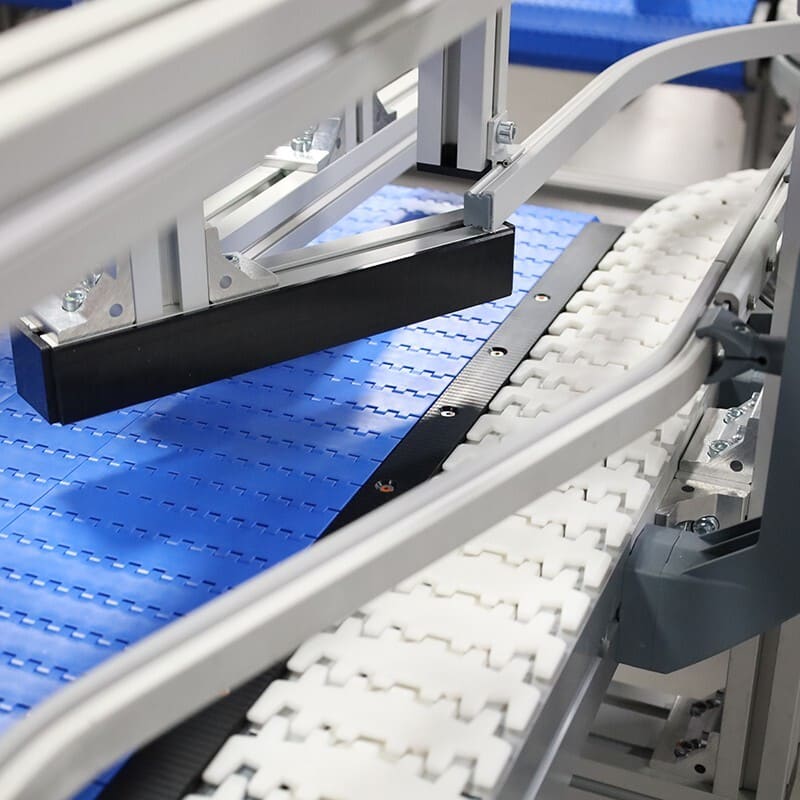
Technical Specifications
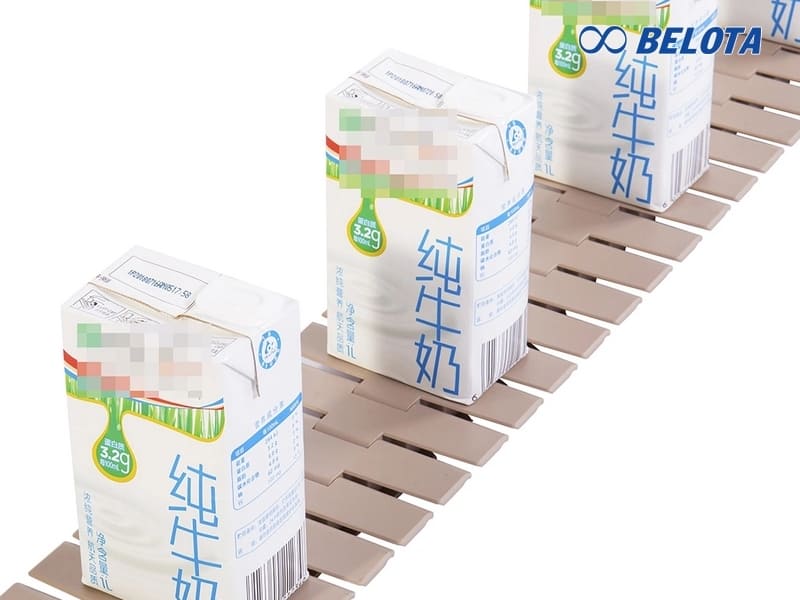
Advantages of Plastic Conveyor Chains
Smooth and Quiet Operation
Plastic materials like POM and PP provide elasticity, reducing vibration and noise compared to metal chains—ideal for food and pharmaceutical environments.
High Durability & Corrosion Resistance
Engineering plastics resist wear, chemicals, and moisture. Compared to stainless steel conveyor chains, plastic chains perform better in wet or mildly corrosive environments.
Easy Installation & Maintenance
Chain design allows quick replacement of individual sections without stopping the entire system. Lightweight structure reduces load on motors and extends system lifespan.
Hygienic & Easy to Clean
Flat, non-porous surfaces prevent dirt buildup and allow easy cleaning with water or chemicals, meeting HACCP and GMP standards.
Stable Product Handling
Uniform surface ensures smooth transportation of bottles, cans, cartons, and packages without tipping or slipping.
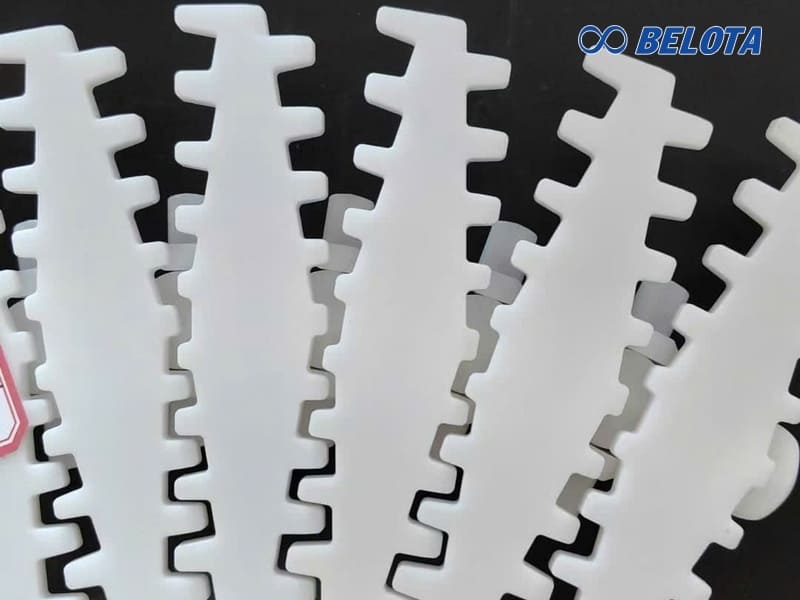
Types of Plastic Chain Conveyor Chains
Slat Top Chains
Snap-on Chains
Combine metal roller chains with plastic top plates for heavy-duty applications.
Heavy-duty Crate Chains
Designed for transporting crates, cartons, and heavy loads.
Gripper Chains
Rubber-coated surface for incline or vertical conveying.
Roller Top Chains (LBP)
Integrated rollers reduce back pressure in accumulation systems.
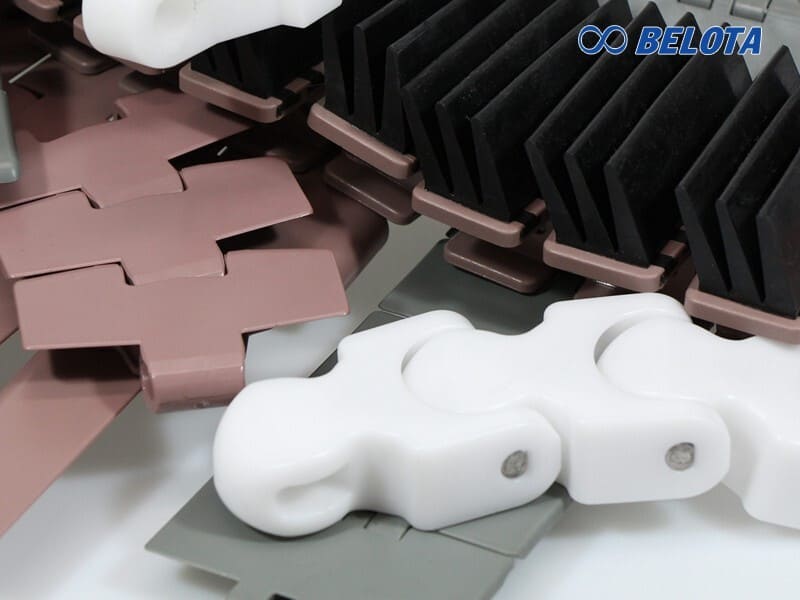
Ribbed Surface Chains
Improve transfer between conveyors and prevent product tipping.
Applications by Industry
Food & Beverage (F&B): Used in bottling, canning, filling, and packaging lines. Hygienic and gentle on products.
Pharmaceutical & Cosmetics: Suitable for cleanroom environments with GMP/HACCP standards.
Packaging Industry: Handles cartons, trays, shrink-wrapped products.
Fresh Food & Seafood Processing: Works well in cold, wet environments with easy cleaning.
Chemical & Household Products: Resistant to mild chemicals, suitable for transporting detergent bottles, containers, etc.
Price Reference
Prices vary depending on type, width, material, and configuration:
Imported chain (e.g., 821-K750): ~11 USD/m
Note:
Belota is a trusted supplier of plastic chain conveyor belts in Vietnam, offering:
Contact:
FAQs
How much load can plastic conveyor chains handle?
Typically 20–150 kg/m, depending on the chain type.
Difference between straight and curved chains?
Straight chains run linearly, while curved chains (TAB, Bevel, MAG) allow smooth turning.
Are plastic chains easy to clean?
Yes, thanks to smooth, non-absorbent surfaces.
Can individual modules be replaced?
Yes, chain design allows easy replacement of sections.
Conclusion
Plastic chain conveyor belts are an efficient and flexible solution for modern industries. With smooth operation, high durability, and hygienic design, they help optimize production efficiency and reduce downtime. Choosing the right chain type, material, and supplier is key to ensuring long-term performance and cost savings.
PRESTIGE - QUALITY - BRAND AFFIRMATION
Copyright © 2017 - 2026 Belota Co., Ltd