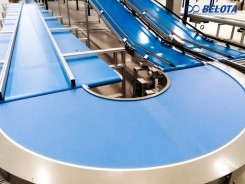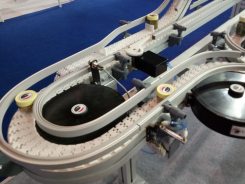
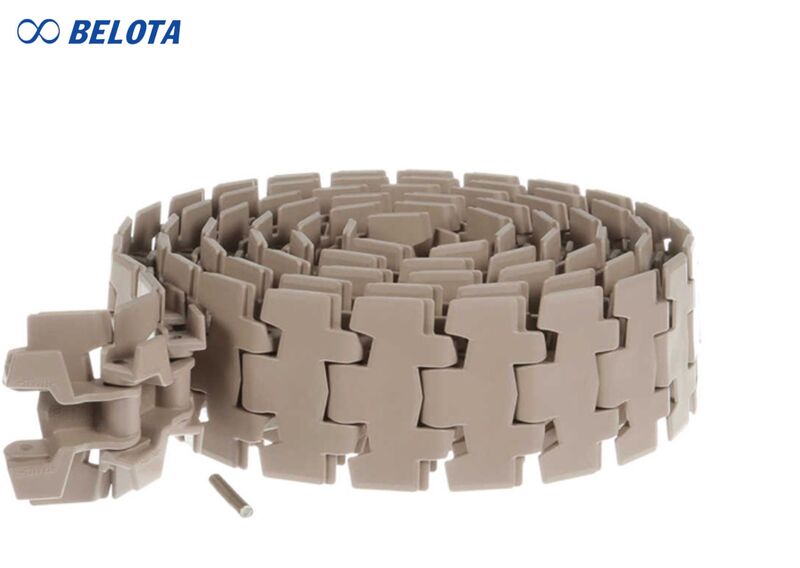
In modern conveyor systems, efficiently transporting products through curves requires a specialized chain that ensures smooth operation without compromising product stability. The 878 TAB Plastic Conveyor Chain is engineered specifically for side-flexing conveyor applications, offering excellent durability, reliable curved conveying performance, and broad compatibility across industries such as food processing, beverage production, pharmaceuticals, and packaging.
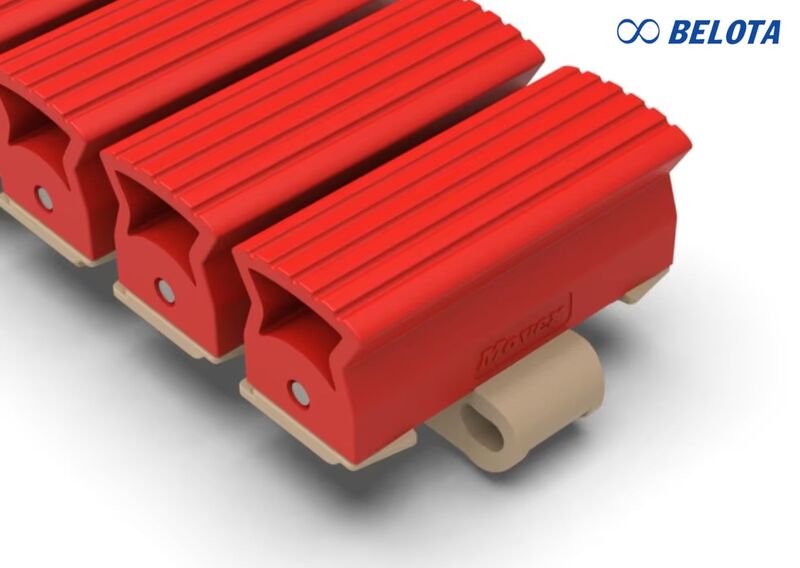
In addition to the standard flat-top version, the 878 TAB GRIPPER (878 GS4) features a high-friction rubber surface that provides enhanced product grip, making it an ideal solution for inclined conveyors. This guide covers the construction, technical specifications, product variants, applications, and selection tips to help manufacturers choose the right conveyor chain for their production lines.
What Is the 878 TAB Plastic Conveyor Chain?
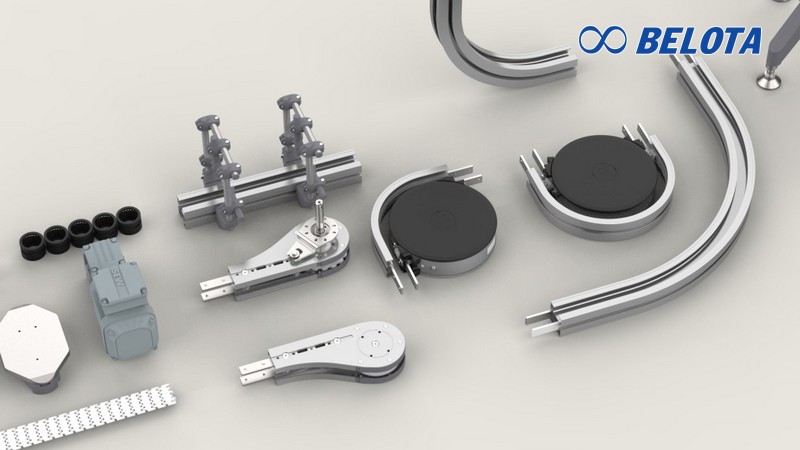
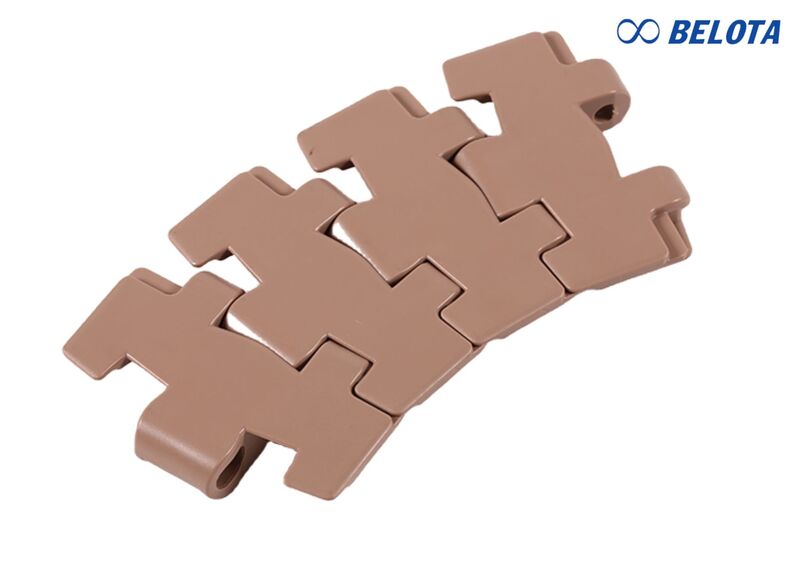
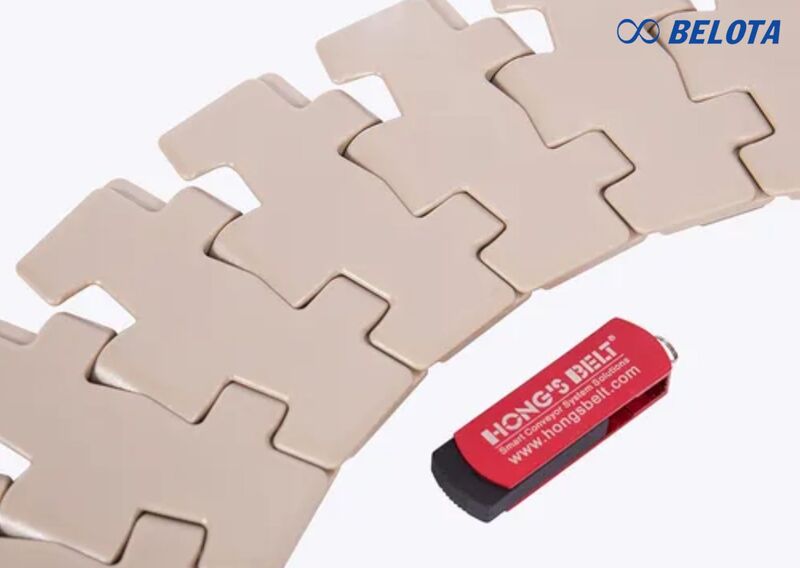
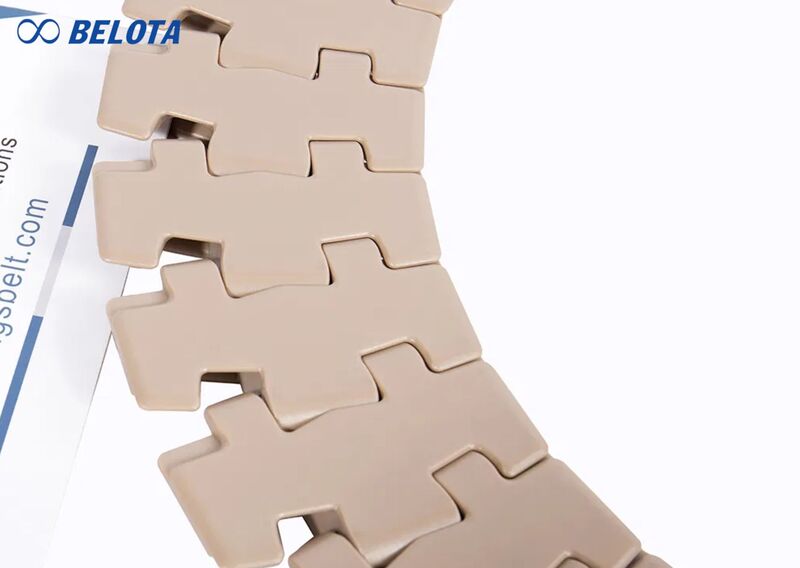
The 878 TAB Plastic Conveyor Chain is a side-flexing modular plastic conveyor chain specifically designed for curved conveyor systems. Unlike conventional straight-running chains, the 878 TAB is capable of both lateral flexing and backflex movement, allowing engineers to design compact conveyor layouts while maximizing available production space.
The chain consists of three primary components:
- Engineering plastic chain modules: Manufactured from high-performance materials such as Acetal (LF), PBT (MX), or reinforced Acetal (DKM) to suit various operating environments.
- Stainless steel hinge pins: Provide excellent mechanical strength, corrosion resistance, and reliable performance in wet or sanitary applications.
- TAB (T-shaped) guide design: Increases the contact surface and helps maintain product stability while traveling through curves.
Its side-flexing design allows each chain link to articulate horizontally, enabling the conveyor to negotiate tight curves while minimizing friction, vibration, and product movement.
Features and Operating Advantages of the 878 TAB Plastic Conveyor Chain
The following characteristics make the 878 TAB one of the preferred solutions for curved conveyor systems:
- Tight turning radius (Minimum 190 mm): Ideal for facilities with limited floor space. Compared with the 880 TAB Plastic Conveyor Chain, the 878 TAB can negotiate tighter curves, making it better suited for compact conveyor layouts.
- Excellent backflex capability (50 mm): Supports both side-flexing and reverse flexing, making it compatible with conveyors incorporating return rollers underneath.
- Smooth, stable operation: The precision interlocking chain design minimizes vibration and operating noise, making it suitable for food, beverage, and pharmaceutical production.
- Outstanding wear and chemical resistance: Engineering plastics provide excellent durability in humid environments and resistance to cleaning agents and mild chemicals.
- Reliable product handling: The wide, flat TAB surface keeps products stable while moving through curved conveyor sections.
- Optional high-grip surface: The 878 TAB GRIPPER (GS4) version features a molded rubber insert that improves traction on inclined conveyors and prevents product slippage.
Popular 878 TAB Plastic Conveyor Chain Models
Standard 878 TAB
The standard 878 TAB features a flat conveying surface and is designed for horizontal conveying on curved conveyor systems with a minimum turning radius of 190 mm. It is widely used in packaging lines for bottles, cans, cartons, and similar products.
Key advantages:
- Working load up to approximately 2,200 N (depending on material)
- Wide conveying surface for improved product stability
- Easy to clean and suitable for hygienic industries
878 TAB GRIPPER (878 GS4)
The 878 GS4 is an upgraded version of the standard chain, incorporating a rubber friction surface that significantly increases product grip during conveying.
Recommended for:
- Inclined conveyor systems
- Glass bottles and plastic containers with smooth bottoms
- Applications requiring secure product positioning throughout transport
Technical Note: Because of the rubber gripping surface, the minimum side-flex radius increases to 250 mm, so adequate space should be considered during conveyor design.
Selection Recommendation: For conveyor systems combining both curves and inclines, the 878 TAB GRIPPER provides an efficient all-in-one solution without requiring multiple chain types.
Technical Specifications of the 878 TAB Plastic Conveyor Chain
| Specification | Value |
|---|---|
| Chain Pitch | 38.1 mm (1.5 in) |
| Chain Thickness | 4.8 mm |
| K325 Width | Approx. 82.5 mm |
| K450 Width | Approx. 114.3 mm |
| Available Materials | LF, MX, DKM |
| Working Load | Approx. 2,000–2,200 N |
| Minimum Side-Flex Radius (878 TAB) | 190 mm |
| Minimum Side-Flex Radius (878 GS4) | 250 mm |
| Minimum Backflex Radius | 50 mm |
| Surface Type | Flat Top (TAB) / Rubber Grip (GS4) |
| Standard Packaging Length | Approx. 3.05 m (10 ft) per box |
Typical Applications
Food & Beverage
One of the most common applications is bottling, filling, and packaging lines. The compact turning radius enables efficient plant layouts while FDA-compliant LF material ensures food safety.
Pharmaceutical Manufacturing
The chain delivers smooth, low-noise operation and is easy to sanitize. The flat conveying surface minimizes bacterial buildup and complies with GMP requirements. The MX material is suitable for high-temperature sterilization processes.
Light Manufacturing & Assembly
Ideal for transporting components through curved assembly lines while maintaining accurate product positioning.
Benefits of Using the 878 TAB Plastic Conveyor Chain
Choosing the right conveyor chain from the beginning helps maximize system performance while minimizing long-term operating costs. The 878 TAB provides several important benefits:
- Improves production efficiency: Reduces product misalignment through curves and minimizes downtime for conveyor adjustments.
- Reduces product damage: The wide TAB surface supports products securely, while the GRIPPER version further minimizes slippage on inclined conveyors.
- Optimizes facility space: Enables compact side-flexing chain plastic conveyor systems with tight turning radii for factories with limited floor space.
- Lower maintenance costs: High-performance engineering plastics offer excellent wear resistance and long service life.
- Easy to clean: Corrosion-resistant materials support strict hygiene standards in food and pharmaceutical facilities.
How to Select the Right 878 TAB Conveyor Chain
Consider the following design factors before selecting a chain:
- Curve radius: For curves below 250 mm, choose the standard 878 TAB instead of the GS4 version.
- Load capacity: LF (approximately 2,200 N) is suitable for heavier loads, while MX performs well in elevated temperatures.
- Operating temperature: Select MX for temperatures above 80°C; LF is recommended for lower-temperature applications.
- Hygiene requirements: LF and MX are ideal for food and pharmaceutical production, while DKM is suitable for general industrial environments.
- Slip resistance: Choose the 878 TAB GRIPPER (GS4) for inclined conveyors or products with smooth bottoms.
- Chain width: K325 is recommended for smaller products, while K450 supports larger packages.
Installation and Maintenance
Proper maintenance significantly extends chain service life and improves conveyor reliability.
Installation
- Align chain modules accurately before inserting hinge pins.
- Match guide rails precisely with the designed curve radius.
- Verify and adjust chain tension after initial operation.
Routine Maintenance
- Clean the chain regularly using water or compatible cleaning solutions.
- Avoid exposing LF material to industrial oils that may affect its performance and food-grade properties.
- Inspect chain elongation every 3–6 months, depending on operating conditions.
- Replace worn modules or damaged hinge pins promptly.
Maintenance Recommendation
Monitor chain wear carefully at curved conveyor sections, where friction is typically highest, to schedule preventive maintenance before unexpected downtime occurs.
Where to Buy the 878 TAB Plastic Conveyor Chain?
Belota supplies a complete range of 878 TAB Plastic Conveyor Chains, including both the standard model and the 878 TAB GRIPPER (GS4) in various materials and widths to meet different application requirements.
Why Choose Belota?
- Ready stock for fast delivery
- Professional engineering consultation
- Nationwide shipping
- Reliable after-sales technical support
- Competitive pricing for replacement and OEM projects
Frequently Asked Questions
Can the 878 TAB chain operate on straight conveyors?
Yes. Although designed primarily for side-flexing applications, the 878 TAB performs equally well on straight conveyor sections. However, if your conveyor operates exclusively in a straight line, an 820 straight-running chain is generally the more economical choice.
How often should the stainless steel hinge pins be replaced?
Inspect hinge pins every six months. Replace them immediately if excessive wear, deformation, or bending is observed to prevent unexpected chain failure.
Does Belota provide conveyor design assistance?
Yes. Belota's engineering team can recommend the appropriate chain width, material, and turning radius based on your product dimensions, production layout, and operating conditions.
Conclusion
Understanding the construction, technical specifications, and operating characteristics of the 878 TAB Plastic Conveyor Chain makes it easier to design an efficient and reliable conveyor system. Selecting the appropriate chain not only maximizes available floor space but also improves product stability, extends equipment life, and reduces maintenance costs. If you need expert advice on selecting the right 878 TAB Plastic Conveyor Chain for your application, contact Belota. Our technical specialists are ready to provide professional recommendations, competitive quotations, and customized conveyor solutions tailored to your production requirements.