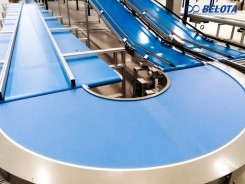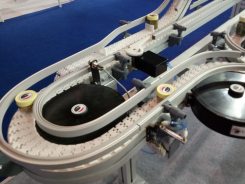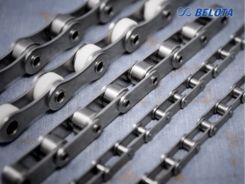



Stainless steel slat chain conveyors are widely used in industrial conveying systems due to their excellent corrosion resistance, high load-bearing capacity, and stable performance in harsh operating environments. Constructed from hinged stainless steel plates, these conveyor chains are commonly found in food processing, beverage production, seafood handling, pharmaceuticals, automotive assembly, and building material manufacturing. In this article, Belota explores the construction, technical specifications, common chain series, and practical applications of stainless steel slat chain conveyors.
What is a Stainless Steel Slat Chain Conveyor?
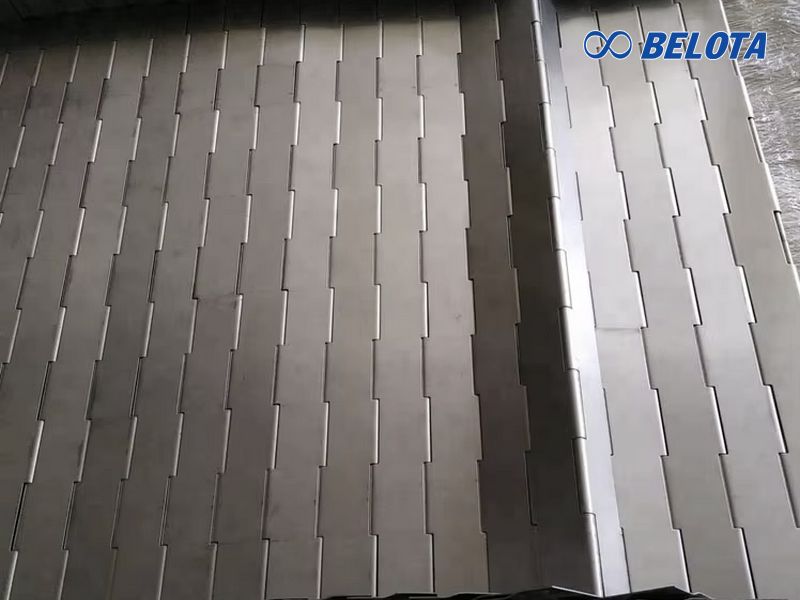
A stainless steel slat chain conveyor is a specialized conveyor system consisting of flat stainless steel plates interconnected by durable hinge pins. Designed to withstand corrosive environments and elevated temperatures, stainless steel slat chains provide long service life while meeting the stringent hygiene requirements of food, beverage, pharmaceutical, and heavy industrial applications.
Standard Technical Specifications
Chain Plate Materials
- Stainless Steel 201: Economical option with good heat resistance.
- Stainless Steel 304: The most commonly used grade for food and beverage applications due to excellent corrosion resistance.
- Stainless Steel 430: Magnetic stainless steel with high hardness and wear resistance.
- Stainless Steel 316: Recommended for aggressive chemical environments and medical industries.
Other Specifications
- Plate thickness: Typically 3.0–3.1 mm
- Operating speed: Up to 80 m/min
- Tensile strength: Approximately 2,000–5,000 N depending on chain series
- Chain pitch: 25.4 mm (1"), 38.1 mm (1.5"), 50.8 mm (2"), and 76.2 mm (3")
- Conveyor dimensions: Customizable, commonly ranging from 1–15 m in length and 300–2,000 mm in width
- Operating temperature: 0°C–200°C under standard conditions and up to 300°C with specialized materials
- Curve capability: Available in straight-running or side-flexing designs with minimum turning radii from 430 mm to 1,500 mm
Key Features of Stainless Steel Slat Chain Conveyors
- Premium materials: Manufactured from stainless steel grades such as SS304, SS316, and SS430, offering excellent load capacity, corrosion resistance, and long service life. Compared with carbon steel hinged slat chains, stainless steel versions perform significantly better in wet, chemical, and hygienic environments.
- Smooth conveying surface: Low-friction surfaces allow products to move steadily while minimizing product adhesion.
- Precise and stable operation: Consistent conveying speeds help reduce process errors and improve production efficiency.
- Easy cleaning: Suitable for washdown applications and compliant with stringent sanitation standards required in food, seafood, and pharmaceutical industries.
- Flexible configurations: Can be designed for horizontal, inclined, or curved conveying layouts to meet specific production requirements.
- Simple maintenance: Modular construction enables quick component replacement, reducing maintenance costs and extending system lifespan.
Types of Stainless Steel Slat Chain Conveyors
Classification by Conveyor Direction
Straight-Running Slat Chains
- Construction: Closely linked chain plates with straight hinge pins.
- Features: Designed exclusively for straight conveying. Minimal gaps between slats help stabilize products during transportation.
- Common Series: 812, 815, and 802.
Side-Flexing Slat Chains
- Construction: Special hinge designs with clearances or beveled edges, often combined with side tabs to prevent disengagement from guide rails.
- Features: Capable of negotiating 90° and 180° curves.
- Common Series: 881 and 881 TAB.
Classification by Design and Function
Standard Hinged Slat Chains
Flexible plate assemblies suitable for both straight and curved conveyor systems, such as SS812 and SS881. Widely used for transporting heavy glass bottles and products exposed to elevated temperatures.
Slat Chains with Flights or Side Guards
Integrated flights or sidewalls help guide product flow, prevent slipping, and contain loose materials.
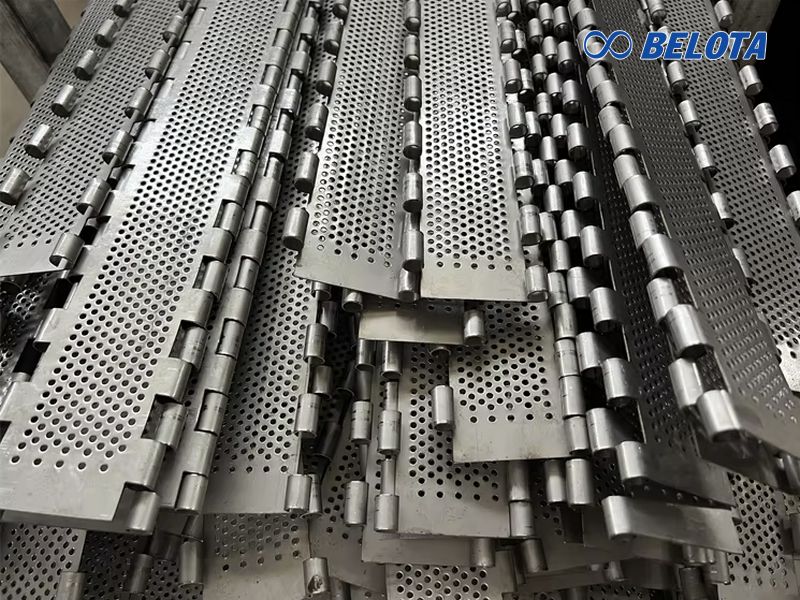
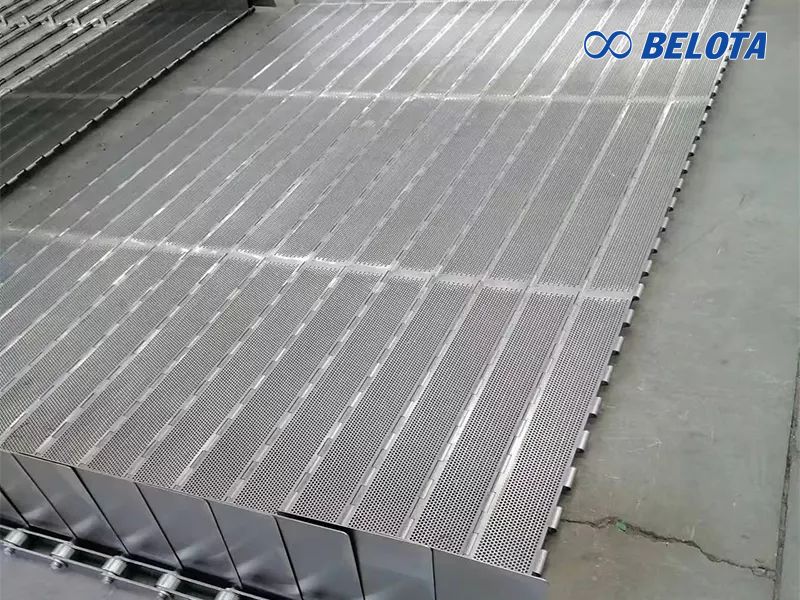
Perforated Slat Chains
Evenly distributed perforations facilitate drainage, oil removal, and airflow circulation.
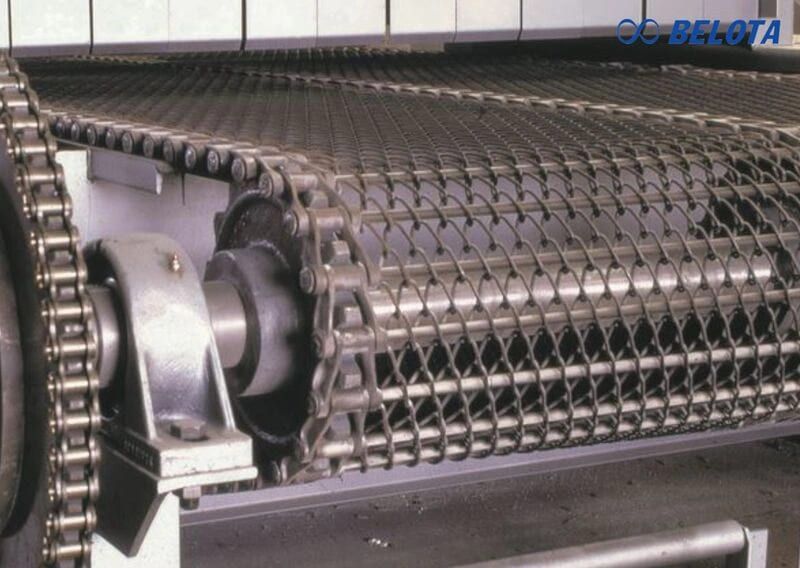
Stainless Steel Mesh Chains
Open-mesh structures provide excellent ventilation and heat resistance, making them ideal for freezing tunnels, drying systems, baking ovens, and frying applications.
Common Applications
- Food Industry: Used in confectionery production, beverage bottling, breweries, dried food processing, agricultural products, and animal feed manufacturing, ensuring clean and hygienic product handling.
- Product Handling Systems: Efficiently transport cartons, pallets, bottles, cans, boxes, and packaged goods while minimizing production errors.
- Automotive Industry: Support assembly lines by conveying vehicle frames, components, and precision parts quickly and accurately.
- Seafood Processing: Suitable for shrimp, fish, squid, and frozen food production, helping maintain product freshness while complying with food safety standards.
- Building Materials Industry: Used to transport wood, clay, cement, bricks, and steel products, improving workflow efficiency and reducing labor costs.
Conclusion
Stainless steel slat chain conveyors represent a long-term investment in production reliability. A high-quality conveyor chain system minimizes downtime, extends equipment lifespan, and ensures smooth plant operation for years. Whether you need replacement stainless steel chains or a completely new conveyor design, Belota provides professional technical consultation and competitive solutions tailored to your production requirements.