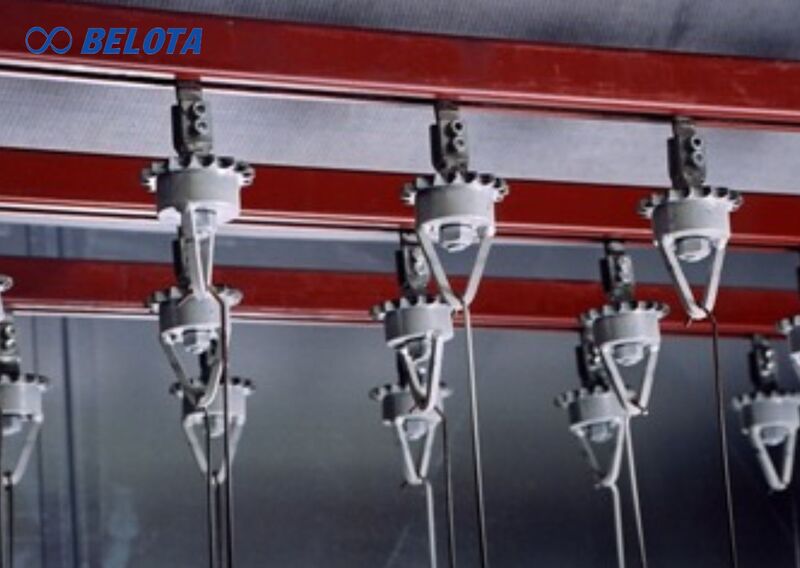
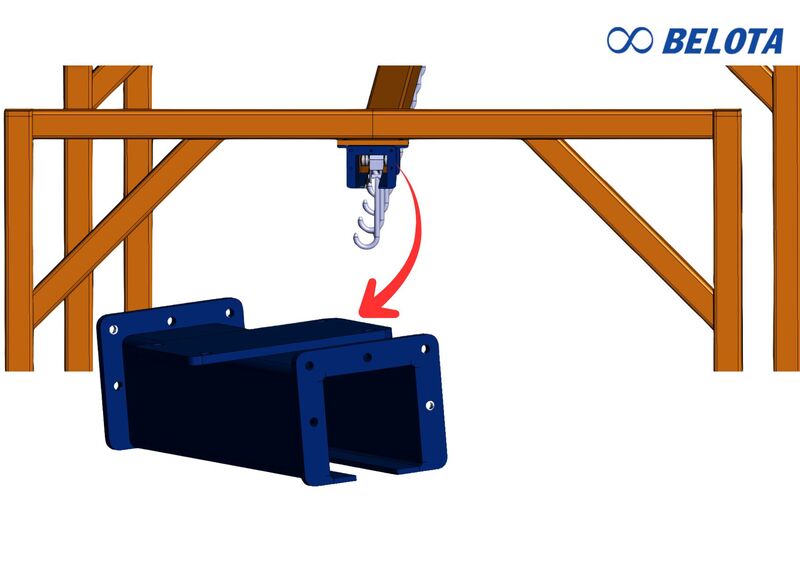
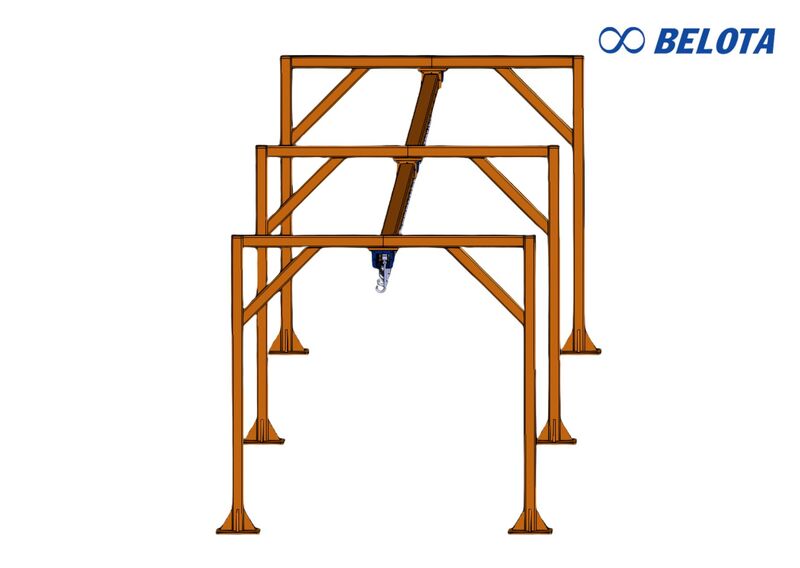
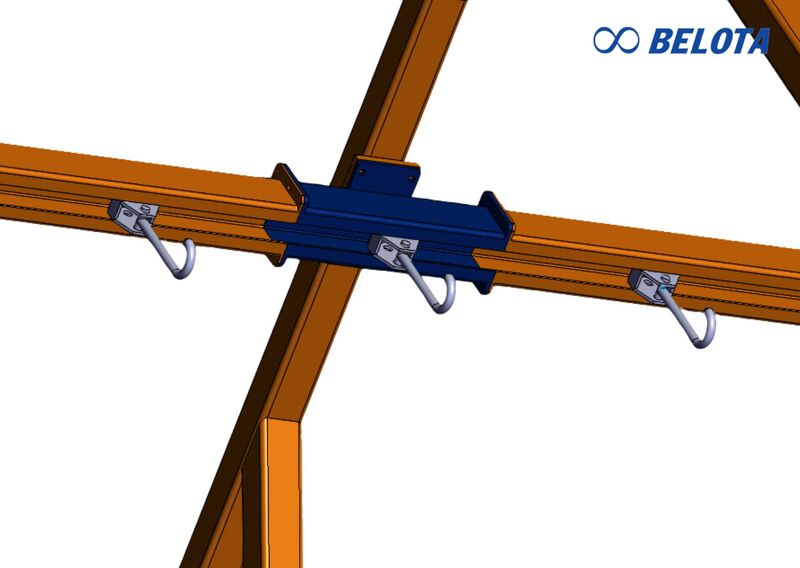
A U-shaped overhead chain conveyor is a material handling system designed for factories that need to transport products overhead, free up floor space, and optimize production workflows. Featuring a chain that moves inside an inverted U-shaped track, the system allows products to be suspended and transported across multiple areas, including curved sections and changes in elevation. This type of chain conveyor is commonly used in automotive assembly, mechanical engineering, industrial painting, garment manufacturing, and component production.
What Is a U-Shaped Overhead Chain Conveyor?
A U-shaped overhead chain conveyor is a type of overhead chain conveyor that uses a chain running inside an inverted U-shaped track. Hooks or carriers are attached beneath the chain to hold products throughout the conveying process.
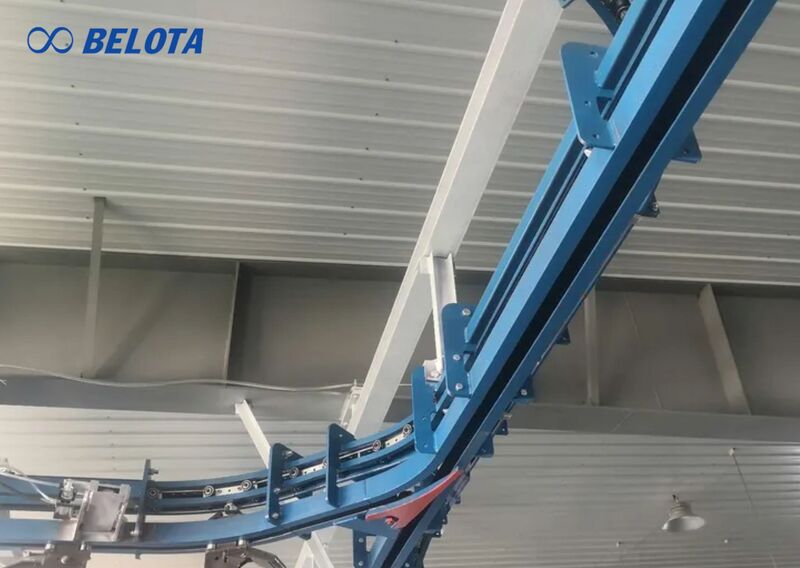
Unlike floor-mounted conveyor systems, this conveyor is typically installed overhead to make use of the available space above the factory floor. The chain is driven by an electric motor and gearbox, moving continuously along a predefined track layout. Depending on the factory layout and production requirements, the track can be designed with straight sections, curves, inclines, and declines to connect different production stages.
Structure of a U-Shaped Overhead Chain Conveyor System
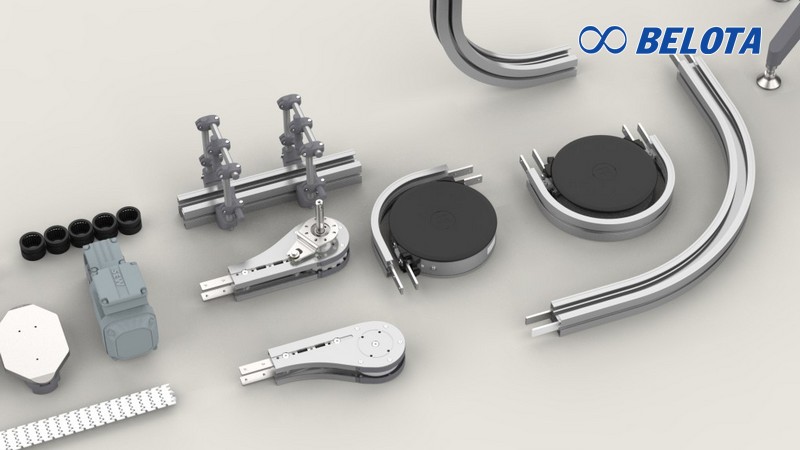
A U-shaped overhead chain conveyor system typically consists of the following main components:
Conveyor Chain
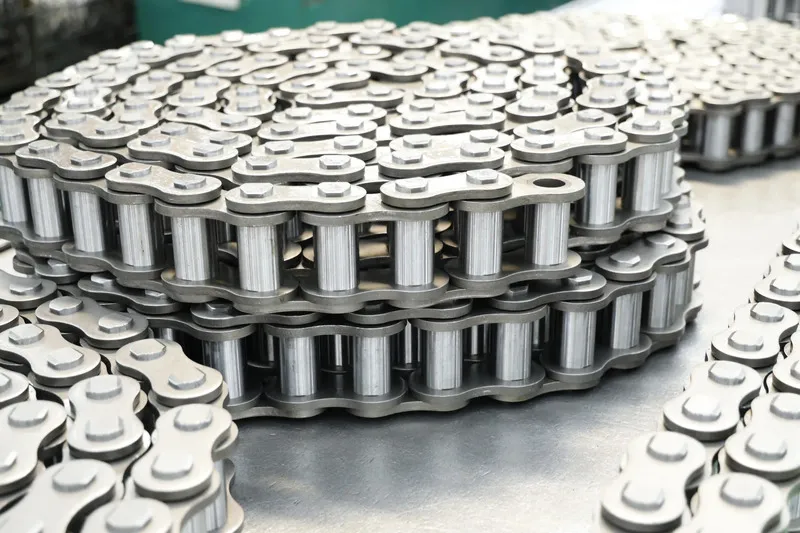
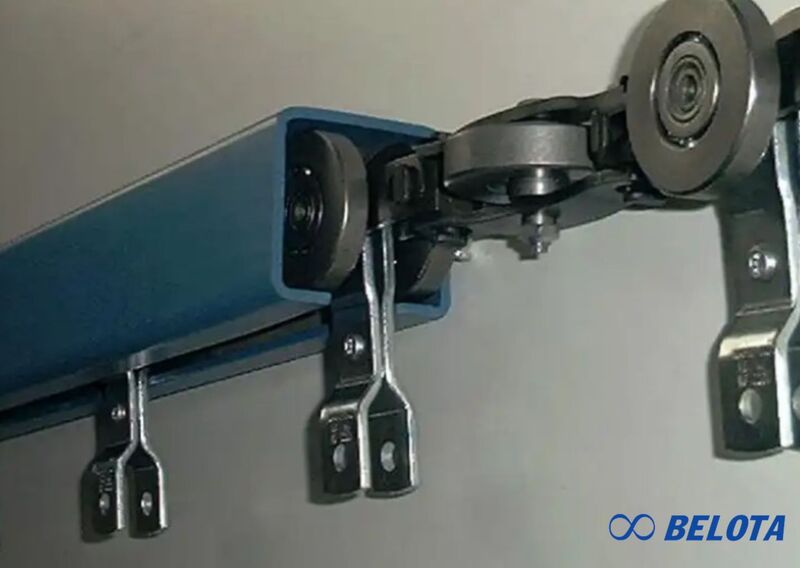
The conveyor chain is an essential component of the U-shaped overhead chain conveyor system. It is installed inside the track to generate movement and pull the hangers and carriers holding the products. The chain consists of multiple interconnected links combined with roller assemblies arranged in alternating longitudinal and transverse directions, allowing it to move smoothly along the track.
Depending on the system design, the conveyor chain is typically 20 meters or longer, with common chain pitches ranging from 100–150 mm. Chain pitch refers to the distance between the centers of two adjacent rollers. This dimension affects hanger spacing and product arrangement along the production line.
Hangers and Carriers
Hangers are connected to the conveyor chain to hold products, trays, or supporting fixtures during transportation. Depending on the shape and dimensions of the products, manufacturers can choose from several carrier designs, including:
- U-shaped hangers.
- Y-shaped hangers.
- S-shaped hooks.
- Frame-type carriers or custom-designed fixtures.
Selecting the appropriate hanger design helps secure products, minimize swinging, and ensure smooth transfer between production stages.
U-Shaped Track
The track guides the overhead chain while supporting the combined weight of the chain, hangers, and transported products. It is typically manufactured from steel with sufficient strength and rigidity to withstand the designed operating load.
With its inverted U-shaped cross-section, the chain and roller assemblies are housed inside the track. Track dimensions, material thickness, and structural configuration are calculated based on the total load and conveyor route length.
Support Frame and Track Hangers
The support frame secures the track and maintains its correct height and alignment throughout operation. It typically consists of support columns, crossbars, connecting brackets, and reinforcing components.
The frame must be designed with sufficient structural rigidity to minimize vibration and deformation during continuous material handling.
Drive System
The drive system typically uses an electric motor combined with a gearbox to generate the pulling force required to move the chain. Depending on the conveyor scale and route layout, the system may use one or multiple drive units.
A typical operating speed ranges from 2 - 8 m/min, depending on production requirements. For applications requiring flexible speed adjustment, a suitable motor can be integrated with a variable frequency drive (VFD).
Technical Specifications of U-Shaped Overhead Chain Conveyors
The following table provides typical reference specifications for U-shaped overhead chain conveyor systems:
| Specification | Reference Value |
|---|---|
| Conveyor type | U-shaped overhead chain conveyor |
| Track structure | Inverted U-shaped steel profile |
| Chain material | Alloy steel or specialized steel |
| Chain pitch | 100–150 mm |
| Conveyor route length | 20 m or longer |
| Conveying speed | 2–8 m/min |
| Load capacity per hanger | 10–100 kg |
| Hanger types | U-shaped, Y-shaped, S-shaped, or frame-type |
| Drive system | Electric motor with gearbox |
| Speed control | Variable frequency drive (optional) |
| Conveying direction | Straight, curved, inclined, and declined sections |
| Installation type | Overhead installation5 |
| Applications | Mechanical engineering, automotive, industrial painting, garment manufacturing, and component assembly |
Note: These specifications are for reference only. Actual values should be determined based on the system configuration, product load, factory layout, and operating requirements.
Advantages of U-Shaped Overhead Chain Conveyors
- Optimizes factory space: Overhead installation saves floor space and provides more room for machinery and production activities.
- Flexible conveying routes: The U-shaped track can be designed with straight sections, curves, inclines, and declines to connect multiple production stages.
- High load capacity: Depending on the chain, track, hanger, and drive system configuration, the conveyor can be designed to handle approximately 10–100 kg per hanger. Heavy-duty applications require individual calculations based on the total system load.
- Suitable for various products: Custom hangers and carriers can transport components, mechanical parts, metal frames, garments, and other products.
- Supports production automation: Reduces manual material handling, improves workflow coordination, and increases productivity.
- Minimizes product damage: Individual products are secured on separate hangers, reducing collisions, stacking pressure, and surface scratches during transportation.
Applications of U-Shaped Overhead Chain Conveyors
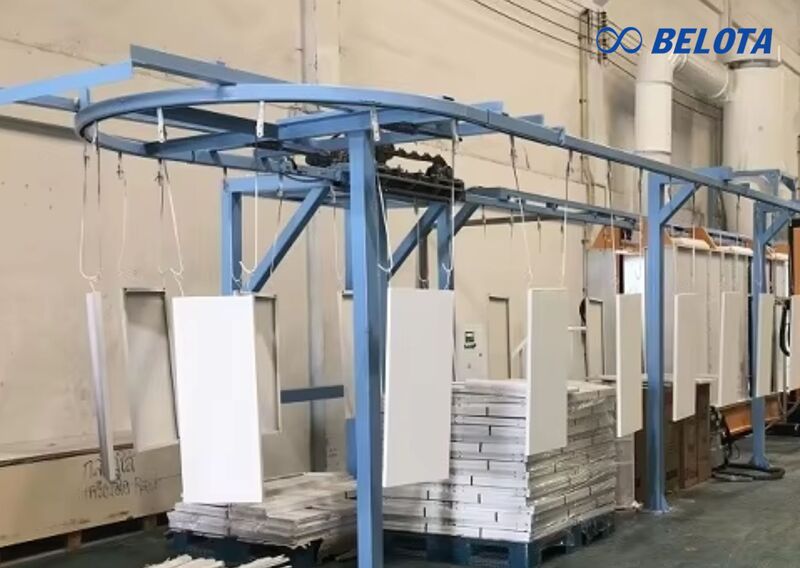
U-shaped overhead chain conveyors are commonly used in factories that need to transport products overhead, particularly production lines where goods must pass through multiple consecutive stages without occupying valuable floor space. Typical applications include:
- Automotive and motorcycle manufacturing: Suspending vehicle frames, bodies, metal components, and parts for transportation through assembly, inspection, and finishing areas.
- Mechanical engineering: Moving steel frames, machine housings, metal components, and semi-finished products between machining and processing areas.
- Industrial painting lines: Suspending products on hooks or carriers and conveying them through cleaning, spray painting, drying, and cooling stages.
- Garment manufacturing: Moving garments on hangers between sewing, finishing, inspection, and packaging areas while minimizing folding and stacking.
- Equipment and component manufacturing: Transporting equipment housings, assembly parts, and semi-finished products between production stages to maintain a continuous workflow.
Maintenance Guide for U-Shaped Overhead Chain Conveyors
Regular maintenance helps maintain stable operation, reduce wear, and identify potential problems at an early stage. Recommended maintenance tasks include:
- Chain inspection and lubrication: Check chain links, rollers, and moving components regularly. Apply lubricants according to technical recommendations.
- Track cleaning: Remove dust, debris, and accumulated residue inside the track to prevent obstruction.
- Hanger inspection: Ensure that hooks, carriers, and connection points are not bent, cracked, or loose.
- Motor and gearbox inspection: Monitor operating noise, temperature, and transmission conditions to identify abnormalities.
- Frame and connection inspection: Ensure that tracks, supports, and fastening bolts remain secure and free from deformation.
Common Operating Problems
- The motor cannot drive the chain: Possible causes include system overload, chain jamming, insufficient lubrication, or drive system failure. Check the load, track, and drive unit before restarting the conveyor.
- The chain produces excessive noise: This may result from worn rollers, insufficient lubrication, or debris trapped inside the track. Identify the noise source and clean, lubricate, or replace damaged components as necessary.
- Hangers swing excessively: This may be caused by deformed hooks, loose connections, or uneven product load distribution. Inspect and adjust the hangers before resuming operation.
How to Choose the Right U-Shaped Overhead Chain Conveyor
To ensure the system meets production requirements, businesses should consider the following factors:
- Product dimensions and weight: Determine the load capacity per hanger and the total load throughout the conveyor route.
- Conveying speed: Select a suitable operating speed based on production capacity and the processing time required at each stage.
- Track length and layout: Design straight sections, curves, inclines, and declines according to the factory floor plan.
- Operating environment: Consider temperature, humidity, dust, chemicals, and other specific factory conditions when selecting materials.
- Hanger and carrier design: Choose a design that matches the product shape, dimensions, and required holding method.
- Safety and maintenance accessibility: Provide suitable inspection points, maintenance access, and necessary safety devices.
- Investment costs: Balance the initial budget with system capacity, durability, and long-term operating efficiency.
Technical parameters such as chain pitch, track dimensions, load capacity, motor power, and conveying speed must be calculated together. Individual components should not be selected separately without first determining the overall system requirements.
Belota - U-Shaped Overhead Chain Conveyor Design and Installation
Designing and installing a U-shaped overhead chain conveyor requires careful consideration of the factory layout, product load, conveying speed, and actual production workflow. Each system needs an appropriate track layout, chain selection, hanger configuration, and drive arrangement to ensure reliable operation.
With experience in industrial transmission components and conveyor systems, Belota provides businesses with the following services:
- Site Survey and Consultation: Assessing factory layouts, product characteristics, and material handling requirements to recommend suitable solutions.
- System Design: Preparing track layout drawings, support frame designs, and drive system configurations based on specific requirements.
- Fabrication and Installation: Manufacturing mechanical components, assembling the system, and performing on-site alignment and adjustments.
- Maintenance and Technical Support: Inspecting chains, guide tracks, motors, and connection components to maintain reliable operation.
Depending on factory size and production requirements, Belota provides customized conveyor designs based on load capacity, conveying route length, and actual operating conditions. Businesses can contact Belota for site surveys, technical consultations, and customized fabrication and installation solutions for U-shaped overhead chain conveyor systems.
Conclusion
U-shaped overhead chain conveyors are an effective material handling solution for factories that need to optimize floor space, transport products overhead, and connect multiple production stages. To ensure reliable operation, businesses should consider the load capacity, track structure, chain type, hanger configuration, and drive system as an integrated design. If you are looking for a partner to design, fabricate, and install customized overhead chain conveyor systems, Belota is ready to provide site surveys and technical consultations to help identify a solution that matches your factory layout and production workflow.