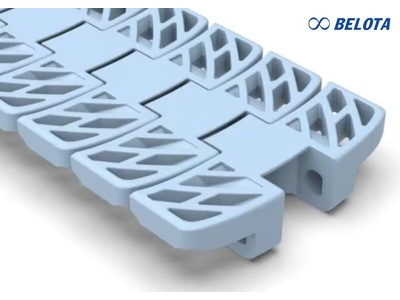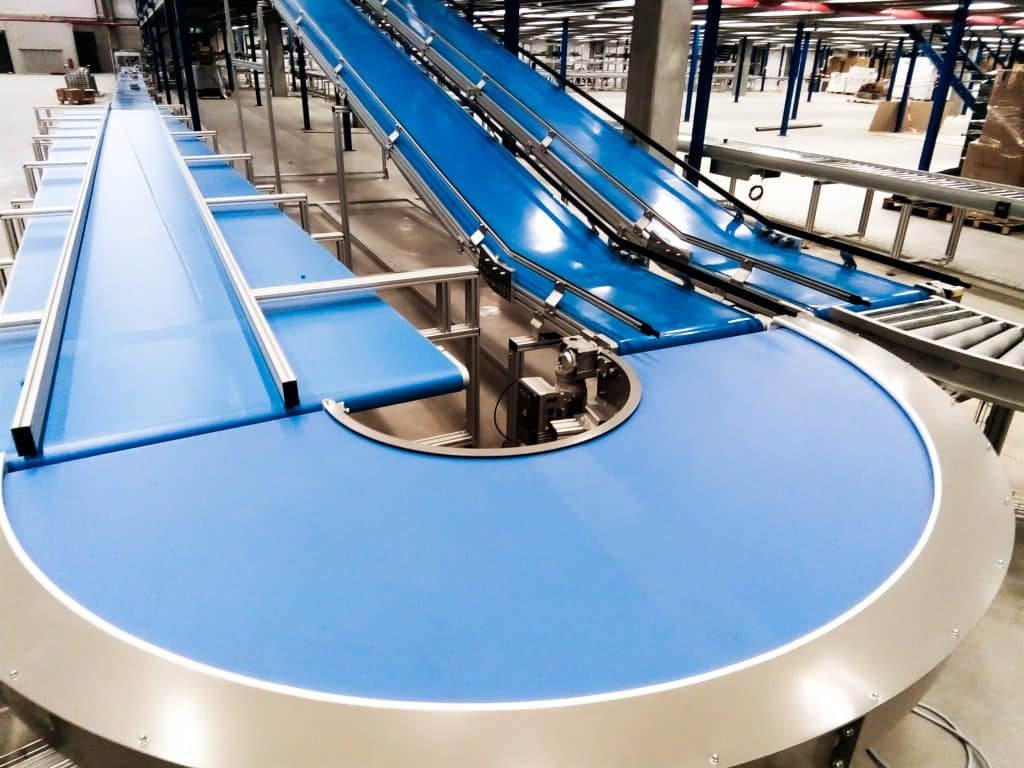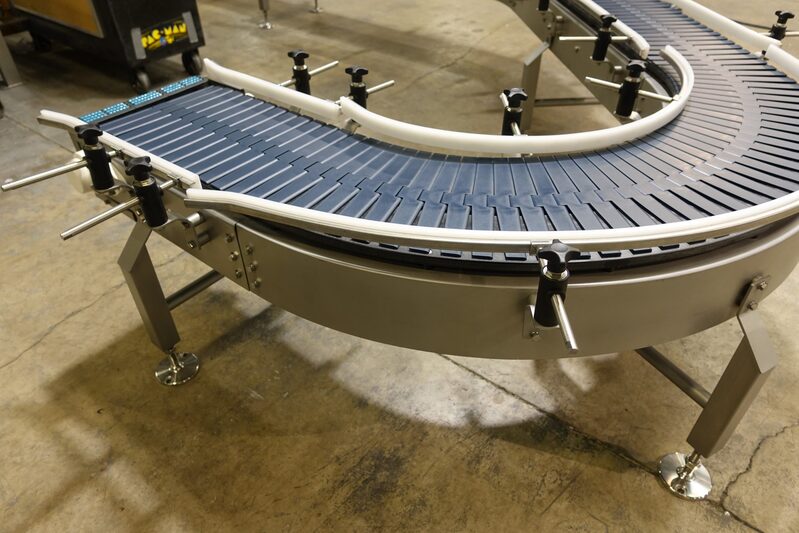
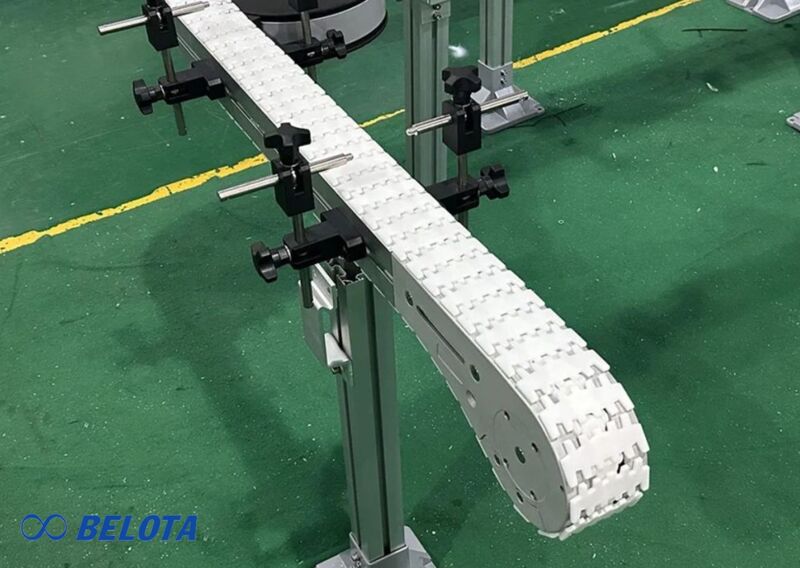
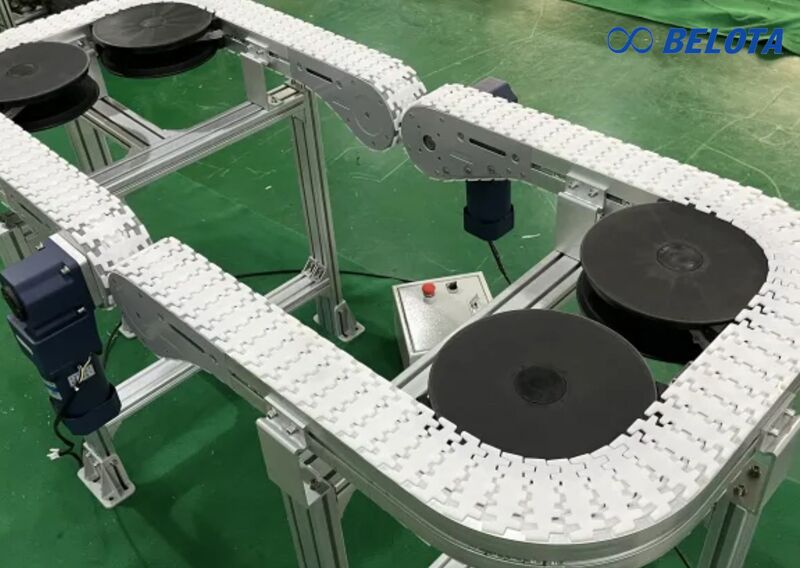
Fishbone plastic chain conveyor (Flexible Chain) is a type of chain conveyor designed to transport products flexibly along straight, curved and inclined paths. It is particularly suitable for factories with limited floor space. Belota supplies a wide range of fishbone plastic chains in different widths and surface designs to meet the conveying needs of bottles, containers, cartons and packaged products.
What Is a Fishbone Plastic Chain Conveyor?
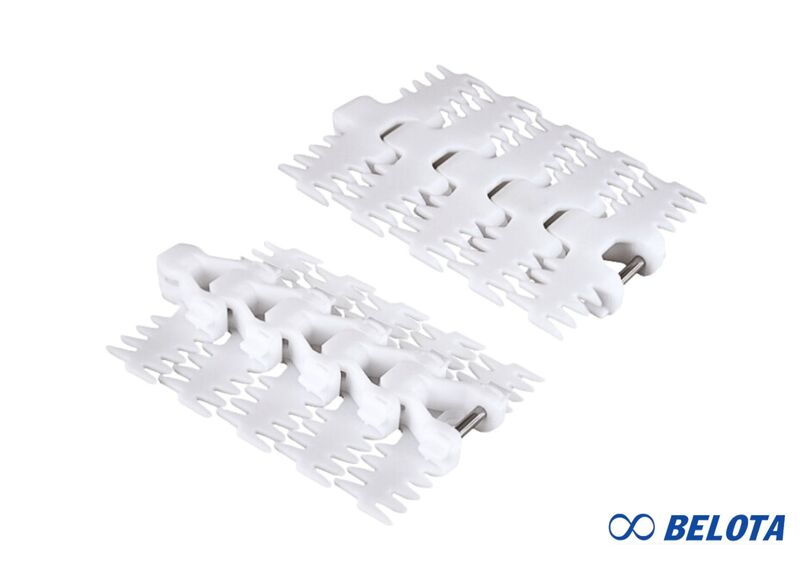
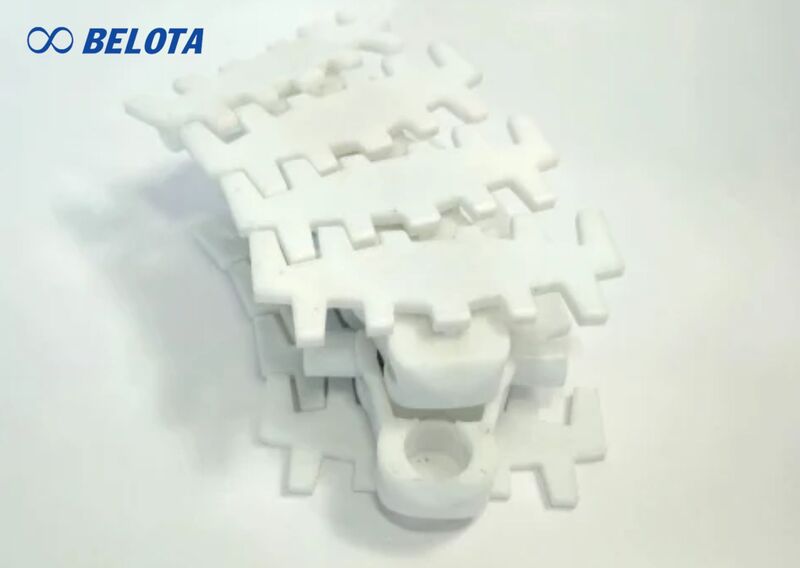
A fishbone plastic chain conveyor is a type of plastic chain conveyor that uses chain links with a distinctive fishbone-patterned surface featuring diagonal ribs. This design helps improve grip, supporting product retention and guiding during conveying.
This type of conveyor is commonly manufactured from engineering plastics such as POM, which offer low weight, corrosion resistance and easy cleaning. Depending on the design, the chain can operate along straight paths or incorporate curved sections to suit the factory layout.
Structure of a Fishbone Plastic Chain Conveyor
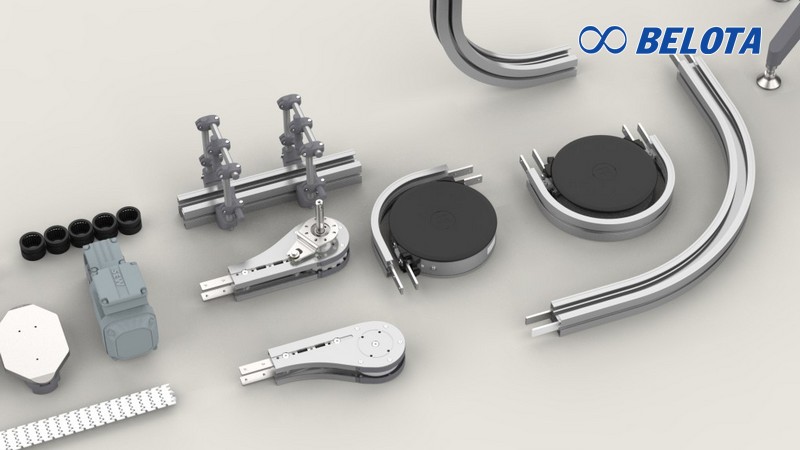
A fishbone plastic chain conveyor system typically consists of the following main components:
- Fishbone plastic chain: Consists of interconnected chain links that form the conveying surface. Common materials include POM and other engineering plastics suitable for the operating conditions.
- Conveyor frame: Usually fabricated from stainless steel, steel or aluminum profiles to support and secure the entire system.
- Drive sprocket: Engages with the chain links to transfer power from the motor, allowing the chain to move continuously.
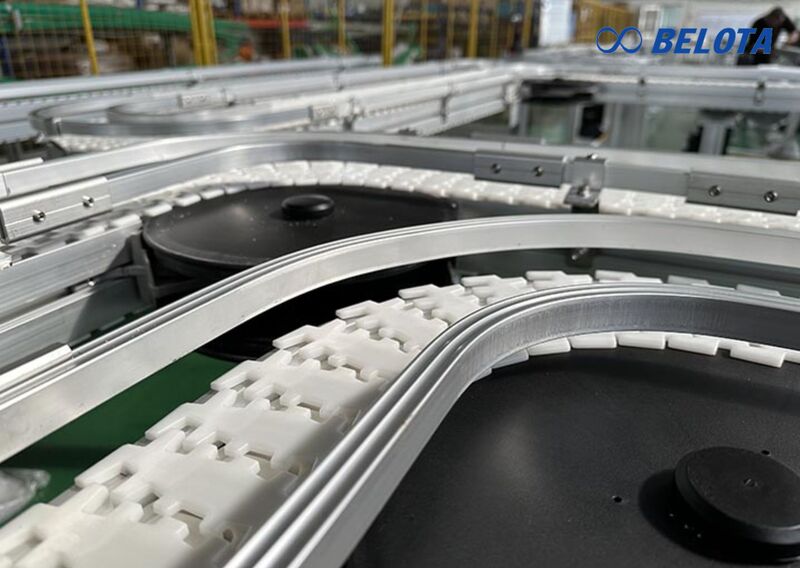
- Wear strips and guide rails: May be made from HDPE or other wear-resistant plastics to support the chain, reduce friction and minimize operating noise.
- Motor and gearbox: Provide the driving force and adjust conveying speed to suit individual production processes.
- Guiding mechanism: Includes guide components and transition sections that help the chain move smoothly along straight and curved paths.
Technical Specifications of Fishbone Plastic Chain Conveyors
Fishbone plastic chains are available in various product codes and dimensions. The following are some reference specifications:
- Chain material: POM or other engineering plastics.
- Colors: White, blue or other colors depending on the product code.
- Common chain widths: 44, 63, 70, 80, 83, 103, 140, 175 and 295 mm.
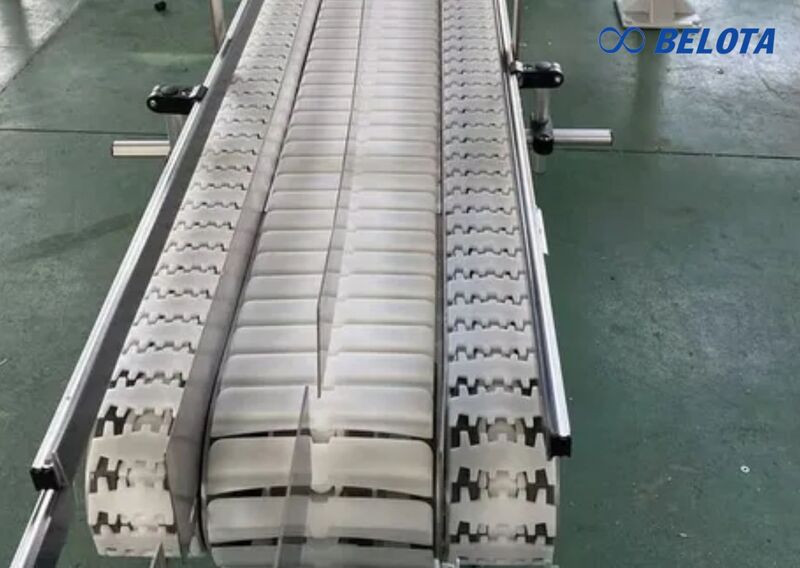
- Surface types: Flat, rubber-coated or flights.
- Operating configurations: Straight, curved and inclined conveying.
- Turning angles: 30°, 45°, 60°, 90° and 180°.
- Turning radius: Depends on the chain model and system design.
- Operating temperature: Depends on the material and specific chain model.
Some popular Hong's Belt Flexible Chain models include:
- HS-7100-63
- HS-7100-70
- HS-7100-80
- HS-7100-83
- HS-7100-103
- HS-7100-140
- HS-7100-70-EL
- HS-7100-83 G3
- HS-7100-83-TD
- HS-7100-103-D
Note: Chain width, turning radius and temperature limits should be verified against the specifications of the actual product model. Chain selection should not be based solely on width; load requirements, conveying speed and guide structure must also be considered.
Key Advantages of Fishbone Plastic Chain Conveyors
- Flexible curved conveying: The design allows curved plastic chain conveyors to change direction at various angles, such as 30°, 45°, 60°, 90° and 180°, depending on the system configuration.
- Smooth and quiet operation: The combination of plastic chains and guide strips helps reduce friction, noise and wear during operation.
- Good wear resistance: POM plastic chains offer high hardness and are suitable for conveying bottles, cans, cartons and packages.
- Easy cleaning and replacement: The modular chain-link structure makes disassembly, cleaning and replacement of individual chain sections convenient.
- Space saving: The ability to operate along curved paths with a suitable turning radius helps optimize floor space and connect multiple production stages.
Applications of Fishbone Plastic Chain Conveyors
Thanks to their flexible direction-changing capabilities, fishbone plastic chain conveyors are used in various production and packaging lines.
- Beverage, beer and bottled water industries: Convey PET bottles, glass bottles, cans and multipacks through filling, capping, labeling and packaging processes.
- Dairy industry: Transport milk cartons, milk bottles, yogurt and other packaged dairy products between production stages.
- Food industry: Convey boxes, trays, packaging materials and packaged food products along processing lines.
- Pharmaceutical and cosmetics industries: Used in conveying systems for bottles, containers, product boxes and packaging.
- Packaging and warehousing: Move cartons, boxes and packaged goods through directional changes or between connected machines.
- Automated production lines: Connect machinery, sorting stations, inspection systems and packaging equipment within an integrated conveying system.
How to Select the Right Fishbone Plastic Chain Conveyor
To ensure stable system operation, businesses should select the appropriate chain based on product characteristics and actual installation conditions.
- Identify the products to be conveyed: Determine product dimensions, weight, shape and surface characteristics to select a suitable chain width and surface design.
- Determine the conveyor layout: Identify whether the system requires a straight-running plastic chain conveyor or a curved configuration. Also consider turning angles, turning radius, elevation changes and inclined or declined sections.
- Select the chain material: POM is commonly used because of its wear resistance and mechanical stability. For direct food-contact applications, verify that the specific material grade has the required food-contact certification.
- Choose the chain surface type: Use a flat surface for products with stable bases. Rubber-coated chains or chains with flights are suitable when additional friction or product retention is required on inclined sections.
- Check load capacity and conveying speed: Calculate the total load along the conveyor, conveying speed and motor driving capacity to prevent overloading and premature chain wear.
- Check component compatibility: The drive sprocket, wear strips, guide frame and chain links must be compatible to minimize vibration, chain misalignment and operating noise.
Installation and Maintenance Considerations for Fishbone Plastic Chain Conveyors
- Install according to the specified turning radius: Do not design curves with a radius smaller than the permitted limit of the chain model, as this may cause jamming or excessive pulling force.
- Align the guide system correctly: Wear strips and sprockets must be installed in the correct positions to ensure stable chain movement along the entire conveyor.
- Check chain tension: Maintain the recommended chain slack according to the manufacturer's specifications. Excessive tension can increase the load on the motor and sprockets.
- Clean the conveyor regularly: Remove dust, product residues and foreign objects trapped between chain links or along the wear strips.
- Inspect wear and damage: Regularly check chain links, sprockets and wear strips for cracks, excessive wear or deformation.
- Replace components with compatible parts: Use chain links and accessories that match the installed chain model. Do not substitute components solely because they have a similar appearance or structure.
Belota Supplies Custom Fishbone Plastic Chain Conveyors
Belota supplies fishbone plastic chains and related components for material handling systems in industrial facilities. Products are selected based on chain model, width, turning radius and actual product characteristics, helping businesses develop conveying systems suited to their production layouts.
- Various specifications: Support for selecting different chain widths, surface designs and product models.
- Application-based consultation: Assistance in selecting suitable chains according to product type, load, conveying speed and direction.
- Layout-based design: Consultation for straight, curved, directional-changing and inclined conveyor configurations.
- Compatible components: Supply of plastic chains, sprockets, wear strips and related accessories.
- Technical support: Guidance on installation, replacement and troubleshooting during operation.
For technical consultation and quotations, customers can provide the existing chain model, chain width, actual product photos or a conveyor layout drawing to Belota.
Frequently Asked Questions About Fishbone Plastic Chain Conveyors
Can fishbone plastic chain conveyors operate along curved paths?
Yes. This is one of the key features of Flexible Chain conveyors. The chain can travel through curved sections within its specified turning radius, allowing the conveying direction to change without requiring multiple separate straight conveyor lines.
Can fishbone plastic chains convey products uphill?
Yes, depending on the chain design and application requirements. For inclined conveying, businesses should consider rubber-coated chain surfaces for increased friction or chains with flights to help prevent products from sliding backward. The inclination angle and load capacity must be calculated based on actual operating conditions.
What materials are fishbone plastic chains made from?
These chains are commonly manufactured from engineering plastics such as POM or other plastic materials suited to specific operating requirements. For food industry applications, check the technical documentation and food-contact certification of the specific product.
Can individual chain links be replaced when damaged?
Yes. The modular structure allows individual chain sections to be removed and replaced when necessary. However, the correct model, width and connection design must be identified to ensure compatibility with the existing system.
Conclusion
Fishbone plastic chain conveyors are suitable for production lines that require products to be transported in multiple directions, particularly in areas with limited space and tight turning radii. Their flexibility, smooth operation and ease of replacement help optimize factory layouts and connect different production stages. Belota supplies fishbone plastic chains and compatible accessories according to businesses' specifications and actual operating requirements.