An I-beam overhead chain conveyor is an industrial conveying system that uses an I-beam steel track combined with a conveyor chain and hanging carriers to transport products overhead. This type of chain conveyor moves goods along a fixed route and can connect multiple areas of a factory without occupying valuable floor space. Thanks to its robust construction and good load-bearing capability, I-beam overhead chain conveyors are widely used in powder coating lines, automotive and motorcycle assembly, metalworking, and industrial equipment manufacturing.
What Is an I-Beam Overhead Chain Conveyor?
An I-beam overhead chain conveyor is a conveying system that uses an I-shaped track as its guiding and supporting structure. The conveyor chain works with roller assemblies that travel along the track, while hooks or carriers are installed underneath to hold and transport products.
I-beam overhead chain conveyor systems are typically installed above the production floor and follow a predetermined route to connect different manufacturing stages. The track can be arranged with straight sections, curves, inclines, and declines depending on the factory layout.
Compared with conventional conveyor systems, this type is suitable for transporting medium- to heavy-weight products, particularly in production lines where items need to remain suspended while moving continuously through multiple processes.
Structure of an I-Beam Overhead Chain Conveyor
A complete I-beam overhead chain conveyor system typically consists of the following main components:
I-Beam Track
The track is made from structural I-beam steel and installed overhead to guide the movement of the roller assemblies and conveyor chain. Its route can include straight sections, curves, inclines, and declines depending on the factory layout.
Overhead Conveyor Chain
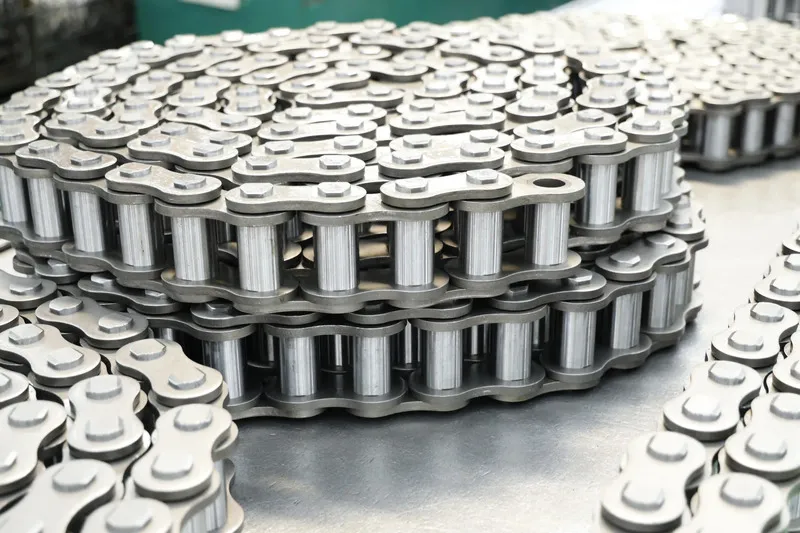
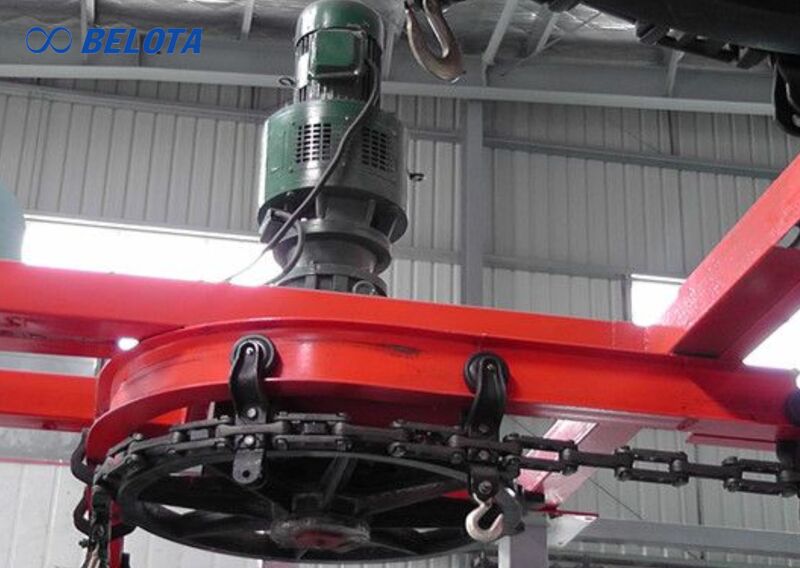
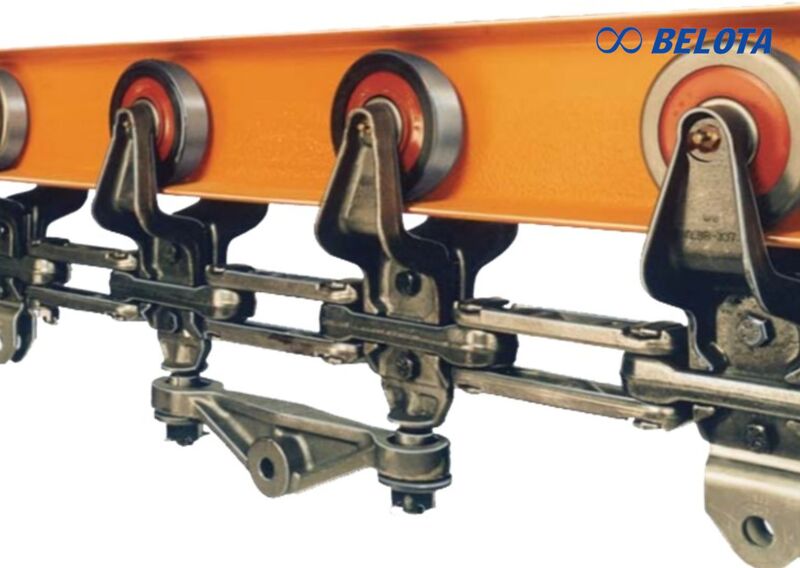
The conveyor chain consists of interconnected links and works with roller assemblies to travel along the track. It transmits the driving force and supports the loads transferred from the hanging hooks, carriers, and products. Chain pitch is selected according to the system design, with common reference values ranging from 100 to 150 mm.
Roller and Trolley Assembly
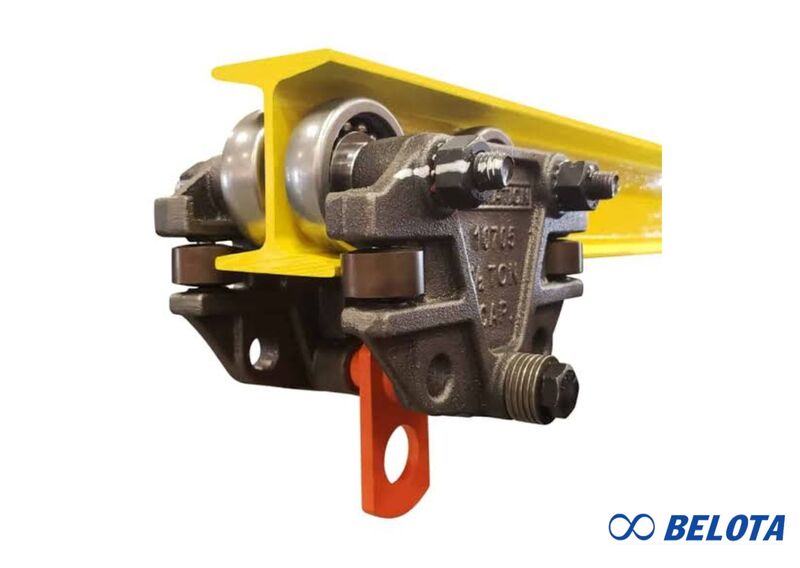
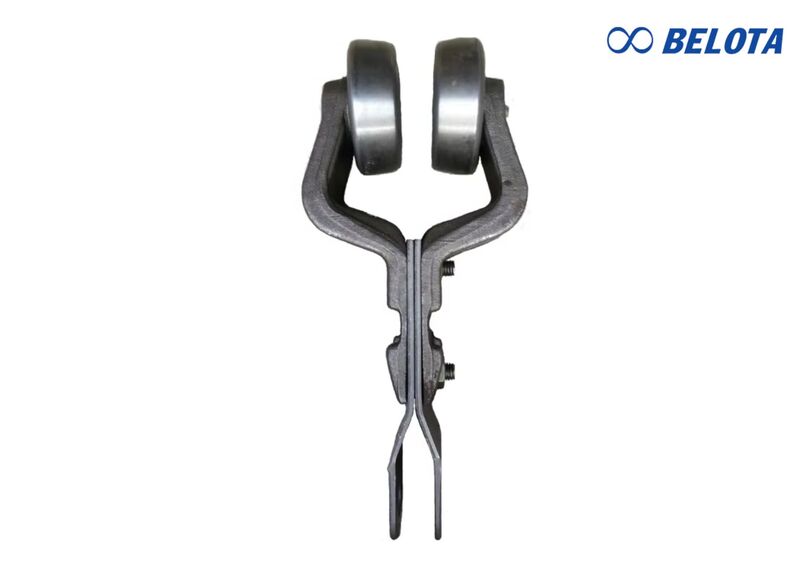
The roller assembly is mounted on the I-beam track to help the trolley move smoothly and reduce friction during operation. Depending on the design, the trolley assembly connects to the conveyor chain to receive the pulling force and maintain continuous movement.
Hanging Hooks and Product Carriers
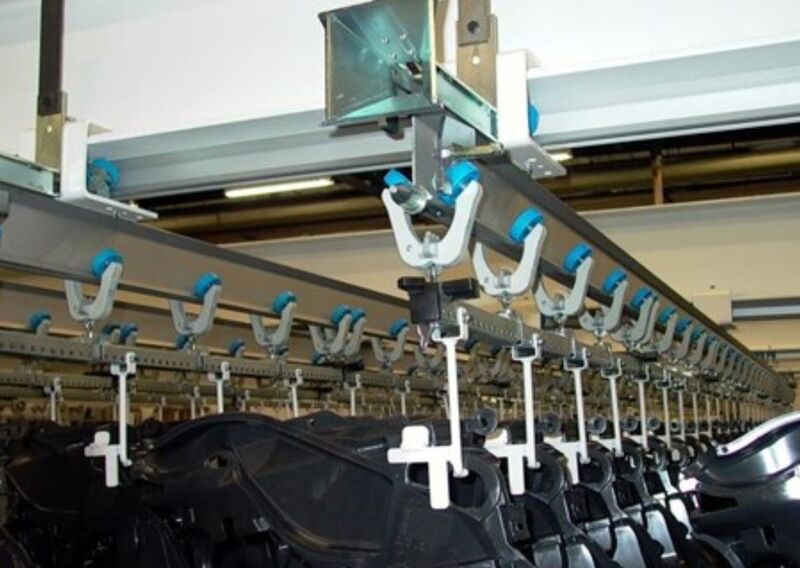
Hooks are connected to the trolley assembly to hold and transport products. Their shapes and configurations are customized according to the characteristics of the goods, such as mechanical components, metal frames, parts, or products that need to pass through painting processes.
Drive Unit
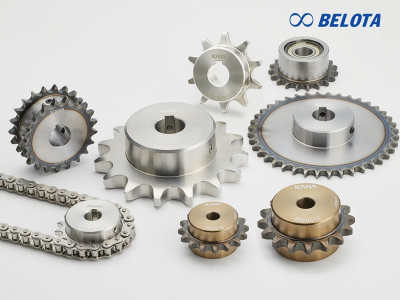
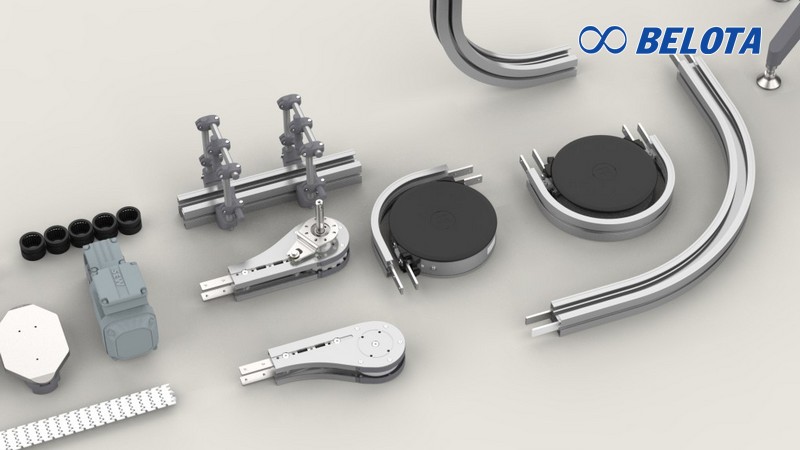
The drive unit typically consists of an electric motor, gearbox, and drive sprocket assembly. It generates the pulling force required to move the chain and hanging trolleys along the track. A variable frequency drive (VFD) can also be installed to adjust conveyor speed according to production requirements.
Support Frame and Accessories
The support frame secures the track and transfers its load to the factory structure. The system may also include the following accessories:
- Curved track sections and directional components.
- Chain tensioning devices.
- Automatic chain lubrication systems.
- Guide assemblies and overload protection devices.
- Emergency stop devices and operating controls.
Reference Technical Specifications of an I-Beam Overhead Chain Conveyor
System specifications are determined based on product weight, track length, and operating conditions. The following are some reference specifications:
- Track structure: I-beam structural steel.
- Chain pitch: Approximately 100 - 150 mm, depending on the chain type.
- Conveying speed: Approximately 0.5 - 15 m/min.
- Load capacity: Calculated based on the load per hanger and total system load.
- Drive unit: Electric motor combined with a gearbox.
- Speed adjustment: Variable frequency drive (VFD) available.
- Operating temperature: Depends on chain, track, bearing materials, and design conditions.
Note: Actual speed, load capacity, and heat resistance are not fixed values for every system. These specifications must be determined based on the chain configuration, track structure, drive equipment, and production environment.
Advantages of an I-Beam Overhead Chain Conveyor
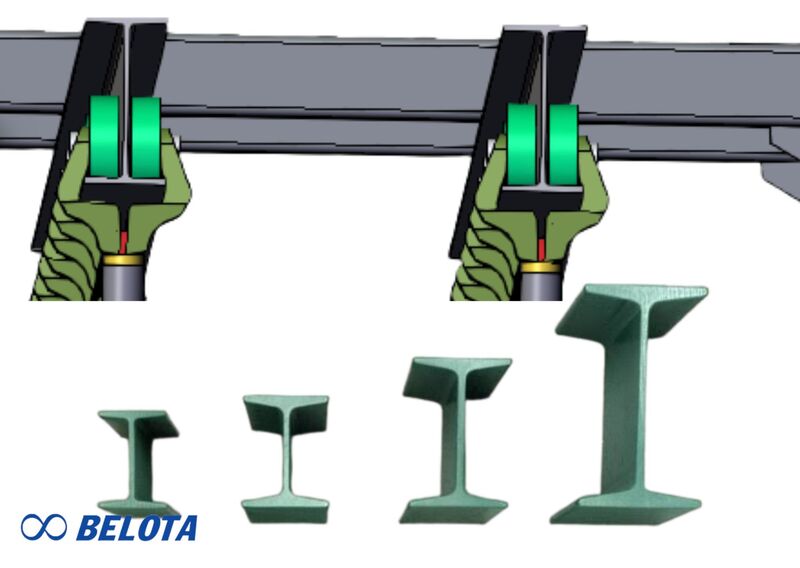
- Robust load-bearing structure: The I-beam steel track has a cross-section consisting of a web and two flanges, making it suitable for systems designed to transport heavy products such as steel frames, vehicle bodies, and mechanical components.
- Stable trolley movement: The wheels make direct contact with the track flanges, allowing the hanging trolleys to travel along the route while distributing loads through the contact points.
- Easy inspection and maintenance: The roller assemblies and I-beam track are exposed, making it easier to inspect wear, clean components, lubricate moving parts, and replace damaged components. Compared with U-rail overhead chain conveyors, where the chain and rollers are often housed inside the track, the I-beam design provides easier access to moving components.
- Flexible track layout: The system can be designed with straight sections, curves, inclines, and declines to connect different production areas.
- Suitable for individually suspended products: Hooks and carriers can be customized to match product shapes, helping reduce collisions and overlapping during transportation.
- Easy integration into production lines: The system can be combined with a geared motor, VFD, and control system to synchronize conveying speed with other production processes.
Applications of an I-Beam Overhead Chain Conveyor
I-beam overhead chain conveyors are commonly used in factories that need to transport relatively heavy or bulky products overhead. The I-beam track, combined with externally mounted trolley wheels, makes it convenient to arrange hanging carriers and inspect the travel path.
Typical applications include:
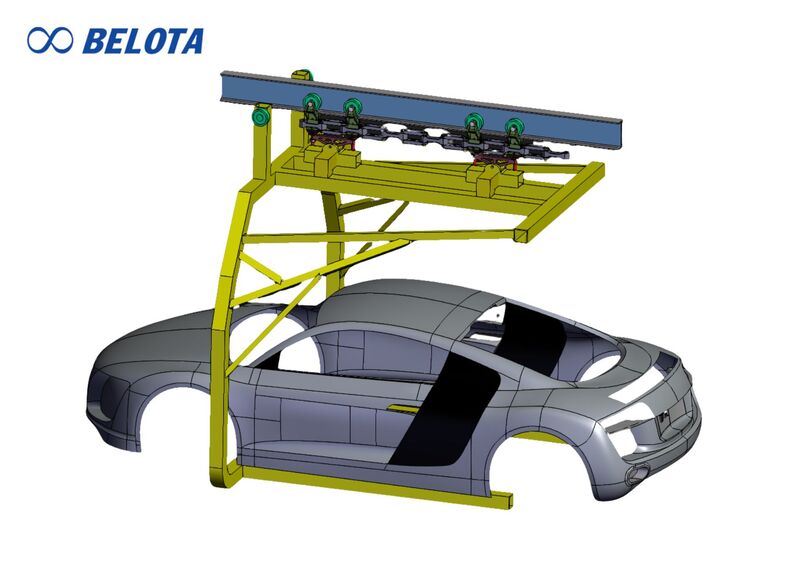
- Automotive and mechanical engineering: Suspending and transporting vehicle frames, bodies, and metal components through assembly, painting, and inspection processes.
- Structural steel manufacturing: Moving steel beams, metal frames, and large fabricated components between production areas.
- Industrial painting: Conveying metal doors, steel frames, machine housings, and other products that need to be suspended for spray painting and drying.
- Industrial equipment manufacturing: Moving electrical cabinet housings, machinery, and mechanical components through machining and finishing processes.
- Industrial assembly lines: Feeding materials and transporting component assemblies between workstations, reducing manual lifting and handling.
Maintenance and Repair of I-Beam Overhead Chain Conveyors
Regular maintenance helps minimize wear, reduce the risk of production downtime, and extend equipment service life. Recommended maintenance tasks include:
- Inspecting the conveyor chain: Check chain links, connecting pins, and signs of elongation, wear, or deformation.
- Lubricating moving components: Apply lubricant to the chain, rollers, and other moving parts according to technical recommendations.
- Inspecting the track: Ensure the track is free from deformation, loose connections, and obstructions.
- Checking the drive unit: Monitor the motor, gearbox, sprockets, and other power transmission components.
- Inspecting hanging hooks: Ensure hooks and carriers are free from cracks, bending, and loose connections.
- Checking safety devices: Make sure emergency stop systems and overload protection devices function properly.
Belota - Industrial Conveyor Solutions Provider
Belota Co., Ltd. provides conveyor systems and power transmission equipment for industrial manufacturing applications. For I-beam overhead chain conveyor systems, businesses should assess the factory layout, determine product loads and conveying speeds, and define the transportation route before selecting a suitable design.
Based on actual operating requirements, Belota provides consultation on conveyor chain configurations, track structures, hanging carriers, and drive units. Each solution is developed according to product characteristics and production processes, with the aim of ensuring stable conveying, saving floor space, and simplifying maintenance.
For consultation on I-beam overhead chain conveyors or other industrial conveyor systems, contact Belota for technical support and a suitable solution.
Conclusion
An I-beam overhead chain conveyor is an overhead conveying solution suitable for factories that need to transport heavy products through multiple production stages. Its robust I-beam steel track, combined with a conveyor chain and hanging carriers, provides flexible material handling, saves floor space, and supports production automation. To ensure long-term operating efficiency, businesses should select the appropriate load capacity, speed, materials, and drive configuration based on actual operating conditions.