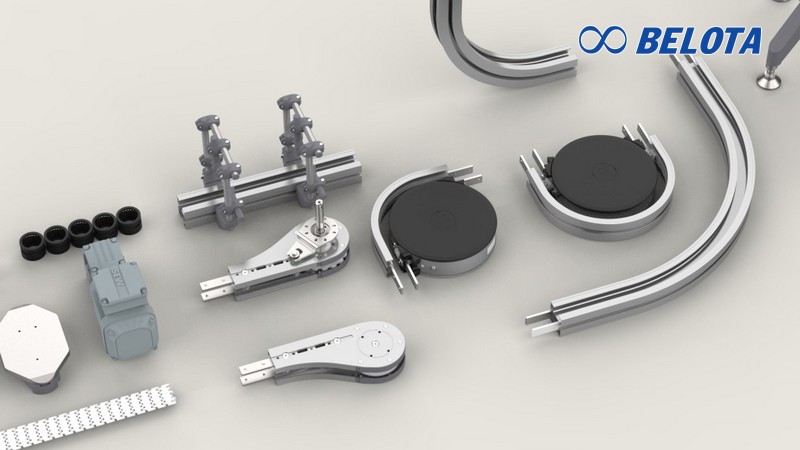


Heat-resistant plastic conveyor belts are used in conveyor systems operating in high-temperature, low-temperature, or freezing environments. Depending on operating conditions, the belt can be manufactured from POM, PE, PP, PA/Nylon, PBT, and other engineering plastics with different temperature resistance properties. This article by Belota explains the main types of heat-resistant plastic conveyor belts, temperature ranges, materials, applications, and factors affecting their price.
What Is a Heat-Resistant Plastic Conveyor Belt?
A heat-resistant plastic conveyor belt is a modular conveyor belt made from engineering plastics that can withstand either high or low operating temperatures. Compared with standard plastic conveyor belts, this type of belt uses specially selected materials to minimize deformation and loss of mechanical properties when operating under demanding temperature conditions.
Depending on the application, the belt can be manufactured from POM, PP, PE, PA/Nylon, PBT, and other engineering plastic compounds. For example, PE is commonly selected for low-temperature and freezing applications, while PP, PA/Nylon, and specialized engineering plastics are more suitable for higher-temperature applications.
Materials Used for Heat-Resistant Plastic Conveyor Belts
Material selection directly affects the operating temperature, durability, load capacity, and service life of a plastic conveyor belt.
Common materials include:
- POM - Polyoxymethylene: Suitable for a wide range of industrial and food-processing applications, with a typical temperature range down to approximately -40°C and up to 90°C, depending on the specific compound and operating conditions.
- PP - Polypropylene: Offers higher temperature resistance than some conventional plastics and is suitable for applications requiring lightweight materials and elevated operating temperatures.
- PE - Polyethylene: Provides good low-temperature performance and is commonly selected for cooling and freezing applications. The actual temperature range depends on the specific PE compound.
- PA/Nylon - Polyamide: Provides good thermal and mechanical performance and is suitable for selected high-temperature applications. Reinforced or heat-stabilized PA grades can handle more demanding operating conditions.
- PBT - Polyester: An engineering material with good temperature resistance, suitable for selected specialized industrial applications.
Note: The temperature ranges above are reference values for the materials. The actual operating temperature of a conveyor belt also depends on the belt series, belt code, load, belt speed, exposure time, and operating environment.
Technical Specifications of Heat-Resistant Plastic Conveyor Belts
- Belt material: POM, PE, PP, PA/Nylon, PBT, and specialized engineering plastics.
- Operating temperature: Approximately -50°C to 180°C, depending on the material and belt code.
- Peak temperature: Some specialized belt materials can withstand higher short-term peak temperatures.
- Belt pitch: Common pitches range from 12.7 to 63.5 mm, depending on the belt series.
- Belt width: Manufactured according to conveyor dimensions and actual application requirements.
- Belt surface: Closed, open, textured, cleated, and other specialized configurations.
- Running style: Straight-running or side-flexing, depending on the conveyor design.
- Load capacity: Depends on the material, belt width, speed, temperature, and conveyor configuration.
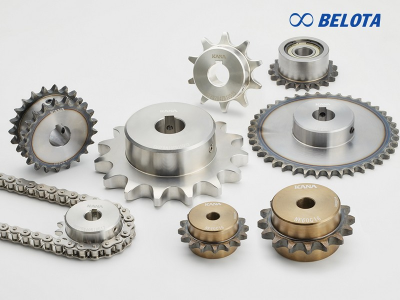
- Drive sprockets: Selected to match the belt pitch and belt code.
- Belt pins: Pin diameter and material vary depending on the modular belt design.
- Applications: Freezing, cooling, drying, food processing, and industrial conveyor systems requiring specific temperature resistance.
Types of Heat-Resistant Plastic Conveyor Belts
Heat-resistant plastic conveyor belts should be selected according to the temperature level, exposure time, load, and operating conditions of each conveyor system. Not all plastic conveyor belts have the same temperature resistance. Even belts made from the same material may have different temperature and load limitations depending on their specific belt code.
Low-Temperature Plastic Conveyor Belts
Low-temperature plastic conveyor belts are suitable for cooling, freezing, and frozen-food processing lines. Materials such as PE and POM are commonly selected for low-temperature applications.
PE can operate at approximately -50°C to 80°C, while POM generally has a temperature range of approximately -40°C to 90°C according to Ammeraal Beltech material data.
PE offers good low-temperature performance and impact resistance, making it suitable for freezing applications. POM provides higher tensile strength and good wear resistance, making it a suitable choice when the conveyor requires both low-temperature performance and mechanical stability.
High-Temperature Plastic Conveyor Belts
For conveyor systems operating at higher temperatures, PP, PA/Nylon, PBT, or specialized engineering plastics can be selected depending on the application.
PP has a reference temperature range of approximately 1°C to 104°C, while PA6.6 can operate from approximately -40°C to 140°C. Heat-stabilized PA6.6-H can reach approximately 160°C, while glass-filled and heat-stabilized PA6.6-GFH can reach approximately 180°C under the specified material conditions.
Some specialized modular belts are designed for even higher temperatures. For example, Ammeraal Beltech's uni OWL uses a special material that can operate at up to 180°C and withstand peak temperatures of up to approximately 230°C.
Plastic Conveyor Belts for Drying, Cooling, and Food Processing Lines
In addition to temperature-based classification, some modular belts are specifically designed for cooling, freezing, drying, or proofing applications in the food-processing industry.
For example, the uni M-TTB is designed for food-processing applications such as cooling, freezing, drying, and proofing. It can be used with standard POM-D and PP materials depending on the operating conditions.
When selecting a conveyor belt for temperature-sensitive applications, it is important to determine the actual product temperature, ambient temperature, exposure time, load, and belt speed. These factors directly affect belt durability and operating stability.
Reference Temperature Ranges of Selected Plastic Materials
Based on manufacturer material data, the following temperature ranges can be used as a reference for plastic conveyor belt material selection:
| Material | Reference Temperature Range |
|---|---|
| POM | -40 to 90°C |
| POM DK – Wear-resistant polyoxymethylene | -40 to 90°C |
| POM DAS/NLAS – Antistatic polyoxymethylene | -40 to 90°C |
| POM EC – Electrically conductive polyoxymethylene | -40 to 90°C |
| POM MD – Metal-detectable polyoxymethylene | -40 to 90°C |
| PP – Polypropylene | 1 to 104°C |
| PPHW – Hot-water polypropylene | 1 to 104°C |
| PE – Polyethylene | -50 to 80°C |
| PBT – Polyester | -40 to 100°C |
| PBT GR – Glass-reinforced polyester | -40 to 125°C |
| PA6 – Polyamide | -40 to 120°C |
| PA6.6 – Polyamide | -40 to 140°C |
| PA6.6 H – Heat-stabilized polyamide | -40 to 160°C |
| PA6.6 GFH – Glass-filled and heat-stabilized polyamide | -40 to 180°C |
| PVDF – Polyvinylidene fluoride | -40 to 100°C |
| PC – Polycarbonate | -20 to 130°C |
The values above are intended as a starting point for material selection. For actual conveyor design, the specific belt code, material grade, load, speed, and operating conditions should always be checked against the manufacturer's technical data.
Advantages of Heat-Resistant Plastic Conveyor Belts
When the correct material and belt configuration are selected, heat-resistant plastic conveyor belts offer several advantages:
- Suitable for low- or high-temperature applications depending on the material.
- Available in POM, PE, PP, PA/Nylon, and other engineering plastics.
- Modular construction makes inspection, maintenance, repair, and replacement easier.
- Available in various belt pitches and surface configurations.
- Provides stable operation in continuous production lines when correctly specified.
- Suitable for food processing, agriculture, seafood processing, and industrial applications.
- Can be customized according to conveyor dimensions and application requirements.
Applications of Heat-Resistant Plastic Conveyor Belts
Due to their ability to operate under specific temperature conditions, heat-resistant plastic conveyor belts are used across various industries:
- Food processing: Used to transport products through baking, cooling, drying, freezing, and other processing stages.
- Bakeries: Used to transport baked products after leaving the oven and during cooling processes.
- Cashew processing: Used in cashew drying and processing lines.
- Meat, fish, and seafood processing: Suitable for freezing, cooling, and product transportation in low-temperature environments.
- Tire manufacturing: Can be used for material transportation and cooling applications after the forming process.
- Packaging lines: Certain heat-related packaging applications, including shrink film, block packaging, and packaging treatment, can use suitable modular belt configurations.
Heat-Resistant Plastic Conveyor Belt Price
The price of a heat-resistant plastic conveyor belt varies depending on its configuration and actual operating requirements. Key factors affecting the price include:
- Brand: Habasit, Movex, Uni-Chains, and other conveyor belt brands may have different price levels.
- Belt material: POM, PE, PP, PA/Nylon, and specialized engineering plastics have different costs.
- Belt code: Each belt code has its own construction, temperature resistance, load capacity, and application range.
- Belt pitch: Common pitches such as 12.7 mm, 25.4 mm, 38.1 mm, and 50.8 mm may have different prices.
- Width and length: Larger belt dimensions require more material and therefore affect the total cost.
- Operating temperature: Belts used for deep-freezing or high-temperature applications may require specialized materials and therefore cost more than standard plastic belts.
- Conveyed load: Higher loads may require a stronger belt, sprockets, wear strips, and conveyor structure.
- Order quantity: The order quantity may affect the unit price of the belt.
- System configuration: When purchasing a complete conveyor system, the total cost may also include the conveyor frame, drive sprockets, rollers, motor, controls, and accessories.
- Custom fabrication: Cutting the belt to size, assembly, belt joining, conveyor frame fabrication, and on-site installation may be included depending on the order requirements.
For an accurate quotation, customers should provide the belt code or information about the operating temperature, belt dimensions, load, speed, and actual application. Belota can recommend a suitable belt material and configuration and provide a quotation based on the specific conveyor requirements.
Conclusion
Heat-resistant plastic conveyor belts are a suitable solution for conveyor systems operating under high- or low-temperature conditions, including freezing, drying, baking, and cooling processes. With material options such as POM, PE, PP, and PA/Nylon, the belt can be selected according to the actual operating environment and technical requirements. Belota supplies heat-resistant modular conveyor belts from brands such as Habasit and Movex, as well as other modular belt solutions according to specific application requirements. We support material selection, belt-code selection, conveyor design, supply, installation, and technical consultation to help businesses choose the right conveyor belt for their temperature, load, and production-line requirements.