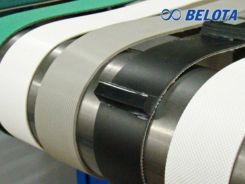
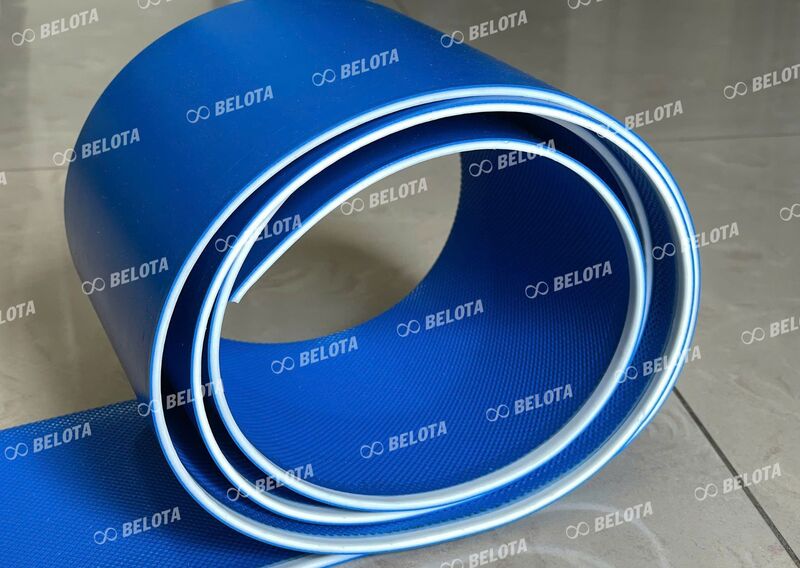
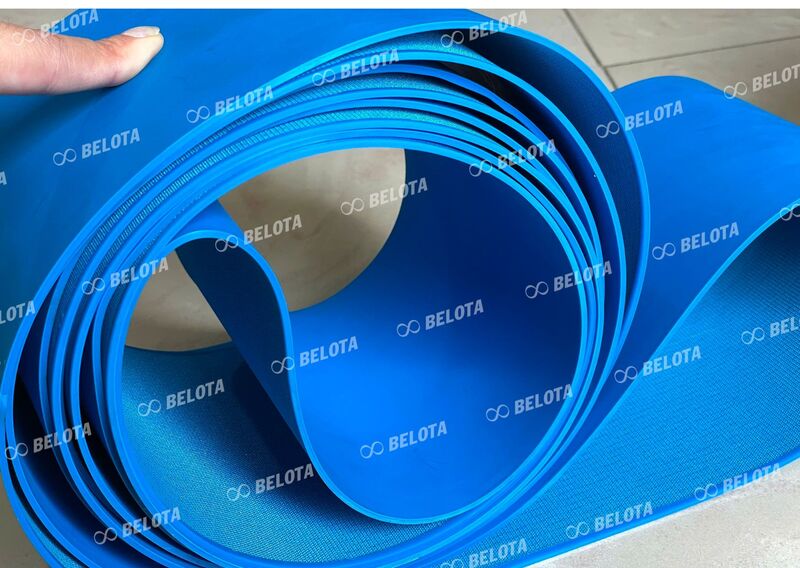
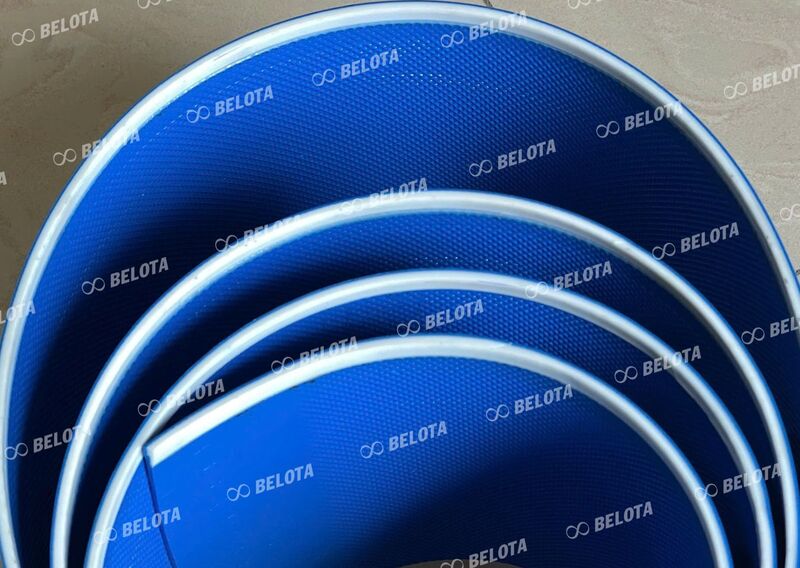
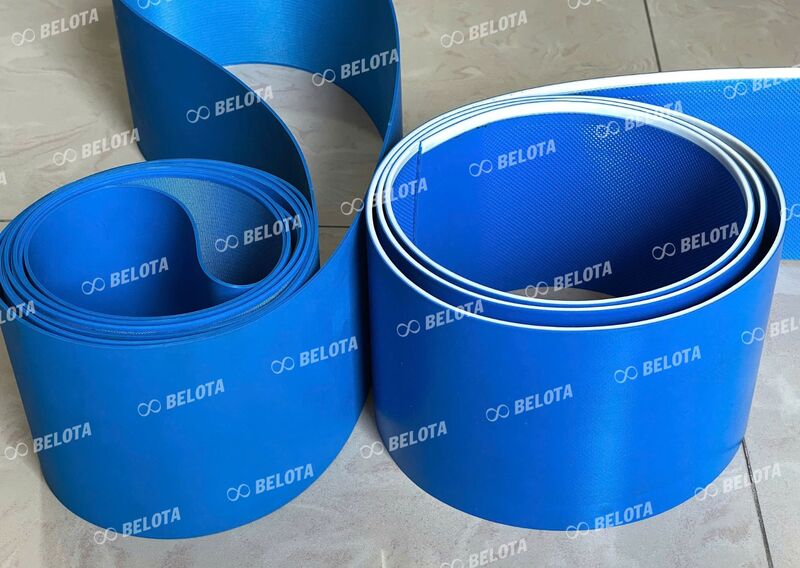
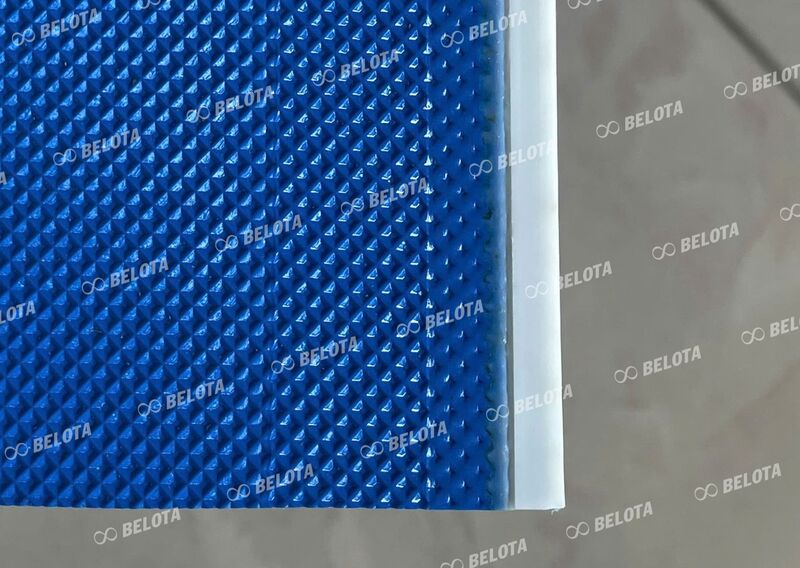
Edge-finished conveyor belts for the food industry are processed along the belt edges after cutting to create a clean, finished edge, reduce fraying, and minimize the potential for food particles to accumulate. With European edge heat-sealing technology, the belt edges can be finished with either a rounded or square profile, making them suitable for various PU and PVC belt configurations used in food processing lines. However, edge finishing is only one part of the overall technical requirements; the belt material, surface finish, and hygiene requirements should still be selected according to the specific application.
What Is an Edge-Finished Conveyor Belt for the Food Industry?
An edge-finished conveyor belt for the food industry is a conveyor belt whose edges are processed with a rounded profile or sealed edge to reduce edge peeling, fraying, and the accumulation of conveyed materials during operation. These belts are commonly considered for food processing, packaging, and conveying lines where hygiene and ease of cleaning are important.
Compared with a belt with a conventional cut edge, an edge-finished conveyor belt has a cleaner and more refined edge, reducing sharp areas or exposed sections where food particles may accumulate or become difficult to clean. Depending on the conveyor design, the belt can also be combined with other requirements such as food-grade PU/PVC materials, anti-stick surfaces, profiles, or perforations.
Why Use Edge-Finished Conveyor Belts in Food Processing Lines?
Cost optimization: Instead of using a solid PU conveyor belt or a belt with a specialized construction that may have a higher cost, a suitable PU/PVC belt can be selected and edge-finished according to the actual application requirements.
- Reduced edge fraying: A properly finished belt edge helps reduce the risk of reinforcement fibers being pulled, rubbed, or gradually frayed during continuous operation.
- Easier cleaning and inspection: A cleanly finished edge makes the belt easier to clean and inspect, while allowing operators to identify early signs of fraying, cracking, or edge damage.
- Reduced edge wear: Proper edge finishing can help minimize the effects of repeated contact between the belt edge and support rails, guide components, or other machine parts.
- Better finishing quality: Suitable for PU and PVC belts manufactured to custom dimensions, helping create more uniform edges and meet the technical requirements of individual orders.
Note: Edge finishing does not prevent belt mistracking. If the belt runs off-center, the conveyor rollers, belt tension, frame alignment, tracking system, and installation conditions should be checked.
Basic Technical Specifications of Edge-Finished Conveyor Belts for the Food Industry
- Belt material: PU, PVC, or other food-grade conveyor belt materials.
- Edge material: The same material as the belt or another material suitable for food-contact applications.
- Edge profile: Available with rounded edges or square edges.
- Edge finishing method: Heat-sealing using European technology.
- Belt width: Manufactured according to the actual conveyor and frame dimensions.
- Belt length: Cut and processed according to the required length; available as an open belt or endless belt.
- Belt thickness: Selected according to the load, pulley diameter, and operating conditions.
- Surface: Smooth or textured, depending on the type of product being conveyed.
- Color: Common options include white, green, blue, and other colors depending on the belt material and application requirements.
When Should You Choose an Edge-Finished Conveyor Belt for a Food Processing Line?
Not every conveyor belt used in the food industry requires edge finishing. This process is worth considering when the belt construction may expose reinforcement fibers after cutting or when the production line has strict requirements for edge condition and hygiene.
Common situations include:
- Belts with reinforcement layers that may expose fibers after cutting: Edge finishing helps reduce fraying during operation.
- Belts that are cleaned frequently: A properly finished edge makes inspection and cleaning more convenient.
- Production lines with fiber and foreign-material control requirements: Edge finishing helps reduce one potential source of loose fibers from the belt.
- Custom-sized conveyor belts: Rounded or square edges can be selected according to the conveyor design and order requirements.
- Edges that frequently contact machine components: The finishing method should be selected to minimize edge fraying or uneven wear during operation.
Belota Manufactures Edge-Finished Conveyor Belts for the Food Industry
Belota operates its own processing workshop and applies European conveyor belt processing technology together with processing methods adapted to different belt materials. Technicians are trained in conveyor belt edge-finishing techniques, helping achieve clean, consistent edges while minimizing the impact on the belt structure.
For food-processing conveyor belts, Belota can process the edges of various PU and PVC belts and other suitable configurations. Depending on the conveyor requirements, the belt edge can be finished with either a rounded or square profile. Before processing, technicians evaluate the belt material, construction, and thickness to determine a suitable finishing method and minimize edge fraying or damage to the belt coating.
In addition to edge finishing, Belota's workshop can perform other belt-processing operations such as cutting to width, belt splicing, T-profile installation, and guide-profile installation. These processes can be handled together within the same order, making the service suitable for conveyor belts manufactured to custom dimensions and configurations.
Conclusion
Edge-finished conveyor belts for the food industry are suitable for production lines that require better control of belt-edge condition, reduced fraying, and convenient cleaning and inspection. Depending on the belt construction and conveyor design, the edges can be processed with a rounded or square profile using an appropriate method. Belota applies European conveyor belt processing technology and combines it with trained technicians specializing in edge finishing to process PU and PVC conveyor belts according to the actual dimensions and requirements of each production line.