Butterfly conveyors are used in warehouses, logistics centers, and loading areas to help move goods into and out of truck trailers. Depending on the design, their foldable frame and height-adjustment mechanism can reduce manual handling while making the equipment easier to reposition or fold away after use. So, how does a butterfly conveyor work, what components does it consist of, and what functions do these parts perform? Let’s explore its structure in detail with Belota.
What Is a Butterfly Conveyor? Key Design Features
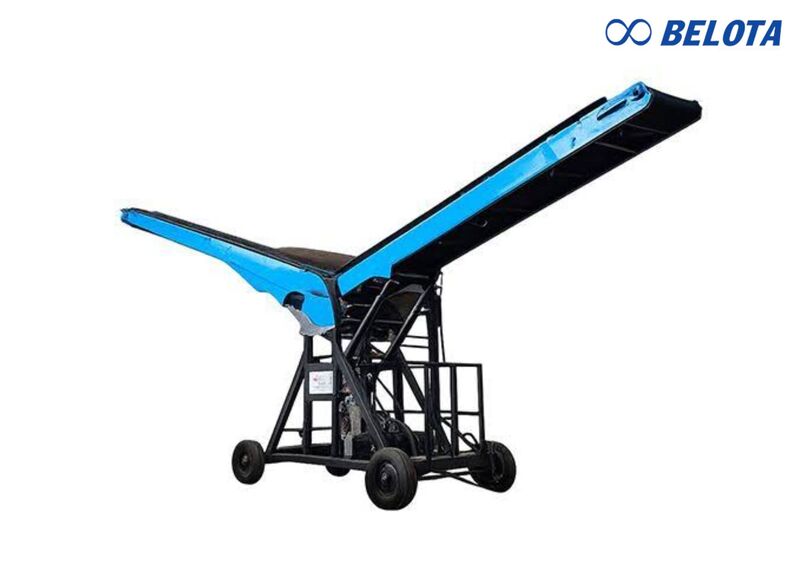
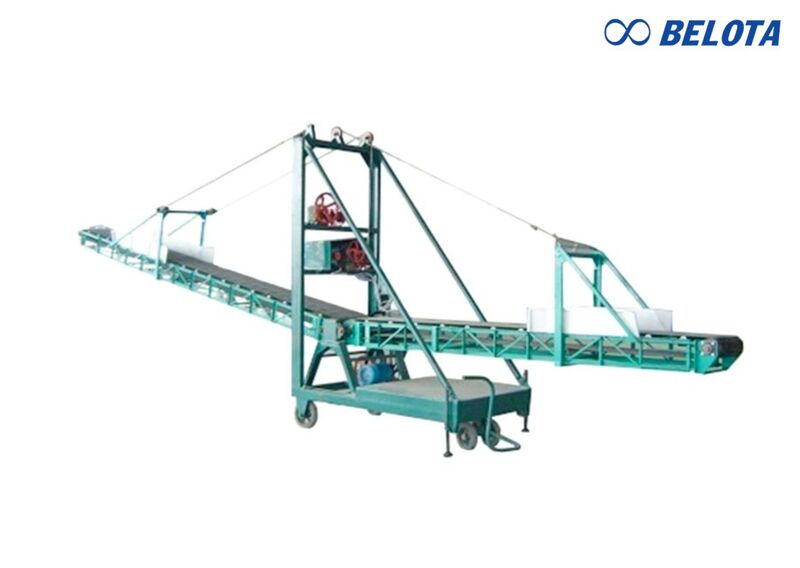
A butterfly conveyor is a type of conveyor system featuring a frame divided into multiple sections connected by folding joints. During operation, the sections are unfolded to create a conveying path. After use, the frame can be folded to reduce the space required for storage.
The name “butterfly conveyor” comes from the shape formed by its frame sections when opened or folded. Depending on the design, the equipment may be fitted with a lifting mechanism, mobility wheels, or a drive system for position adjustment.
Key design features include:
- Flexible folding frame: The conveying path can be adjusted according to the equipment’s structural design.
- Access to truck loading areas: The conveyor’s end section can be positioned to suit loading and unloading requirements.
- Space-saving storage: The equipment can be folded when not in use, making it suitable for warehouses with limited space.
- Support for mechanized handling: It reduces manual lifting and carrying, helping shorten loading and unloading times when properly configured.
Structure of a Butterfly Conveyor
Conveyor Frame and Folding Joints
The frame is typically manufactured from square steel tubing or structural steel to withstand loads during operation. The frame sections are connected by folding joints, which must be sufficiently robust to minimize vibration and misalignment after repeated use. Locking pins also help secure the sections in the correct position during operation.
Conveyor Belt, Rollers, and Drive Pulleys
The conveyor belt is the component that directly contacts the goods. Depending on the operating conditions, suitable belt options include:
- Plain rubber conveyor belt: Suitable for transporting cardboard boxes and packages with flat bottoms.
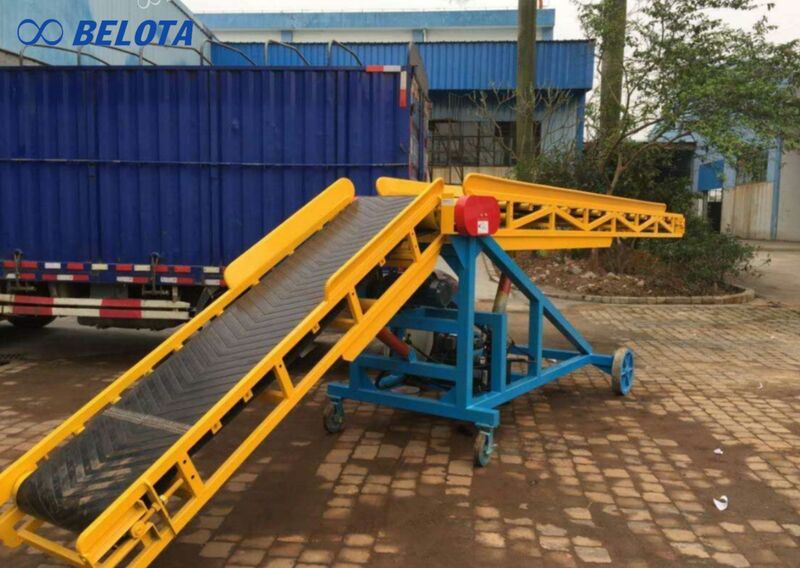
- Chevron rubber conveyor belt: Provides additional grip when conveying goods along inclined sections.
Rollers or support surfaces carry the belt and help maintain stable movement. The drive pulley transmits the driving force to the belt, while the tail pulley helps guide the belt and maintain proper tension.
Motor and Lifting Mechanism
The geared motor provides the driving force for the conveyor belt. Its power rating must be suitable for the required load and conveying capacity. Depending on the design, the conveyor may use hydraulic cylinders or a winch system to raise, lower, and adjust its height.
Control and Safety Systems
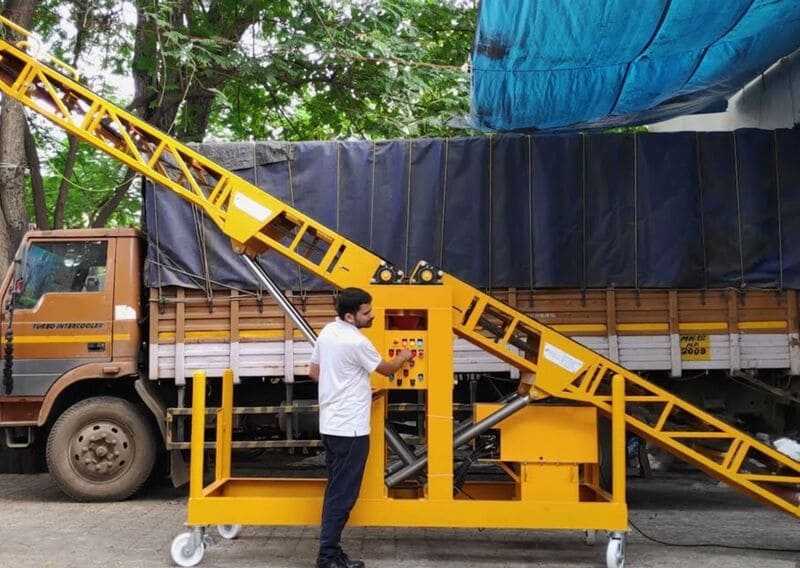
The control system typically includes an electrical control cabinet and start/stop buttons. A variable frequency drive (VFD) may also be installed to adjust belt speed according to operational requirements.
Essential safety features include:
- Emergency stop buttons positioned for easy access.
- Guards around folding joints and other potential pinch points.
- Covers for pulleys, chains, and belt-drive components.
Secure locking mechanisms to hold the frame in position during lifting, lowering, or folding.
Practical Applications of Butterfly Conveyors in Warehousing and Logistics
- Loading and unloading at warehouses and logistics centers: Helps transport cartons and packages between staging areas and storage zones, reducing manual handling.
- Loading and unloading trucks and containers: Adjustable height and inclination, when available, allow the conveyor end to reach the vehicle floor more conveniently for loading or unloading goods.
- Transporting bagged goods and industrial materials: Suitable for agricultural produce, cement, and fertilizer bags when the belt provides adequate grip and the structure meets the required load capacity.
- Connecting to existing conveyor systems: Acts as a transfer section between a vehicle and a fixed conveyor line, moving goods to sorting or packaging areas without requiring a complete production-line redesign.
Advantages and Limitations of Butterfly Conveyors
Advantages During Operation
- Improved loading and unloading productivity: Continuous material movement can reduce waiting time during receiving and dispatch operations.
- Reduced manual labor: Limits manual lifting and carrying, helping reduce the risk of work-related injuries.
- Flexible positioning: The angle or height can be adjusted when the equipment is designed with the appropriate mechanisms.
- Space-saving design: Some models allow the frame to be folded when not in use.
Factors to Consider
- Operating space: Sufficient clearance is required to unfold the frame, move the equipment, and access vehicles.
- Maintenance: Folding joints, locking pins, the conveyor belt, and the lifting mechanism should be inspected regularly.
- Initial investment: Folding structures and adjustment mechanisms may increase the cost compared with fixed conveyors serving similar functions.
- Conveying capacity: The required load, package dimensions, and operating incline should be determined before selecting the equipment.
Butterfly Conveyor vs. Fixed Conveyor
| Criteria | Butterfly Conveyor | Fixed Conveyor |
|---|---|---|
| Mobility | Depending on the design, it may be foldable or movable. | Generally installed in a fixed position. |
| Height Adjustment | Available on models equipped with a lifting mechanism. | Depends on the installation structure. |
| Initial Investment | Often higher due to a more complex structure. | Often lower for simple conveying lines. |
| Maintenance | Requires additional inspection of folding joints and locking pins. | Generally has a simpler structure. |
| Applications | Loading and unloading at multiple locations. | Material transport along a stable route. |
The right choice depends on loading and unloading frequency, warehouse layout, and how often the loading position changes.
Frequently Asked Questions
How Does the Lifting System of a Butterfly Conveyor Work?
Depending on the design, a butterfly conveyor may use one of the following lifting mechanisms:
- Hydraulic cylinder: Generates lifting force and is suitable for equipment designed to adjust height under substantial loads.
- Cable or chain winch: Raises and lowers the conveyor through a pulling mechanism. A suitable locking system is required for safety.
- Screw mechanism: Typically used for equipment with load capacities and adjustment ranges suited to the mechanical design.
Is Butterfly Conveyor Maintenance Expensive?
Maintenance costs depend on the equipment’s structure, usage frequency, and operating conditions. In addition to the belt, motor, and rollers, businesses should inspect the folding joints, locking pins, and lifting mechanism.
Can a Butterfly Conveyor Transport Goods in Both Directions?
Bidirectional conveying depends on the motor, control system, and drive configuration. If the conveyor needs to support both loading and unloading operations, this requirement should be specified at the design stage so the appropriate configuration can be selected.
Belota Supplies Butterfly Conveyors at Competitive Prices
Belota Co., Ltd. provides consultation and custom fabrication of butterfly conveyors based on actual operating requirements. The equipment can be designed to suit the type of goods, load capacity, and loading conditions in warehouses, factories, truck loading areas, or containers. Pricing depends on the conveyor dimensions, structural design, and lifting requirements.
Contact Belota via hotline/Zalo at 0917 657 946 for technical consultation and a quotation tailored to your requirements.