After cutting, stamping, or machining metal, burrs, sharp edges, oxide layers, and residual debris often remain on the workpiece, making subsequent finishing processes more difficult and affecting the surface quality of the finished product. A metal deburring machine conveyor belt is used to continuously transport workpieces through the deburring system, helping maintain a stable product flow during grinding and cleaning. In this article, let’s explore the characteristics, construction, and applications of this conveyor belt solution with Belota.
What Is a Metal Deburring Machine Conveyor Belt?
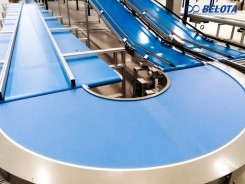
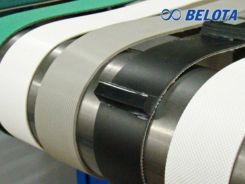
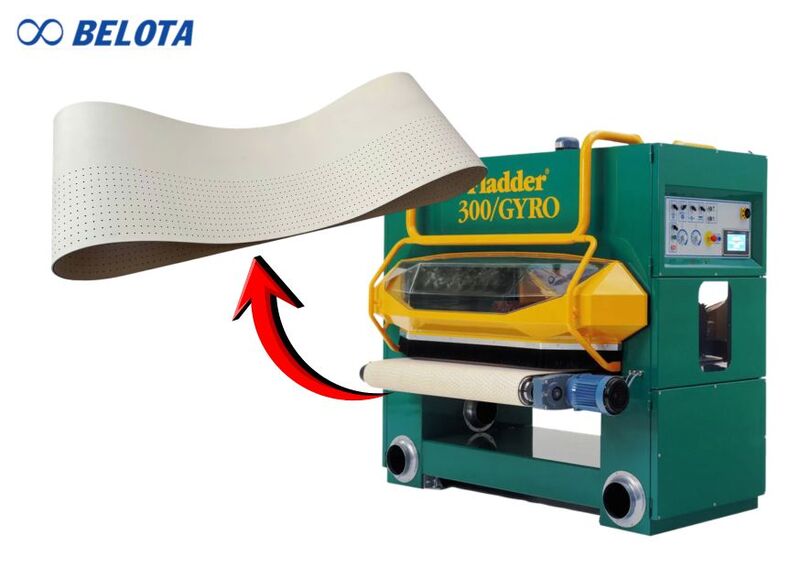
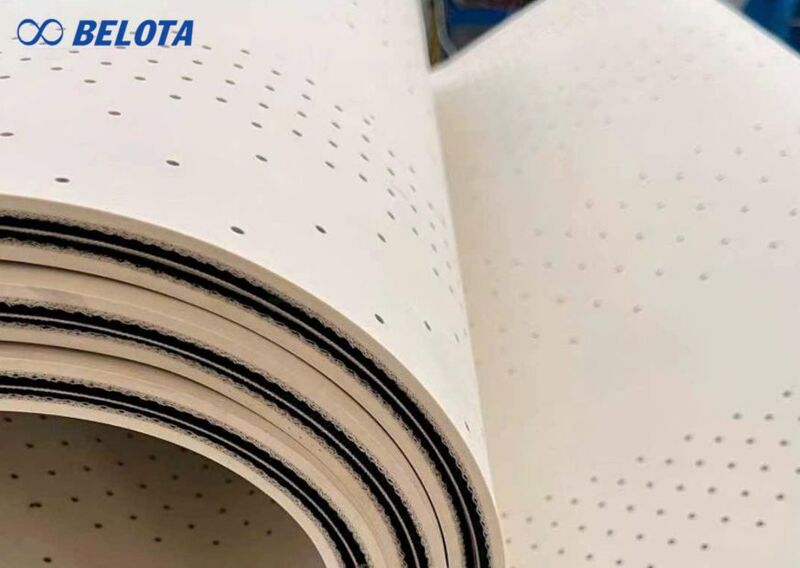
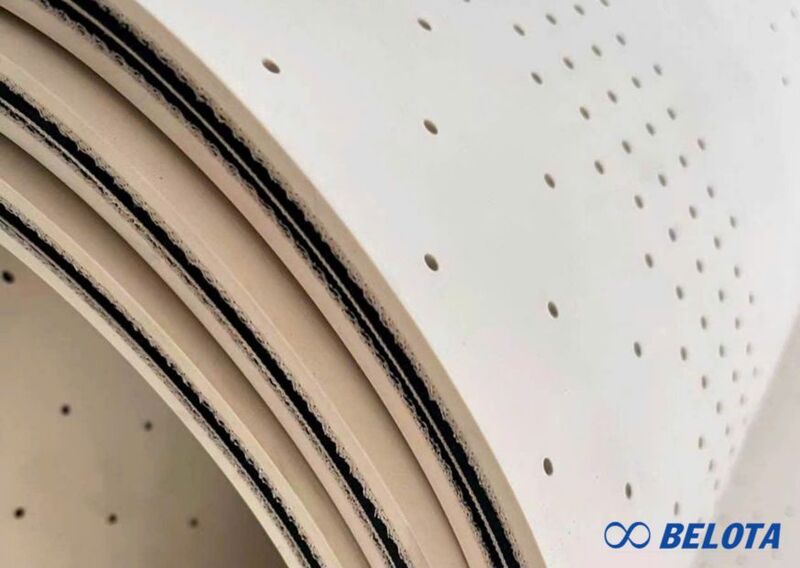
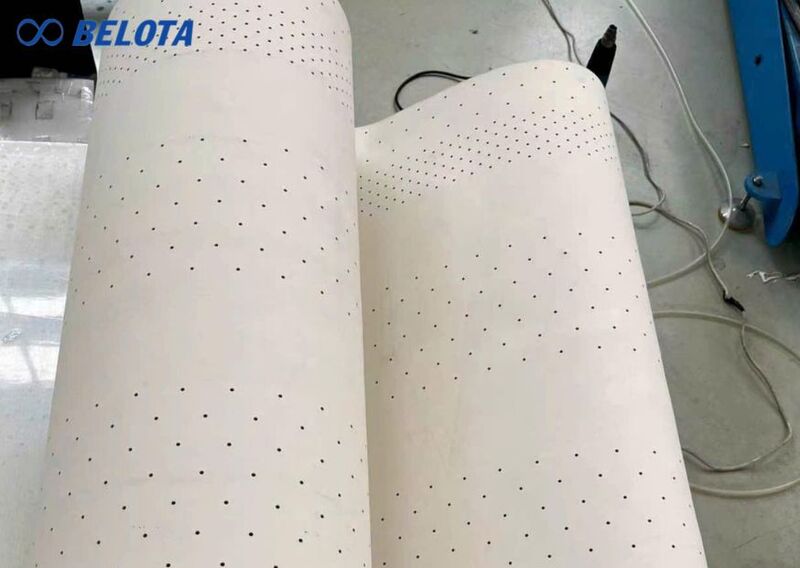
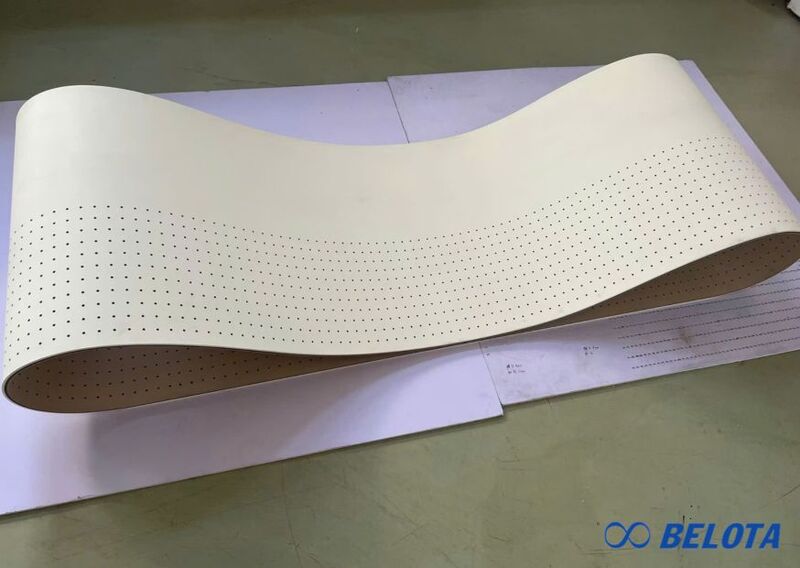
A metal deburring machine conveyor belt is a specialized conveyor belt designed to transport metal workpieces and components through deburring machines, supporting the removal of burrs, sharp edges, and excess metal generated during cutting or machining. The belt operates continuously under friction and impact from metal workpieces, so it requires high wear resistance, load-bearing capacity, and durability.
It is an important component that directly affects the processing stability, surface quality, and productivity of the entire metalworking line.
Operating Principle of a Metal Deburring Machine Conveyor Belt
A conveyor belt for metal grinding machines operates on a continuous conveying principle, allowing workpieces to move steadily through different processing units for burr removal, surface cleaning, and finishing. The operating process generally includes the following steps:
- Workpiece loading: The operator places metal sheets or machined components onto the conveyor belt surface.
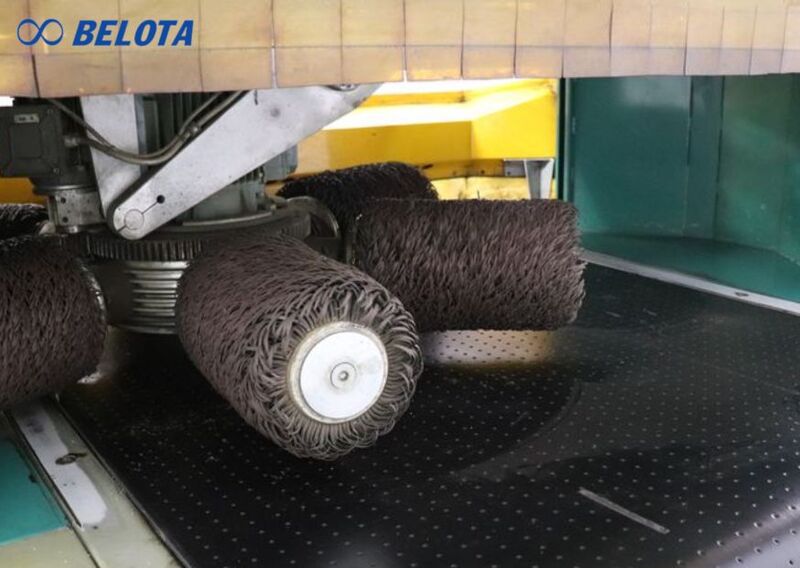
- Workpiece holding: For thin or small workpieces, a vacuum table or magnetic table can hold the products securely and minimize movement during processing.
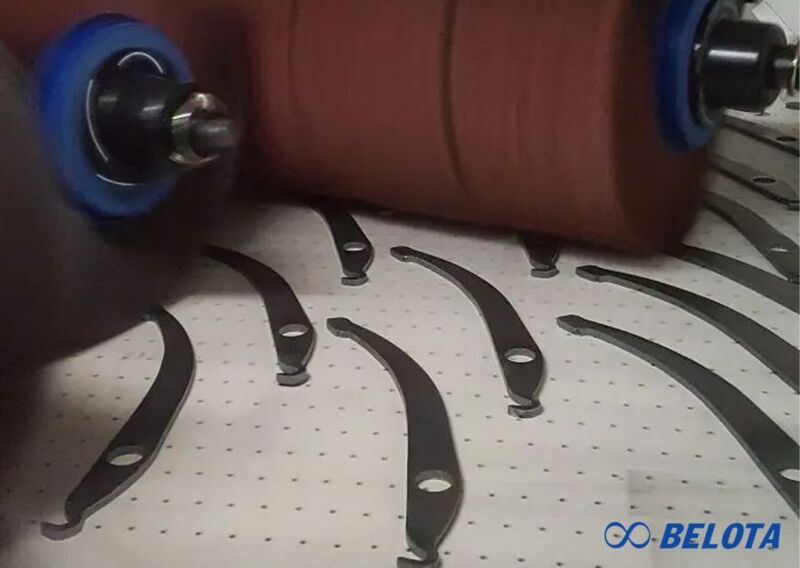
- Surface processing: The conveyor transports the workpieces through a sequence of processing units, such as wide belt sanding, deburring brushes, two-way rotating brushes, Scotch-Brite wheels, polishing units, and cleaning units, to remove burrs and sharp edges and achieve a more uniform surface finish.
- Product discharge: After processing is completed, the conveyor transports the finished products to the machine outlet for inspection, assembly, or further processing.
Key Advantages of a Deburring Machine Conveyor Belt
- High wear resistance: The conveyor belt has passed the ISO 4649:2017 standard test, providing resistance to continuous friction from metal workpieces and abrasive materials during deburring.
- High impact resistance: Suitable for transporting metal components with sharp edges, burrs, or machining debris.
- Stable operation: Maintains a consistent conveying speed, allowing workpieces to pass continuously and uniformly through the deburring area.
- Good load-bearing capacity: Suitable for transporting metal workpieces and components with different loads.
- Long service life: The conveyor belt has passed an accelerated aging test, achieving a minimum expected service life of 5 years under normal operating conditions.
- Easy cleaning and maintenance: Can be cleaned with clean water, alcohol, or specialized cleaning agents. Avoid corrosive solvents.
- Cutting oil resistance: Helps minimize the effects of cutting oils, maintaining belt durability and stable operation.
- Chemical resistance: Resistant to many chemicals commonly used in metalworking processes.
- Good heat resistance: Provides stable operation in environments with elevated working temperatures.
- High grip: Helps keep workpieces stable and reduces slipping during processing.
Key advantages of a deburring machine conveyor belt
| Specification | Value |
|---|---|
| Material | Rubber / Polyurethane / Nylon |
| Color | Black / White / Green / Custom |
| Belt width | 10 – 2,000 mm |
| Belt thickness | 2 – 15 mm |
| Length | Custom-made |
| Maximum load capacity | Up to 50 kg/m |
| Working temperature | -20°C to 80°C |
| Conveying speed | 0.5 – 10 m/min |
| Workpiece thickness | 0.5 – 120 mm |
| Splicing method | Endless or mechanical splice |
| Tensile strength | 100 – 500 N/mm |
| Oil resistance | Available |
| Antistatic | Optional |
| Compatible machines | Metal grinding machines, wood sanding machines, stone polishing machines, etc. |
Applications of Conveyor Belts in Deburring Machines
Conveyor belts are widely used in metal processing and surface finishing systems, providing stable workpiece transportation, improving processing quality, and increasing production efficiency. They are suitable for various types of machines, including:
- Metal deburring machines: Transport components after cutting, stamping, or machining to remove burrs and sharp edges.
- Metal edge grinding machines: Convey workpieces through the grinding area to remove sharp edges and achieve a more uniform finish.
- Sanding machines: Transport workpieces through sanding and surface treatment processes.
- Polishing machines: Convey metal components through surface polishing systems.
- Metal processing lines: Connect cutting, grinding, deburring, and finishing processes to maintain a continuous product flow.
- Wood sanding machines and stone polishing machines: Suitable conveyor belts can be used to transport materials through surface treatment processes.
Maintenance Guide to Extend the Service Life
During operation, metal dust, abrasive particles, and sharp-edged workpieces can accumulate on the conveyor belt surface, causing wear and affecting the stable operation of the system. Regular maintenance helps prevent damage, maintain conveying performance, and extend belt service life. Recommended maintenance tasks include:
- Clean metal dust and abrasive particles with alcohol, clean water, or specialized cleaning agents after each working shift.
- Check for belt misalignment and make adjustments promptly.
- Adjust belt tension according to the manufacturer's recommendations.
- Inspect pulleys, rollers, and transmission components.
- Replace the conveyor belt when the surface becomes worn, torn, or cracked.
- Check the vacuum system or magnetic table to ensure proper workpiece holding.
Belota - Supplier of Conveyor Belts for Metal Deburring Machines
Belota specializes in supplying replacement conveyor belts and custom-fabricated belts for deburring machines, wide-belt sanding machines, and metal surface finishing machines. We offer a range of materials, including PU, PVC, rubber, NBR, and multi-layer reinforced conveyor belts, suitable for different machine brands and operating conditions.
Belota provides:
- Consultation on selecting the appropriate conveyor belt for each machine.
- Custom fabrication according to required dimensions and technical specifications.
- Endless or mechanical belt splicing.
- Supply of accessories, replacement, and installation services.
- Prompt technical support nationwide.
Conclusion
A metal deburring machine conveyor belt is an important component that directly affects process stability, product surface quality, and production efficiency. Selecting the right conveyor belt with high wear resistance, oil resistance, good load-bearing capacity, and compatibility with the specific deburring process can help optimize production efficiency and reduce operating costs. If your company is looking for replacement conveyor belts or conveyor belt solutions for laser, plasma, oxy-fuel cutting, stamping, or wide-belt sanding machines, Belota is ready to provide technical consultation and high-quality, custom-fabricated conveyor belts to meet a wide range of metalworking applications.