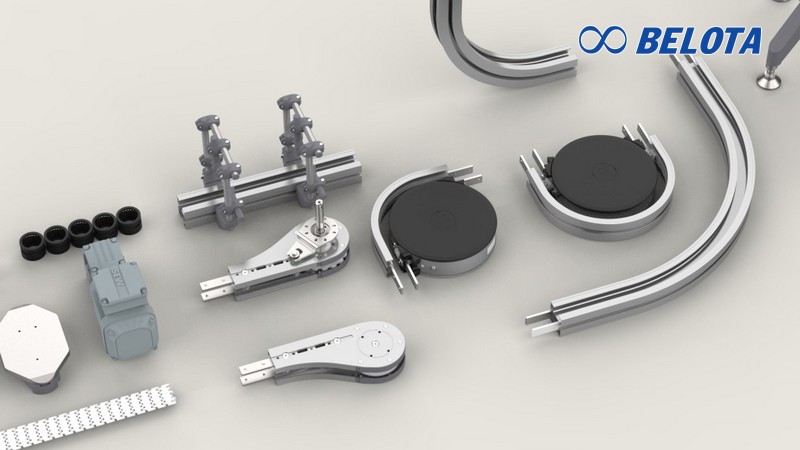
In the garment, textile, and footwear industries, fusing machines (interlining bonding machines) play a critical role in enhancing product durability and shape. One of the most essential components of these machines is the PTFE Fusing Machine Belt. With excellent heat resistance, non-stick properties, and long-lasting performance, this belt is widely used not only in apparel and footwear manufacturing but also in many other industrial applications. This article will help you understand the features, applications, and how to choose the right PTFE Fusing Machine Belt.
What is a PTFE Fusing Machine Belt?
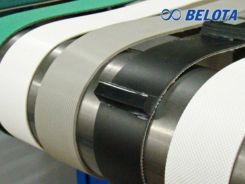
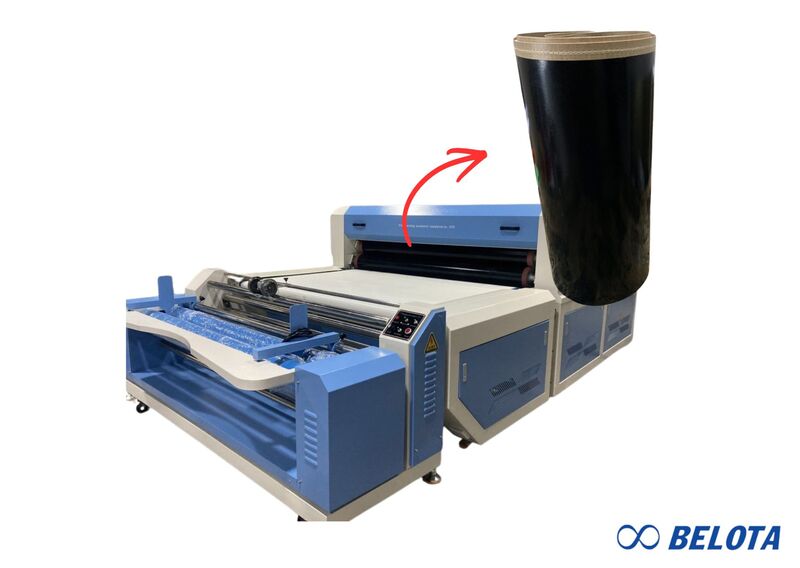
A PTFE Fusing Machine Belt is a heat-resistant conveyor belt made from fiberglass fabric coated with Teflon (PTFE). This material can withstand temperatures up to 327°C, offers excellent non-stick properties, high load capacity during pressing, and strong anti-static performance.
Thanks to these characteristics, it is specifically designed for fusing machines in the garment industry, where high temperatures and a clean, stable belt surface are essential.
Technical Specifications of PTFE Fusing Machine Belt
- Material: Fiberglass fabric coated with PTFE
- Surface: Smooth, ultra-thin
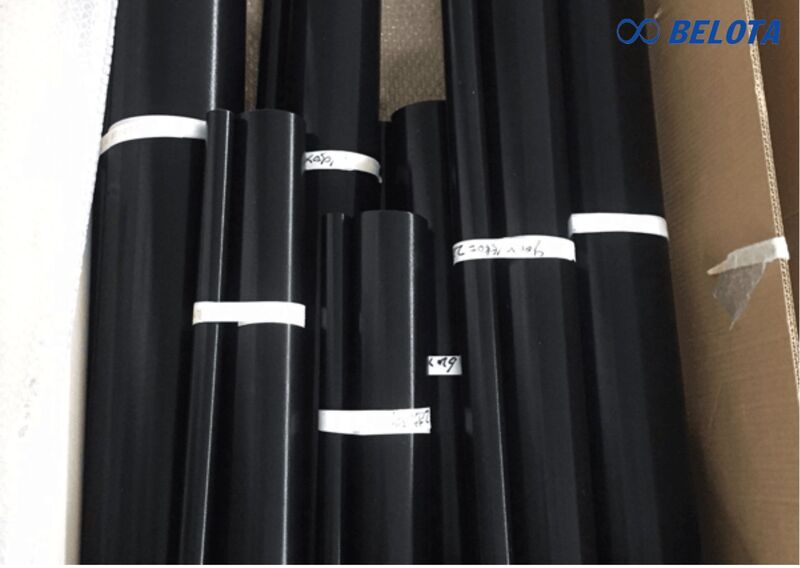
- Color: Black
- Operating temperature: Continuous from -40°F to +500°F (-70°C to +260°C), up to 327°C (short-term)
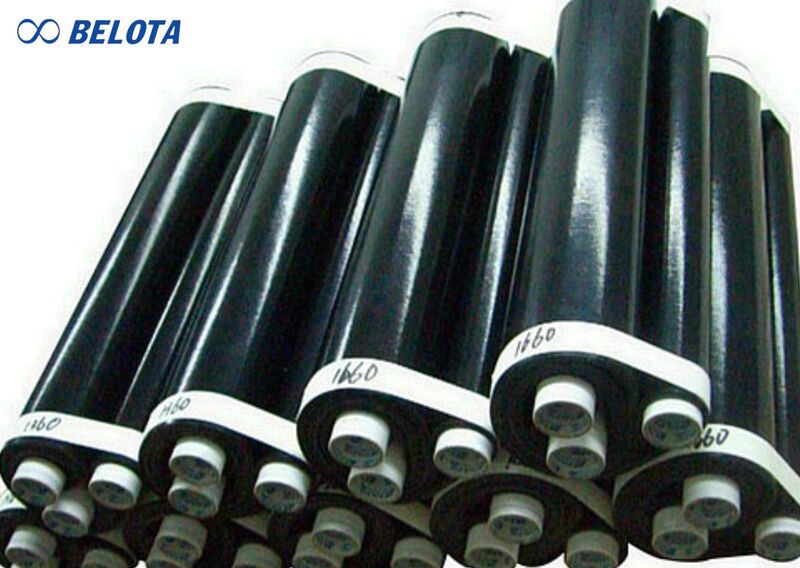
- Standard width: 1500 mm – 6700 mm
- Length: Customized
- Key features: Non-stick, chemical-resistant, easy to clean
- Tensile strength: High
- Applications: Suitable for electric, RF, and UV heating systems
Advantages of PTFE Fusing Machine Belt
- Outstanding heat resistance: Stable operation from -70°C to +260°C, with short-term resistance up to 327°C. Even heat distribution ensures consistent product quality.
- Non-stick & easy cleaning: PTFE-coated surface prevents adhesive buildup, reduces friction, and is easy to maintain. Resistant to most industrial chemicals.
- High durability: Fiberglass combined with PTFE provides strong tensile strength, wear resistance, and minimal deformation.
- Anti-static performance: Black belts with carbon additives reduce static electricity, prevent dust adhesion, and improve safety.
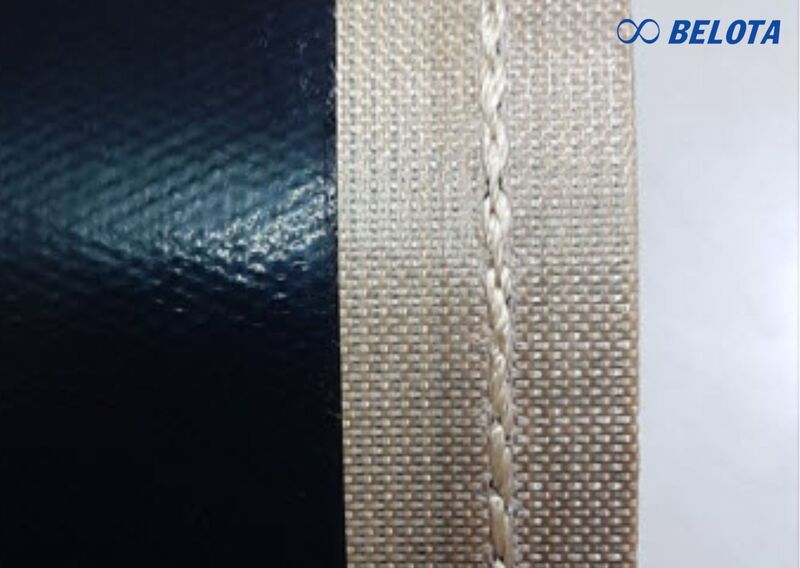
- Seamless weaving technology: Ensures smooth operation without interruptions, improving pressing efficiency and product quality.
- High compatibility: Works efficiently with popular machines such as Hashima, Oshima, Meyer…, widely used in garments, footwear, printing, and food industries.
Common Types of Glue Press Conveyor Belts
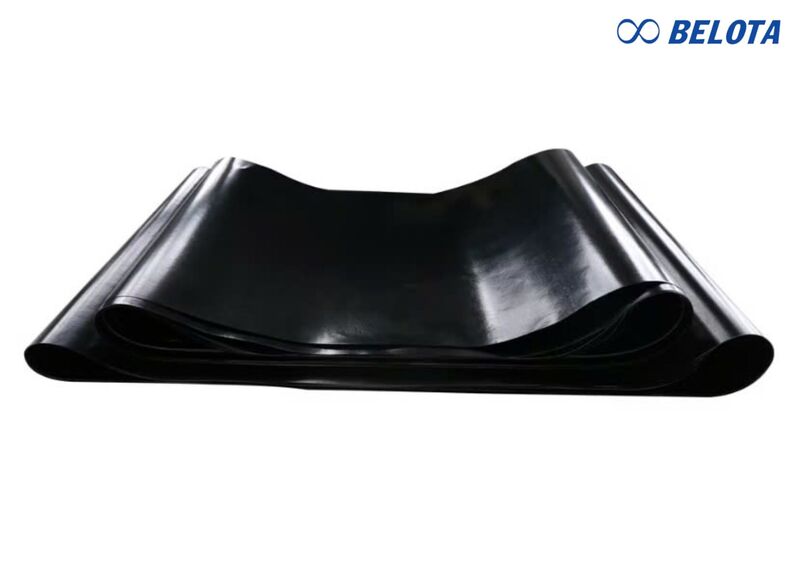
Seamless PTFE Fusing Machine Belt
No joints, ensuring smooth running, reduced vibration, and extended lifespan.
Application: High-precision garment production lines.
Jointed PTFE Fusing Machine Belt
Flexible installation and replacement, suitable for various machine types.
Application: Widely used in medium to large-scale factories.
PTFE Fusing Machine Belt with Tracking Guides
Equipped with guides to improve product alignment and prevent belt misalignment.
Application: Continuous high-stability operations.
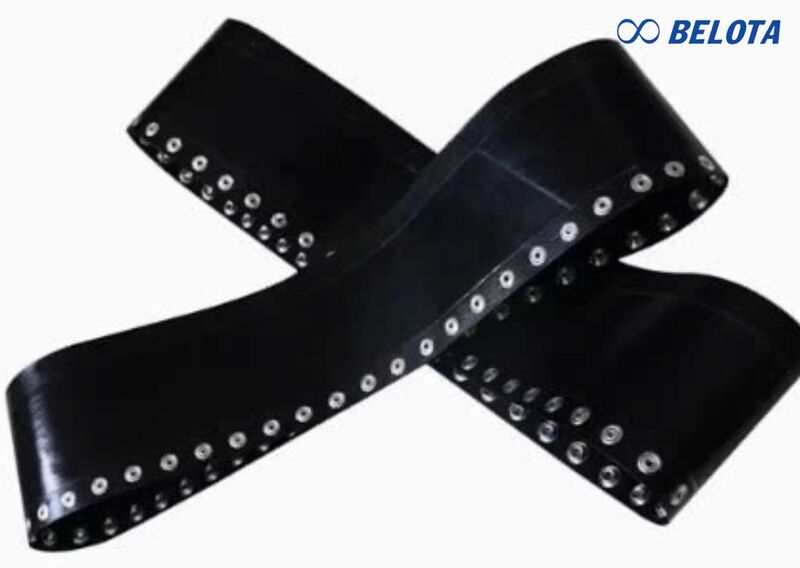
Button-Type PTFE Fusing Machine Belt
Enhanced anti-static properties, improved grip and stability at high speeds.
Application: Garment, textile, and footwear industries.
Applications of PTFE Fusing Machine Belt
PTFE Fusing Machine Belts are widely used thanks to their durability, heat resistance, and non-stick properties:
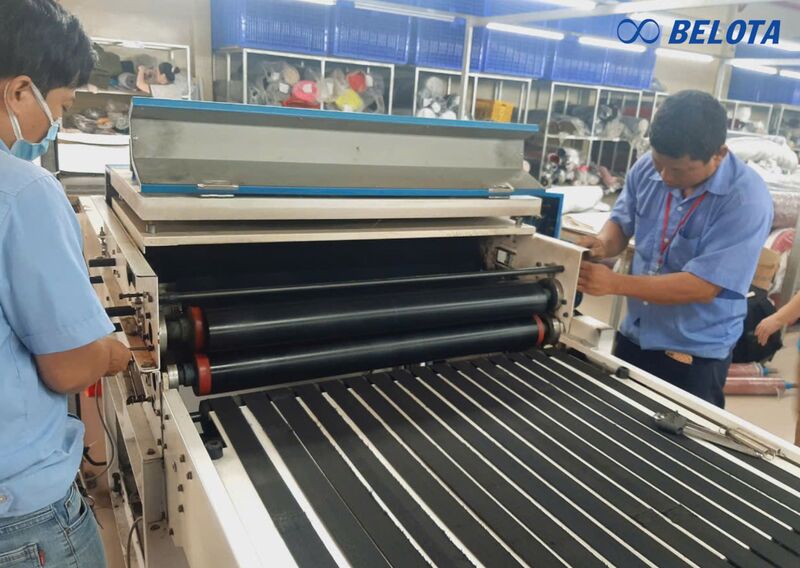
- Garment & Footwear Industry: Used in fusing machines (Hashima, Oshima, Meyer…) for bonding interlining and processing shoe materials.
- Industrial Drying Systems: Applied in UV drying, infrared drying, and post-printing processes to ensure fast drying and strong adhesion.
- Food Industry: Used for transporting food through heating chambers or as non-stick liners in industrial ovens.
- Other Industrial Processes: Used in laminating, curing, insulation, and anti-static applications, especially in environments prone to dust and static electricity.
Modern seamless belts further improve stability and enhance product quality in thermal processing.
Belota – Custom PTFE Fusing Machine Belt Manufacturer
Belota provides custom-made PTFE Fusing Machine Belt solutions tailored to each machine’s specifications, ensuring optimal compatibility and performance. Each product is precisely engineered in terms of size, material, and structure to deliver:
- Precise installation: Perfect fit, reducing setup time and errors
- Stable operation: Smooth performance, minimizing downtime
- Optimized efficiency: Even heat distribution, improving product quality and productivity
With extensive experience and a skilled technical team, Belota is committed to delivering durable and efficient conveyor solutions for every production need.
Conclusion
The PTFE Fusing Machine Belt is an essential component for improving product quality, ensuring stable machine operation, and reducing long-term operating costs in the garment industry. Choosing the right belt in terms of type and specifications will significantly enhance the overall efficiency of your production line.