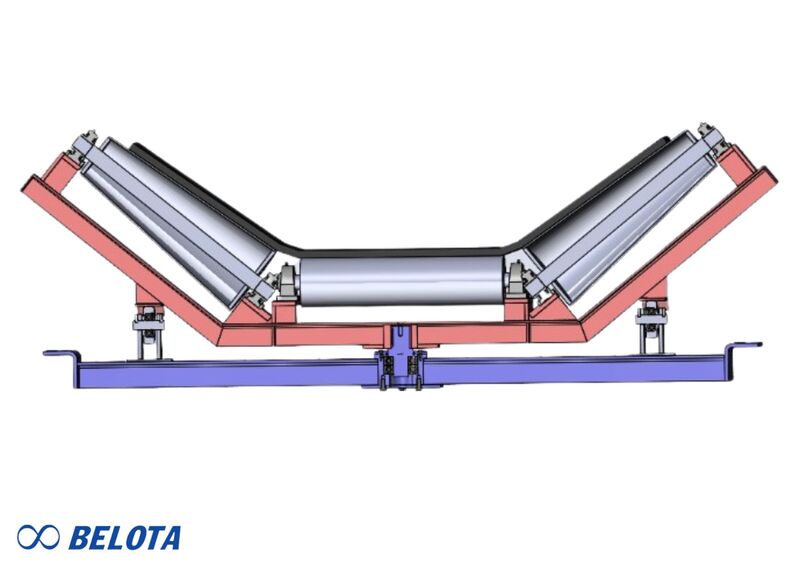
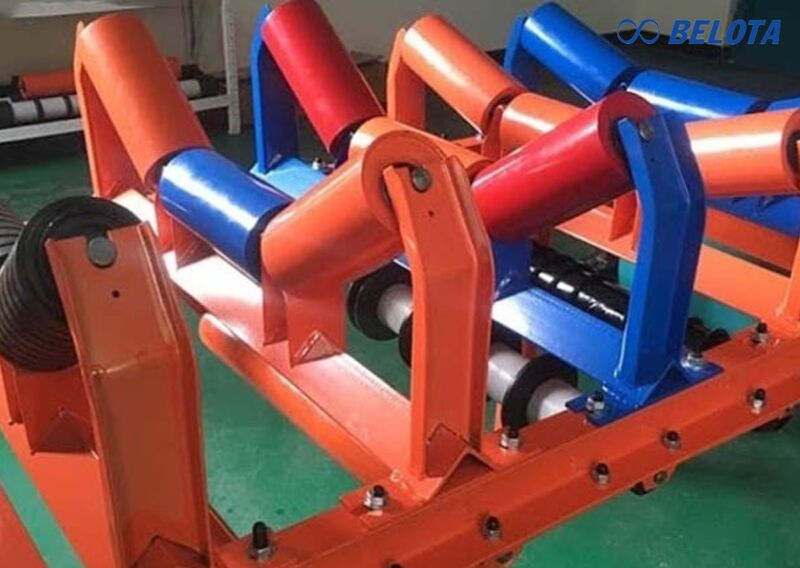
In modern industrial conveyor operations, the Troughing Idler Frame is a critical structural component. It secures the rollers in a precise geometry, ensuring the belt remains centered and stable during continuous, high-speed runs. Selecting the right frame doesn't just impact load capacity, it is the deciding factor in the overall service life of your rubber conveyor belt. In this article, Belota provides a deep dive into the anatomy, classifications, and technical specs of idler frames, along with pro tips for choosing the right rig for your specific industrial environment.
What is a Troughing Idler Frame?
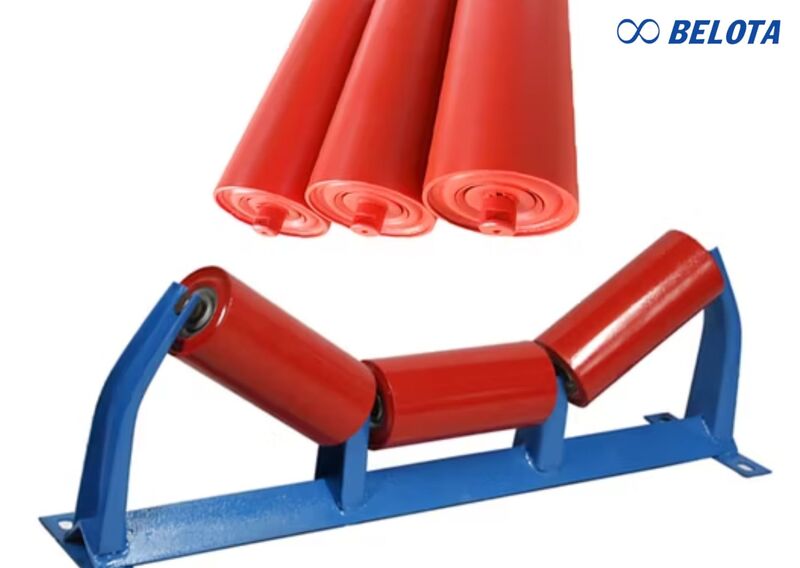
A Troughing Idler Frame is the structural chassis of a conveyor system. Its primary function is to support and lock the rollers in a configuration, typically a "trough" shape to keep the belt running true and minimize vibration.
By angling the side rollers, the frame forces the belt to form a concave profile. This "cupping" effect allows the system to cradle bulk materials securely, maximizing throughput and preventing costly spillage or material "drift" during transport.
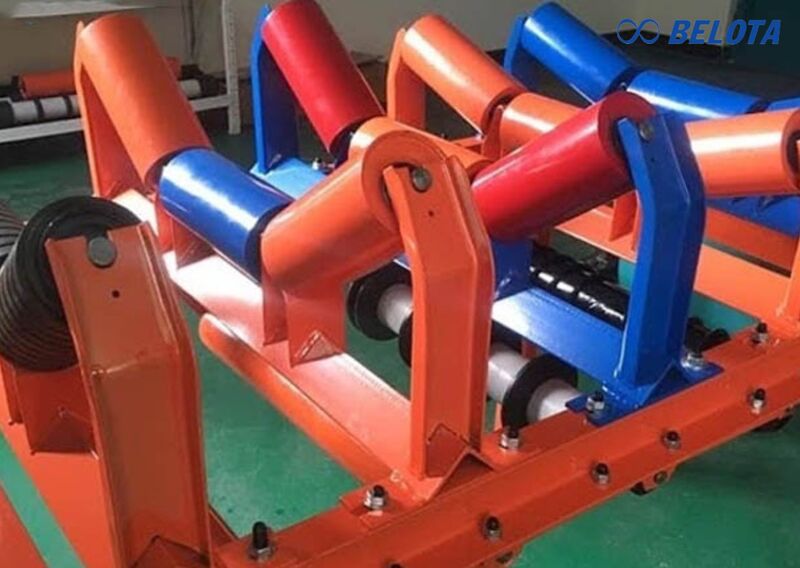
The idler frame is a crucial component designed to secure the conveyor rollers in place
Technical Anatomy
- Main Cross-Member: Usually fabricated from heavy-duty Channel Steel (U-Steel) such as U60 to U120, providing the rigid backbone needed for high-intensity loads.
- Link Bars / Bracing: These components distribute the weight evenly across the structure, dampening mechanical jitter and preventing frame deformation.
- Mounting Slots: Precision-engineered with standard bolt holes for "drop-in" installation and rapid alignment during maintenance.
- Surface Protection: Typically finished with Hot-Dip Galvanizing (HDG) or high-grade Powder Coating to resist corrosion in dusty, humid, or abrasive environments.
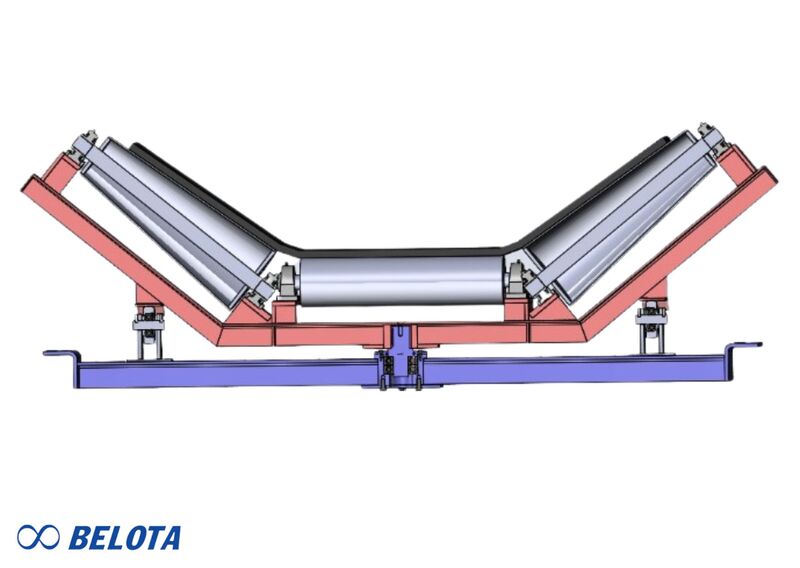
Anatomy of a Troughing Idler Frame
Common Classifications
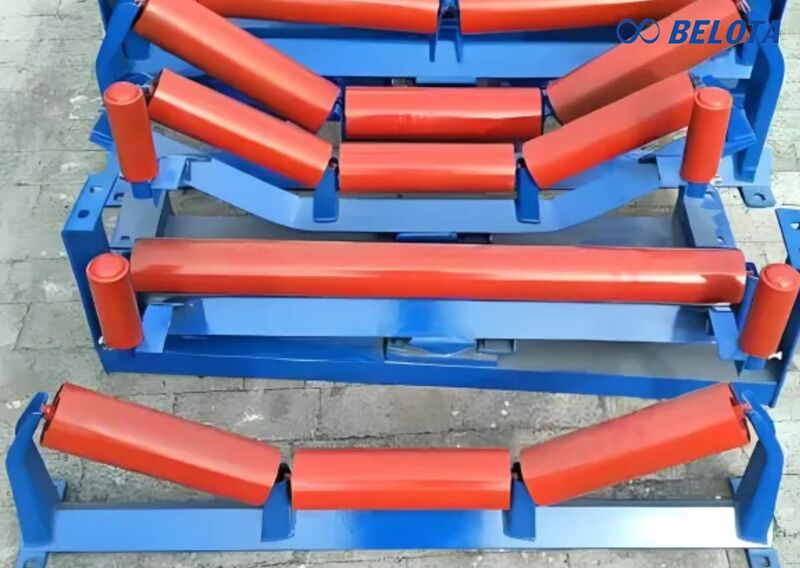
V-Type Idler Frames (2-Roller Sets)
The V-type configuration features two rollers angled toward each other. These are the "lightweights" of the conveyor world.
- The Pro: Low cost, easy to fabricate, and straightforward to install.
- The Con: Limited load-bearing capacity. If pushed too hard, they can cause uneven belt wear and lack the stability of a 3-roller setup.
- Best For: Light-duty goods, bagged materials, or narrow belt widths (300mm - 800mm).
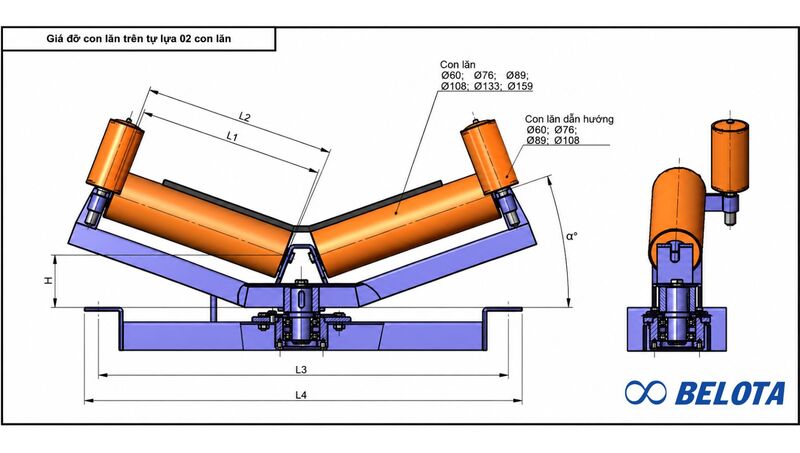
V type troughing idler frame specifications
U-Type / Standard Troughing Idler Frames (3-Roller Sets)
This is the industry workhorse. It uses a center horizontal roller and two wing rollers (angled at 20°, 35°, or 45°) to create a deep, stable trough.
- The Pro: Superior load support and high throughput. It is engineered to keep materials like coal, ore, and aggregate locked in the center of the belt.
- The Con: More complex construction and a higher initial investment.
- Best For: Heavy-duty industries like mining, cement, and bulk handling (600mm - 1600mm+).
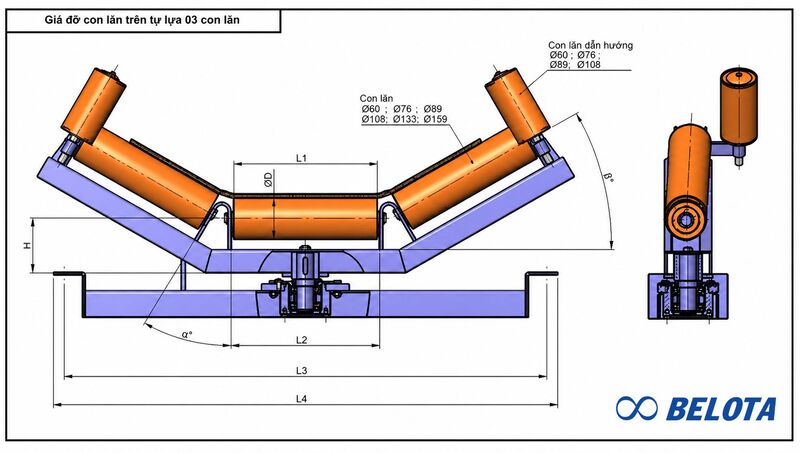
U type 3 roller troughing idler specs
Standard Specifications
V-Type Frame Overview
| Belt Width (mm) | Roller Ø (mm) | Trough Angle (α°) | Frame Section (U-Steel) |
| 300 | Ø60 | 20° | U60×30×4 |
| 500 | Ø60; Ø76; Ø89 | 20° | U60×30×4 |
| 800 | Ø89; Ø108; Ø133 | 20° | U80×40×4 |
Designed for belt widths 300mm - 800mm and roller diameters Ø21 - Ø60mm.
U-Type Frame Overview
| Belt Width (mm) | Roller Ø (mm) | Trough Angle (α°) | Frame Section (U-Steel) |
| 650 | Ø60 – Ø108 | 20°; 30°; 35°; 45° | U80×40×4 |
| 1000 | Ø89 – Ø159 | 20°; 30°; 35°; 45° | U100×50×5 |
| 1600 | Ø108 – Ø159 | 20°; 30°; 35°; 45° | U120×60×5 |
Belota’s Pro Tips: Choosing the Right Rig
In our experience, most belt mistracking issues aren't caused by the belt itself, but by a mismatched or poor-quality idler frame.
- Steel Gauge Matters: For heavy-load applications (sand, stone, ore), never skimp on the cross-member thickness. A "bowed" frame will ruin your belt alignment within weeks.
- Environment is King: For outdoor or high-humidity sites, Hot-Dip Galvanized frames are a must. Standard paint will flake, leading to rust-seized bolts that turn a simple maintenance check into a logistical nightmare.
- Optimize the "Gap": The distance between idler sets is crucial. Too far apart and the belt will "sag," increasing power consumption. Too close and you're over-investing. Calculate your pitch based on belt speed and material density.
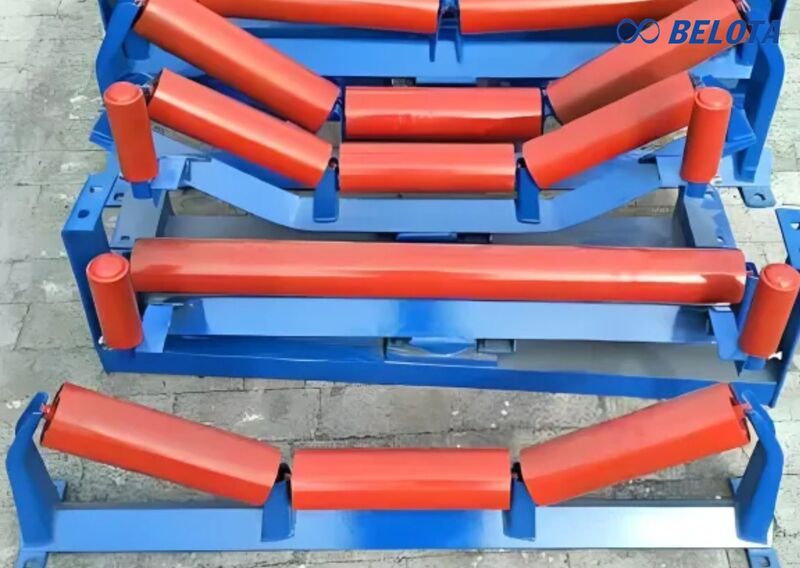
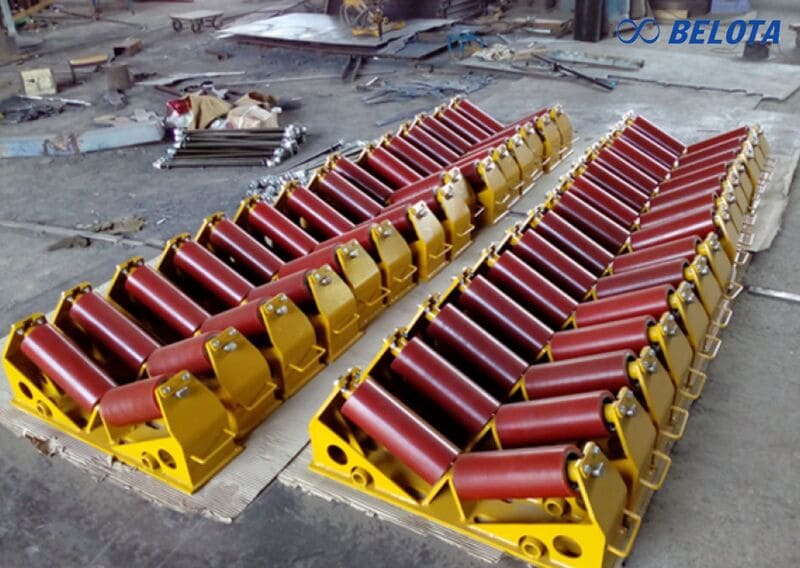
The working environment greatly affects the service life of the roller bracket
Maintenance & Longevity
To keep your system running like a clock, we recommend a "preventative" approach:
- Tighten the Foundation: Periodically check mounting bolts and frame alignment.
- Debris Clearance: Keep the frame base clear of material build-up. Accumulated dirt can jam rollers and act like sandpaper against the belt.
- Anti-Corrosion Touch-ups: If you spot a scratch on a painted frame, hit it with cold-galvanizing spray immediately to stop "rust creep."
Conclusion
The Troughing Idler Frame is the unsung hero of your conveyor line. Investing in a high-quality, properly specified frame is an investment in uptime. Whether you need a nimble V-type for light work or a beefy U-type for the heavy stuff, choosing the right support structure ensures your operation stays efficient, safe, and profitable for the long haul. Does your current system suffer from belt mistracking? Contact Belota today for a technical consultation on our custom troughing idler solutions.