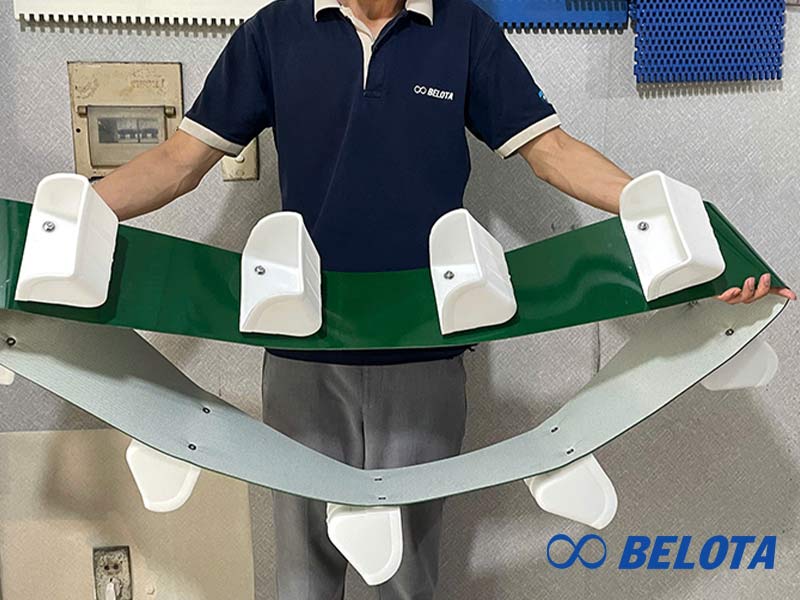
Bucket elevators are vertical material handling systems widely used in industries such as cement, food processing, animal feed, and many other manufacturing sectors. By continuously lifting bulk materials to higher elevations, they help optimize factory space and improve material flow between different stages of the production process. In this article, Belota Conveyor provides an overview of bucket elevators, including their structure, working principle, types, and key factors to consider when selecting the right solution for industrial applications.
What Is a Bucket Elevator?
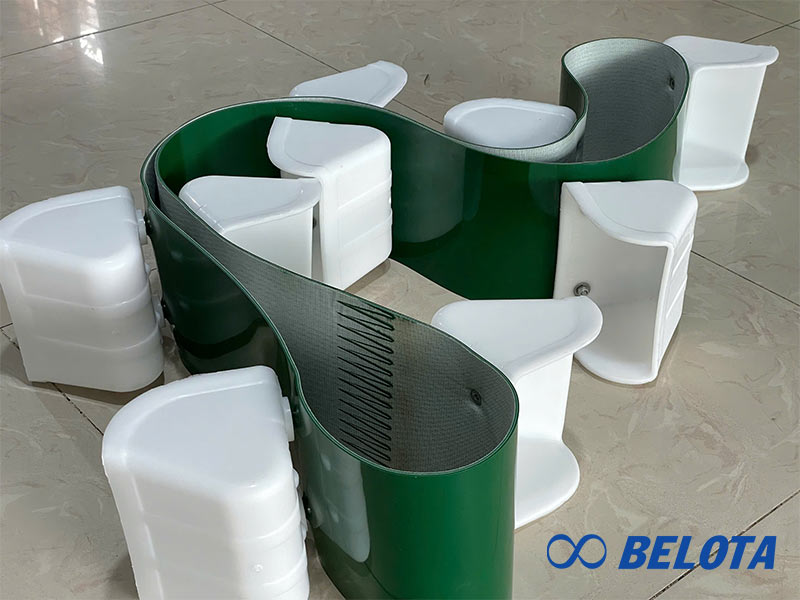
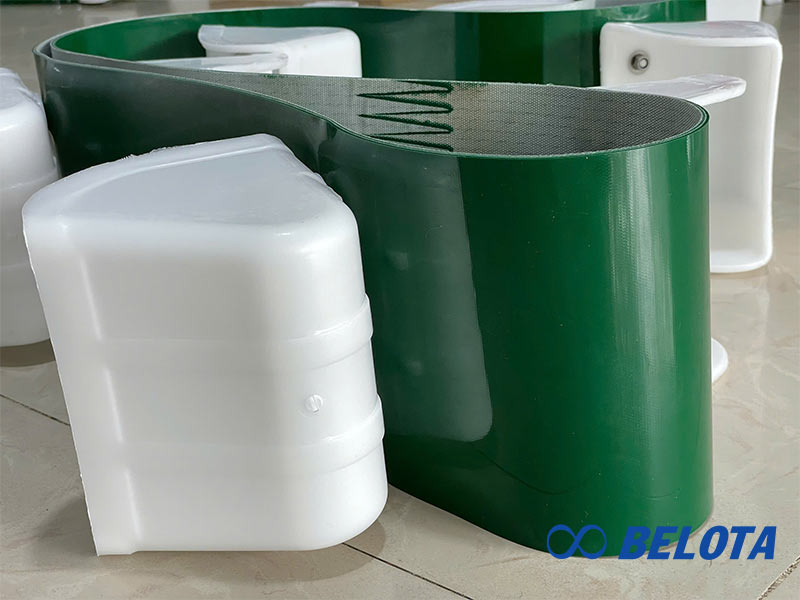
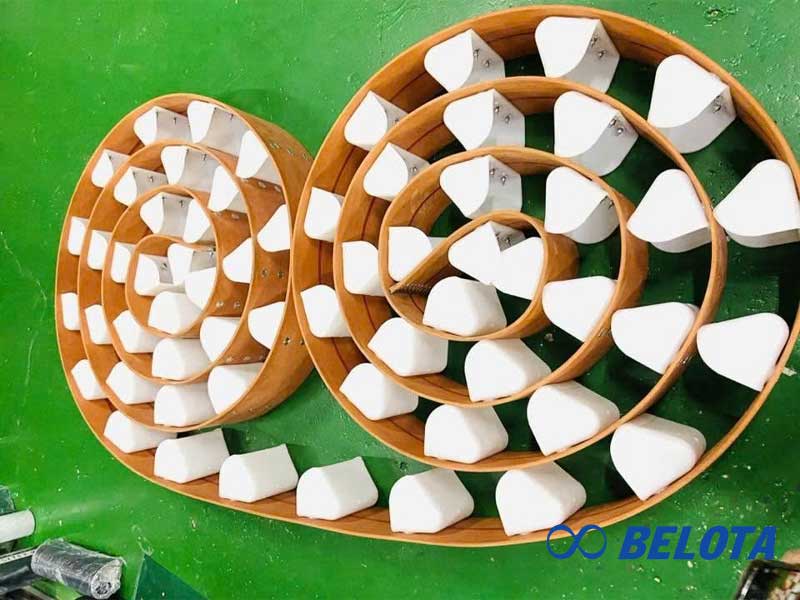
Bucket Elevator is a mechanical conveying system designed to handle and transport bulk materials vertically or at steep inclines. It operates by using buckets securely attached to a conveyor belt or chain to lift materials from a lower level to a higher discharge point. As one of the essential conveyor accessories, bucket elevators are widely used in various industrial production lines.
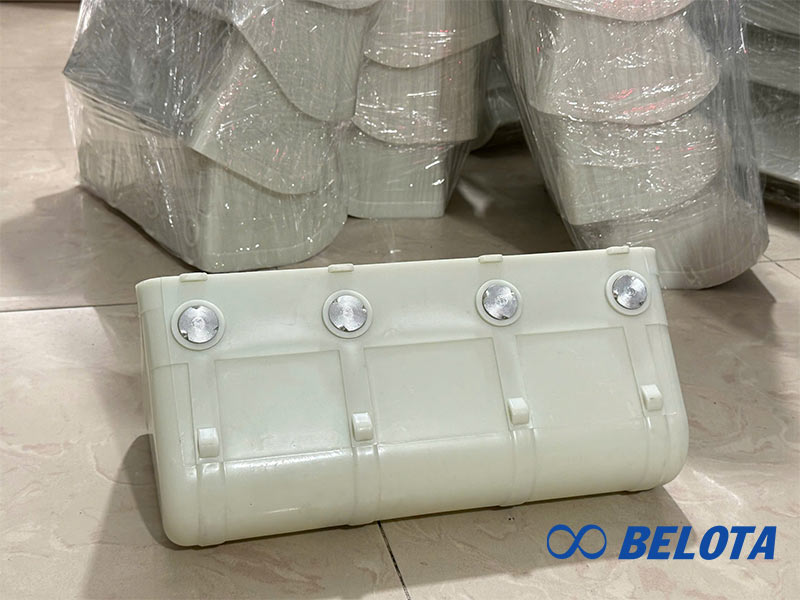
In industrial facilities, bucket elevators are commonly installed between storage silos, crushers, mixers, dryers, or packaging lines. Depending on the application, the buckets may be manufactured from HDPE plastic, polyurethane (PU), mild steel, or stainless steel to suit different material characteristics.
Compared with conventional conveyor belts, bucket elevators require a much smaller installation footprint while providing excellent vertical conveying capacity, making them ideal for facilities with limited floor space.
Bucket Elevator Components
A bucket elevator consists of several key components that work together to transport materials safely and efficiently.
Buckets
The bucket is the primary working component responsible for collecting and conveying materials. Since it comes into direct contact with the product, it is also the component most exposed to wear.
Depending on the application, buckets may be made from:
- HDPE plastic
- Polyurethane (PU)
- Mild steel
- Stainless steel
For cement plants and mining operations, steel buckets are generally preferred because of their superior strength and abrasion resistance.
Belt or Chain
The belt or chain serves as the main traction element that drives the buckets through the elevator casing. Belt bucket elevators are commonly used for grain, flour, animal feed, and other lightweight materials. Chain bucket elevators are better suited for heavy-duty applications involving abrasive materials, high temperatures, or large loads.
Drive System
The drive assembly includes:
- Electric motor
- Gear reducer
- Drive shaft
Power transmission components
This system generates the pulling force required to move the buckets continuously while maintaining the desired conveying capacity.
Elevator Casing
The casing encloses the entire conveying system, protecting internal components while preventing dust emission and material spillage during operation.
Depending on the working environment, the casing may be fabricated from:
- Painted carbon steel
- Galvanized steel
- Stainless steel
Working Principle
A bucket elevator operates through a continuous lifting cycle. Bulk materials enter the boot section through the inlet hopper, where moving buckets scoop up the product. The buckets then travel upward to the head section. At the discharge point, materials are released either by centrifugal force or gravity, depending on the elevator design. The empty buckets then return to the boot section to repeat the cycle.
In practical operation, the boot section is the area most susceptible to material buildup or bucket damage if excessive material is fed into the system. Proper feeding control is therefore essential for reliable operation.
Types of Bucket Elevators
Bucket elevators are generally classified into two main categories:
- Belt Bucket Elevator
- Chain Bucket Elevator
Belt Bucket Elevator
A belt bucket elevator uses a rubber or PVC conveyor belt to carry the buckets throughout the system.
This design is widely used in:
- Food processing
- Agriculture
- Grain handling
- Animal feed production
Advantages
- Smooth and quiet operation
- Higher conveying speed
- Lower installation and maintenance costs
Limitations
- Limited load capacity
- Lower heat resistance
- Not suitable for highly abrasive materials
Chain Bucket Elevator
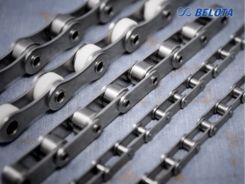
A chain bucket elevator uses one or two steel chains to drive the buckets.
This configuration is designed for demanding industrial environments involving heavy materials and harsh operating conditions.
Advantages
- High load capacity
- Excellent wear resistance
- Suitable for high-temperature applications
- Long service life under heavy-duty conditions
Limitations
- Higher initial investment
- Lower conveying speed
- Requires regular chain maintenance
Belt Bucket Elevator vs. Chain Bucket Elevator
Choosing between a belt bucket elevator and a chain bucket elevator depends on the material characteristics, production capacity, and operating conditions.
| Criteria | Belt Bucket Elevator | Chain Bucket Elevator |
|---|---|---|
| Operating Speed | 1.0–2.0 m/s | 0.2–0.8 m/s |
| Conveying Capacity | Up to 100 tons/hour | Up to 400 tons/hour |
| Maximum Lifting Height | Up to 40 m | Up to 60 m |
| Material Temperature | Below 80°C | Can exceed 200°C |
| Abrasion Resistance | Moderate | High |
| Initial Investment | Approximately 15–30% lower | Higher |
| Maintenance Cost | Low | Moderate to High |
| Typical Applications | Food processing, agriculture, animal feed, and light chemical industries | Cement, mining, power plants, building materials, and metallurgy |
For facilities handling grain, rice, corn, or other lightweight materials, a belt bucket elevator is generally the more economical solution. Conversely, cement, clinker, crushed stone, and other highly abrasive materials are better handled by chain bucket elevators due to their superior durability.
Industrial Applications
Bucket elevators are widely used across various industries.
Cement and Building Materials
Transporting:
- Clinker
- Limestone
- Raw meal
- Cement powder
- Other abrasive materials
Animal Feed Industry
Handling:
- Corn
- Soybeans
- Rice bran
- Feed ingredients
- Mixed feed products
Agricultural Processing
Used for lifting:
- Rice
- Paddy
- Wheat
- Corn
- Various grains
from receiving pits to storage silos or drying systems.
Chemical and Fertilizer Industry
Suitable for conveying:
- Fertilizer granules
- Mineral powders
- Chemical pellets
- Bulk granular materials
through mixing, storage, and packaging processes.
Customized Bucket Elevator Solutions from Belota
Belota provides customized bucket elevator solutions designed to meet the specific operational requirements of each customer. Every system is engineered based on the material characteristics, required conveying capacity, installation conditions, and production environment to ensure long-term performance and reliability.
Our services include:
Engineering Consultation: We evaluate material properties, conveying capacity, lifting height, and operating conditions to recommend the most suitable bucket elevator solution.
Custom Design: Each system can be customized in terms of:
- Dimensions
- Structural design
- Construction materials
- Bucket type
- Drive configuration
- Motor capacity
- to match your production line.
Installation & Commissioning Support: Belota assists customers throughout installation, testing, and system commissioning to ensure smooth operation from day one.
Maintenance & Spare Parts: We provide periodic inspections, preventive maintenance services, and replacement parts for worn components to maximize equipment lifespan.
With extensive experience in industrial material handling systems, Belota delivers reliable bucket elevator solutions tailored to the operational needs of manufacturers across multiple industries.
Frequently Asked Questions
When should plastic buckets be used instead of steel buckets?
Each bucket material is suitable for different operating conditions.
Plastic buckets (HDPE/PU) are lightweight, corrosion-resistant, and non-sparking, making them ideal for food processing, agriculture, fertilizers, and grain handling where product protection is essential.
Steel buckets offer greater impact resistance, higher strength, and superior heat resistance, making them the preferred choice for cement plants, mining operations, and other heavy-duty industrial applications.
What causes bucket elevator clogging, and how can it be prevented?
Material blockage is one of the most common operational issues.
Typical causes include:
- Overfeeding
- Sudden material surges
- Stopping the elevator while buckets are still loaded
To minimize clogging:
- Install a feed control gate or flow regulator.
- Maintain a consistent feed rate.
- Allow all material to discharge before shutting down the system.
What factors affect the installation cost of a bucket elevator?
The overall cost depends on several factors, including:
- Lifting height
- Required conveying capacity (tons/hour)
- Construction materials (carbon steel, stainless steel, plastic buckets)
- Drive system (belt or chain)
- Installation environment
- Level of customization
To provide an accurate quotation, Belota conducts a site assessment before proposing the most suitable technical and commercial solution.
Conclusion
Bucket elevators provide an efficient solution for vertical bulk material handling, helping manufacturers optimize production flow, increase productivity, and make better use of available factory space. Selecting the right bucket elevator requires careful consideration of material characteristics, conveying capacity, lifting height, and operating conditions. With extensive experience in industrial conveying systems, Belota is ready to assist customers in designing, manufacturing, and implementing bucket elevator solutions that meet the unique requirements of every production line.