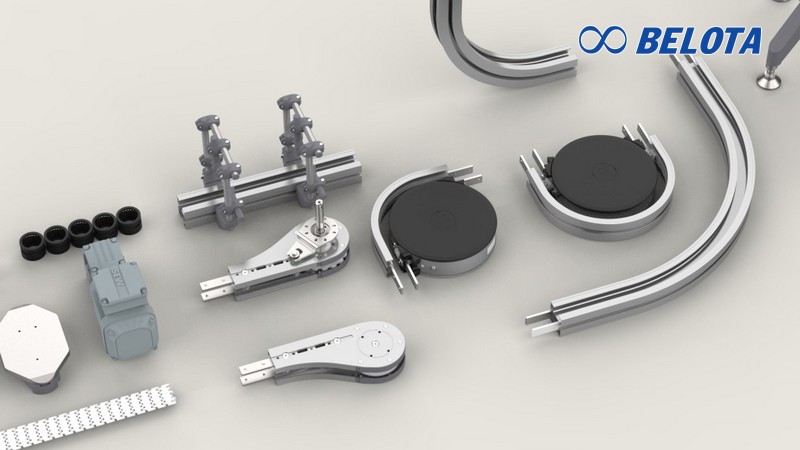
Not every production line requires a large conveyor system. For small products or facilities with limited installation space, mini conveyor rollers provide an efficient solution that optimizes space utilization, ensures stable product movement, and integrates easily into automated systems. Based on Belota’s experience in industrial roller design and manufacturing, this article explores the structure, specifications, common types, applications, and key selection criteria for mini conveyor rollers.
What Are Mini Conveyor Rollers?
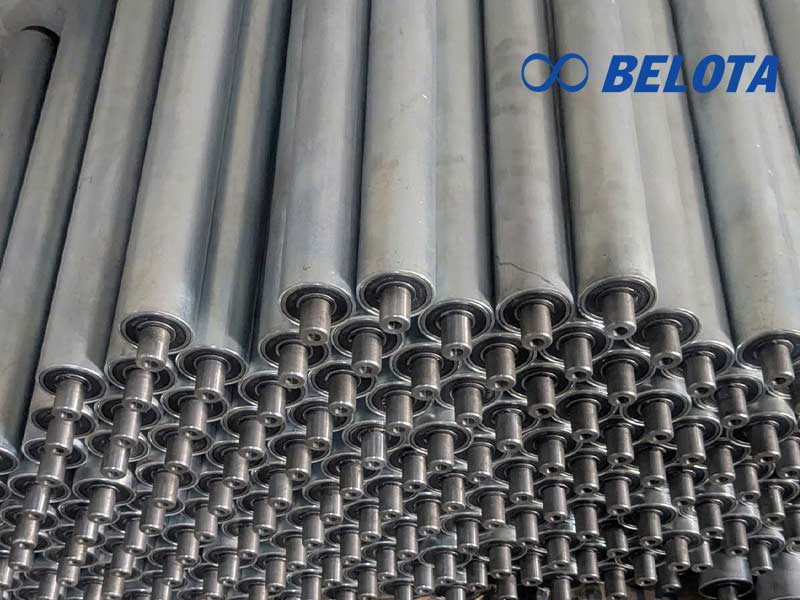
Mini conveyor rollers are industrial rollers with compact dimensions, typically featuring diameters ranging from 20 mm to 50 mm. The cylindrical roller body rotates around a shaft through a bearing system, reducing friction and enabling smooth product transportation.
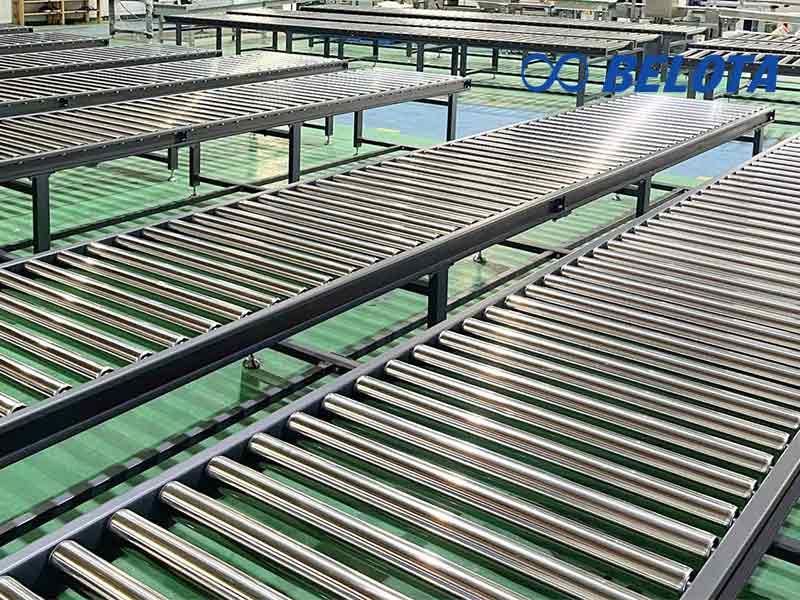
These rollers are widely used in gravity roller conveyors and powered roller conveyor systems for handling small to medium-sized products.
Basic Structure of Mini Conveyor Rollers
A complete mini conveyor roller generally consists of the following components:
Roller Tube
The roller tube is the main body of the roller and is commonly manufactured from steel, stainless steel, or engineering plastics. Its diameter and wall thickness directly influence load capacity, durability, and service life.
Roller Shaft
The shaft connects the roller to the conveyor frame and transfers operational loads. Depending on the application, shafts can be manufactured from C45 steel, stainless steel 304, or stainless steel 316.
Bearings
Bearings allow the roller to rotate smoothly while minimizing friction and operating noise. Common bearing models include 608, 6001, and 6002, selected according to load requirements and working conditions.
Protective End Caps
Installed at both ends of the roller, end caps protect the bearings from dust, moisture, and environmental contaminants, extending the service life of the roller assembly.
Surface Coating (Optional)
For specialized applications, rollers may be coated with rubber, polyurethane (PU), or anti-static materials to increase grip, reduce slippage, and protect conveyed products.
Common Technical Specifications
Depending on product dimensions, load requirements, and operating conditions, mini conveyor rollers can be customized accordingly.
| Specification | Typical Value |
|---|---|
| Roller Diameter | 20 – 50 mm |
| Roller Length | 100 – 600 mm |
| Shaft Diameter | 6 – 20 mm |
| Working Load Capacity | 20 – 200 kg/roller |
| Rotational Speed | 50 – 400 RPM |
| Materials | Steel, Stainless Steel 304/316, POM, PP |
Note: These values are for reference only. At Belota, mini conveyor rollers can be custom-manufactured according to specific requirements regarding dimensions, materials, load capacity, and operating environments.
Common Types of Mini Conveyor Rollers
Steel Mini Conveyor Rollers
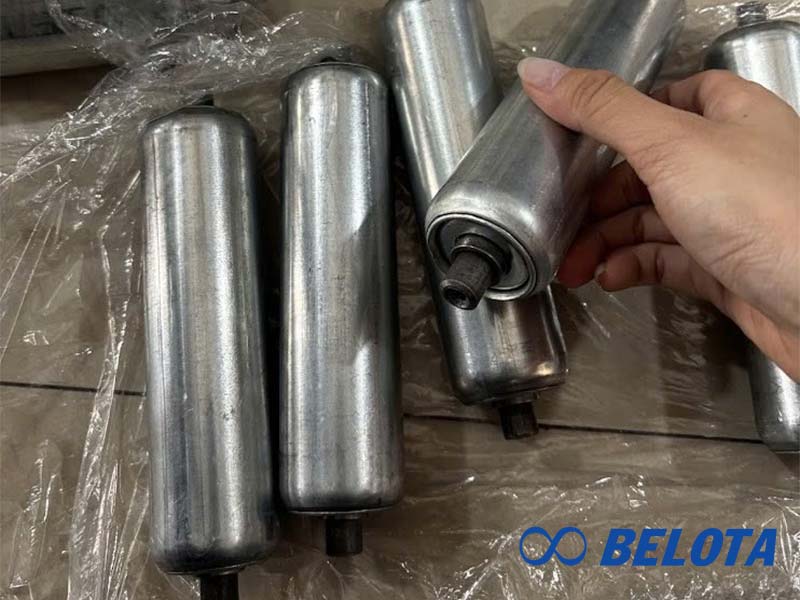
Steel mini conveyor rollers are the most widely used type. The roller body is typically manufactured from carbon steel, with galvanized or powder-coated finishes to improve corrosion resistance.
Advantages:
- High strength and load capacity
- Cost-effective solution
- Excellent mechanical durability
- Available in various sizes
Stainless Steel Mini Conveyor Rollers
Manufactured from stainless steel 304 or 316, these rollers are ideal for environments requiring high corrosion resistance and hygiene standards.
Advantages:
- Excellent corrosion resistance
- Easy to clean and maintain
- Suitable for wet and chemical environments
- Long service life
Rubber-Coated and PU-Coated Mini Conveyor Rollers
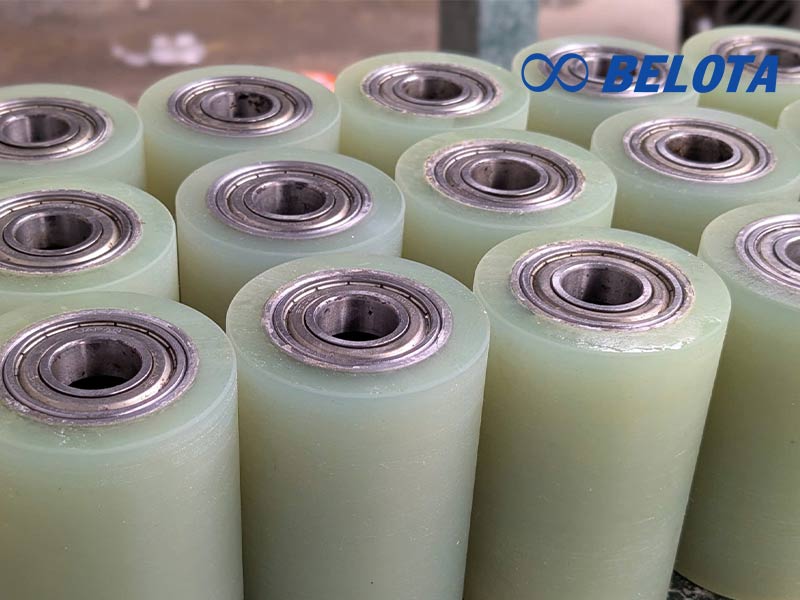
These rollers use steel or stainless-steel cores coated with rubber or polyurethane to enhance friction and product stability.
Advantages:
- Improved product grip
- Reduced slippage
- Lower vibration and noise
- Protection for delicate product surfaces
Plastic Mini Conveyor Rollers
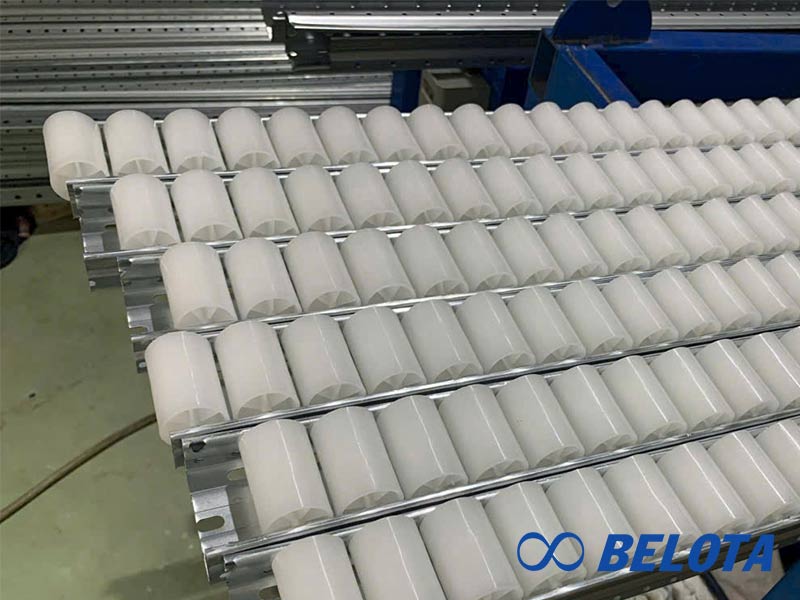
Plastic rollers are typically manufactured from engineering plastics such as POM (Polyacetal) or PP (Polypropylene).
Advantages:
- Lightweight construction
- Excellent chemical resistance
- Quiet operation
- Resistant to oxidation and moisture
Industrial Applications of Mini Conveyor Rollers
Mini conveyor rollers are widely used across various industries due to their compact design and versatile functionality.
Packaging Industry
- Weighing systems
- Labeling machines
- Product transfer and sorting systems
Electronics Industry
- PCB assembly lines
- Electronic component handling
- Anti-static conveyor systems
Warehousing and Logistics
- Parcel sorting systems
- Distribution centers
- Small-package transportation
Food and Beverage Industry
- Hygienic conveyor systems
- Washdown environments
- Stainless steel conveyor applications
Automation Systems
- Packaging machinery
- Product inspection equipment
- Feeding and transfer systems
How to Choose the Right Mini Conveyor Roller
Selecting the proper roller ensures stable operation and reduces long-term maintenance costs.
Load Capacity: Choose a roller capable of supporting the weight of conveyed products.
Working Environment: Stainless steel rollers are recommended for humid or corrosive environments, while steel rollers are suitable for standard industrial conditions.
Operating Speed: High-speed conveyor systems require high-quality bearings to ensure reliability and durability.
Product Characteristics: Rubber-coated or PU-coated rollers are ideal for fragile products or applications requiring enhanced grip.
Service Life: Select rollers with robust construction and suitable materials to minimize maintenance requirements.
Belota's Mini Conveyor Roller Manufacturing Process
To ensure each product meets operational and technical requirements, Belota follows a structured manufacturing process:
- Requirement Collection: Gather information regarding dimensions, load capacity, operating conditions, and technical specifications.
- Engineering Consultation: Our technical team evaluates project requirements and recommends the most suitable materials and configurations.
- Design and Manufacturing: Rollers are produced according to detailed engineering drawings, ensuring precision and operational reliability.
- Quality Inspection: Every roller undergoes strict quality control inspections before shipment.
- Delivery and Technical Support: Belota provides technical documentation and installation guidance to ensure efficient system operation.
Why Choose Belota?
Belota specializes in designing and manufacturing custom mini conveyor rollers tailored to specific industrial applications. Instead of relying on standard off-the-shelf products, businesses receive solutions optimized for their actual operating conditions.
With in-house production capabilities, strict quality control, and the ability to fulfill both small and large-volume orders, Belota delivers durable, reliable, and cost-effective mini conveyor roller solutions for modern production systems.
Frequently Asked Questions (FAQ)
Does Belota manufacture custom-sized mini conveyor rollers?
Answer: Yes. Belota specializes in custom manufacturing mini conveyor rollers based on your specific requirements, including diameter, length, material selection, and load capacity.
Do mini conveyor rollers require regular maintenance?
Answer: Yes. Bearings and roller surfaces should be inspected every 3–6 months. In harsh environments involving dust, moisture, or chemicals, more frequent cleaning and lubrication are recommended.
How long does production take?
Answer: Production time depends on order quantity and complexity. Thanks to our in-house manufacturing capabilities, Belota can provide fast turnaround times while maintaining product quality.
Conclusion
The performance of a conveyor system depends not only on its overall structure but also on critical components such as rollers. With their compact design, customization flexibility, and broad application range, mini conveyor rollers have become an essential solution for modern production lines. If you are looking for a custom-designed roller solution, Belota is ready to support your business from consultation and engineering to manufacturing and delivery.