Flatwork Ironer Belts are essential industrial laundry supplies used in automated flatwork ironing systems. They transport clothing, bed linen, towels, and other textile products smoothly and continuously through heated rollers, helping maintain finishing quality and improve operating productivity. With various material options, heat resistance levels, and specifications, these belts are suitable for hotels, hospitals, restaurants, commercial laundries, and textile factories. Let’s explore the details with Belota Co., Ltd. in the following article.
What Is a Flatwork Ironer Belt?
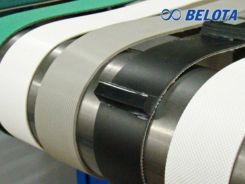
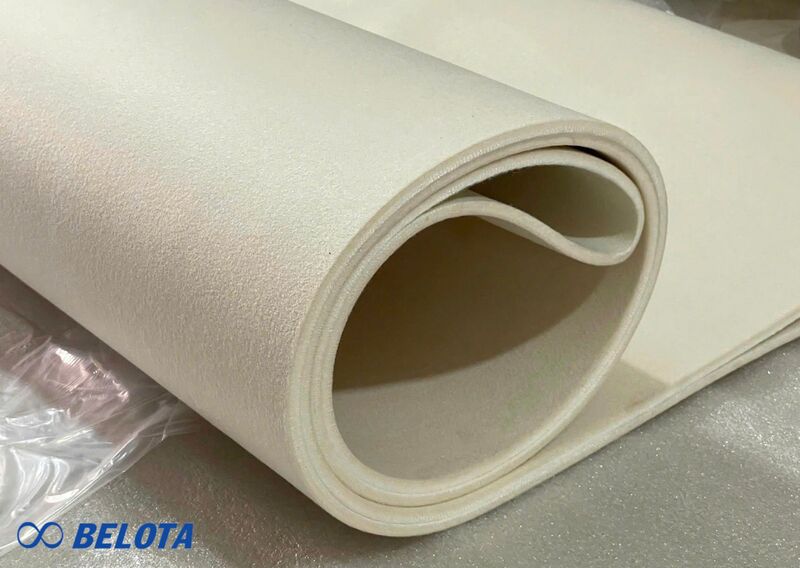
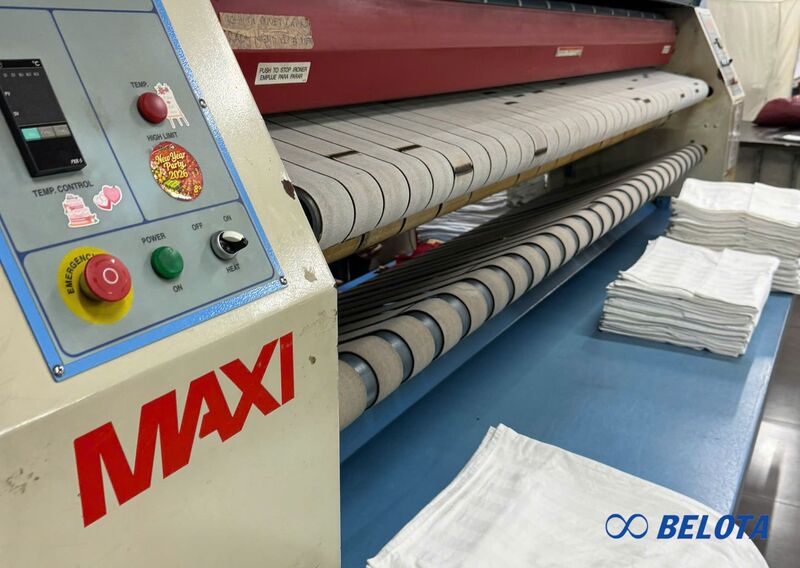
A Flatwork Ironer Belt (industrial flat ironer belt) is a specialized conveying component installed on an industrial flatwork ironer. It continuously transports fabrics, clothing, bed linen, towels, and other textile products through the heating section during the ironing process. It is an important component in industrial laundry systems, helping maintain consistent ironing quality, increase productivity, and support stable machine operation.
For optimal performance, the belt is often used together with an industrial ironer felt pad. While the belt transports the textile products, the felt pad helps distribute heat evenly, release moisture, and maintain stable pressure, thereby supporting ironing quality and extending machine service life.
Construction of an Industrial Flatwork Ironer Belt
An industrial flatwork ironer belt is designed to withstand heat and operate continuously in commercial laundry environments. Depending on the product series, its construction may vary, but it generally consists of the following components:
- Main material layer: Made from Nomex (Meta-Aramid), Polyester, or a Nomex + Polyester blend, providing heat resistance, abrasion resistance, and durability.
- Reinforced base layer: Some belt types use 100% Nomex fabric as the base to improve dimensional stability and minimize stretching or deformation during operation.
- Anti-static fibers (optional): Integrated into certain high-temperature belt types to reduce static electricity and improve operating performance.
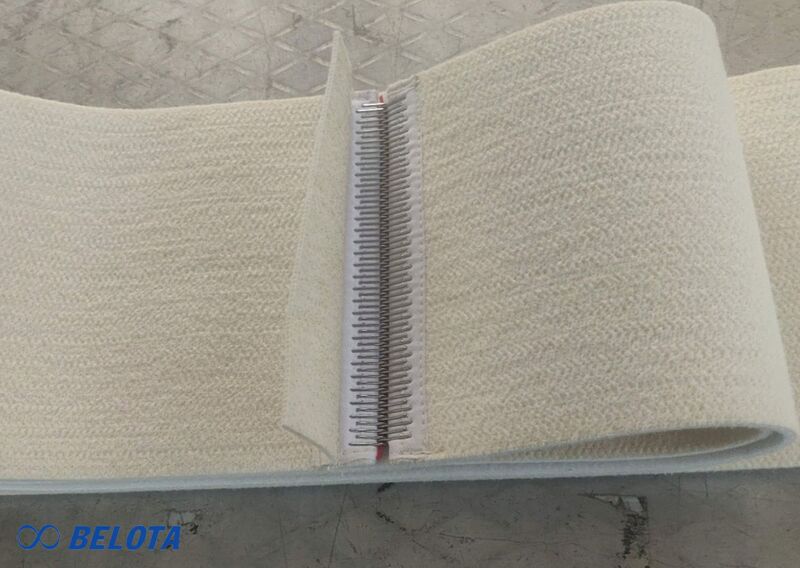
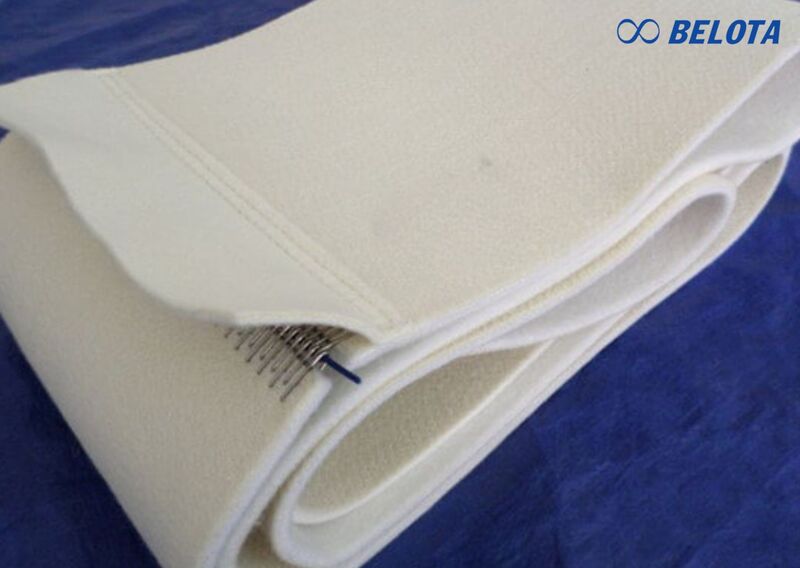
- Belt joining fastener: The belt is installed using specialized belt fasteners combined with stainless steel pins, allowing quick replacement and maintenance.
- Belt surface: Available in felt or woven structures, providing suitable fabric grip, air permeability, and heat transfer during the ironing process.
General Technical Specifications of Industrial Flatwork Ironer Belts
- Material: Nomex (Meta-Aramid), Polyester, Nomex + Polyester, or Kevlar combined with anti-static fibers, depending on the belt type.
- Weight: 500–1,600 gsm.
- Thickness: 1–5 mm.
- Width: 75–210 mm.
- Length: Custom-made according to requirements; some standard types are available in 100 m rolls.
- Operating temperature: Below 160°C to 280°C, depending on the material.
- Compatible heating sources: Steam, electric, thermal oil, and gas heating.
- Compatible machine brands: Jensen, Kannegiesser, Braun Delta, Primus, Speed Queen, Electrolux, Fagor, Wascomat, Image, Tolon, CLM, Sealion, Weishi, Shenguang, LACO, and many other industrial flatwork ironer brands.
- Installation accessories: Belt fasteners and stainless steel pins, depending on the belt type.
Key Advantages of Flatwork Ironer Belts
- High heat resistance: Nomex (Aramid), Polyester, and Nomex + Polyester materials are available for different operating temperature requirements, with some types suitable for temperatures up to 280°C.
- Good abrasion resistance: The belt surface provides resistance to wear during continuous operation, helping extend service life and reduce replacement frequency.
- High tensile strength: Designed to withstand tension and minimize stretching, supporting stable belt movement during operation.
- Stable textile transportation: Continuously carries clothing, bed linen, towels, and other textile products through the heating zone while helping minimize fabric shifting and wrinkling.
- Good moisture release: The breathable fiber structure allows moisture and steam to escape efficiently, supporting the drying and ironing process.
- Low shrinkage: Maintains dimensional stability under high temperatures and minimizes deformation during extended operation.
- Compatible with multiple heating sources: Suitable for flatwork ironers using steam, electric, thermal oil, or gas heating.
- Various specifications: Available in different materials, thicknesses, weights, and widths, with custom fabrication according to machine requirements.
- Compatible with various machine brands: Suitable for machines from Jensen, Kannegiesser, Primus, Electrolux, Speed Queen, Braun, Fagor, Wascomat, Tolon, CLM, and other brands.
Common Types of Flatwork Ironer Belts on the Market
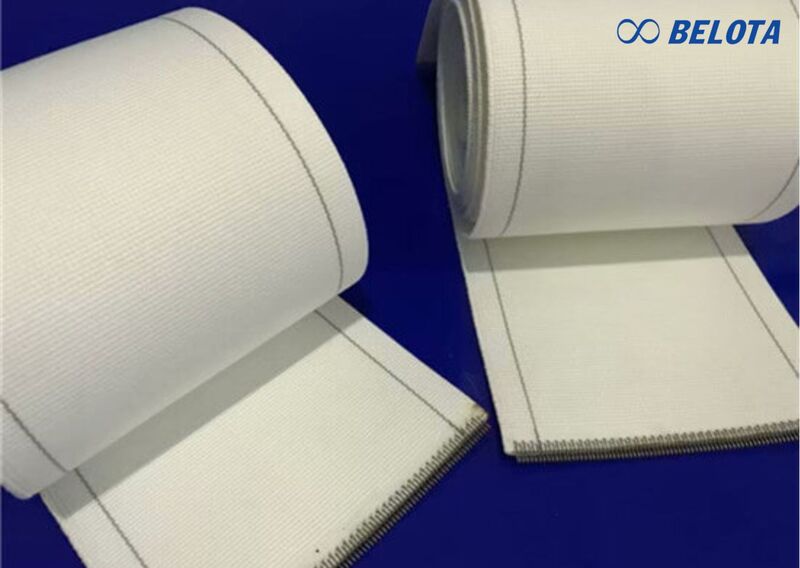
100% Nomex (Meta-Aramid) Flatwork Ironer Belt
- Material: 100% Nomex (Meta-Aramid).
- Thickness: 2 mm, 3 mm, 5 mm.
- Weight: 500 gsm (2 mm), 700 gsm (3 mm), 1,200 gsm (5 mm).
- Operating temperature: 210–240°C.
- Width: 110 mm, 150 mm, 190 mm, 200 mm, 205 mm, 210 mm.
- Advantages: Good air permeability; the 2 mm version can be used as a protective cover for the belt fastener.
- Applications: Oil-heated machines such as Speed Queen, Braun Delta, Kannegiesser, JENSEN, LACO, Image, and Tolon.
75% Nomex and 25% Polyester Flatwork Ironer Belt
- Material: 75% Nomex + 25% Polyester with a 100% Nomex fabric base.
- Thickness: Approximately 5 mm.
- Weight: 1,500 gsm.
- Operating temperature: 200–220°C.
- Width: 110 mm, 150 mm, 190 mm, 200 mm, 205 mm, 210 mm.
- Advantages: High dimensional stability and long service life.
- Applications: Steam-, electric-, and oil-heated machines such as Speed Queen, Braun Delta, Kannegiesser, JENSEN, LACO, Image, and Tolon.
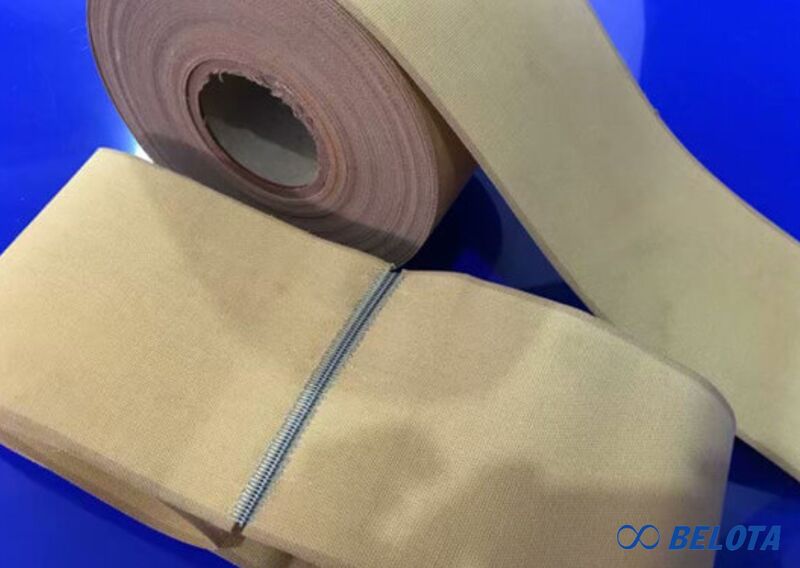
Chicago Ironer Belt
- Material: Aramid fiber.
- Color: Brown.
- Thickness: 1 mm.
- Weight: 600 gsm.
- Operating temperature: Approximately 200°C.
- Width: 150 mm (6 inches).
- Applications: Chicago flatwork ironers.
Woven Polyester Ironer Belt
- Material: Woven Polyester.
- Thickness: Approximately 2.5 mm.
- Weight: 1,600 gsm.
- Operating temperature: Below 160°C.
- Width: 75 mm, 90 mm, 100 mm, 150 mm, 200 mm.
- Applications: Chinese-manufactured flatwork ironers such as Shenguang, CLM, Weishi, and Sealion.
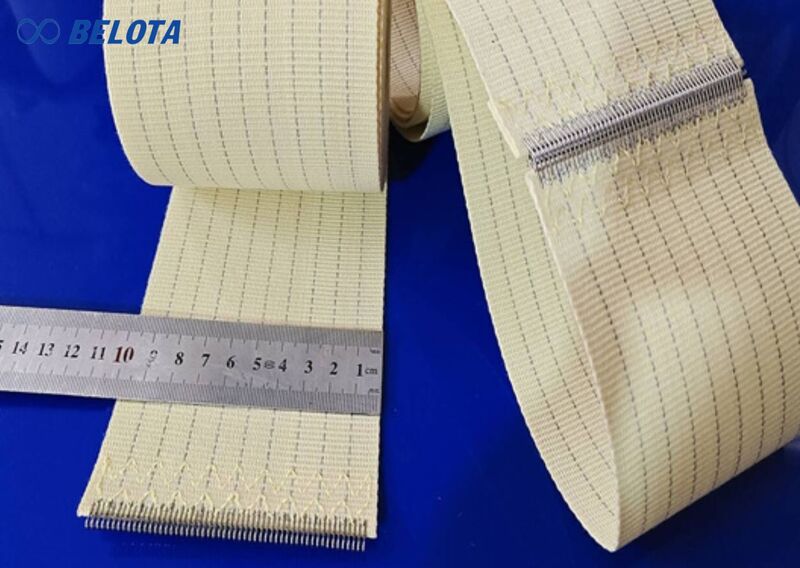
High-Temperature Woven Nomex Ironer Belt
- Material: 100% Kevlar combined with anti-static fibers.
- Weight: 700 gsm.
- Width: 98 mm (4 inches).
- Length: 100 m/roll.
- Operating temperature: Up to 280°C.
- Advantages: Abrasion resistance, acid and alkali resistance, high tensile strength, dimensional stability, and long service life.
- Applications: High-speed flatwork ironers manufactured in China.
Applications of Flatwork Ironer Belts
Flatwork ironer belts are widely used in industrial laundry systems, where they transport and press textile products during the ironing process. Common applications include:
- Industrial flatwork ironers.
- Bed sheet ironing machines.
- Hotel towel ironing machines.
- Hospital towel ironing machines.
- Restaurant towel ironing machines.
- Fabric winding machines.
- Industrial ironing presses.
- Automated industrial laundry systems.
The belts are designed to be compatible with various well-known flatwork ironer brands, including Jensen, Kannegiesser, Braun, Primus, IPSO, Speed Queen, Electrolux, Fagor, Image, Tolon, Lavamac, Wascomat, CLM, and other industrial laundry machines. With various material options and dimensions, these belts can meet the requirements of hotels, hospitals, restaurants, commercial laundries, and textile factories.
How to Choose the Right Heat-Resistant Felt Belt for an Industrial Ironer
To ensure that a felt conveyor belt operates efficiently, reliably, and according to the required working conditions, businesses should select a belt based on the machine specifications and actual operating environment. Important factors include:
- Heating source: Steam, electric, or thermal oil heating.
- Operating temperature: Select a material with an appropriate heat resistance rating.
- Operating pressure: Ensure that the belt can withstand the load and pressure applied by the machine.
- Machine dimensions: Select the correct belt width, length, and thickness.
- Operating speed: The belt should be suitable for the working speed of the flatwork ironer.
- Operating frequency: For continuously operating systems, belts with higher durability and heat resistance should be considered.
Choosing the appropriate belt type and material not only helps maintain stable machine operation and consistent ironing quality but can also reduce maintenance costs, minimize downtime, and extend equipment service life.
Why Choose Belota for Flatwork Ironer Belts?
Belota Co., Ltd. specializes in supplying industrial flatwork ironer belts and conveyor belts with various material, dimensional, and weight options to meet the requirements of different industrial laundry systems. The belts can be custom-fabricated according to specific requirements and are compatible with machine brands such as Jensen, Kannegiesser, Primus, Electrolux, Fagor, Wascomat, and others. This helps support stable operation, heat resistance, and long-term belt performance.
We provide solutions for hotels, resorts, hospitals, commercial laundries, and textile factories nationwide, particularly in major tourism and hospitality areas such as Ho Chi Minh City, Da Nang, Nha Trang, Phu Quoc, Vung Tau, Phan Thiet, Quy Nhon, Hoi An, Hue, Ha Long, and Can Tho. Belota provides technical consultation, custom fabrication based on actual machine dimensions, and fast delivery to help businesses optimize operating costs and improve laundry efficiency.
Conclusion
Flatwork ironer belts are essential components that directly affect the operating efficiency, ironing quality, and service life of industrial laundry systems. Selecting the appropriate belt according to its material, heat resistance, dimensions, and operating conditions can help businesses improve productivity, reduce maintenance costs, and maintain consistent finishing quality. If you are looking for an industrial flatwork ironer belt or other industrial laundry supplies such as industrial ironer felt pads, Belota is ready to provide technical consultation, custom fabrication, and suitable solutions for different machine models, serving hotels, hospitals, restaurants, commercial laundries, and textile factories nationwide.