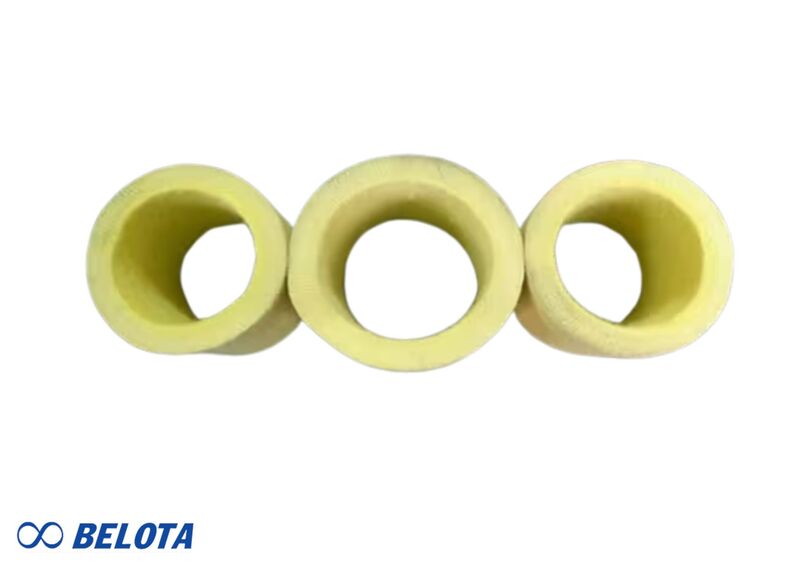
In aluminum extrusion lines, aluminum profiles remain at high temperatures after leaving the extrusion press and are transferred through a system of rollers for cooling, conveying, and handling. If the roller surface is unsuitable, the profiles may become scratched, marked, or otherwise affected in surface quality. Kevlar felt covers for roller shafts are used to provide a soft, smooth, and heat-resistant contact layer on rollers, making them suitable for high-temperature areas on cooling tables and runout tables.
What Is a Kevlar Felt Cover for Roller Shafts?
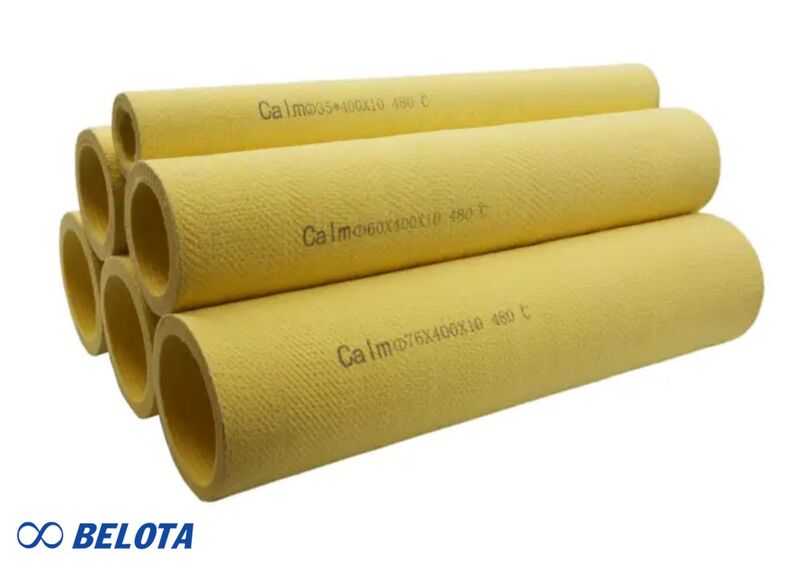
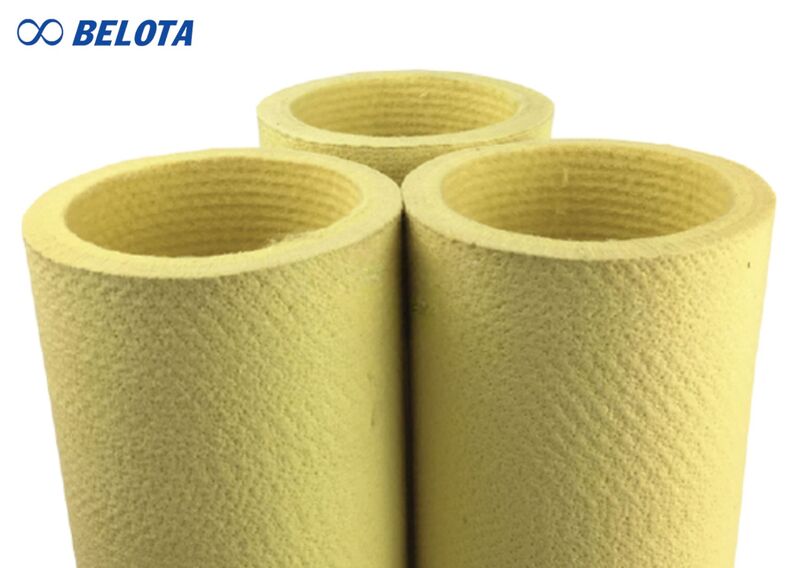
A Kevlar felt cover for roller shafts is a protective tube made from 100% heat-resistant Kevlar fiber and manufactured in a seamless tubular form to cover shafts or rollers in industrial equipment. The material offers high heat resistance, flame resistance, and good abrasion resistance, making it suitable for positions exposed to continuous heat and friction.
Compared with Nomex felt covers, Kevlar felt has higher heat resistance and is therefore commonly used in the first and second stages of cooling tables in aluminum extrusion lines. At these positions, aluminum profiles are still at relatively high temperatures and require stable conveying while minimizing surface scratches.
Advantages of Heat-Resistant Kevlar Felt Covers
- High heat resistance: Capable of continuous operation at approximately 300°C, with short-term peak temperatures of up to 480°C, making it suitable for the initial sections of the line where aluminum profiles are still hot.
- 100% Kevlar fiber: Made from high-strength Kevlar fiber with good abrasion resistance and suitable for continuous industrial operation. In addition to 100% Kevlar products, PBO + Kevlar felt covers for roller shafts can also be used for applications requiring higher heat resistance.
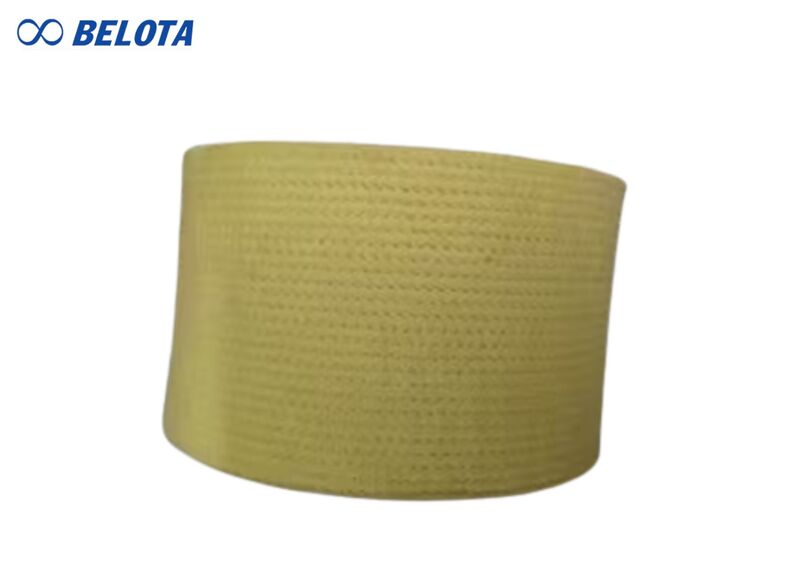
- Needle-punched construction: The Needle Punched manufacturing process creates a stable felt structure with a smooth and soft surface, helping minimize marks on aluminum profiles.
- Seamless tubular design: The Endless design has no joints, helping minimize weak points or joining areas during roller rotation.
- Good flame resistance: Kevlar fiber provides good flame resistance and maintains its stability when exposed to high temperatures.
- Abrasion resistance: Good resistance to wear under continuous friction between the felt cover, roller, and aluminum profiles.
- Easy installation: The relatively lightweight tube is convenient to store and can be installed directly onto shafts or rollers according to the required dimensions.
Specifications of Kevlar Felt Covers for Roller Shafts
- Material: 100% Kevlar (Aramid) fiber or Kevlar combined with carbon fiber.
- Manufacturing process: Needle Punched.
- Color: Yellow for 100% Kevlar; green for Kevlar + Carbon.
- Continuous operating temperature: Approximately 300°C.
- Peak temperature: Approximately 480°C, with maximum short-term heat resistance of around 480–500°C, depending on the configuration.
- Thickness: Commonly 6, 8, and 10 mm, with custom thicknesses available from 6–12 mm.
- Inside diameter (ID): Φ18, Φ23, Φ25, Φ49, Φ50, Φ51, Φ60, Φ62, Φ63, Φ76, Φ77, Φ80, Φ81, Φ82, Φ90, Φ95, Φ100, Φ101, Φ102, Φ114, Φ115, and Φ120 mm.
- Length: Cut and manufactured according to the actual shaft, roller, or production line dimensions.
- Reinforcement: Available with or without resin reinforcement, depending on application requirements.
Applications of Kevlar Felt Covers in Aluminum Extrusion Lines
Kevlar felt covers are mainly used in areas where aluminum profiles are conveyed and cooled after leaving the extrusion press while the material is still at high temperatures. With heat resistance of up to approximately 480°C, Kevlar felt is suitable for areas operating at higher temperatures than those using Nomex felt.
- First and second-stage cooling tables: Installed on shafts or rollers in the initial cooling area, where aluminum profiles are still at high temperatures.
- Runout tables: Used to convey newly extruded aluminum profiles while minimizing direct contact between the aluminum surface and the metal roller.
- Temperature transition zones: Kevlar felt can be used in temperature zones between the high-temperature areas using PBO felt and the lower-temperature areas using Nomex or polyester felt.
Belota Manufactures and Supplies Kevlar Felt Covers for Roller Shafts
Belota supplies and manufactures Kevlar felt covers for roller shafts according to the actual dimensions of rollers, shafts, and installation positions in aluminum extrusion lines. Depending on the operating temperature and application requirements, our technical team can assist in selecting the appropriate felt material, thickness, and dimensions.
When ordering Kevlar felt covers, customers should provide:
- Inside diameter (ID): Based on the shaft or roller diameter to ensure a suitable fit.
- Thickness: Selected according to the operating temperature and friction conditions.
- Length: Manufactured according to the actual shaft or roller length.
- Installation position: Specify the application area, such as the first-stage cooling table, second-stage cooling table, or runout table.
- Operating conditions: Including contact temperature, roller speed, and requirements for protecting the aluminum surface.
Belota can provide technical consultation, custom sizing, and Kevlar felt covers for roller shafts according to the actual requirements of each production line.
Conclusion
Kevlar felt covers for roller shafts are a suitable solution for rollers operating in high-temperature environments, particularly on cooling tables and runout tables in aluminum extrusion lines. Kevlar provides good heat resistance, a soft surface, and high mechanical strength, helping reduce the risk of scratches on aluminum profiles during conveying. The products can be manufactured according to the actual shaft diameter, thickness, and length requirements.