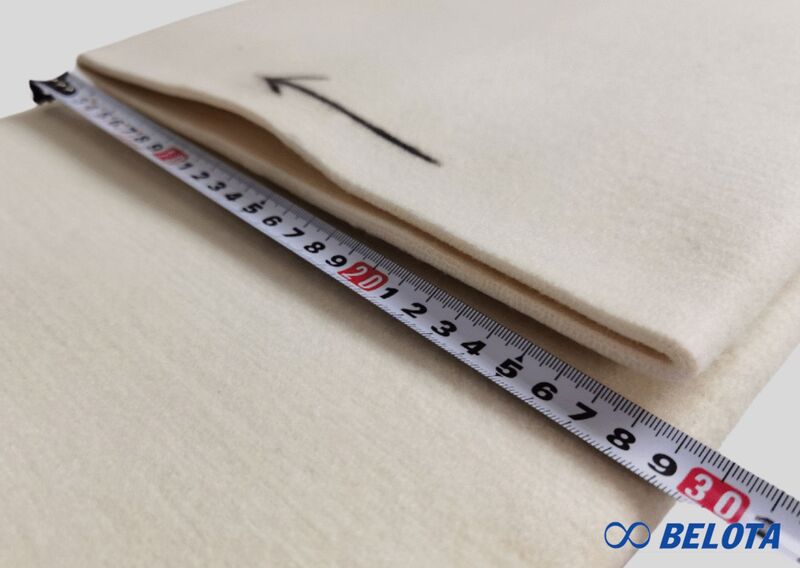
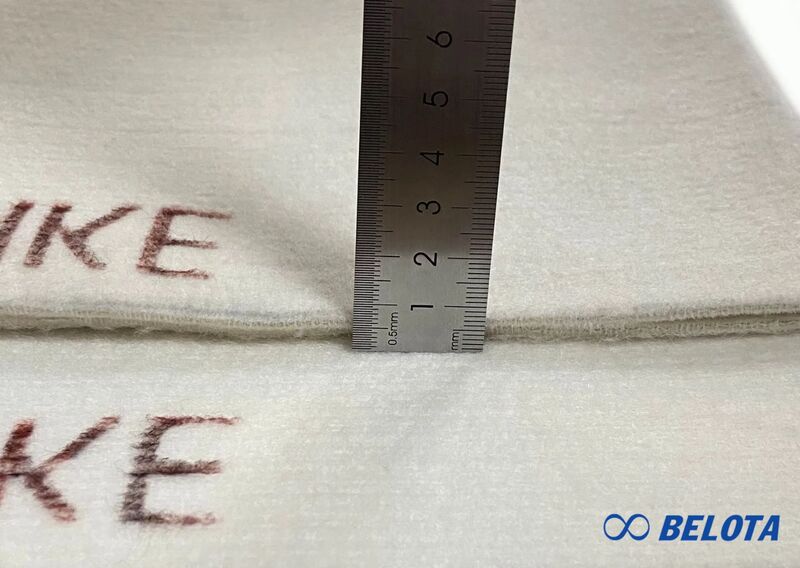
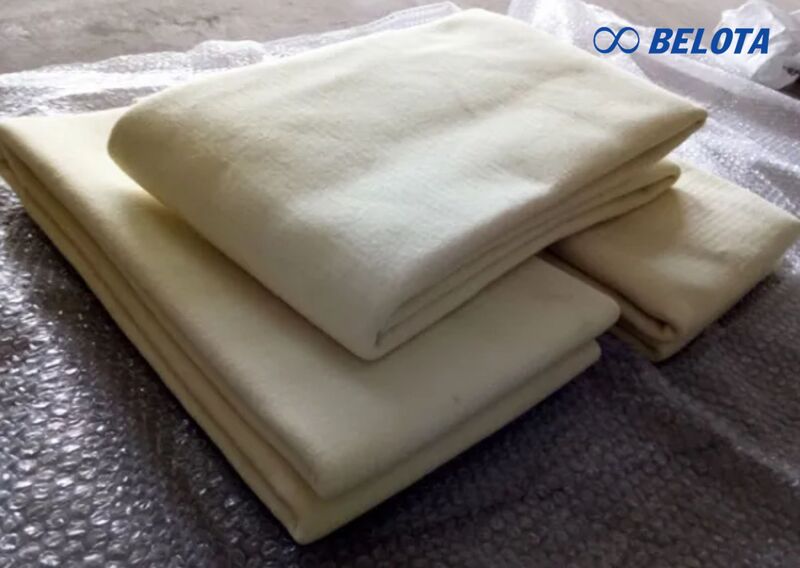
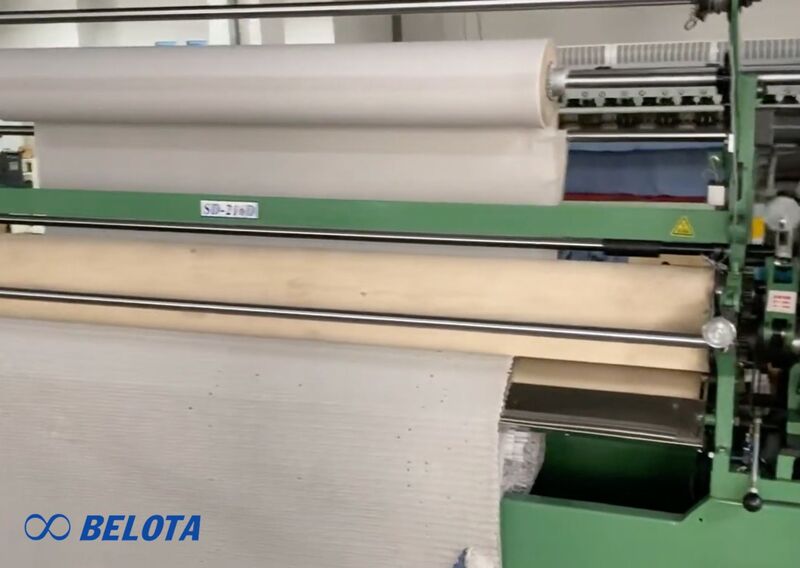
Pleating felt is a specialized industrial laundry supply used in fabric pleating machines to create uniform, sharp, and consistent folds on various materials, including polyester, synthetic fabrics, fashion textiles, artificial leather, and filter media. With excellent heat resistance, abrasion resistance, and long service life, Nomex/Kevlar pleating felt is a preferred choice in the modern garment and textile industries. Belota supplies pleating felt sheets, pleating felt sleeves, and endless pleating felt in various custom sizes, suitable for most pleating machine models available on the market.
What Is Pleating Felt?
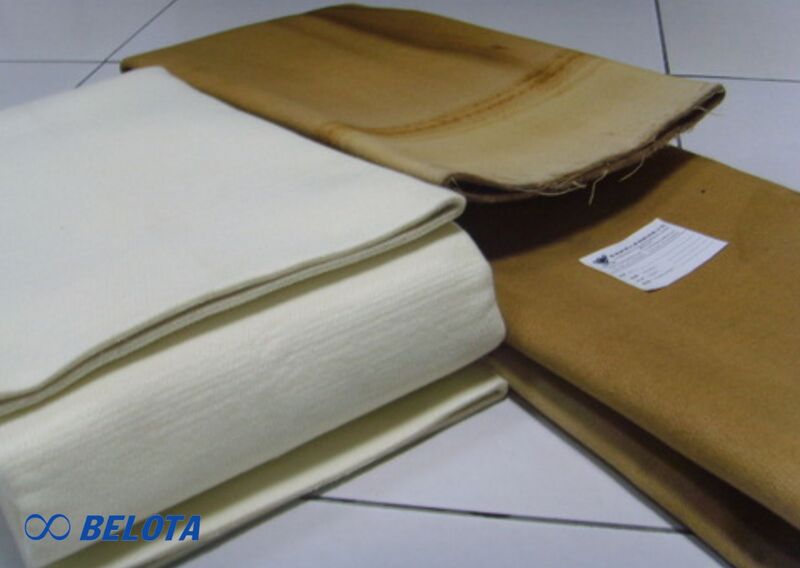
Pleating felt (fabric pleating machine felt) is a technical felt material manufactured from Nomex fibers, Kevlar fibers, or a combination of both. It is designed to withstand high temperatures during the fabric pressing and pleating process.
During operation, the felt comes into direct contact with the fabric and the machine's heating system, helping to:
- Create uniform and precise pleats.
- Maintain pleat shapes after heat setting.
- Protect fabric surfaces from scratches.
- Reduce slipping and deformation during pressing.
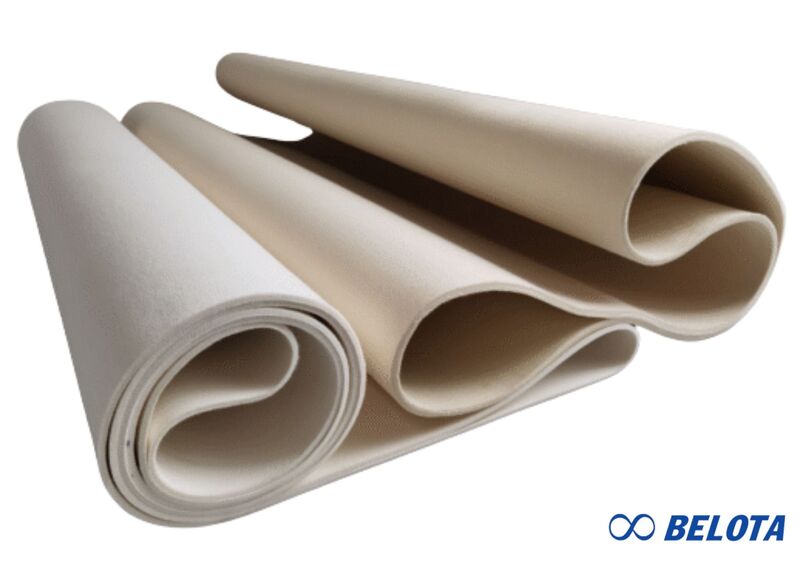
Pleating felt is commonly manufactured in flat sheet, endless felt sleeve, or closed-loop configurations to accommodate different pleating machine designs.
Technical Specifications
- Material: 100% Nomex, Kevlar, or a combination of both.
- Density: 900 - 2000 g/m².
- Thickness: 2 - 6 mm (4 mm is the most common).
- Width: 600 - 2400 mm (customizable up to 3800 mm).
- Inner circumference: 560 mm or custom sizes from 1200–30000 mm.
- Thermal shrinkage: ≤5%.
- Operating temperature: 200 - 300°C.
- Service life: Approximately 3000 hours.
- Color: White.
- Elasticity: Non-elastic.
- Water absorption: Low.
- Manufacturing: OEM customization available.
Common Types of Pleating Felt for Fabric Pleating Machines
Depending on application requirements, pleating felt is manufactured using different materials.
100% Nomex Felt
100% Nomex felt is manufactured from high-quality aramid fibers. It offers excellent heat resistance, high dimensional stability, and minimal shrinkage during operation. Its soft surface helps protect fabrics while producing uniform and sharp pleats, making it suitable for most industrial fabric pleating machines.
Advantages:
- Heat resistance from 260–280°C.
- Soft surface that prevents fabric scratching.
- High durability and resistance to deformation during use.
- Suitable for synthetic fabrics and fashion textiles.
In addition to Nomex felt for pleating machines, industrial textile finishing systems also use other heat-resistant materials, such as flatwork ironer conveyor belts and industrial ironing machine padding felt. These products have different structures and functions, supporting various stages of textile processing.
Kevlar Felt
Kevlar felt is made from Kevlar aramid fibers, offering excellent tensile strength and abrasion resistance. It is an ideal choice for production lines operating continuously or under high-temperature conditions, helping extend felt service life and reduce replacement frequency.
Advantages:
- Heat resistance up to 300°C.
- Excellent abrasion and tensile strength.
- Longer service life compared to conventional Nomex felt.
- Suitable for high-intensity, continuous machine operation.
Nomex and Kevlar Blended Felt
For specialized applications, pleating felt can be manufactured using a combination of Nomex and Kevlar fibers to balance heat resistance, durability, and material softness. This combination improves operating performance and meets demanding technical requirements during fabric pleating.
Advantages:
- Combines the softness of Nomex with the durability of Kevlar.
- Excellent heat resistance and dimensional stability.
- Good abrasion resistance for extended service life.
- Suitable for various machines and production conditions.
Key Features of Fabric Pleating Felt
- High heat resistance: Operates reliably at temperatures ranging from 200°C to 300°C, meeting the requirements of fabric pleating machines and supporting continuous heating processes.
- High uniformity: Its evenly compressed fiber structure helps distribute heat and pressure across the surface, producing sharp, consistent, and aesthetically pleasing pleats.
- Excellent abrasion resistance: Nomex and Kevlar fibers provide good abrasion resistance, reducing wear during continuous operation and extending felt service life.
- Soft surface structure: The soft felt surface protects fabrics, minimizes scratches and pressure marks, and maintains finished product quality.
- Stable heat transfer: Distributes heat evenly across the felt surface, supporting faster and more accurate pleat formation while helping maintain pleat shapes.
- Long service life: Can operate continuously for approximately 3000 hours under standard conditions, reducing replacement and maintenance costs while improving production efficiency.
Applications of Pleating Felt
Pleating felt is widely used in various industries, including:
- Garment industry: Used to create pleats in pleated skirts, dresses, fashion shirts, scarves, uniforms, and other high-end clothing products.
- Interior and furniture industry: Applied in the production of curtains, decorative fabrics, and upholstery materials requiring aesthetic pleating effects.
- Leather industry: Suitable for pleating PU leather, synthetic leather, and fashion leather materials while protecting the product surface.
- Filtration industry: Used to pleat industrial filter fabrics and technical filter media, increasing filtration surface area and improving filtration efficiency.
Common Types of Pleating Felt
Depending on machine design, pleating felt is available in several configurations.
|
Pleating Felt Type |
Characteristics |
Advantages |
|---|---|---|
|
Flat Felt Sheet |
Used in cyclic pressing machines or semi-automatic pleating systems. |
Easy to install and replace, compatible with various pleating machines. |
|
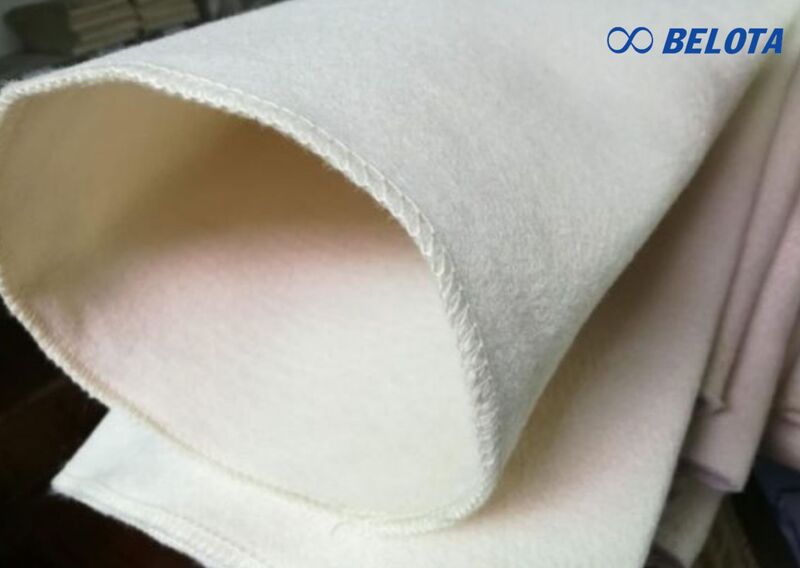
Pleating Felt Sleeve |
Designed as a closed tubular structure, allowing continuous machine operation without a felt joint. |
Seamless construction, reduced vibration, stable operation, and improved pleating accuracy. |
|
Endless Pleating Felt |
Manufactured as a continuous loop, specifically for industrial pleating machines operating continuously. |
Long service life, consistent pleat formation, reliable operation, and reduced maintenance time. |
Which Fabric Pleating Machine Brands Are Compatible with Belota Felt?
Belota pleating felt can be manufactured according to the dimensions and technical requirements of various industrial fabric pleating machines. The products are suitable for systems that use heat-resistant felt for pressing, shaping, and maintaining fabric pleats during production.
Some common fabric pleating machine brands that Belota felt can be customized for include:
- Hashima pleating machines: Used in garment manufacturing, textile processing, and fabric pleating applications.
- Oshima pleating machines: Designed for fabric pleating and shaping processes in industrial production.
- Suzhou pleating machines: Industrial fabric pleating machines requiring custom felt dimensions.
- Comel pleating machines: Used in fabric pressing and pleat-setting equipment.
In addition, Belota can customize pleating felt for other machine brands, including Sahiba, Fortuny, Mario Crosta, Ruian, and various OEM industrial pleating machines. Depending on machine construction, operating methods, and pressing component dimensions, Belota provides recommendations for suitable materials, thicknesses, and felt specifications.
Note: Pleating felt is generally manufactured to OEM dimensions, making it compatible with various machine brands and models, provided that the required specifications for width, circumference, thickness, and material are met. This allows manufacturers to replace existing felt and optimize pleating machine performance.
How to Choose the Right Pleating Felt
When selecting felt for fabric pleating machines, consider the following factors:
- Choose the right Nomex or Kevlar material: Select a material based on operating temperature and machine workload. Nomex is suitable for standard applications, while Kevlar is preferred for demanding, high-temperature, continuous operations.
- Determine the correct felt dimensions: Measure the width, circumference, and installation dimensions accurately to ensure proper fitting. This helps maintain stable operation and consistent pleat formation.
- Select the appropriate thickness: Felt thickness must match the machine design and the type of fabric being processed. The correct thickness helps optimize heat transfer and pleating quality.
- Check felt density: Density should meet the requirements of each application to ensure uniform heat and pressure distribution, resulting in sharper and more consistent pleats.
- Prioritize high-quality felt: Choose products with excellent heat resistance, abrasion resistance, and durability to extend service life, reduce replacement costs, and maintain long-term production efficiency.
Belota - Custom Pleating Felt for Fabric Pleating Machines
Belota specializes in supplying Pleating Felt, Nomex Felt, Kevlar Felt, Pleating Felt Sleeves, and Endless Pleating Felt for various industrial pleating machines.
We offer custom manufacturing based on specific requirements, including width, circumference, thickness, felt density, and material selection. Customers can choose Nomex, Kevlar, or a combination of both to suit their particular applications.
With OEM customization capabilities, our products are suitable for various fabric pleating machine brands and models on the market. We focus on durability, heat resistance, abrasion resistance, and dimensional accuracy to ensure consistent operation.
Belota pleating felt helps manufacturers achieve uniform pleats, improve finished product quality, and optimize production efficiency across the garment, textile, interior, leather, and technical materials industries.
Conclusion
Pleating felt is an essential component in fabric pleating machines, helping produce attractive, uniform, and durable pleats on various materials. With excellent heat resistance, abrasion resistance, and long service life, Nomex and Kevlar felt are effective solutions for industrial pleating systems. If you need advice on selecting or customizing pleating felt to specific dimensions, Belota is ready to provide suitable solutions for different machine models and production requirements.