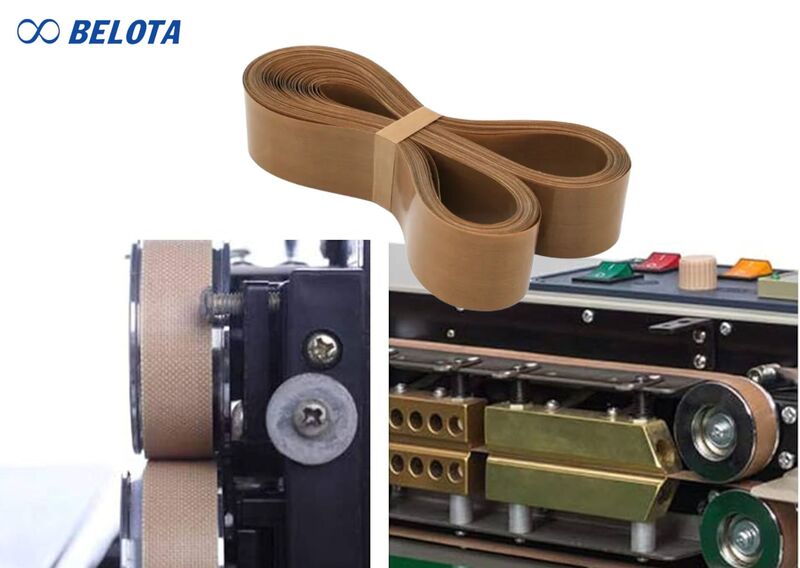
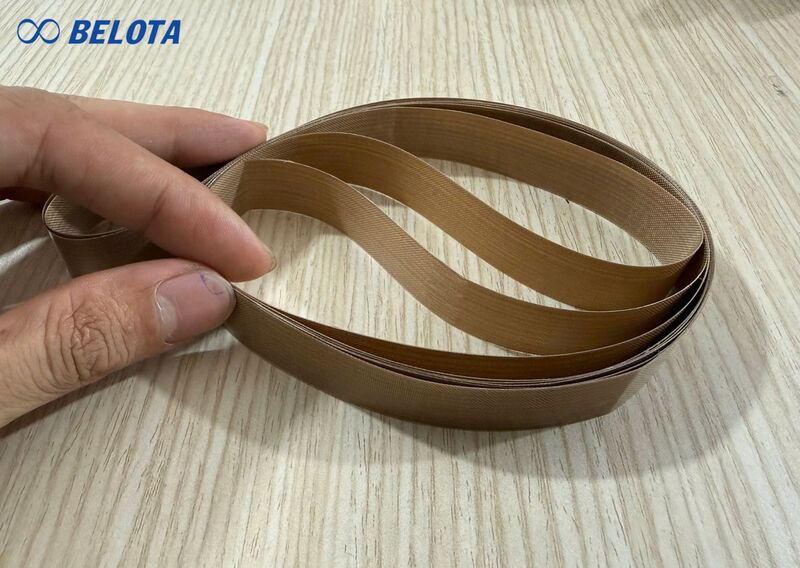
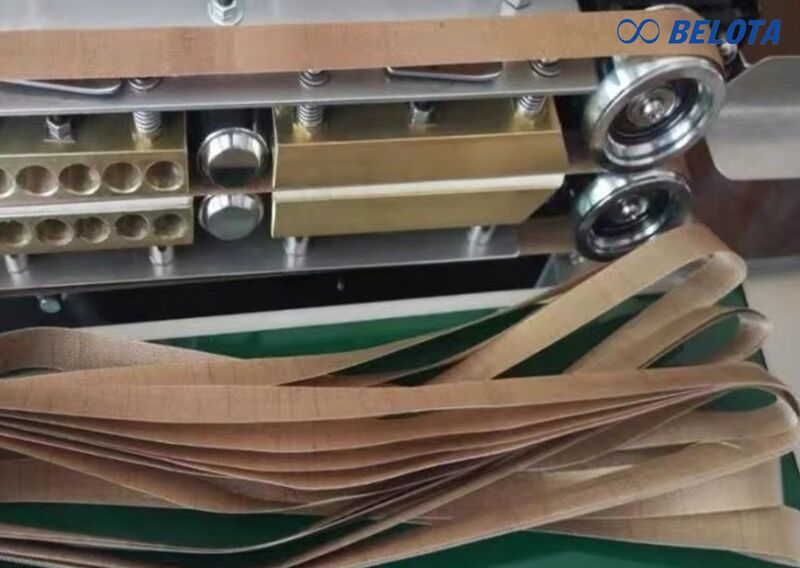
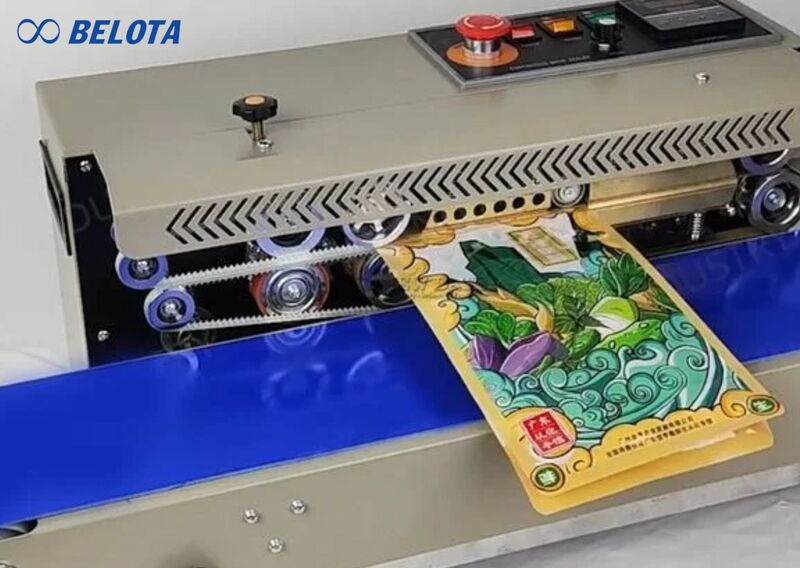
PTFE sealing belts are essential components in continuous band sealing machines, helping create strong, airtight, and visually consistent seals on plastic bags, laminated pouches, aluminum foil bags, and vacuum packaging. Featuring a non-stick PTFE (Teflon) coating and a fiberglass core, these belts deliver excellent heat resistance, long service life, and reliable performance in continuous packaging operations.
What Is a PTFE Sealing Belt?
A PTFE sealing belt is a heat-resistant conveyor belt used in bag sealing machines. It wraps around the heating block and transfers heat to the bag opening, allowing the plastic film to melt and form a clean, durable seal. Often referred to as a Teflon sealing belt or PTFE heat sealing belt, it is widely used in continuous band sealers, impulse sealers, foot-operated sealers, and automatic packaging machines.
Compatible with a wide range of packaging materials - including PE, PP, PVC, PA, PET, BOPP, aluminum foil bags, metallized pouches, coated paper bags, and vacuum bags—PTFE sealing belts are commonly used in the food, beverage, pharmaceutical, cosmetic, agricultural, and electronics industries.
Construction and Working Principle
Construction
A PTFE sealing belt consists of two main layers:
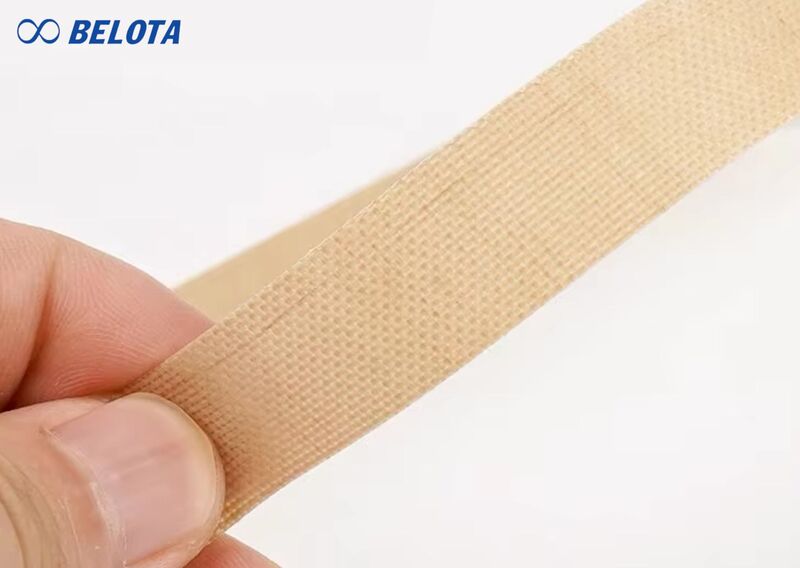
- Fiberglass fabric: Provides excellent tensile strength, dimensional stability, and resistance to deformation under high temperatures.
- PTFE (Teflon) coating: Applied to the outer surface to provide outstanding heat resistance, non-stick performance, wear resistance, and low friction, preventing packaging film from sticking during sealing.
Standard belt thickness ranges from 0.25 - 0.30 mm, with widths from 12 - 30 mm and endless circumferences from 750 - 2005 mm. Belts are available with finger joints, bias joints, or seamless endless construction to suit different sealing machines.
Working Principle
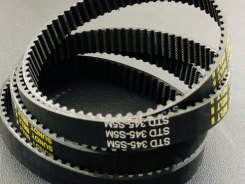
During operation, the timing belt of the band sealer transmits power from the drive motor to the conveyor system, moving the package smoothly through the sealing section. The PTFE sealing belt wraps around the heating bar, transferring heat directly to soften and fuse the plastic layers at the bag opening. The package then passes through the pressure and cooling sections, producing a tight, uniform, and professional-looking seal.
PTFE Sealing Belt Specifications
- Thickness: 0.08 mm, 0.12 mm, 0.18 mm, 0.25 mm, 0.30 mm, 0.40 mm.
- Color: Brown, White, Black.
- Operating Temperature: Up to 280°C (536°F).
- Belt Width: 12–25 mm, with custom widths available.
- Belt Circumference: 750 - 2005 mm or manufactured to match your machine specifications.
Common Belt Sizes
- 12 × 1110 mm
- 14 × 1100 mm
- 15 × 1110 mm
- 15 × 1120 mm
- 15 × 1300 mm
- 18 × 1245 mm
- 18 × 1140 mm
- 20 × 1150 mm
- 20 × 1275 mm
- 20 × 1390 mm
- 20 × 1880 mm
- 25 × 1030 mm
Belota also manufactures PTFE sealing belts to custom dimensions upon request.
Key Features
- High heat resistance up to 280°C
- Excellent non-stick surface for clean sealing
- Low coefficient of friction for smooth operation
- Outstanding wear resistance
- Flame-resistant material
- Good chemical resistance
- Excellent electrical insulation
- High tensile strength and dimensional stability
- Long service life with reduced maintenance costs
- Easy installation and replacement on various sealing machines
Joint Types
PTFE sealing belts are available in several joint configurations:
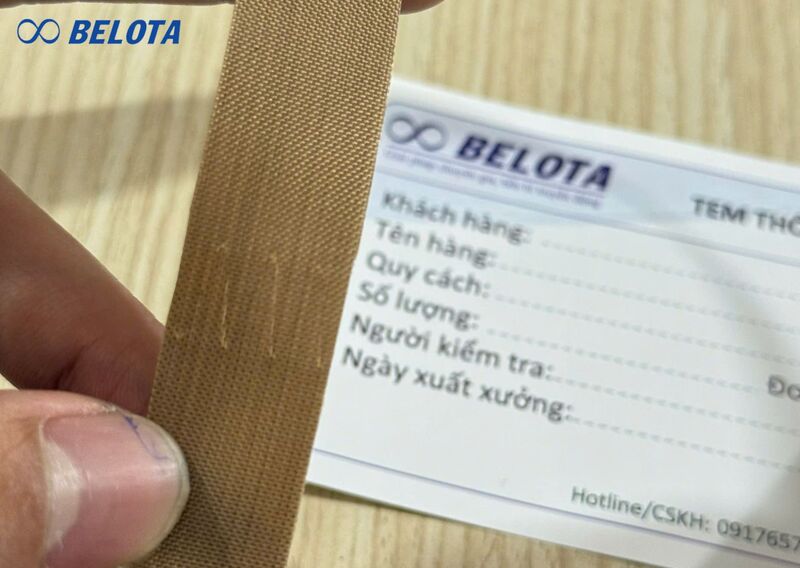
- Finger joint
- Bias joint
- Seamless endless belt
Among these, the finger joint is the most widely used because it provides excellent strength while minimizing visible joint marks on the sealed package.
Applications
PTFE sealing belts are widely used on FRD, Band Sealer, AIE, PFS, FISCHBEIN, automatic bag sealing machines, and date-printing sealers. Typical applications include:
- PE and PP bags: Food, consumer goods, industrial products, and electronic components.
- PA, PET, and BOPP pouches: High-strength packaging requiring excellent protection.
- Aluminum foil bags: Moisture-proof and oxygen-barrier packaging.
- Vacuum bags: Airtight sealing for extended shelf life.
- Food, pharmaceutical, and cosmetic packaging: Clean, consistent sealing in automated production lines.
How to Choose the Right PTFE Sealing Belt
To ensure proper fit and performance, consider the following:
- Belt circumference: Measure the belt length accurately.
- Belt width: Match the sealing machine specifications.
- Belt thickness: Influences heat transfer and durability.
- Joint type: Select the correct joint style for your machine.
- Machine model: Confirm compatibility with models such as FRD, Band Sealer, PFS, AIE, and others.
- Date-printing sealers: Typically require longer sealing belts than standard continuous sealers.
Common Problems and Solutions
| Issue | Cause | Solution |
|---|---|---|
| Packaging sticks to the belt | PTFE coating worn out | Replace the PTFE sealing belt. |
| Uneven seal | Belt stretched or misaligned | Re-tension or replace the belt. |
| Torn belt | Overloading or contact with sharp objects | Install the correct replacement belt. |
| Belt tracking off-center | Improper installation or uneven tension | Adjust belt alignment and belt tension. |
| Short belt life | Excessive operating temperature or poor maintenance | Lower the sealing temperature and perform routine machine maintenance. |
Your Reliable PTFE Sealing Belt Supplier
Belota supplies premium-quality PTFE sealing belts in a wide range of standard sizes and also offers custom manufacturing services. Our products provide outstanding heat resistance, excellent non-stick performance, and long-lasting durability, making them suitable for many of the most widely used bag sealing machines.
When you choose Belota, you benefit from:
- High-quality PTFE sealing belts
- Complete range of sizes and thicknesses
- Custom widths and circumferences
- Precision-manufactured belt joints
- Professional product selection support
- Competitive pricing and fast delivery
Frequently Asked Questions
What temperature can a PTFE sealing belt withstand?
PTFE sealing belts can operate continuously at temperatures of up to 280°C (536°F), making them suitable for most industrial bag sealing applications.
When should I replace the sealing belt?
Replace the belt if you notice worn PTFE coating, surface damage, tearing, or inconsistent sealing performance.
Which sealing machines are compatible?
PTFE sealing belts are compatible with many machines, including FRD, Band Sealer, AIE, PFS, FISCHBEIN, and other continuous band sealers.
Does Belota provide custom-made sealing belts?
Yes. Belota manufactures PTFE sealing belts to customer specifications, including custom thicknesses, widths, circumferences, and joint types to fit specific machine models.
Conclusion
A PTFE sealing belt is a critical component for achieving strong, consistent, and professional-quality seals across a wide range of packaging applications. Selecting the correct belt size, thickness, and joint type helps maximize machine performance, improve seal quality, and reduce maintenance costs. With a comprehensive selection of standard products and custom manufacturing capabilities, Belota provides dependable PTFE sealing belt solutions for modern packaging and bag sealing systems worldwide.