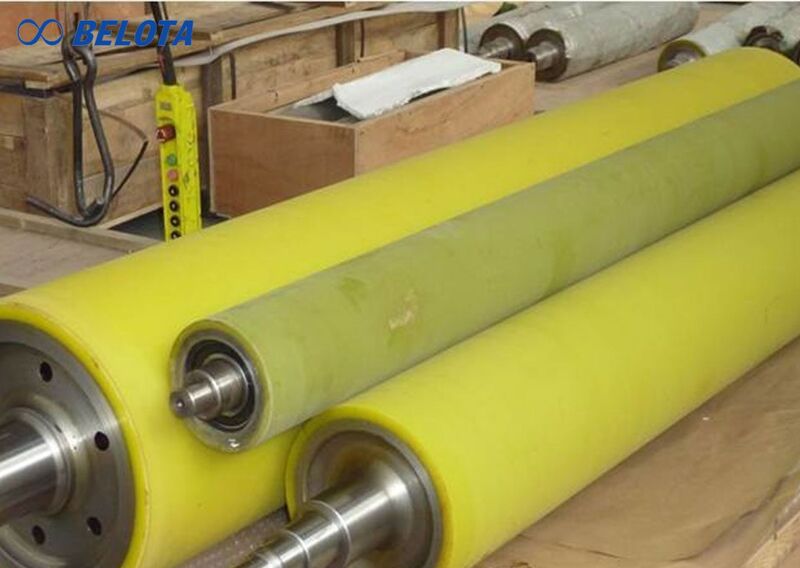
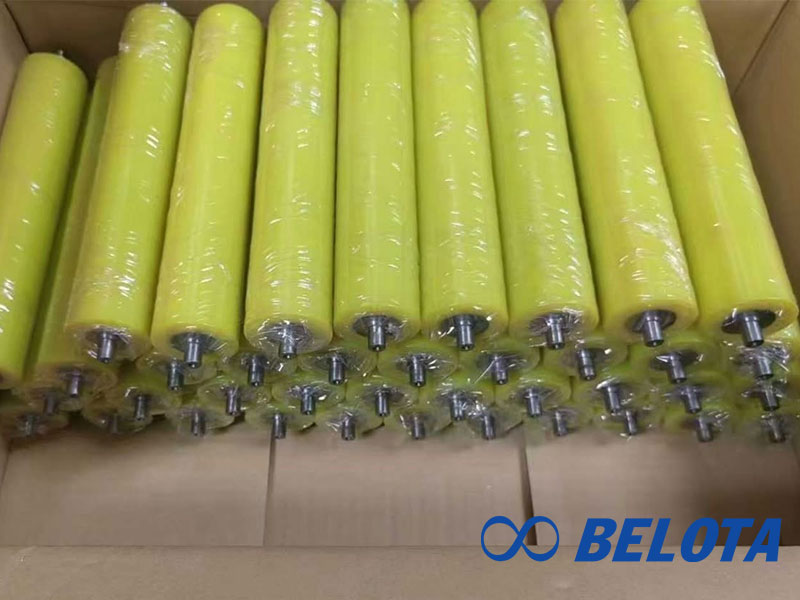
When rollers come into direct contact with products, metal surfaces can generate noise, cause scratches, or affect conveying stability. A polyurethane (PU) coating provides an elastic contact surface that helps reduce impact, limit wear, and improve the grip between the roller and the product. PU-coated rollers are used in various conveying systems and production lines where smooth operation, reliable grip, and product surface protection are required. This article covers the structure, material properties, Shore hardness, and key factors to consider when selecting PU rollers for different operating conditions.
What Is a PU-Coated Roller?
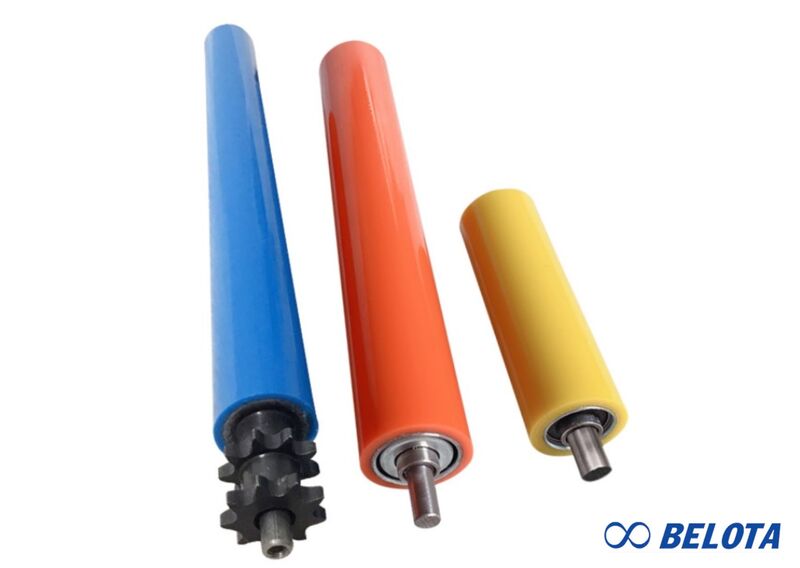
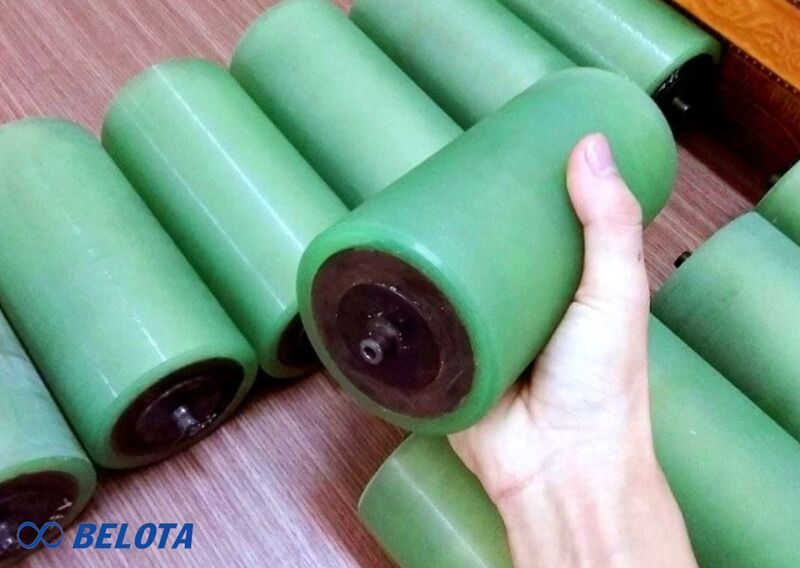
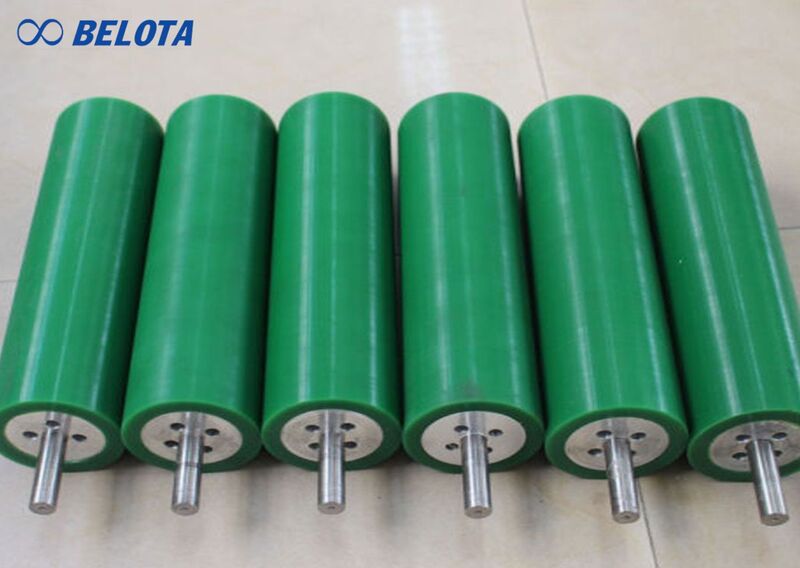
A PU-coated roller is a roller with a metal core covered by a layer of polyurethane (PU) to create the contact surface with the product. PU offers good elasticity, wear resistance, and adjustable hardness to suit different operating requirements.
Compared with conventional metal rollers, PU-coated rollers are better suited to applications that require reduced impact, less surface scratching, improved grip, or lower operating noise. Depending on the conveyor system, rollers can be manufactured in different diameters, lengths, PU hardness levels, and surface configurations.
Structure of a PU-Coated Roller
Roller Core
The core is typically manufactured from steel or stainless steel, forming the main structure of the roller and supporting most of the load during operation. Core dimensions are determined based on the roller diameter, length, applied load, and installation method within the system.
Polyurethane Coating
The PU layer is the part that comes directly into contact with the product. Its hardness and thickness affect elasticity, grip, vibration absorption, and wear resistance during operation.
PU selection should be based on the characteristics of the conveyed product and actual operating conditions. Products that are easily scratched or require impact reduction may be better suited to a more elastic coating. For heavy loads and applications where deformation must be minimized, a suitable higher-hardness PU formulation should be considered.
Shaft and Bearings
The shaft connects the roller to the supporting frame and transmits motion in driven roller systems. Shaft dimensions must provide sufficient rigidity and minimize deflection under load.
Bearings determine the smoothness of rotation and directly affect operating resistance. Bearing selection should consider radial load, rotational speed, operating time, and environmental conditions such as dust, moisture, or chemicals.
Technical Specifications of PU-Coated Rollers
- Core material: Steel, stainless steel, or aluminum as required
- Surface: PU-coated, with customizable coating thickness
- PU hardness: 50–95 Shore A, selected according to load and application
- Roller diameter: Ø34, Ø42, Ø49, Ø50, Ø60 mm
- Length: 100–1400 mm or customized according to requirements
- Shaft: Steel or stainless steel, with dimensions based on the design
- Bearings: Plastic bearings, steel bearings, or other bearing configurations as required
- Color: Black, blue, red, or customized
- Manufacturing: Based on technical drawings, existing samples, or conveyor system specifications
Technical Advantages of PU-Coated Rollers
The polyurethane (PU) layer determines many of the roller's surface characteristics when it comes into contact with products. Compared with metal surfaces, PU can absorb impact, provide grip, and reduce the risk of scratching products. Actual performance depends on the PU formulation, hardness, and operating conditions.
Wear Resistance
PU offers good wear resistance under continuous friction, making it suitable for roller positions that frequently contact products or guiding surfaces. Coating service life is affected by load, rotational speed, operating frequency, surface roughness, product material, operating temperature, and the specific PU formulation.
Elasticity and Shock Absorption
Polyurethane has good elasticity, allowing the surface to deform within a certain range under load. This enables the coating to absorb part of the vibration and impact, helping the roller operate more smoothly. This property is particularly useful when conveying products with easily scratched surfaces or applications where mechanical impact needs to be minimized.
Friction and Grip
The PU surface provides suitable friction for pulling, guiding, positioning, or maintaining product movement. Actual grip depends on PU hardness, the condition of the contact surface, and operating conditions. Compared with a rubber-coated roller, PU can be suitable for applications requiring stable grip and good wear resistance, while rubber is softer and more elastic, making it suitable when impact absorption and increased grip are prioritized. Therefore, the choice between the two materials should consider load, rotational speed, product surface, and working environment.
Oil and Chemical Resistance
Some PU formulations provide resistance to oils, grease, and certain industrial chemicals. However, resistance varies between PU formulations. If the roller is exposed to oil, solvents, cleaning agents, or specialized chemicals, material compatibility should be checked before selection.
Temperature Resistance
The temperature resistance of a roller depends on the polyurethane formulation. As temperature increases, the hardness, elasticity, and wear resistance of the coating may change. For high-temperature applications or processes with continuous temperature fluctuations, the operating temperature range of the specific PU material should be clearly determined to ensure roller service life and performance.
Shore Hardness of PU-Coated Rollers
Hardness is one of the key specifications to consider when selecting a polyurethane coating. As the Shore A value increases, the material generally becomes harder and deforms less under the same applied force. Conversely, lower-hardness PU is softer and more elastic.
This parameter directly affects surface contact, deformation under load, and the roller's operating performance.
| Reference Hardness | Surface Characteristics | Typical Applications |
|---|---|---|
| 50–60 Shore A | Soft, highly elastic | Products requiring impact absorption and surface protection |
| 60–75 Shore A | Balanced softness and hardness | Conveying and guiding rollers |
| 75–85 Shore A | Harder surface, good wear resistance | Industrial conveying systems |
| 85–95 Shore A | Hard, low deformation | Applications requiring high load capacity and wear resistance |
The ranges above are for reference only and should not be considered fixed limits for every roller. When determining PU hardness, product type, applied load, operating speed, grip requirements, and environmental conditions should be considered together.
In practice, selecting a harder PU does not necessarily mean better performance. Hardness should be balanced between load capacity, grip, shock absorption, and product surface protection requirements.
Industrial Applications of PU-Coated Rollers
- Conveyor and material handling systems: Used in roller conveyors, sorting systems, carton conveying, and transfer points where additional grip is required.
- Packaging lines: Suitable for feeding, conveying, and guiding boxes, bottles, packaging materials, or products that require surface protection.
- Electronics manufacturing and assembly: Used for guiding, conveying, or inspection processes where impact and hard contact with products should be minimized.
- Food processing lines: Can be used for certain conveying and guiding applications. For direct food contact, the PU coating must comply with applicable food-contact requirements.
- Automation systems: Used for pulling, guiding, positioning, or holding products through stable friction.
Operating and Maintenance Considerations for PU-Coated Rollers
Roller service life depends significantly on operating conditions and maintenance practices. The following points should be checked periodically:
- Do not operate the roller beyond its designed load capacity.
- Inspect the PU surface for cracks, tears, coating separation, uneven wear, or deformation.
- Avoid contact with sharp edges, metal corners, or hard objects that may damage the PU coating.
- Check bearing play and shaft condition during scheduled maintenance.
- Monitor noise, vibration, or irregular rotation to identify mechanical problems at an early stage.
- Use cleaning agents compatible with polyurethane, especially in production lines requiring frequent cleaning.
- In high-temperature environments, monitor the coating for hardening, softening, or deformation.
- When the PU coating reaches its service limit, recoating the existing core may be considered if the core, shaft, and mounting areas still meet the required mechanical conditions.
Belota Supplies Custom PU-Coated Rollers
Belota supplies PU-coated rollers for conveyor systems, machinery, and production lines. Rollers can be manufactured according to required diameter, length, core material, PU coating thickness, and Shore hardness. Customers can provide technical drawings, existing roller samples, or dimensional specifications so Belota can check the configuration and recommend a suitable design. Rollers are available with different diameters, lengths, shafts, bearings, and PU coating specifications, with Shore hardness selected according to the product, applied load, and actual operating conditions.
The price of PU-coated rollers depends on dimensions, core material, coating thickness and hardness, shaft configuration, bearings, and order quantity. Belota provides quotations based on the actual configuration so businesses can determine the appropriate cost for each requirement. Products are covered by a 6-month warranty according to the company's warranty terms. For replacement rollers, customers can provide an existing sample or technical drawing so Belota can check the dimensions, shaft position, and other relevant specifications before manufacturing.
Contact Belota for detailed consultation on PU-coated rollers.
- Email: info@belota.com.vn
- Hotline/Zalo: 0917 657 946
- Address: B74 Le Thi Rieng Street, Thoi An Residential Area, Thoi An Ward, Ho Chi Minh City, Vietnam