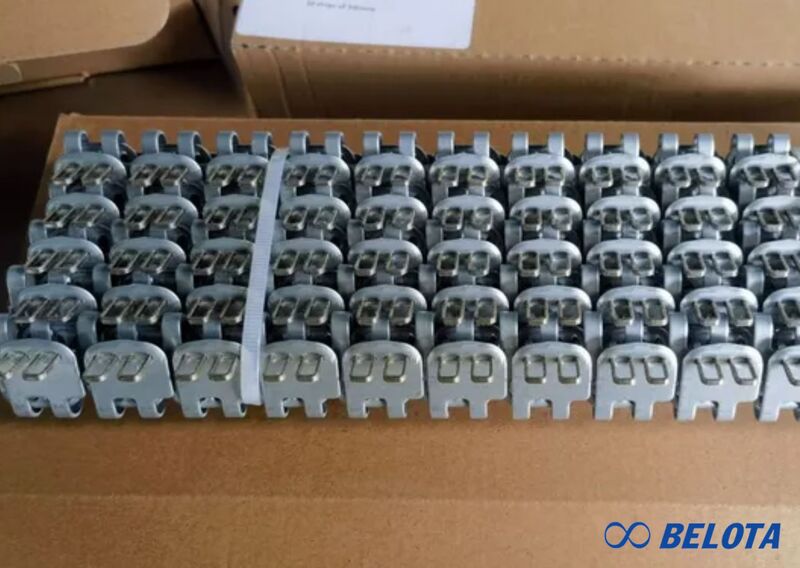
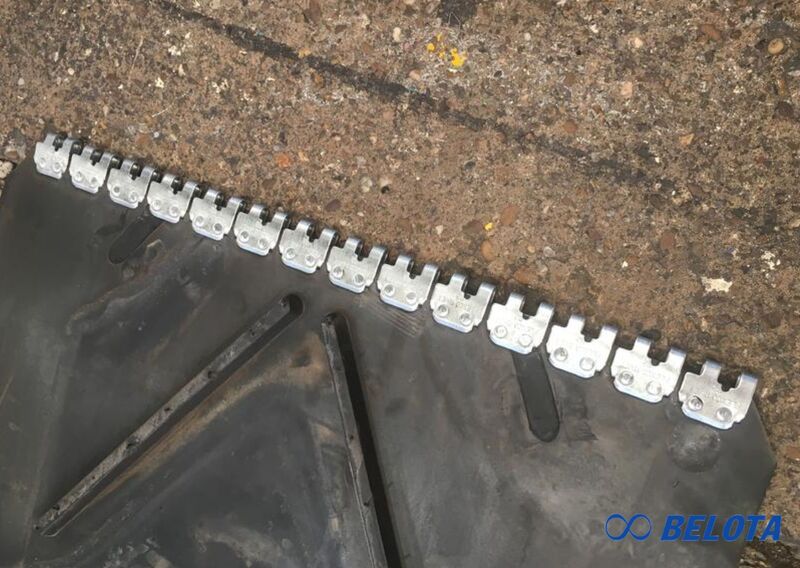
Alligator conveyor belt fasteners provide a quick way to join two belt ends, making repairs and replacements easier without requiring hot vulcanization. Belota Co., Ltd. supplies fasteners suitable for conveyor belts with thicknesses of 1.5 - 4.0 mm, helping businesses reduce machine downtime and maintain production operations. Let’s explore the advantages, specifications, and selection criteria for these fasteners.
What Are Alligator Conveyor Belt Fasteners?
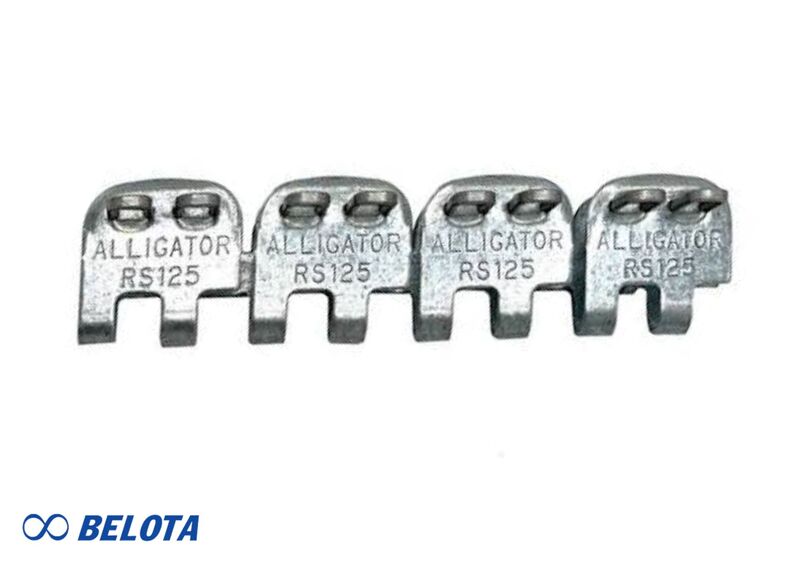
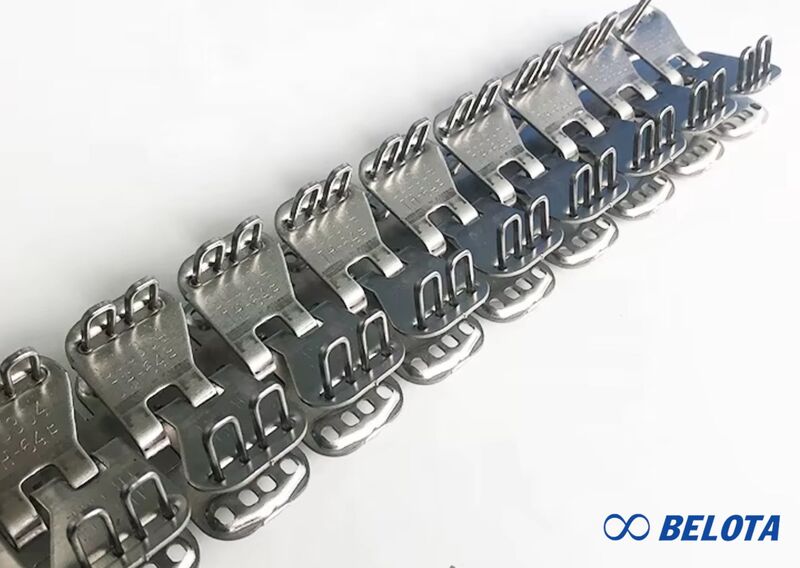
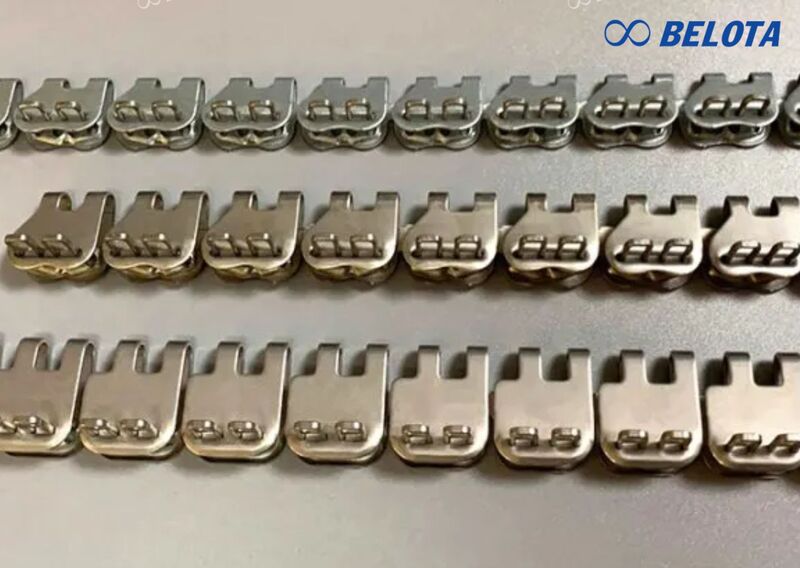
Alligator conveyor belt fasteners, also known as Alligator belt lacing or fishbone-style conveyor belt fasteners, are mechanical components used to connect two ends of a conveyor belt with a metal splice. They feature a series of interlocking teeth that are pressed into both belt ends to create a mechanical joint.
These fasteners are commonly made of steel or corrosion-resistant stainless steel, offering impact resistance during operation. They are used to form endless conveyor belts or repair damaged belts, particularly in applications where quick installation and convenient maintenance are required.
Alligator Conveyor Belt Fastener Specifications
|
Product Code |
Compatible Belt Thickness |
Reference Minimum Pulley Diameter |
Origin/Brand |
|---|---|---|---|
|
7S-24 |
1.5 - 4.0 mm |
50 mm |
Flexco – USA |
|
No. 7 – 600 mm |
1.5 - 4.0 mm |
50 mm |
China |
|
No. 7 – 1200 mm |
1.5–4.0 mm |
50 mm |
China |
The specifications above are provided for reference when selecting a product. Actual compatibility depends on the specific fastener series, belt material, load, and operating conditions. Businesses should confirm the specifications with the supplier before placing an order.
Advantages of Alligator Conveyor Belt Fasteners
- Quick belt joining: Specialized tools are used to press the fasteners into both belt ends without hot vulcanization, reducing installation time and machine downtime during repairs and maintenance.
- Easy repairs and maintenance: Convenient for troubleshooting, replacing damaged sections, and adjusting belt length.
- Versatile applications: Suitable for certain PVC conveyor belts, PU belts, and rubber belts with thicknesses of 1.5–4.0 mm, depending on belt construction and operating conditions.
Note: Not all PVC, PU, and rubber conveyor belts can use the same fastener type. Belt construction, hardness, reinforcement layers, and operating conditions should be checked before selecting a suitable model.
Disadvantages of Alligator Conveyor Belt Fasteners
- Load limitations: Not suitable for every heavy-duty conveying system or applications involving severe impact.
- Potential operating noise: Metal fasteners may create noise or impact when passing over small-diameter pulleys and rollers.
- Not suitable for every application: Mechanical splices may not meet the requirements of applications that demand a seamless belt surface or strict hygiene standards.
How to Choose the Right Alligator Conveyor Belt Fasteners
Select according to conveyor belt width: Alligator conveyor belt fasteners are available in different lengths, such as 600 mm and 1200 mm. Choose a fastener length that matches the belt width to ensure an even and secure splice across the belt.
Select according to brand: Belota supplies Flexco Alligator conveyor belt fasteners from the USA, as well as fasteners manufactured in China to meet different application requirements and budgets. Customers can select products based on their operating conditions and conveyor system specifications.
Choose Based on Belt Material and Operating Conditions: Alligator belt fasteners are best suited for splicing rubber conveyor belts used in heavy industries, such as systems conveying sand, gravel, and other bulk materials. For heavy-duty or continuous-operation systems, check the fasteners’ load-bearing capacity and compatibility with the belt before use.
Tips for Using Alligator Conveyor Belt Fasteners
Before installation, inspect the belt ends, trim any damaged sections, and ensure both ends are straight and properly aligned. Use a tool compatible with the selected fastener model to ensure the teeth grip securely and are distributed evenly across the belt width.
After joining, check the splice alignment, ensure it passes smoothly over the pulleys, and inspect its contact with the rollers. For applications involving small materials, requiring a sealed belt surface, handling heavy loads, or operating at high speeds, carefully evaluate whether a mechanical splice is appropriate compared with hot splicing or vulcanization.
Conclusion
Alligator conveyor belt fasteners provide a quick and convenient solution for joining conveyor belts during repairs and maintenance. To ensure a secure splice and stable operation, businesses should select fasteners that match the belt width, thickness, and actual operating conditions. Belota supplies Flexco Alligator fasteners and other suitable fastener options, with support for product selection, specification verification, and quotation requests.