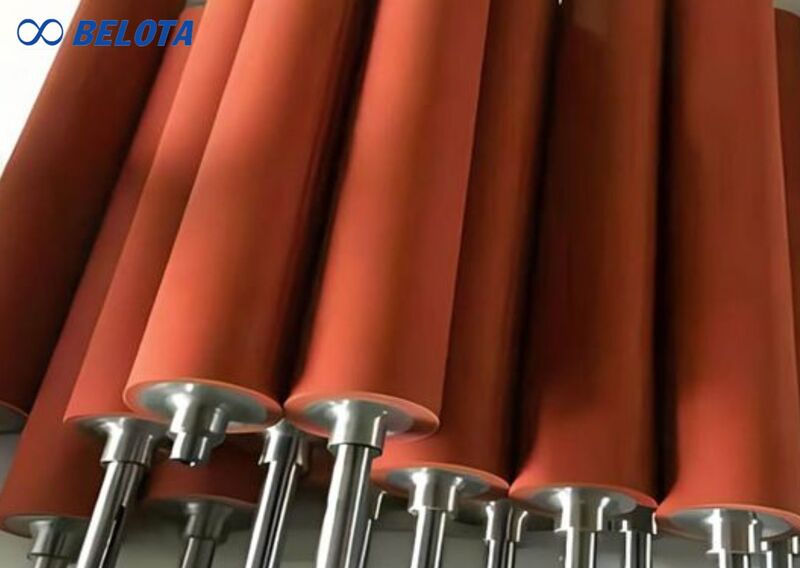
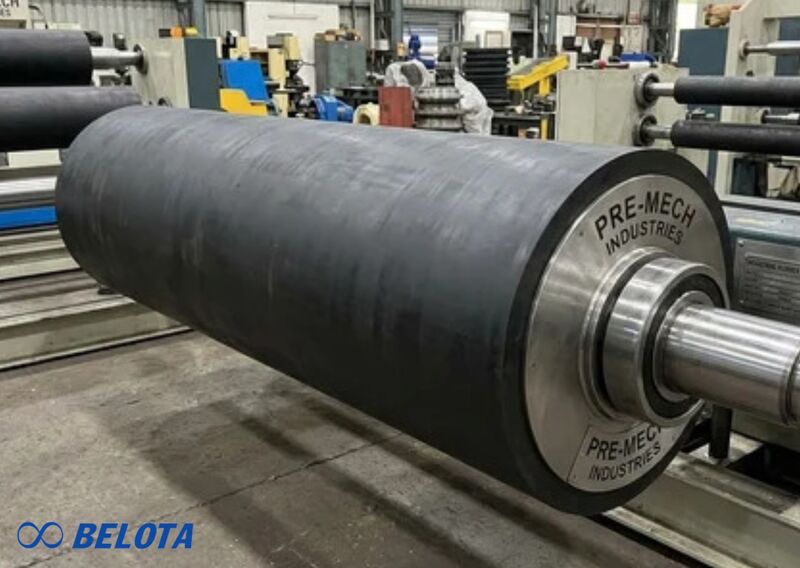
Rubber rollers are widely used in conveyor systems and industrial production lines. The rubber coating on the outer surface helps increase grip, reduce slipping, absorb vibration, and protect product surfaces during conveying or processing. The operating performance of a rubber roller depends on the covering material, core construction, rubber hardness, and working conditions. Each application requires different technical specifications to ensure durability and reliable performance. This article provides an overview of rubber roller construction, covering materials, technical specifications, and the key factors to consider when selecting a suitable roller for industrial applications.
Structure and Working Principle of Rubber Rollers
Structure
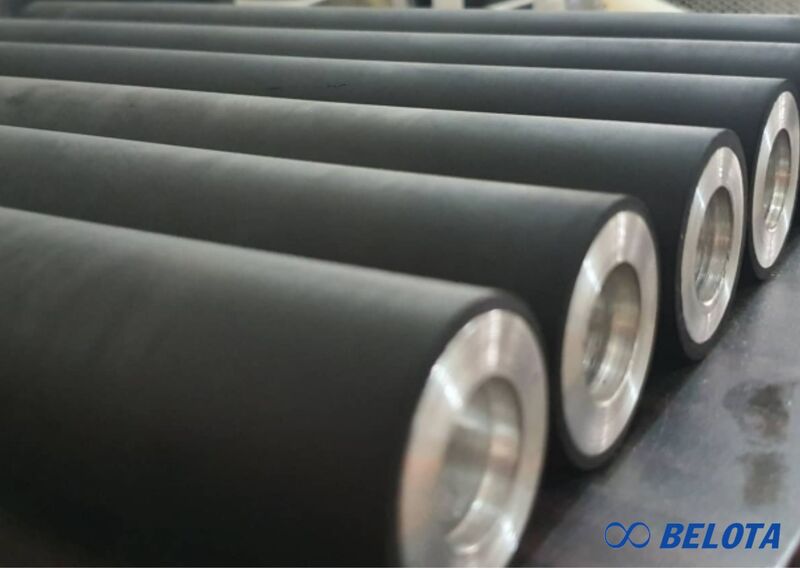
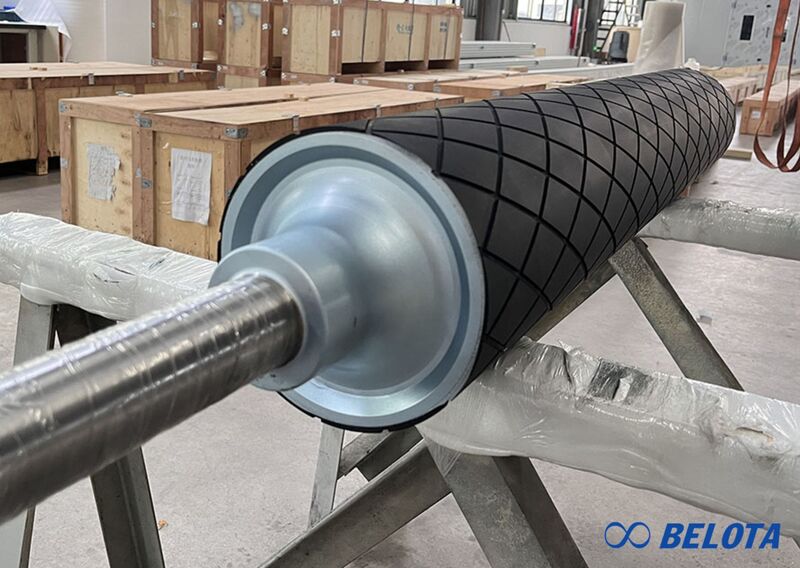
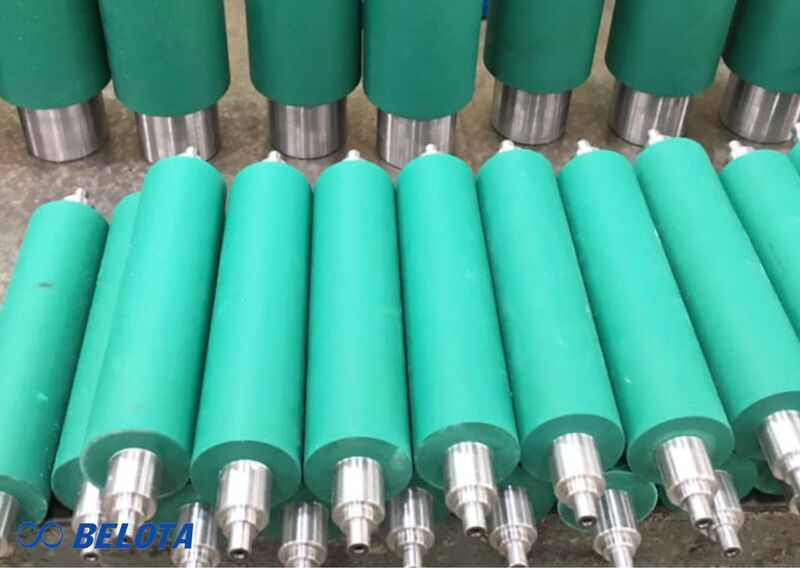
A rubber roller is an industrial roller consisting of a metal core covered with an outer rubber layer. It generally consists of three main components:
- Roller shaft or metal core: The main load-bearing component, commonly manufactured from C45 steel, galvanized steel, or stainless steel, depending on the load capacity and operating environment.
- Bonding layer: A specialized adhesive layer used to create a strong bond between the metal core and the outer rubber covering, helping reduce the risk of delamination during continuous operation or under load.
- Rubber covering: The outer layer surrounding the metal core, which may be made from natural rubber or synthetic rubber. The rubber type and hardness are selected based on requirements for shock absorption, grip, wear resistance, or oil resistance.
Compared with steel rollers, rubber rollers generally provide better traction, helping reduce slipping, absorb vibration, and protect product surfaces during contact. For this reason, they are commonly selected for applications that require stable handling and reduced risk of material damage.
Working Principle
During operation, the rubber surface comes into direct contact with the conveyor belt or conveyed material, creating friction that supports stable driving and guiding. At the same time, the elastic properties of the rubber layer absorb part of the vibration, reduce impact, and help minimize wear on both the roller and the conveyed product.
The performance of a rubber roller mainly depends on three factors:
- The coefficient of friction of the covering material
- The elasticity of the rubber layer
- Proper and even load distribution across the working length of the roller
Reference Technical Specifications for Rubber-Coated Rollers
- Core material: C45 steel, stainless steel 304/316, or aluminum.
- Covering material: Natural rubber or synthetic materials such as NBR, SBR, EPDM, or PU.
- Roller diameter: Ø34, Ø42, Ø49, and Ø60 mm.
- Roller length: Approximately 150–3,500 mm.
- Rubber coating thickness: Approximately 3–20 mm, depending on the application.
- Surface hardness: Typically 50–80 Shore A.
- Operating temperature: Approximately -20°C to 120°C, depending on the covering material.
- Load capacity: Approximately 50–5,000 kg, depending on roller dimensions, core construction, and overall design.
Actual specifications may vary depending on the material, dimensions, and operating conditions.
Types of Rubber Rollers by Construction and Application
Depending on operating conditions and the type of material being handled, rubber rollers can be designed in different configurations to meet the requirements of specific production lines.
Common designs may vary according to the roller core, rubber material, surface hardness, coating thickness, shaft configuration, and intended function, such as driving, pressing, guiding, or conveying.
Advantages and Limitations of Rubber Rollers
Advantages
Compared with conventional metal rollers, rubber rollers are widely used in industrial production lines because they provide stable operation and can be adapted to different materials and working conditions.
Increased Grip and Effective Power Transmission
Rubber generally has a higher coefficient of friction than steel surfaces, helping improve traction and reduce slipping during material handling or conveyor belt driving.
Reduced Vibration and Operating Noise
Thanks to its elastic properties, the rubber layer can absorb part of the vibration and reduce operating noise more effectively than a galvanized steel roller with a hard metal surface. This helps the system operate more smoothly and reduces impact on the conveyed material.
Protection of Product Surfaces
For materials that are easily scratched, such as paper, plastic film, aluminum, glass, or packaging materials, the rubber surface helps reduce impact and minimize surface damage during contact with the roller.
Suitable for Different Operating Conditions
Rubber rollers can be covered with materials such as NBR, EPDM, silicone, or polyurethane (PU), allowing the roller to be selected according to requirements for oil resistance, heat resistance, wear resistance, or food-safe applications.
Limitations
Despite their advantages, rubber rollers also have certain limitations that should be considered during the selection and system design process.
Service Life Depends on Operating Conditions
The rubber layer can age over time due to load, temperature, UV exposure, or chemical environments. If the roller operates beyond its design limits, the rubber surface may crack, harden, or separate from the core.
Not Every Material Is Suitable for Every Application
Each rubber compound has different performance characteristics. For example, NBR is suitable for environments involving oils and grease but has limited weather resistance. EPDM performs well in hot water and ozone environments but is generally not suitable for prolonged contact with mineral oils.
Requires Regular Inspection and Maintenance
During operation, the rubber surface should be inspected for wear, while the bearings and roller alignment should also be checked periodically to maintain stable performance.
Rubber Covering Materials and Their Technical Properties
Selecting the right covering material directly affects the service life, operating performance, and maintenance requirements of the roller. Different materials are suitable for different working conditions.
- NBR rubber (Nitrile): Provides good resistance to oils and grease as well as good wear resistance. It is commonly used in mechanical engineering, metal processing, and systems exposed to lubricants.
- EPDM rubber: Offers good resistance to weathering, ozone, and hot water, making it suitable for outdoor environments or production lines exposed to steam or moisture.
- Silicone rubber: Provides high heat resistance and can be formulated for applications requiring food-contact or hygienic properties. It is commonly used in food processing, pharmaceutical, and packaging applications where appropriate material grades are selected.
- Polyurethane (PU): Offers high hardness, good wear resistance, and strong load-bearing performance, making it suitable for high-intensity or heavy-duty applications.
- Natural rubber (NR): Provides good elasticity and is relatively economical, making it suitable for general applications that do not require high resistance to oils or aggressive chemicals.
Rubber Roller Manufacturing Process
The quality of a rubber roller depends not only on the selected material but also on the manufacturing process.
Production typically begins with machining the steel or metal core according to the required dimensions and tolerances. The core surface is then cleaned and prepared to improve adhesion between the metal and the rubber covering.
Next, the rubber material is applied to the core and vulcanized under suitable temperature and pressure conditions to create a durable bond between the two materials. After vulcanization, the roller is machined and ground to achieve the required dimensions, concentricity, and surface finish.
Before delivery, the roller may be inspected for key parameters such as dimensions, runout, concentricity, Shore A hardness, and rubber-to-metal adhesion to ensure stable performance during operation.
Applications of Rubber-Coated Rollers
Rubber-coated rollers are used where the contact surface requires increased grip, reduced impact, protection against scratching, or improved handling stability. Depending on the rubber material and roller design, they can be used in the following applications:
- Conveyor systems: Used as drive rollers or support rollers in selected systems where increased friction between the roller and conveyor belt is required.
- Steel and metal processing: Used for guiding, pressing, or handling metal sheets and coils while helping reduce the risk of surface scratching.
- Paper and packaging: Used in pressing, guiding, pulling, or transporting paper and sheet materials.
- Printing industry: Used in mechanisms for pulling, pressing, and guiding paper, film, and other printing materials.
- Plastics, rubber, and film processing: Used for pulling, pressing, guiding, or processing roll-fed and sheet materials.
- Textile industry: Used for guiding and transporting fabrics while reducing slipping and limiting surface damage.
- Packaging lines: Suitable for conveying or handling products with surfaces that are easily scratched or applications requiring more grip than conventional metal rollers.
- Industrial machinery: Can be designed as pressure rollers, pull rollers, guide rollers, or drive rollers depending on the machine configuration.
Installation, Maintenance, and Common Problems
To ensure stable operation, roller dimensions, concentricity, and bearing condition should be checked before installation. During operation, regular cleaning and inspection of the rubber surface are recommended, and damaged components should be repaired or replaced when necessary.
Common issues and recommended solutions include:
| Issue | Possible Cause | Recommended Solution |
|---|---|---|
| Rubber layer separation | Poor bonding or excessive operating load | Re-coat the roller or replace it |
| Roller runout or wobbling | Core or shaft is not properly concentric | Inspect and realign the roller |
| Rapid rubber wear | Unsuitable material selection or excessive operating temperature | Select a more suitable covering material |
| Rubber hardening | Aging or exposure to incompatible chemicals | Replace the rubber covering |
| Material slipping | Shore A hardness is not suitable for the application | Adjust or select an appropriate rubber hardness |
| System vibration during operation | Excessive runout or damaged bearings | Check alignment and balance, and replace bearings if necessary |
Custom Rubber Roller Manufacturing Services
Belota provides custom rubber roller manufacturing based on technical drawings or actual samples, serving the requirements of various industrial applications. Customers can select covering materials such as NBR, EPDM, silicone, polyurethane (PU), or natural rubber according to load requirements, operating environments, and technical specifications.
Each roller can be manufactured and inspected according to important parameters such as dimensions, concentricity, runout, Shore A hardness, and rubber adhesion before delivery. The technical team also provides support in selecting suitable materials, roller construction, and specifications based on actual operating conditions.
For custom projects, Belota can manufacture rollers according to drawings, provide technical documentation, and supply CO/CQ documentation when required. Customers can provide dimensions, technical drawings, or an existing roller sample for evaluation and consultation on a suitable manufacturing solution.
Frequently Asked Questions About Rubber Rollers
When Should Rubber Rollers Be Used Instead of Steel Rollers?
Rubber rollers are suitable for systems that require increased grip, reduced slipping, and better protection against scratches or surface damage. The rubber layer can also help reduce vibration and operating noise. For applications that mainly require high load capacity without the need for a softer contact surface, steel rollers may be a more suitable option.
Why Does the Rubber Layer Separate From the Steel Core?
Rubber separation can result from inadequate surface preparation of the steel core, insufficient bonding or vulcanization quality, or operation beyond the designed load and temperature limits. Depending on the extent of the damage, the roller can be re-coated or replaced to restore stable operation.
What Information Is Needed When Ordering a Custom Rubber Roller?
To improve manufacturing accuracy and reduce production time, customers should provide a technical drawing or an actual sample, roller dimensions, shaft diameter, working length, preferred covering material, and information about load capacity, rotational speed, and operating environment.
If complete specifications are not available, the manufacturer or supplier can assist with technical evaluation and recommend a suitable configuration.
Conclusion
Selecting the right covering material and technical specifications can help rubber rollers operate reliably, extend service life, and reduce maintenance costs. Understanding the roller construction, material properties, operating conditions, and load requirements makes it easier to select a suitable solution for each application. For detailed consultation on rubber rollers or custom rubber roller manufacturing, please contact Belota using the information below:
- Email: info@belota.com.vn
- Hotline/Zalo: 0917 657 946
- Address: B74 Le Thi Rieng Street, Thoi An Residential Area, Thoi An Ward, Ho Chi Minh City, Vietnam