During conveyor operation, especially in cement plants, mining sites, and building material manufacturing facilities, material carryback on the conveyor belt is a common issue. Materials such as coal, crushed stone, cement, clay, mineral powder, and wet bulk materials can adhere to the belt surface, leading to excessive wear, belt mistracking, reduced productivity, and higher maintenance costs. A motorized conveyor brush cleaner is an effective solution for removing residual materials from the belt surface, ensuring stable conveyor performance and extending belt service life.
What is a Conveyor Brush Cleaner?
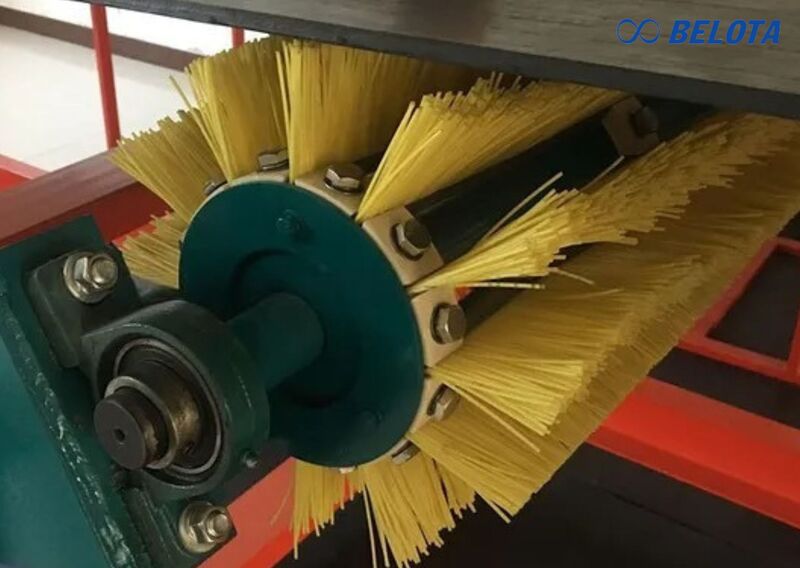
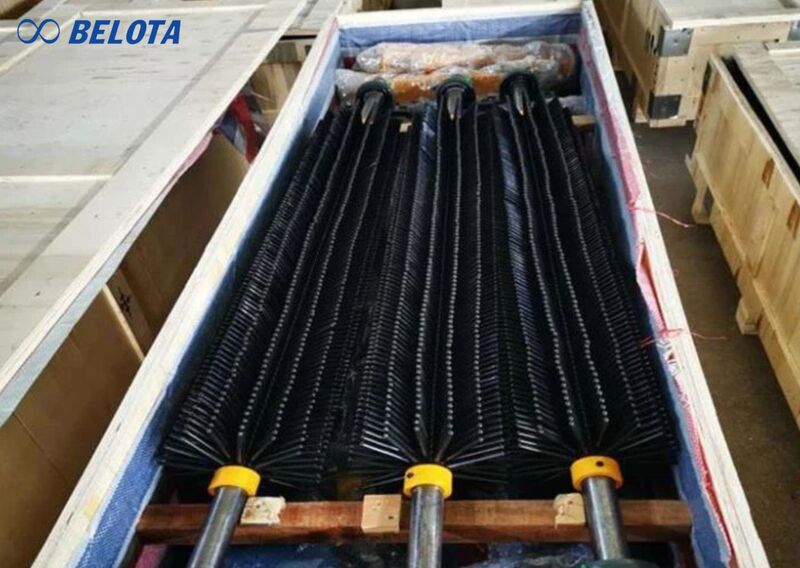
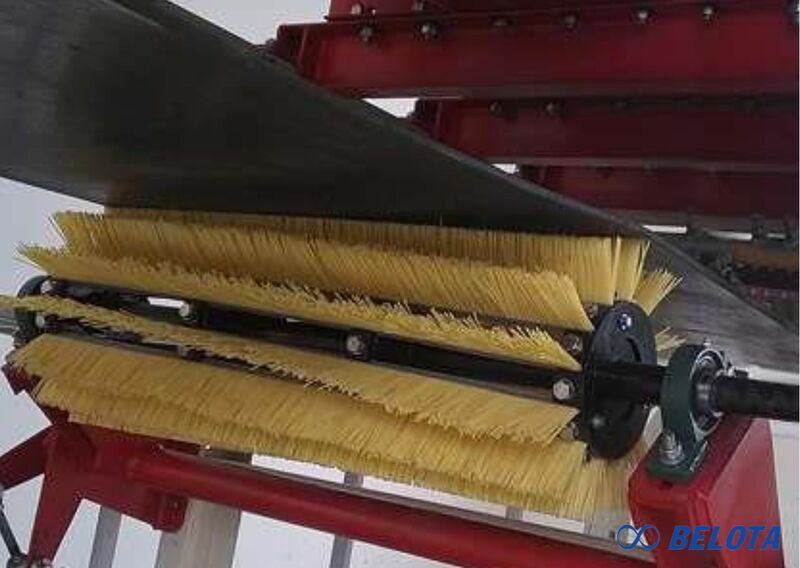
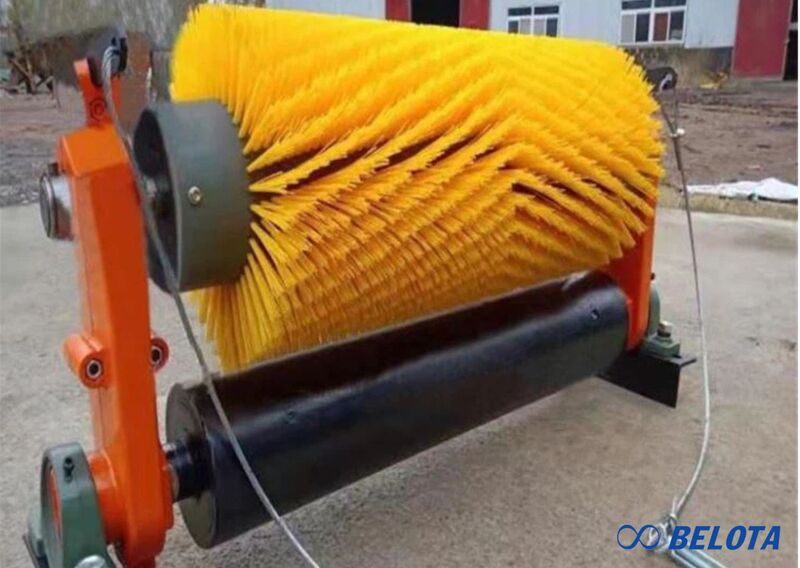
A Brush Belt Cleaner is a conveyor cleaning device that uses a gear motor to drive a cylindrical brush rotating in the opposite direction of the conveyor belt. As the brush rotates, its bristles sweep away residual materials remaining on the belt surface. It is particularly effective for chevron belts, cleated belts, and patterned conveyor belts, where conventional polyurethane (PU) belt scrapers are less effective.
Unlike traditional mechanical scrapers that rely on blade pressure, a motorized brush cleaner uses hundreds of nylon, polyurethane (PU), or rubber bristles to gently contact the belt surface. This cleaning mechanism effectively removes fine dust, sticky materials, and particles trapped in grooves without damaging the conveyor belt.
Components of a Motorized Conveyor Brush Cleaner
A typical motorized brush cleaner consists of the following components:
Brush Roller
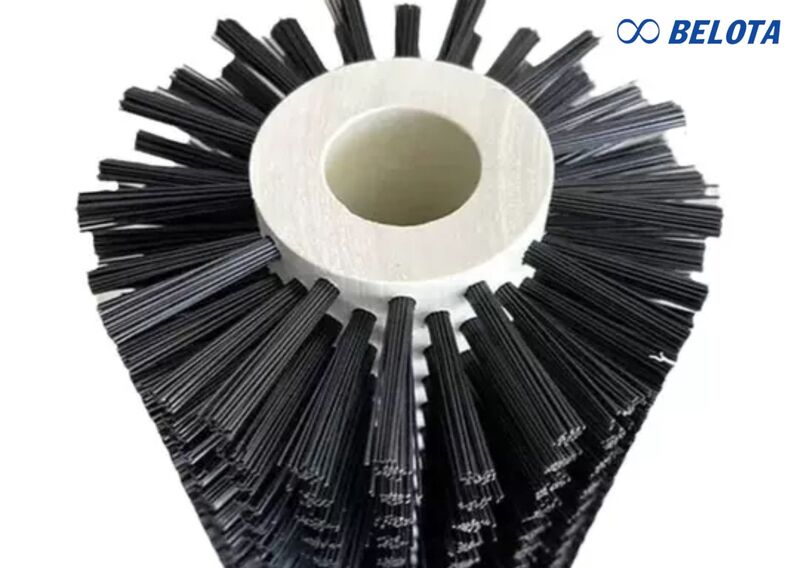
The rotating shaft is the core component of the cleaner. It is designed to withstand continuous operation in demanding industrial environments. Brush bristles are evenly distributed around the shaft to maximize cleaning efficiency while minimizing belt wear.
Brush Assembly
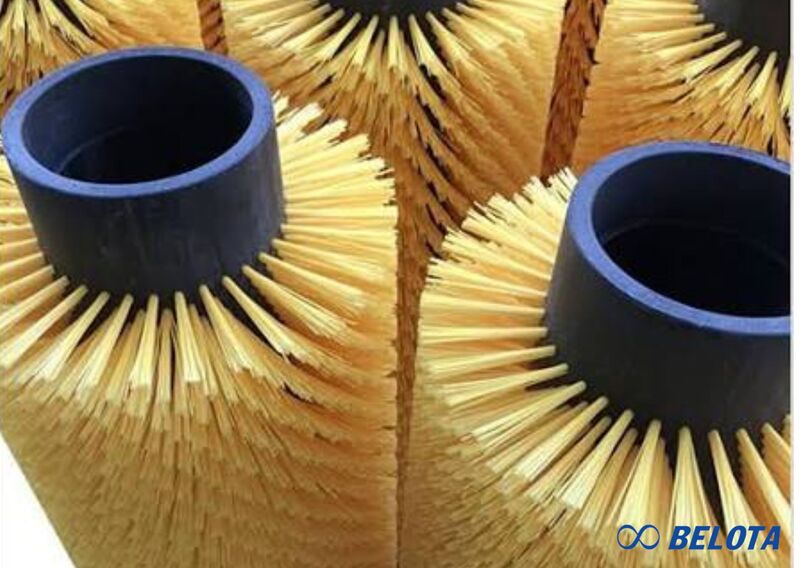
Different brush materials are available depending on the application:
- Nylon brushes: High wear resistance, ideal for dry materials and fine dust.
- Rubber brushes: Flexible and suitable for uneven belt surfaces or sticky materials.
- Chemical-resistant brushes: Designed for chemical processing and special material handling applications.
Drive Motor
The electric gear motor drives the brush at an optimized speed, ensuring consistent cleaning performance throughout conveyor operation.
Mounting Frame
The support frame securely mounts the cleaner onto the conveyor structure and allows adjustment of the contact pressure between the brush and the belt.
Working Principle
When the conveyor is running, the gear motor rotates the brush in the opposite direction of belt travel. The rotating bristles generate continuous sweeping action to:
- Remove fine dust from the belt surface.
- Sweep away wet and sticky materials.
- Clean grooves on chevron conveyor belts.
- Prevent material accumulation around rollers and conveyor frames.
Unlike straight blade scrapers that only contact flat surfaces, a brush cleaner reaches deep into grooves and textured belt surfaces, providing superior cleaning performance.
Technical Specifications
| Specification | Value |
|---|---|
| Belt Width | 650 – 2,000 mm |
| Brush Length | 650 – 2,000 mm |
| Brush Material | Rubber, Polyurethane (PU), Nylon |
| Cleaning Direction | Reversible rotation |
| Applicable Belt Speed | Depends on application (Not specified by manufacturer) |
PU Scraper vs. Motorized Brush Cleaner
| Criteria | PU Belt Scraper | Motorized Brush Cleaner |
|---|---|---|
| Cleaning Method | PU blade scrapes material directly from the belt. | Rotating brush sweeps material from the belt surface. |
| Suitable Materials | Coal, stone, ore, cement, and coarse bulk materials. | Fine powders, wet materials, sticky materials, and dust. |
| Suitable Conveyor Belts | Flat rubber conveyor belts. | Flat belts, chevron belts, cleated belts, and troughed conveyors. |
| Cleaning Performance | Removes most residual materials. | Cleans fine particles trapped in grooves and textured surfaces. |
| Contact Method | Direct blade contact. | Flexible brush bristle contact. |
| Belt Wear | Requires proper blade pressure adjustment to reduce wear. | Gentle on belt surfaces, suitable for special belt profiles. |
| Maintenance | Replace scraper blade when worn. | Periodically inspect the brush and drive motor. |
| Investment Cost | Lower. | Higher due to the motor and drive mechanism. |
Advantages of Motorized Conveyor Brush Cleaners
- Excellent cleaning efficiency for sticky and fine materials.
- Suitable for chevron, cleated, and textured conveyor belts.
- Reduces wear on conveyor belts, pulleys, and rollers.
- Lowers maintenance costs and minimizes production downtime.
- Durable construction for long-term industrial operation.
Applications
Motorized brush cleaners are widely used on:
- Chevron conveyor belts
- Cleated conveyor belts
- Patterned conveyor belts
- Worn conveyor belts with uneven surfaces
- Conveyor belts with mechanical fasteners (mechanical splices)
They are commonly installed in industries such as:
- Mining
- Cement manufacturing
- Power generation
- Metallurgy
- Fertilizer production
- Chemical processing
- Wood processing
- Food processing
Compared with V-plow cleaners, primary belt scrapers, and secondary belt scrapers, motorized brush cleaners require a higher initial investment but provide significantly better cleaning performance for textured belts and applications involving fine or sticky materials.
When Should You Use a Motorized Brush Cleaner?
A motorized brush cleaner is recommended when:
- The conveyed material has high moisture content or strong adhesion.
- Conventional scraper blades cannot achieve satisfactory cleaning performance.
- Continuous conveyor operation is required.
- Maintenance and manual cleaning costs need to be minimized.
Belota Supplies High-Quality Motorized Conveyor Brush Cleaners
Belota Co., Ltd. supplies a complete range of conveyor belt cleaning solutions, including motorized brush cleaners, primary belt scrapers, secondary belt scrapers, and other conveyor cleaning accessories for various industrial applications.
With extensive experience in conveyor systems, Belota provides professional consultation, customized solutions, and equipment selection based on each customer's operating conditions, helping improve conveyor efficiency, reduce downtime, and extend equipment lifespan.
Contact Information
- Email: info@belota.com.vn
- Hotline / Zalo: +84 917 657 946
- Address: B74 Le Thi Rieng Street, Thoi An Residential Area, Thoi An Ward, Ho Chi Minh City, Vietnam