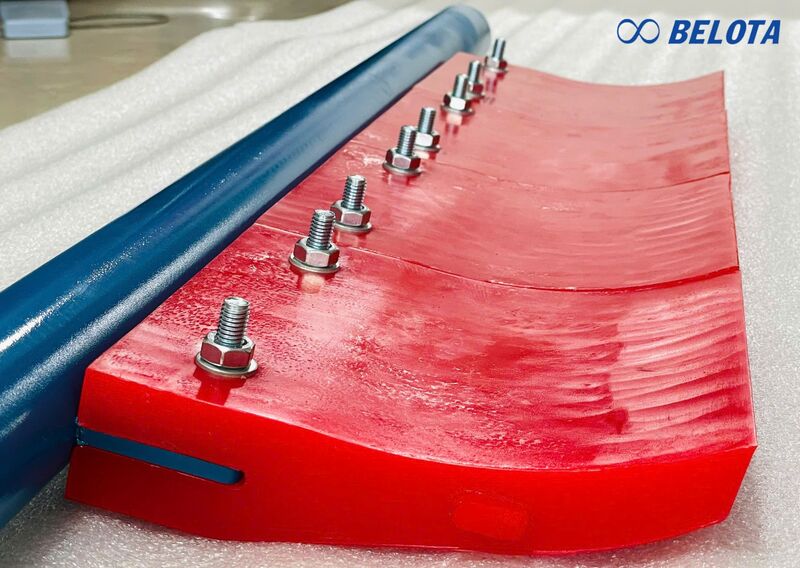
Material carryback after the discharge point is a common issue in conveyor belt systems. It can lead to material spillage, increased housekeeping costs, premature belt wear, and reduced operational efficiency. Choosing the right conveyor belt scraper blade helps remove residual material effectively, protects the belt surface, and lowers maintenance costs. However, no single scraper blade is suitable for every application. The ideal choice depends on the conveyed material, operating conditions, and conveyor design. This guide explains what a conveyor belt scraper blade is, how it works, its construction, common blade types, and the key factors to consider when selecting one.
What Is a Conveyor Belt Scraper Blade?
A conveyor belt scraper blade is the wear component that comes into direct contact with the conveyor belt surface to remove carryback after the discharge point. It is the primary cleaning element of a conveyor belt cleaner and is responsible for maintaining belt cleanliness during operation. To achieve the best cleaning performance, the scraper blade should be selected based on the material being conveyed, belt speed, operating environment, and required cleaning efficiency.
Scraper Blade vs. Conveyor Belt Cleaner: What's the Difference?
Although these terms are often used interchangeably, they refer to different components.
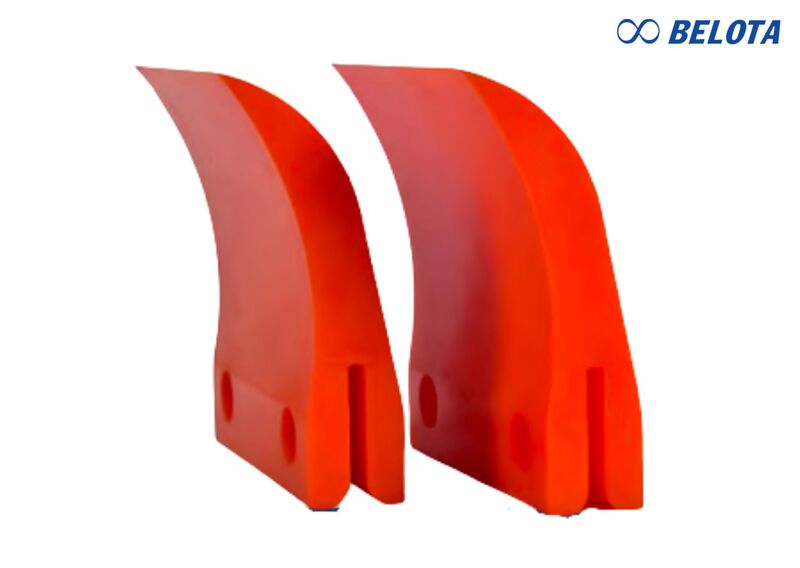
A scraper blade is the replaceable wear part that contacts the belt and removes residual material. Since it experiences continuous abrasion, it requires periodic inspection and replacement.
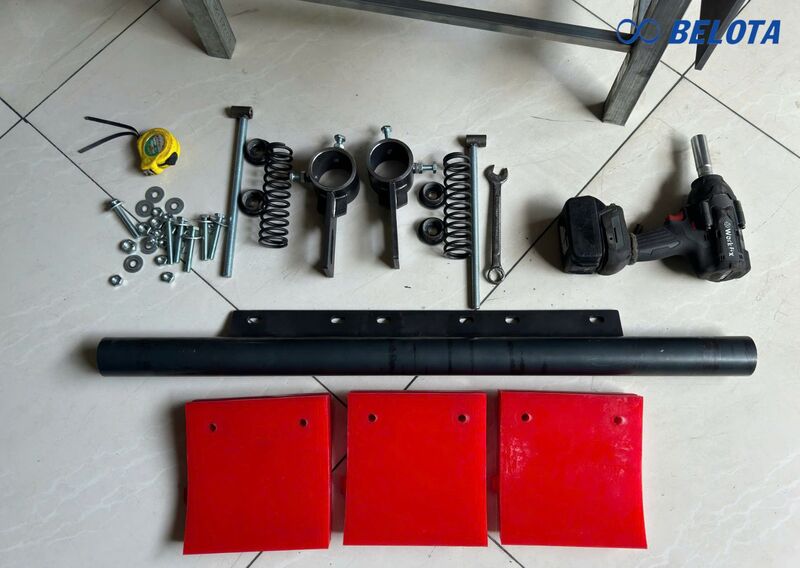
A conveyor belt cleaner, on the other hand, is the complete assembly consisting of the support frame, tensioning mechanism, mounting hardware, and scraper blade. Its role is to maintain proper blade pressure against the belt for consistent cleaning performance.
Understanding this distinction helps users order the correct replacement parts and avoid unnecessary maintenance costs.
Conveyor Belt Scraper Blade Construction
Although scraper blades have a relatively simple design, each component contributes to cleaning efficiency and service life.
Blade Body
The blade body provides structural support and is typically manufactured from steel or other high-strength materials capable of withstanding continuous operating loads. It also serves as the mounting interface between the blade and the cleaner assembly.
Cleaning Edge
The cleaning edge is the working surface that contacts the conveyor belt. Depending on the application, it may be manufactured from:
- Polyurethane (PU)
- Tungsten carbide
- Hardened alloy
- Technical rubber
Each material offers different levels of wear resistance, flexibility, and durability for specific conveying applications. The blade edge is precision-machined to maintain effective cleaning while minimizing belt wear.
Mounting System
The blade is secured to the cleaner assembly using bolts, locking pins, or slide-in mounting systems, allowing quick installation, adjustment, and replacement during maintenance.
How Does a Conveyor Belt Scraper Blade Work?
A scraper blade operates by maintaining continuous contact with the moving conveyor belt through controlled spring tension or mechanical pressure. As the belt passes beneath the blade, the cleaning edge scrapes off any remaining carryback, directing it back into the material stream or collection chute. Cleaning performance depends on several factors, including:
- Blade pressure
- Contact angle
- Blade wear condition
- Belt condition
If the blade becomes worn or the pressure is incorrectly adjusted, cleaning efficiency decreases and carryback increases. Routine inspection and proper tension adjustment help maximize cleaning performance and extend blade life.
Belota Custom Conveyor Belt Scraper Blade Specifications
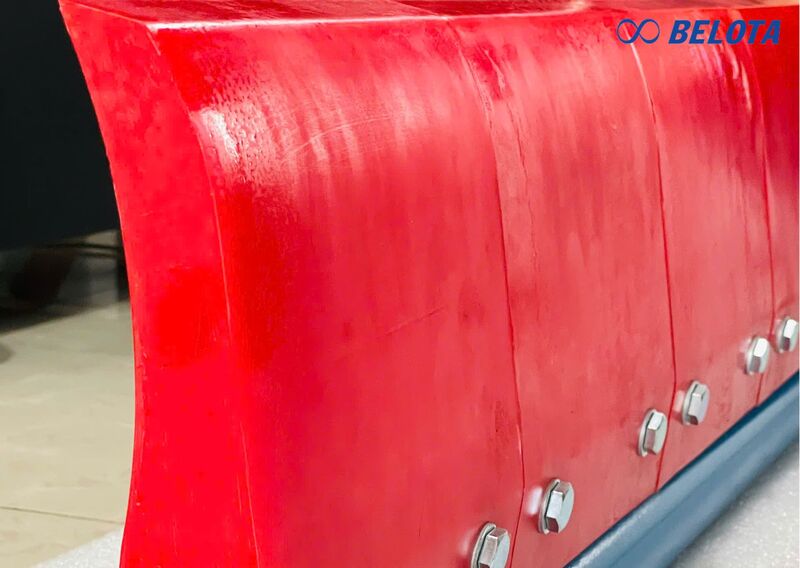
Belota manufactures solid scraper blades in widths ranging from 200 mm up to 2,000 mm (2 m). For wider conveyor belts, we assemble multiple 200 mm blade modules or combine a 2,000 mm blade with additional 200 mm modules to achieve the required cleaning width.
This modular design provides:
- Even cleaning pressure
- Better cleaning performance
- Easy replacement of individual blade sections
- Lower maintenance costs
Below are some of the most common scraper blade configurations supplied by Belota.
| Belt Width | Blade Configuration | Cleaning Width |
|---|---|---|
| B650 | 3 × 200 mm | 600 mm |
| B800 | 3 × 200 mm | 600 mm |
| B1000 | 4 × 200 mm | 800 mm |
| B1200 | 5 × 200 mm | 1,000 mm |
| B1400 | 6 × 200 mm | 1,200 mm |
| B1600 | 7 × 200 mm | 1,400 mm |
| B1800 | 8 × 200 mm | 1,600 mm |
| B2000 | 9 × 200 mm | 1,800 mm |
| B2200 | 1 × 2,000 mm | 2,000 mm |
| B2400 | 1 × 2,000 mm + 1 × 200 mm | 2,200 mm |
Custom Conveyor Belt Scraper Blade Manufacturer
Belota specializes in manufacturing custom conveyor belt scraper blades for a wide range of industrial applications. We machine, cut, and assemble scraper blades to match each customer's conveyor dimensions for accurate installation and optimum cleaning performance. Our standard solid scraper blades are available in widths from 200 mm to 2,000 mm. For wider conveyors, we manufacture modular scraper assemblies that maintain uniform cleaning pressure while making future blade replacement faster and more economical.
We also provide custom color coating upon request to suit different industries, including:
- Food processing
- Beverage production
- Pharmaceutical manufacturing
- Mining
- Cement plants
- Ports and bulk material handling
Every scraper blade is inspected before shipment to ensure durability, dimensional accuracy, and reliable field performance.
Frequently Asked Questions
Can Belota manufacture scraper blades for 3-meter-wide conveyors?
Yes. We manufacture scraper blades for 3 m conveyor belts and custom sizes. For cleaning widths exceeding 2,000 mm, we combine one 2,000 mm blade with one or more 200 mm blade modules to achieve the required width while maintaining uniform cleaning performance.
How can I prevent scraper blades from damaging the conveyor belt?
Belt damage is usually caused by either excessive blade hardness or trapped material between the blade and belt. Installing a protective deflector ahead of the scraper helps prevent large particles from entering the blade contact area, allowing the scraper to remove only residual fines while minimizing belt wear.
Why does the conveyor belt become hot after installing a new scraper blade?
In most cases, excessive blade tension is the cause. A newly installed blade may be adjusted with more pressure than necessary, increasing friction and belt temperature. After installation, monitor both cleaning performance and belt temperature, then fine-tune the blade tension as needed.
Can scraper blades be used on PVC food-grade conveyor belts?
Yes. However, the blade material should be compatible with food-processing applications. Food-grade polyurethane (PU) is commonly recommended because it meets hygiene requirements while remaining gentle on the belt surface. If regulatory compliance is required, always verify that the blade material meets the applicable food-contact standards.
Conclusion
Every conveyor system operates under different conditions, so there is no universal scraper blade suitable for every application. Selecting the right blade based on the conveyed material, operating environment, and conveyor configuration improves cleaning efficiency, reduces carryback, and minimizes maintenance costs. If you need assistance selecting the right conveyor belt scraper blade or require a custom-built solution, Belota's engineering team is ready to help.