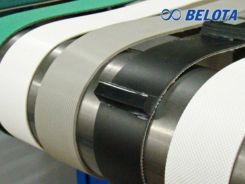
A feeding machine belt is a specialized conveyor belt used in automatic laundry feeding systems (Feeding Machines/Unifeed). Its primary function is to grip, tension, and accurately align flat linens before they enter a flatwork ironer. Designed for continuous operation, the belt helps ensure smooth fabric feeding, minimizes wrinkles and misalignment, and improves the overall efficiency of industrial laundry production lines. Feeding machine belts are widely used in hotels, hospitals, commercial laundries, textile mills, and other high-volume laundry facilities.
What Is a Feeding Machine Belt?
A feeding machine belt is installed at the infeed section of an automatic feeding machine. It transports and positions linens before they are fed into a flatwork ironer or an automated folding system.
Working together with vacuum suction, rollers, and alignment systems, the belt keeps fabrics flat and properly positioned throughout the feeding process, ensuring consistent ironing quality while reducing manual handling.
Construction of a Feeding Machine Belt
Feeding machine belts are engineered for continuous operation in high-temperature and high-humidity laundry environments.
Typical construction includes:
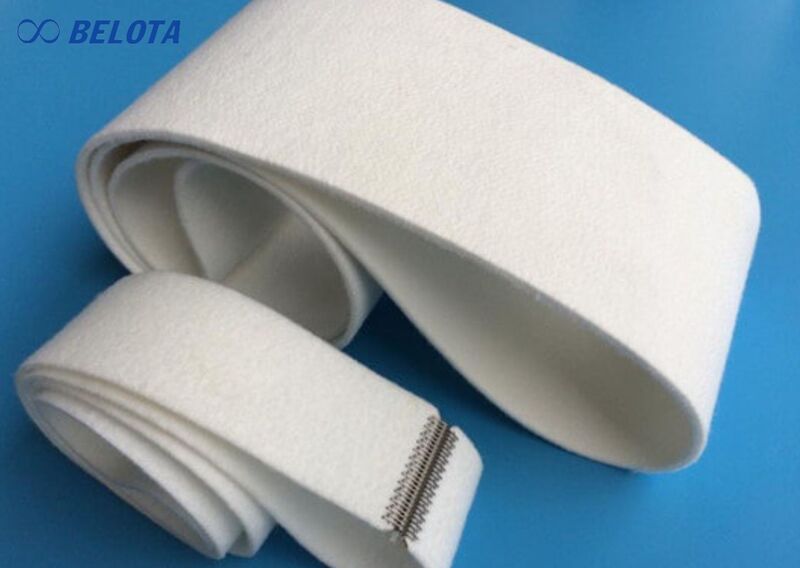
- High-density needle-punched polyester felt
- High-friction surface for secure fabric handling
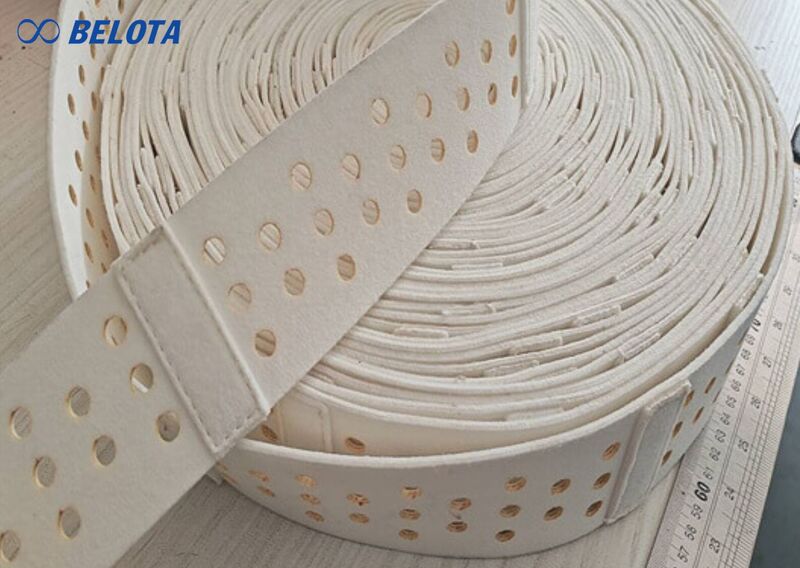
- Optional rubber anti-slip coating or vacuum perforations
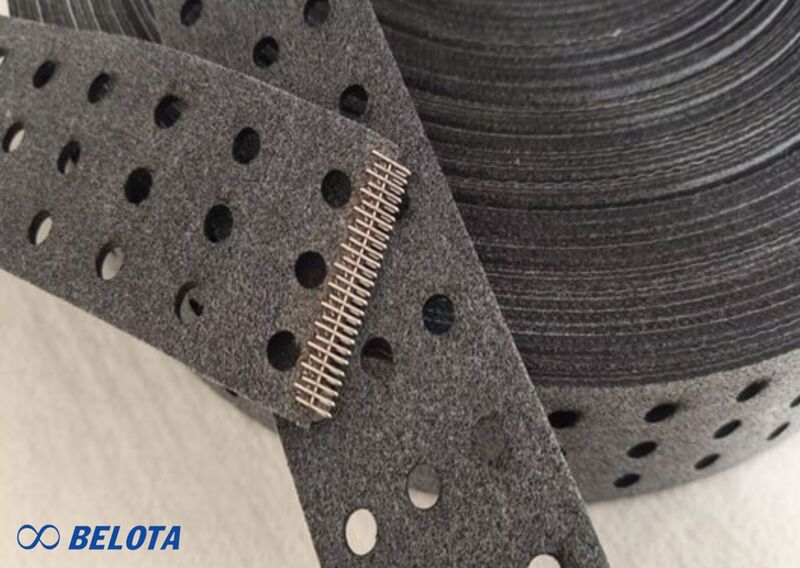
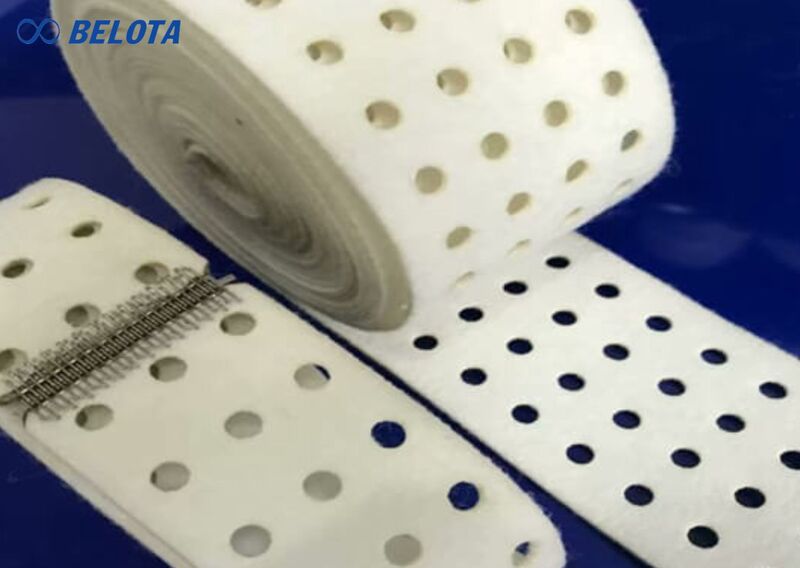
- Multiple joint options, including endless splice, stainless steel clipper lacing, stitched joints, and plastic fasteners
How Does a Feeding Machine Belt Work?
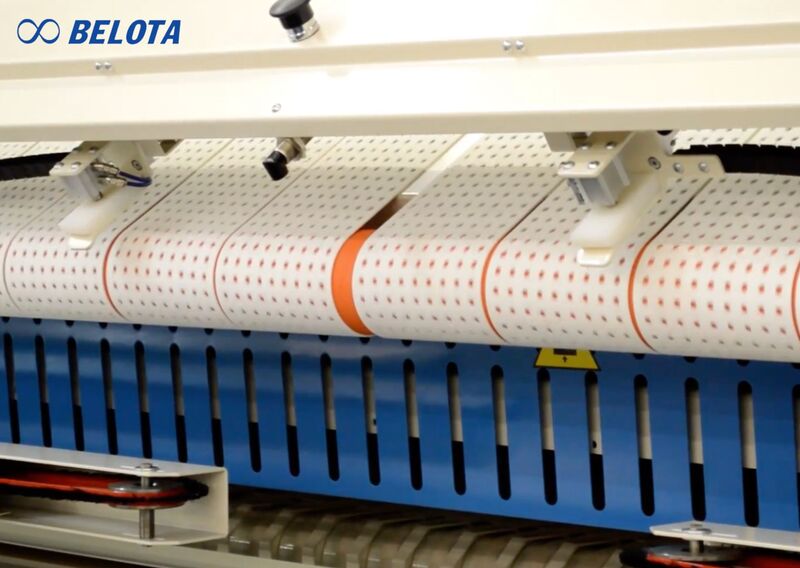
Several feeding belts operate in parallel with rollers, vacuum suction, and sensors to ensure accurate fabric positioning throughout the feeding process.
Step 1: Fabric Feeding
After washing and extraction, bed sheets, towels, table linens, and other flat textiles are placed onto the feeding table. Large linens are typically tensioned using edge clamps before entering the conveyor.
Step 2: Fabric Transport
The vacuum system holds the fabric securely against the belt while independently driven feeding belts pull the linen smoothly toward the flatwork ironer without slipping or shifting.
Step 3: Synchronization with the Ironer
The feeding belts synchronize with the ironer's operating speed, delivering the fabric to the ironer padding and rollers at precisely the right time for continuous and uniform ironing.
Technical Specifications
- Material: 100% Polyester or Rubber Composite
- Fabric Weight: 1200 g/m²
- Width: 50 - 200 mm (custom widths up to 800 mm)
- Length: 20 m, 30 m, or custom lengths
- Thickness: Varies by model
- Joint Type: Endless splice, stainless steel clipper lacing, stitched joint, or plastic fastener
- Customization: Manufactured to fit individual machine specifications
Types of Feeding Machine Belts
Polyester Feeding Belt
Manufactured from 100% needle-punched polyester, this belt provides excellent grip for transporting linens while minimizing wrinkles and slippage. The felt surface absorbs residual moisture, allowing fabrics to spread evenly across the feeding section.
Its needle-punched construction offers excellent dimensional stability, high abrasion resistance, and long service life.
Vacuum Feeding Belt (Perforated Feeding Belt)
Designed with evenly distributed perforations, this belt works with vacuum suction systems to securely hold lightweight fabrics during feeding. It improves feeding accuracy, prevents fabric displacement, and allows quick installation and replacement using stainless steel fasteners.
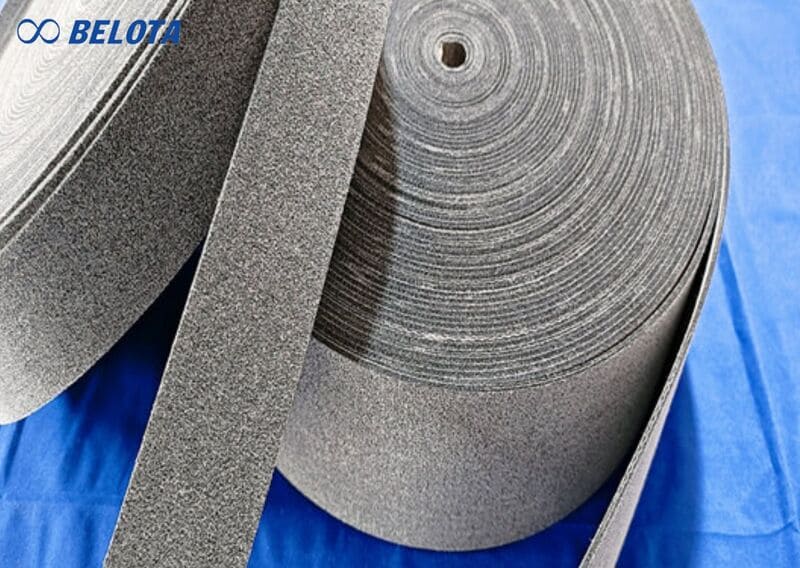
Gray Rubber Composite Feeding Belt
Made from high-performance rubber composite material, this belt features excellent wear resistance, anti-static properties, and lint-free operation. Designed for high-speed feeding systems, it delivers outstanding durability and stable performance. Both solid and perforated versions are available.
Gray Perforated Feeding Belt
This perforated version is commonly used on Kannegiesser ironers, folders, and feeding systems. Its vacuum-compatible design provides reliable fabric control, ensuring smooth linen transport and accurate feeding at high production speeds.
Reinforced Anti-Slip Feeding Belt
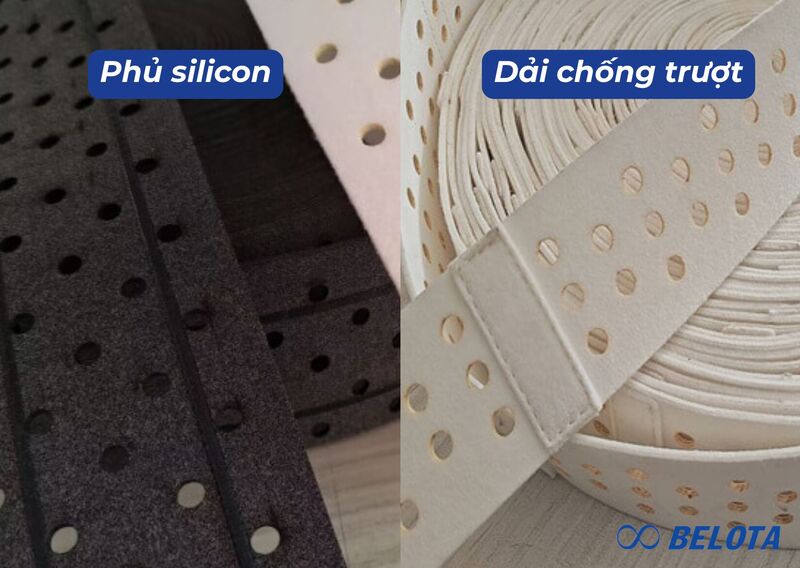
For high-speed flatwork ironers, reinforced anti-slip strips or silicone coatings can be added to improve fabric grip. The silicone surface enhances traction, reduces static buildup, improves wear resistance, and extends belt service life under demanding operating conditions.
Advantages of Feeding Machine Belts
- Smooth and stable fabric feeding
- Excellent anti-slip performance
- High abrasion resistance
- Excellent dimensional stability
- Compatible with vacuum feeding systems
- Optional anti-static properties
- Quiet and reliable operation
- Custom sizes and joint configurations available
- Long service life with reduced maintenance costs
Compatible Machine Brands
Belota feeding machine belts are compatible with a wide range of commercial laundry equipment, including:
- JENSEN
- LAPAUW
- Kannegiesser
- ADC
- Electrolux
- Chicago
- Cissell
- IPSO
- Braun
- Girbau
Custom widths, lengths, and splice types are available to suit individual machine models.
How to Choose the Right Feeding Machine Belt
When selecting a feeding machine belt, consider the following:
- Machine model
- Belt width
- Belt length
- Joint type
- Belt surface (standard polyester, perforated vacuum type, or rubber composite)
- Operating conditions such as machine speed, temperature, humidity, and fabric type
Choosing the correct specifications improves feeding accuracy, reduces downtime, extends belt life, and lowers maintenance costs.
Buy High-Quality Feeding Machine Belts from Belota
Belota supplies and custom-manufactures feeding machine belts for commercial laundry facilities across Vietnam, including hotels, hospitals, laundries, and textile factories. In addition to supplying standard products, we offer on-site measurement, technical consultation, custom fabrication, and replacement belts tailored to your equipment. Our products are available throughout Ho Chi Minh City, Binh Duong, Dong Nai, Long An, Ba Ria–Vung Tau, Hanoi, Bac Ninh, Hai Phong, Da Nang, and other industrial regions.
Contact Belota
- Email: info@belota.com.vn
- Hotline / Zalo: +84 917 657 946
- Address: B74 Le Thi Rieng Street, Thoi An Ward, Ho Chi Minh City, Vietnam