Sprocket rollers are a vital drive solution in industrial roller conveyor systems, ensuring the stable, synchronized, and efficient transport of heavy goods. With high load-bearing capacity, rugged durability, and zero-slip performance, these rollers are widely utilized in logistics, warehousing, manufacturing, and industrial processing. Through this article, Belota will help you understand the construction, operating principles, applications, and selection criteria for sprocket rollers in modern conveyor systems.
What is a Sprocket Roller?
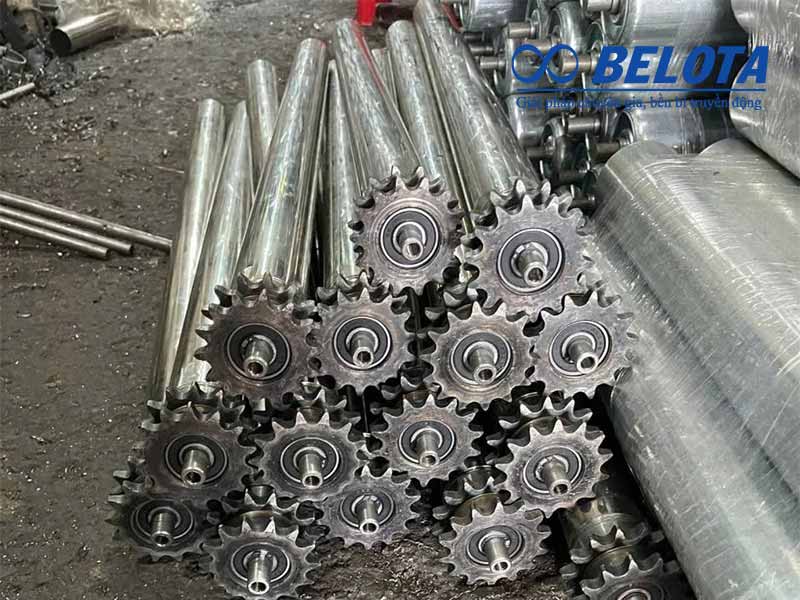
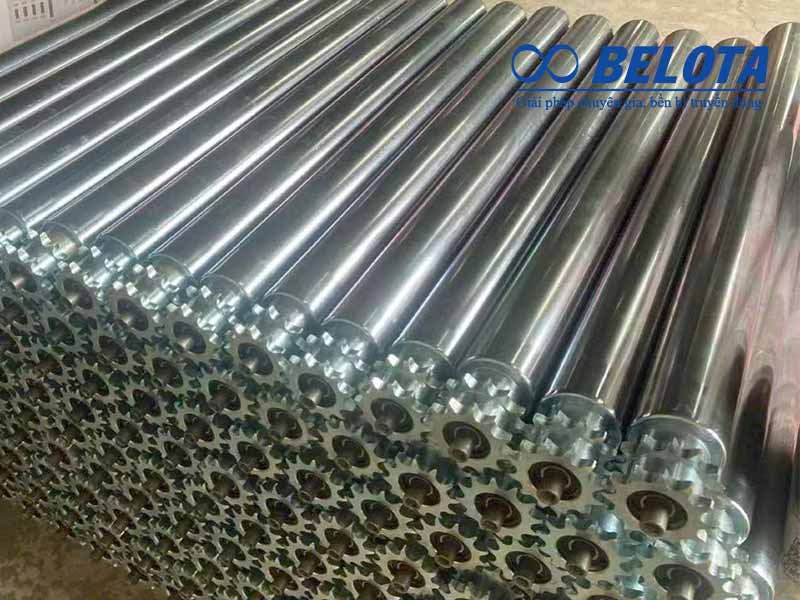
A Sprocket Roller is a specialized drive component in a power roller conveyor system, designed to transport heavy loads steadily and continuously. Unlike gravity rollers, sprocket rollers operate via a mechanical link between a chain and a sprocket (gear) integrated into the roller. This ensures a much more powerful drive, making them ideal for handling pallets, heavy crates, or high-capacity industrial goods.
Detailed Construction of Standard Sprocket Rollers
A standard sprocket roller is built from precision components that work together to ensure high load capacity and continuous operation.
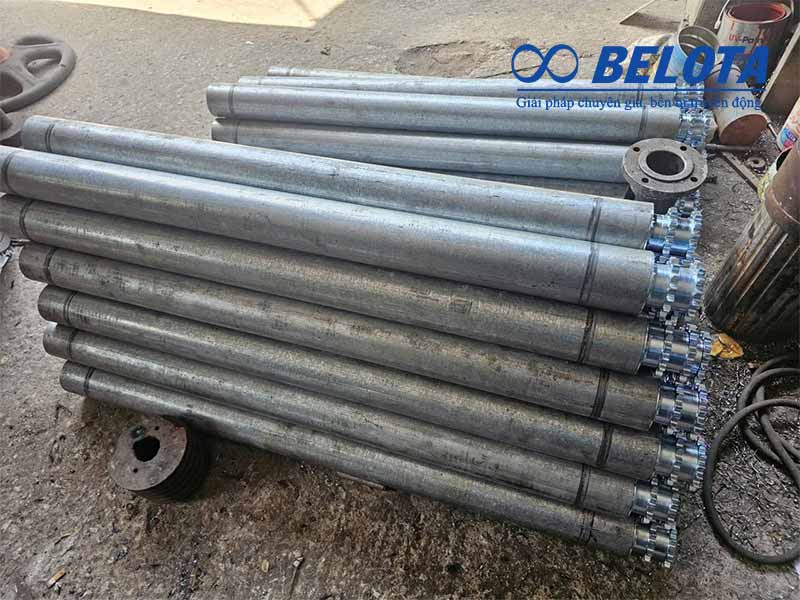
- Roller Tube: The main cylindrical body, typically made from galvanized steel, 304 stainless steel, or powder-coated steel to enhance rigidity and wear resistance.
- Axle (Shaft): The primary load-bearing spine, machined from C45 steel or stainless steel. Common end-types include threaded shafts, spring-loaded, or milled flats (D-shape).
- Bearings: These allow the roller to rotate smoothly. Common series include 6202, 6203, or 6204, preferably with 2RS (rubber seals) or ZZ (metal shields) to prevent dust ingress.
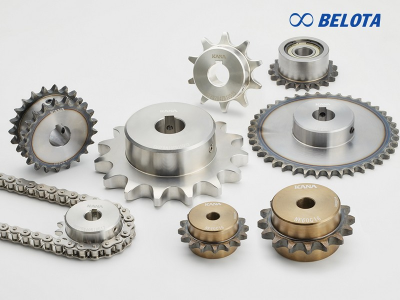
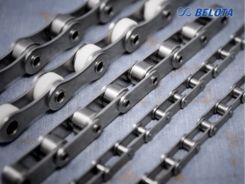
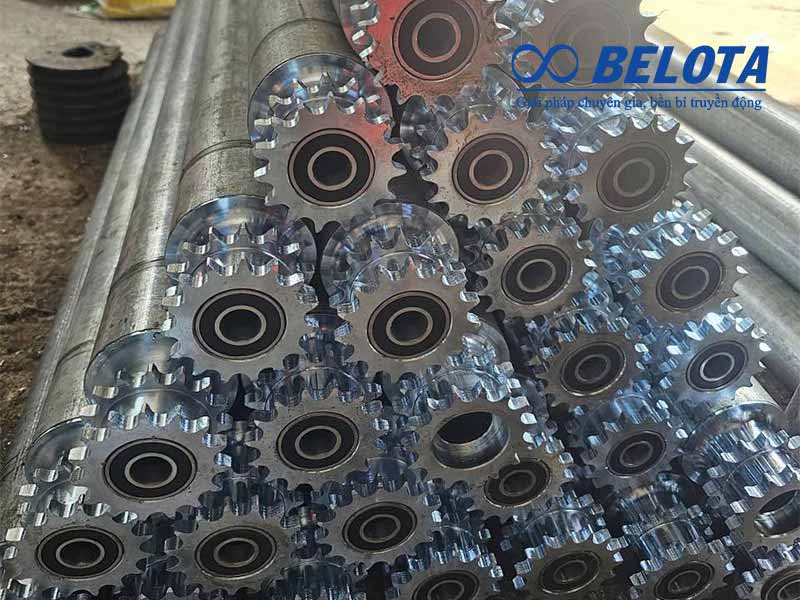
- Sprockets: The key component that meshes with the drive chain. Technical specs include tooth counts (11T–14T), chain pitch (ISO 08B, 10A, 12A), and options for single or double sprockets.
- End Caps and Seals: These protect the internal bearings from dust, moisture, and chemicals, extending the service life in harsh warehouse or cold-room environments.
Classification of Sprocket Rollers
By Drive Mechanism
- Single Sprocket Rollers: Driven by a single chain loop, suitable for light to medium loads.
- Double Sprocket Rollers: Features two sprockets, allowing "roll-to-roll" transmission. This provides higher torque, better stability, and prevents load slipping on long runs.
By Material
- Galvanized Steel: Standard rust protection for dry warehouse environments.
- 304 Stainless Steel: Anti-corrosion properties, essential for food processing, seafood, and hygienic applications.
- Powder-Coated Steel: High durability with customizable aesthetics for specific production lines.
Operating Principle
Sprocket rollers work on the principle of direct power transmission via chains and gears:
- Motor Torque: A gear motor generates rotational force and drives the main transmission chain.
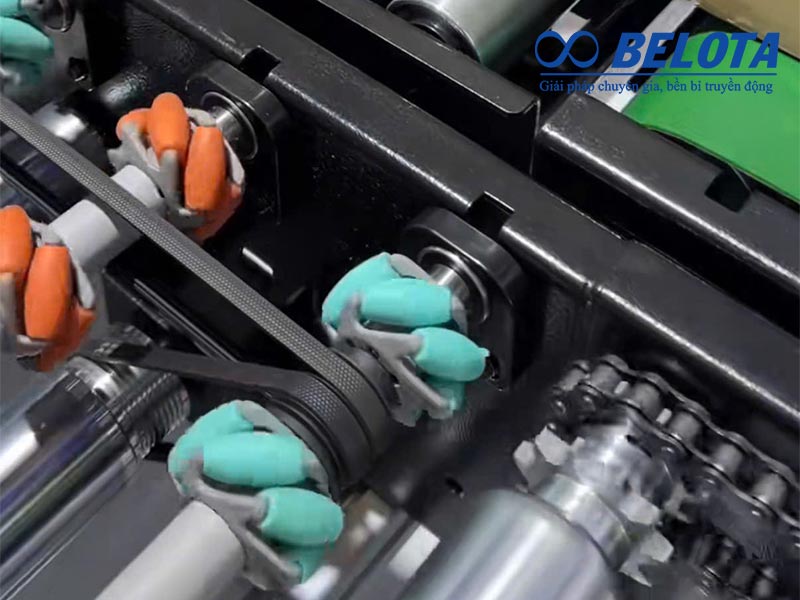
- Chain-to-Sprocket Engagement: As the chain moves, its links mesh with the sprockets fixed to each roller. Since the sprocket is keyed or welded to the roller tube, the power is transferred directly.
- Synchronized Transport: All rollers rotate at the same speed, ensuring that pallets or heavy cartons move steadily without slipping, providing high precision in automated lines.
Technical Specifications
| Parameters | Common Values |
|---|---|
| Roller Diameter | ∅50 – ∅114 mm |
| Roller Length | 200 – 2000 mm |
| Axle Diameter | ∅12 – ∅30 mm |
| Sprocket Type | Single / Double (Pitch: 08B, 10A, 12A) |
| Load Capacity | 50 – 500 kg per roller |
| Bearings | Precision industrial-grade bearings |
Key Advantages
- High Load-Bearing: Capable of transporting heavy industrial loads for long periods without deformation.
- Powerful Positive Drive: The chain-and-sprocket engagement eliminates the slipping found in belt-driven rollers.
- Precise Synchronization: Ensures goods move at a uniform speed, crucial for automated sorting and assembly.
- Rugged Durability: Operates effectively in dusty, oily, or high-humidity environments.
- Easy Integration: Seamlessly connects with PLCs, sensors, and AGVs for smart warehousing.
Limitations and Maintenance
- Noise Level: Naturally higher than belt systems due to metal-on-metal contact. Regular lubrication is required to dampen the sound.
- Maintenance: Requires periodic checks of chain tension and sprocket wear to prevent downtime.
- Initial Cost: Higher than gravity rollers due to the complexity of the drive assembly.
Industrial Applications
- Pallet Conveyors: Handling heavy pallets (500–1000 kg) in logistics hubs.
- Packaging Lines: Transporting crates and boxes through labeling and sealing stages.
- Automotive & Electronics: Moving heavy sub-assemblies or chassis through workstations.
- Smart Warehousing: Integrating with automated storage and retrieval systems (AS/RS).
Selection Guide for Sprocket Rollers
When choosing a roller, consider the following:
- Diameter: Larger diameters are better for heavier loads to prevent tube deflection.
- Chain Pitch: Must be perfectly compatible with your existing drive chain to avoid vibration.
- Environment: Use 304 Stainless Steel for wash-down zones and galvanized steel for standard dry storage.
Conclusion
Selecting the right drive solution ensures operational stability while optimizing long-term investment costs. When purchasing Sprocket Rollers at Belota, you receive full technical support and a comprehensive warranty. We also provide complete CO – CQ documentation upon request. Contact Belota today for consultation on the best sprocket roller solutions for your business!