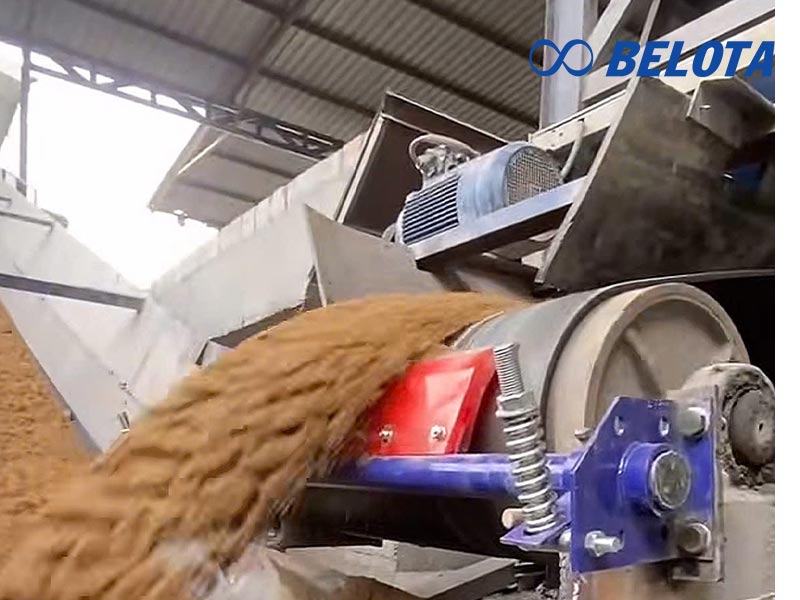
Many companies only pay attention to replacing the conveyor belt scraper blade when cleaning performance starts to decline, while overlooking the importance of a properly fabricated scraper frame. In reality, a frame that is incorrectly sized or poorly matched to the conveyor system can cause uneven contact pressure, reducing cleaning efficiency and accelerating blade wear. Investing in a custom-fabricated scraper frame from the outset helps ensure stable operation, extends scraper blade life, and protects the conveyor belt from unnecessary wear.
Components of a Conveyor Belt Scraper Frame
A properly engineered conveyor belt scraper frame consists of several key components working together to maintain consistent scraper performance. While the design may vary depending on the conveyor belt system, most scraper frames include the following:
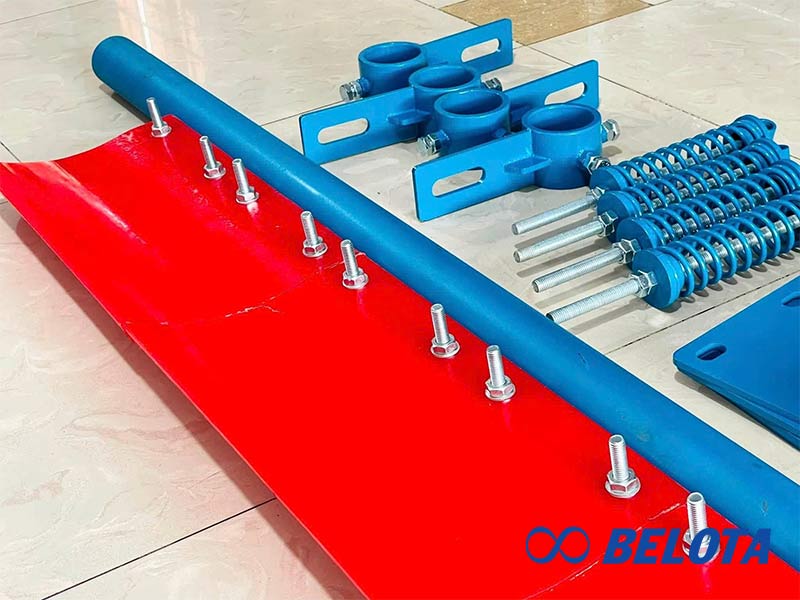
Main Support Frame
The main support frame serves as the structural backbone of the scraper assembly, supporting all other components while maintaining overall rigidity. It must be strong enough to resist bending and deformation during continuous operation.
Scraper Blade Holder
The blade holder secures the scraper blade at the correct working angle against the conveyor belt. A well-designed holder also allows for quick blade replacement, minimizing maintenance downtime.
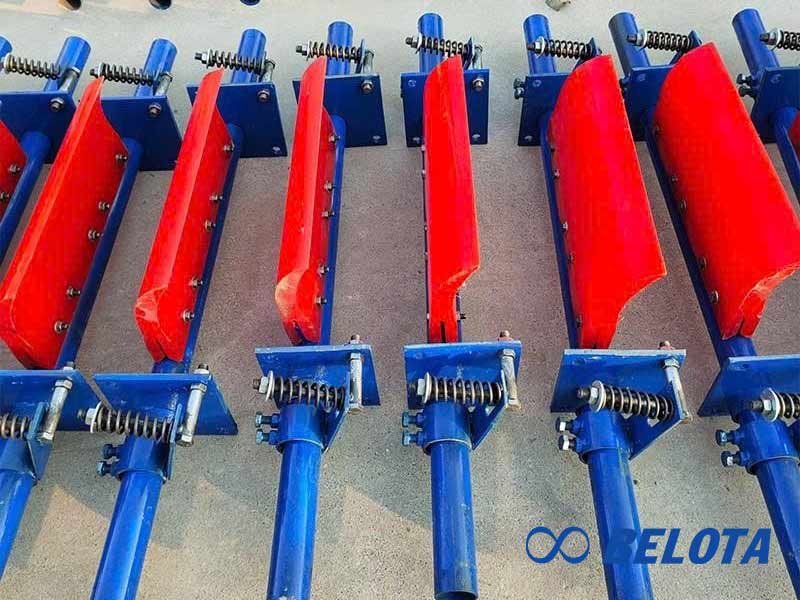
Blade Tensioning Mechanism
The tensioning mechanism maintains consistent contact pressure between the scraper blade and the conveyor belt throughout operation. Depending on the application, different adjustment systems are available:
- Lead Screw Adjustment: Provides precise pressure control, ideal for systems requiring frequent fine adjustments.
- Turnbuckle Adjustment: A simple, reliable solution that is easy to install and maintain.
- Spring Tension System: Automatically compensates for blade wear, reducing the need for manual adjustments.
- Pneumatic Tensioning: Designed for automated conveyor systems, delivering uniform pressure with flexible control.
Each option offers distinct advantages, and the right choice depends on operating conditions and system requirements.
Support Brackets and Mounting Points
Support brackets reinforce the scraper frame, minimizing vibration and maintaining stable blade pressure during operation. Proper placement is essential to distribute the cleaning force evenly across the full width of the conveyor belt.
Why Is the Scraper Frame Important?
The scraper frame keeps the entire scraper assembly securely positioned while the conveyor is running. A properly fabricated frame ensures the scraper blade maintains the correct contact angle and pressure against the belt, while minimizing vibration during continuous operation.
Rather than simply supporting the scraper blade, the frame directly affects the overall cleaning performance of the conveyor system. If the frame becomes bent, misaligned, or lacks sufficient rigidity, contact pressure becomes uneven, resulting in poor material removal and accelerated blade wear.
When Should You Replace or Fabricate a New Scraper Frame?
A scraper frame should be replaced when it becomes bent, corroded, or no longer matches the conveyor system after equipment modifications or upgrades. Replacement is also recommended when switching to scraper blades with different sizes or mounting configurations.
Although some facilities attempt to repair old frames through welding to reduce costs, repeated repairs often compromise dimensional accuracy and structural integrity. As a result, scraper adjustment becomes more frequent, while cleaning efficiency continues to decline.
Materials Commonly Used for Conveyor Belt Scraper Frames
Material selection has a significant impact on the durability, service life, and fabrication cost of a conveyor belt scraper frame. Each material is suited to different operating environments, so the selection should be based on working conditions rather than price alone.
| Material | Key Features | Recommended Applications |
|---|---|---|
| Carbon Steel (CT3) | Economical, easy to fabricate, high mechanical strength | General manufacturing plants, factories, and industrial facilities |
| Powder-Coated Steel | Enhanced corrosion resistance with a durable protective coating | Warehouses, logistics centers, and low-corrosion environments |
| Stainless Steel 304 | Excellent corrosion resistance, hygienic surface, easy to clean | Food processing, beverage production, pharmaceutical manufacturing |
| Stainless Steel 316 | Superior resistance to corrosion, chemicals, and harsh environments | Chemical processing plants, seafood processing, marine, and coastal applications |
When selecting a material, businesses should evaluate the actual operating environment, corrosion exposure, durability requirements, and overall budget. Choosing the right material improves equipment longevity while avoiding unnecessary maintenance costs.
Not every conveyor system requires Stainless Steel 316. Likewise, selecting a material with insufficient corrosion resistance for aggressive environments can lead to premature deterioration and higher maintenance expenses.
Conveyor Belt Scraper Frame Fabrication Process
The fabrication process typically begins with a site survey to collect critical information such as conveyor dimensions, mounting location, and operating conditions. These measurements form the basis for designing a scraper frame that fits the system precisely, minimizing installation adjustments.
Once the engineering drawings are finalized, the frame is manufactured through precision cutting, drilling, welding, and assembly according to the approved specifications. Depending on the selected material, the finished frame may receive protective coatings or corrosion-resistant surface treatments to improve long-term durability.
Before delivery, every scraper frame undergoes dimensional inspection, structural verification, and fit-up checks to ensure compliance with design specifications.
How to Choose a Conveyor Belt Scraper Frame Fabricator
When selecting a fabrication partner, companies should prioritize suppliers capable of providing custom-engineered solutions, rather than simply reproducing standard designs. A fabricator with expertise in both conveyor systems and scraper technology can produce equipment tailored to actual operating conditions.
Manufacturing capability is equally important. A supplier with modern fabrication equipment, established quality control procedures, and comprehensive inspection processes is more likely to deliver accurate, reliable products. Installation assistance and after-sales technical support should also be considered when evaluating potential suppliers.
Common Mistakes When Ordering a Custom Scraper Frame
Many installation issues are caused not by fabrication errors but by incomplete project information or inappropriate material selection. Common mistakes include:
- Providing only the conveyor belt width without specifying pulley diameter or mounting location.
- Skipping an on-site survey before fabrication.
- Selecting materials based solely on initial cost rather than operating conditions.
- Failing to consider future scraper blade replacement and maintenance requirements.
Even minor dimensional errors can result in uneven blade pressure, reduced cleaning efficiency, and shorter scraper service life.
Belota Custom Conveyor Belt Scraper Frame Fabrication
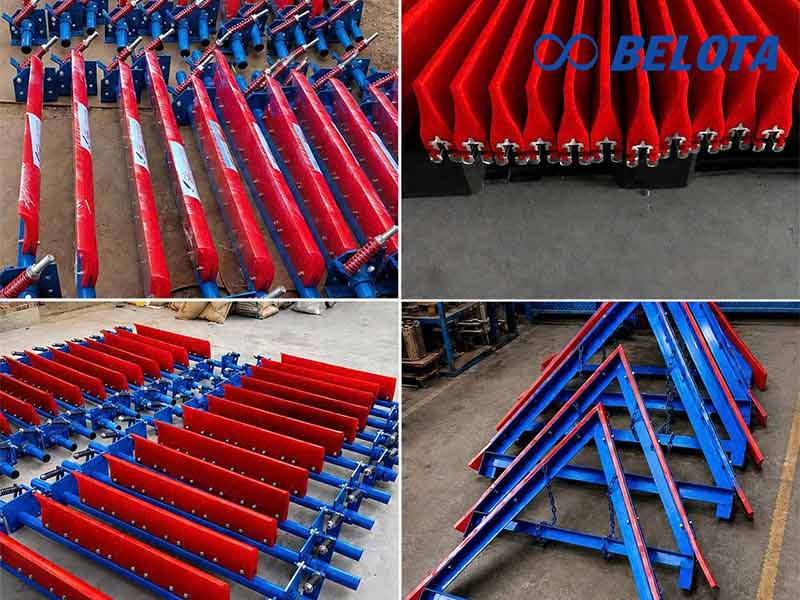
Belota provides custom conveyor belt scraper frame fabrication based on customer drawings or actual field measurements. For customers without engineering drawings, our technical team can perform on-site inspections and recommend the most suitable design for the conveyor system.
Frames are manufactured using a variety of materials, including CT3 carbon steel, powder-coated steel, Stainless Steel 304, and Stainless Steel 316—to match different operating environments and application requirements. In addition to the main frame, Belota also fabricates blade holders, tensioning mechanisms, support brackets, and other related components to ensure complete system compatibility.
Every fabricated component is precision-manufactured to the approved design and thoroughly inspected before shipment.
Frequently Asked Questions
Can the scraper frame be custom-manufactured to my specifications?
Yes. Belota fabricates custom scraper frames based on your conveyor dimensions, available installation space, and existing scraper assembly to ensure a precise fit.
How long does fabrication take?
Standard production lead time is typically 3 - 7 business days, depending on design complexity and material selection. We strive to meet delivery schedules to minimize production downtime.
Can I replace only the frame while keeping my existing scraper blade?
Absolutely. Belota can design a new blade holder compatible with your existing scraper blade, allowing you to reduce replacement costs while maintaining excellent cleaning performance.
Conclusion
A properly fabricated conveyor belt scraper frame is essential for maintaining consistent cleaning performance, extending scraper blade life, and reducing maintenance costs throughout the conveyor system. Choosing an experienced fabrication partner ensures the frame is engineered to match your specific operating conditions and performance requirements. If you're looking for a reliable supplier of custom conveyor belt scraper frames, Belota offers complete services, from site inspection and engineering design to precision fabrication and installation support. Contact our technical team today for expert consultation and a solution tailored to your conveyor system.