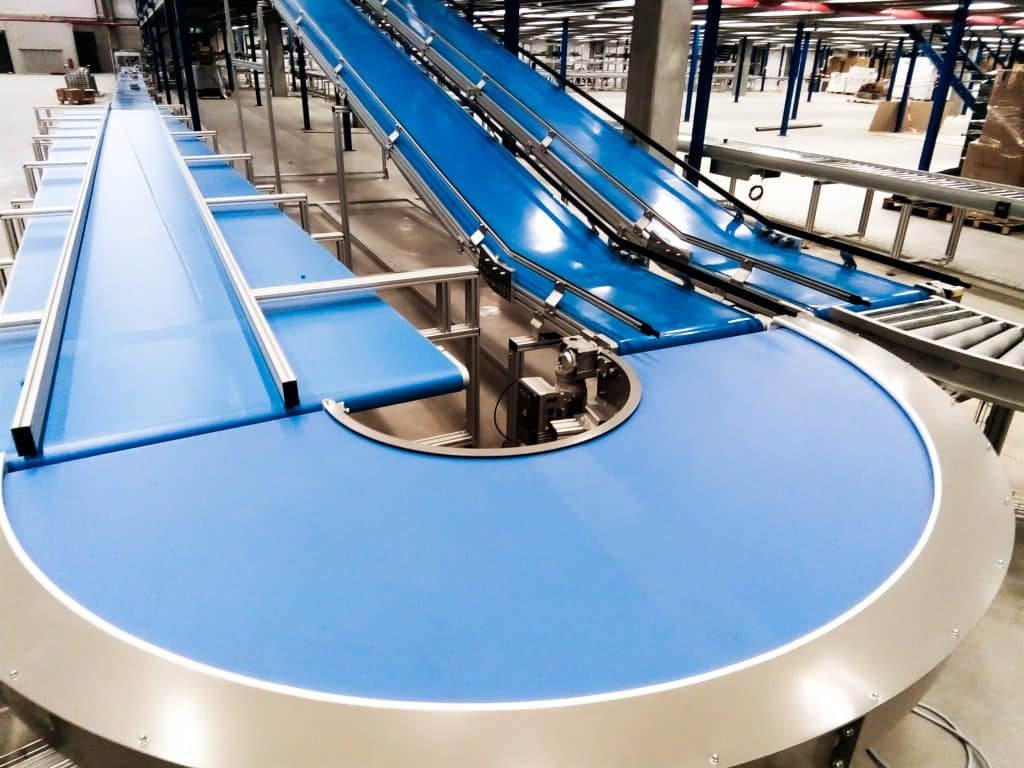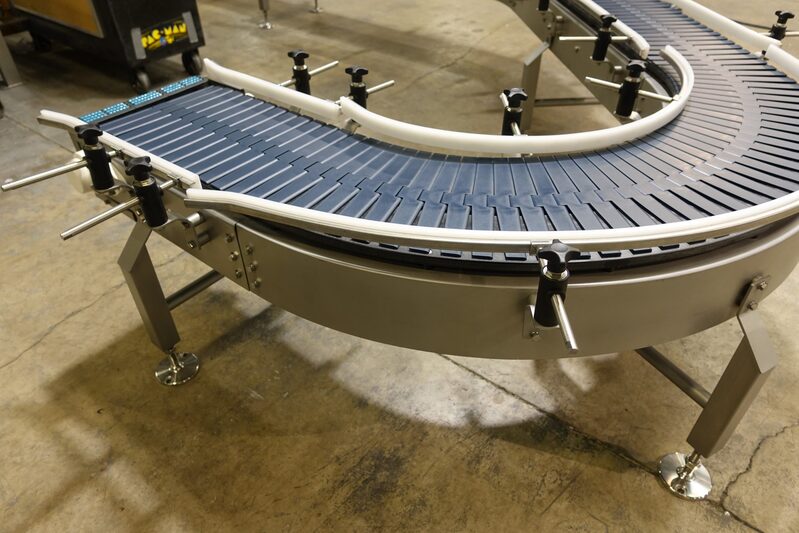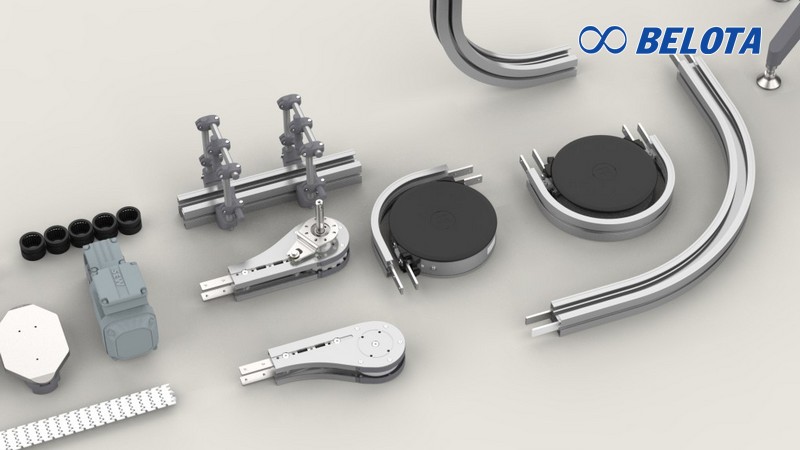
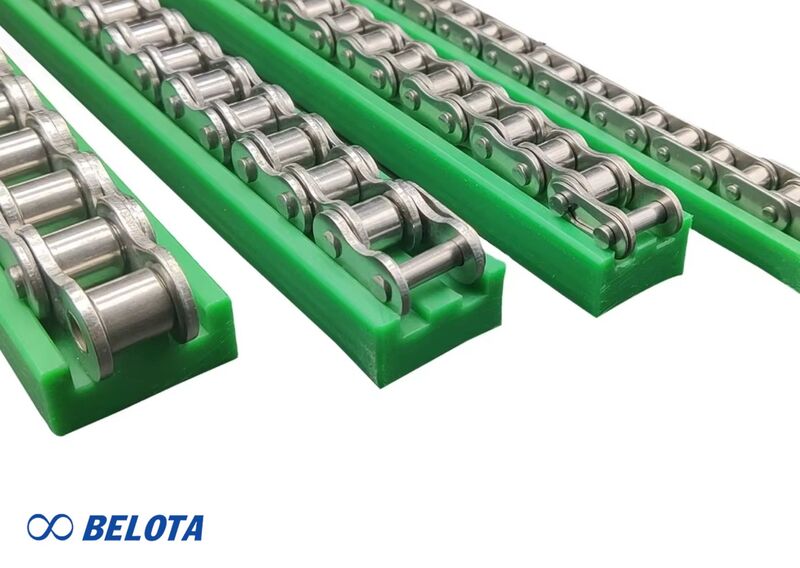
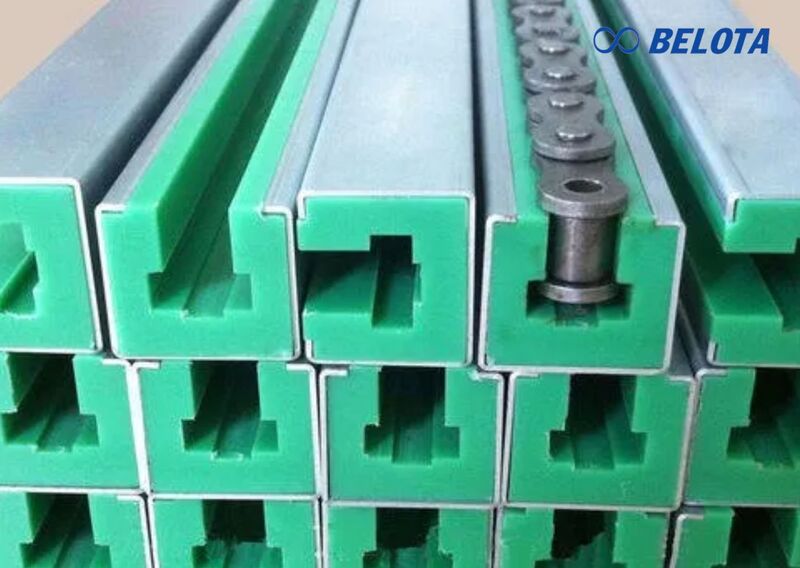
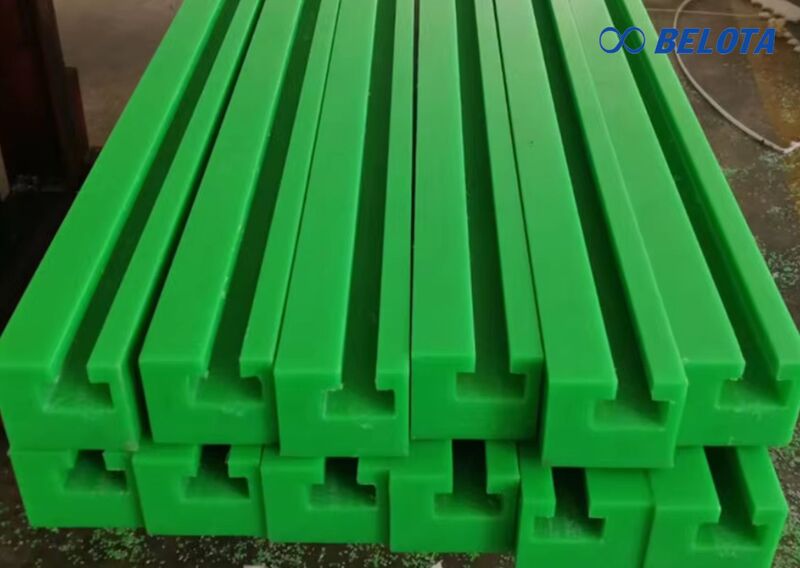
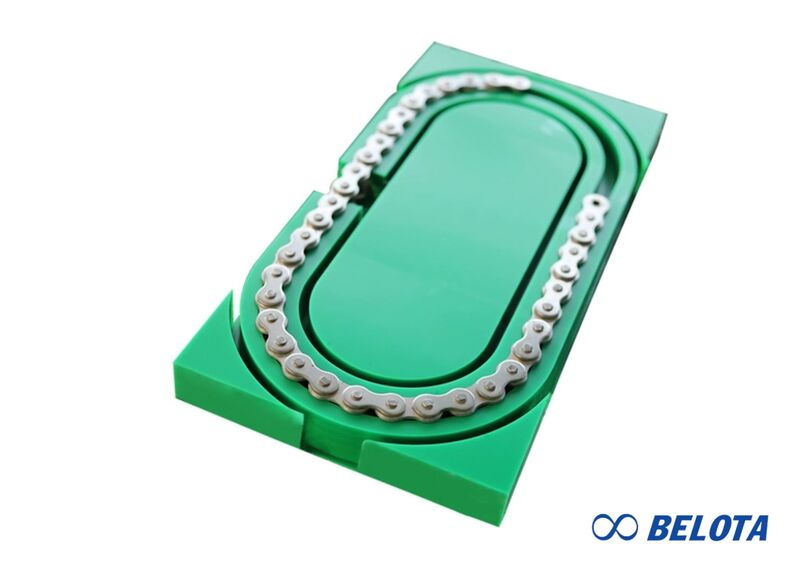
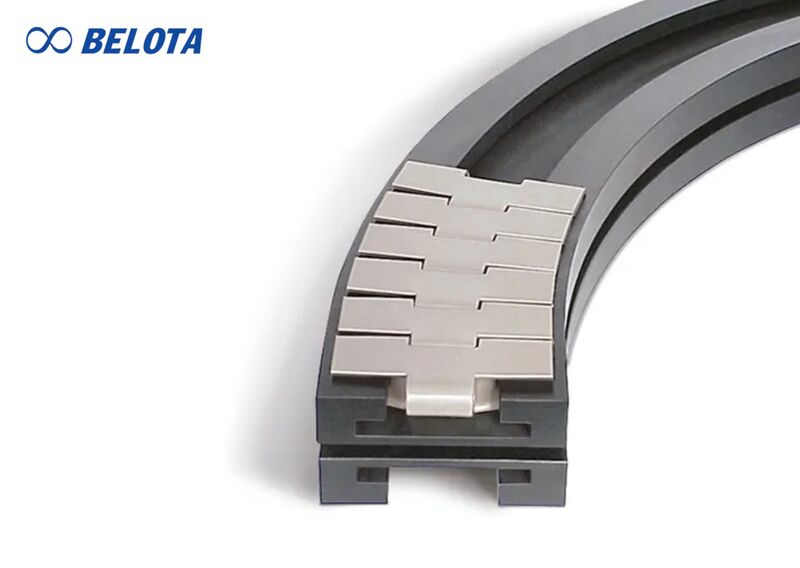
Chain Guide Rail is an accessory installed along the travel path of a conveyor chain. It helps position, support, and guide the chain along the correct path. The product reduces friction between the chain and conveyor frame, minimizing wear, noise, and chain misalignment during operation.
What Is a Chain Guide Rail?
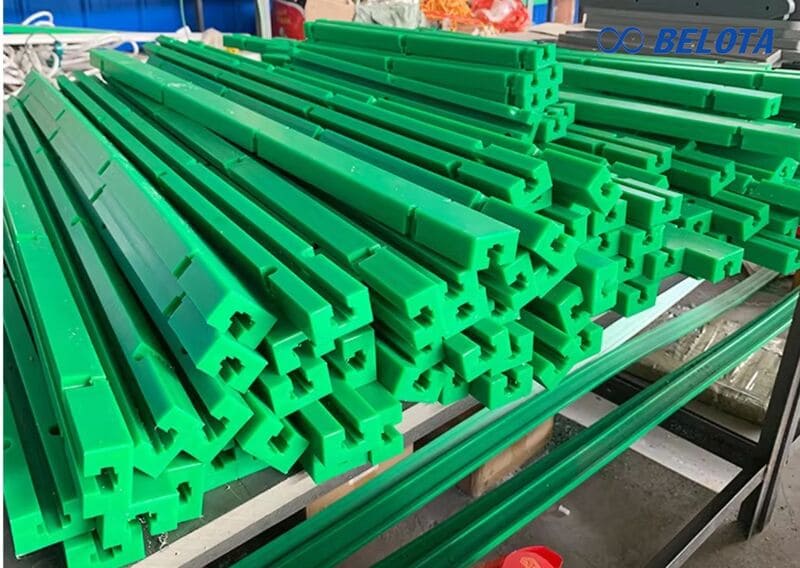
A Chain Guide Rail is a mechanical component fixed along the travel path of a conveyor chain. Its main function is to support, position, and maintain the chain's direction of movement in a conveyor system. The product is commonly manufactured from engineering plastics such as UHMWPE, HDPE, POM, or PA6, depending on the load requirements and operating conditions.
Chain guide rails are commonly used in two main systems:
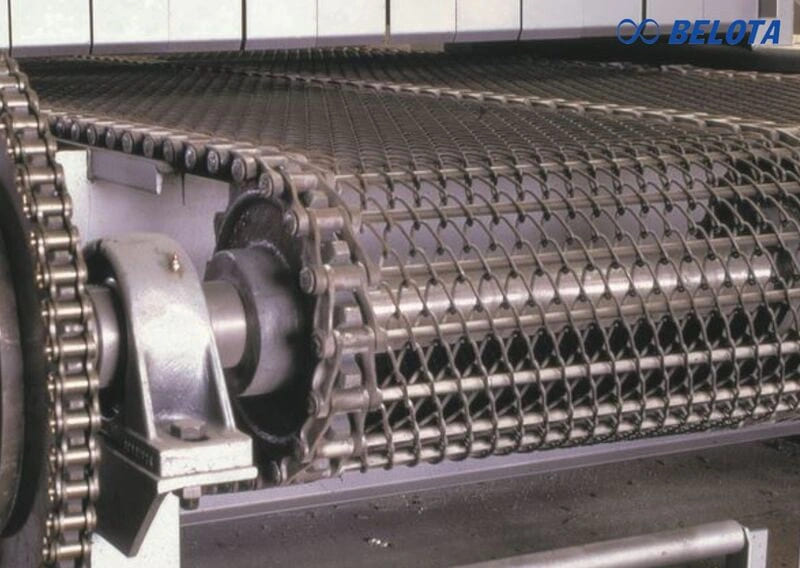
- Slat Chain Conveyors: Support and guide plastic or stainless steel slat chains, ensuring stable movement along straight and curved sections.
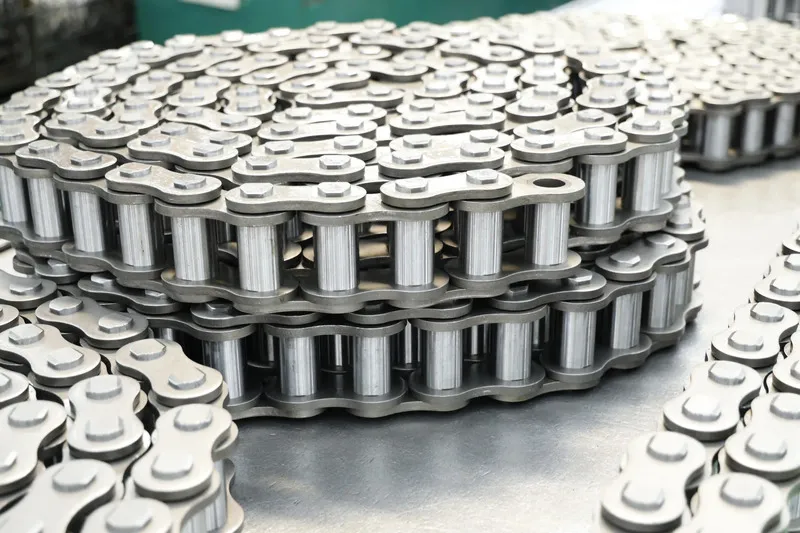
- Industrial Roller Chains: Support and position roller chains in transmission systems or chain conveyors, with profiles designed to match the chain configuration.
During operation, the chain continuously slides along or contacts the guide rail surface. Thanks to the low-friction and wear-resistant properties of the material, the guide rail minimizes direct contact between the chain and metal frame, reducing noise and misalignment. This helps improve system stability and minimize wear on related components.
Functions of Chain Guide Rails in Conveyor Systems
Chain guide rails are important accessories that help maintain conveyor stability and extend equipment service life. Their main functions include:
- Maintaining the travel path: Keeps the chain moving in the correct direction, minimizing misalignment, vibration, or derailment.
- Reducing friction and wear: Prevents direct contact between the chain and metal frame, protecting mechanical components.
- Reducing noise: Provides a stable sliding surface and minimizes impact noise during operation.
- Extending equipment service life: Reduces wear on chains, conveyor frames, and related components.
- Supporting stable operation: Helps conveyor systems run continuously while reducing breakdowns and maintenance costs.
Common Types of Chain Guide Rails
Chain guide rails are available in various shapes and profiles, designed according to chain configuration, frame structure, and operating requirements.
- T-Type Chain Guide Rail: Features a raised center rib to position the chain. Commonly used for single-chain systems and straight-running conveyors.
- U-Type Chain Guide Rail: Features a channel-shaped groove that keeps the chain within its travel path. Suitable for single- or double-chain systems.
- K-Type Chain Guide Rail: Features a grooved structure that partially encloses the chain, helping position it both horizontally and vertically. Suitable for systems requiring secure chain guidance.
- C-Type Chain Guide Rail: Has a channel-shaped profile and is often combined with a metal support strip for increased rigidity and easier installation.
- E-Type Chain Guide Rail: Features specialized positioning grooves and is commonly used with chains equipped with attachments or mounting brackets for additional conveying components.
In addition, flat guide rails and custom-machined profiles are available to suit different conveyor structures.
Materials Used for Chain Guide Rails
Material selection directly affects the wear resistance, coefficient of friction, and service life of a chain guide rail. HDPE and UHMWPE are two commonly used materials in industrial conveyor systems.
HDPE (High-Density Polyethylene)
HDPE is a high-density polyethylene plastic known for its lightweight structure, good rigidity, and impact resistance. It has a relatively low coefficient of friction, good moisture resistance, and resistance to many chemicals.
HDPE chain guide rails are suitable for conventional conveyor systems that require reasonable wear resistance at a competitive cost.
UHMWPE (Ultra-High-Molecular-Weight Polyethylene)
UHMWPE is a polyethylene plastic with an ultra-high molecular weight, known for its excellent wear resistance and low coefficient of friction.
This material allows chains to slide smoothly, reduces resistance, and minimizes wear during continuous operation. UHMWPE is commonly selected for high-frequency conveyor lines or applications requiring longer accessory service life.
POM (Polyoxymethylene)
POM is an engineering plastic with high rigidity, good dimensional stability, and relatively good load-bearing capacity. It offers a low coefficient of friction, wear resistance, and minimal deformation under suitable loading conditions.
POM chain guide rails are suitable for conveyor systems requiring precision, load resistance, and dimensional stability during operation.
PA6 (Polyamide 6)
PA6 is an engineering plastic with good mechanical strength, impact resistance, and wear resistance. It offers relatively high load-bearing capacity, making it suitable for guide components exposed to continuous friction and mechanical stress.
However, PA6 absorbs moisture, which can affect its dimensions and mechanical properties. Therefore, its use should be carefully considered in humid environments or applications involving frequent water exposure.
Applications of Chain Guide Rails
Chain guide rails are used in various industrial conveying systems, particularly production lines equipped with plastic chains, stainless steel chains, or roller chains.
- Food and Beverage Industry: Guides chains in filling, bottling, canning, and product conveying lines.
- Packaging Industry: Used in conveyor systems for cartons, packaging materials, and finished products.
- Component Manufacturing: Supports chain guidance in assembly lines and small-part conveying systems.
- Industrial Manufacturing: Used in chain conveyors, plastic chain conveyors, and industrial chain transmission systems.
Important Considerations When Selecting Chain Guide Rails
To ensure effective operation and compatibility with the conveyor system, several technical factors should be considered:
- Chain dimensions: Identify the chain type, pitch, width, and link configuration to select the correct guide rail profile.
- Material: Choose HDPE, UHMWPE, POM, or PA6 according to operating conditions and performance requirements.
- Rail profile: Select T, U, K, C, E, or flat profiles based on the conveyor travel path design.
- Operating conditions: Consider temperature, humidity, chemical exposure, speed, and operating frequency.
- Installation method: Ensure the guide rail is securely fixed and aligned, with no points that obstruct chain movement.
The guide rail surface should also be inspected regularly. If deep wear, cracks, or deformation cause chain misalignment, the rail should be replaced to prevent further damage to the system.
Belota Supplies Chain Guide Rails and Conveyor Accessories
Belota supplies conveyor accessories and chain-guiding components for industrial conveying systems. Products are selected based on chain dimensions, travel path profiles, and the actual operating conditions of each production line.
Belota provides consultation on material selection, specifications, and custom machining to help customers find suitable solutions for their existing equipment. For replacement or new installations, customers can provide an existing guide rail sample, chain dimensions, technical drawings, or system photos for inspection and consultation.
Conclusion
Chain guide rails help maintain the chain travel path, reduce friction, and minimize wear in conveyor systems. Selecting the right material, profile, and dimensions helps ensure stable chain operation, extend equipment service life, and reduce maintenance costs. Belota provides consultation and conveyor accessories tailored to the actual operating requirements of industrial systems.