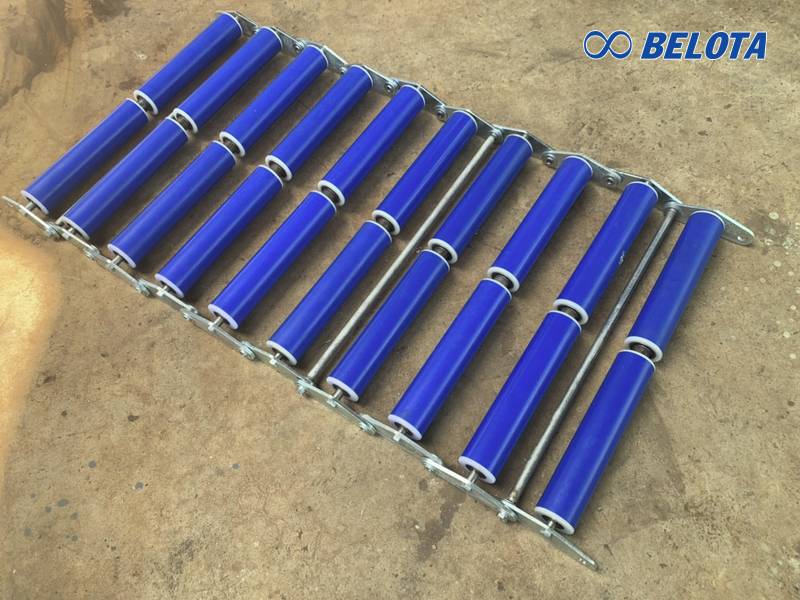
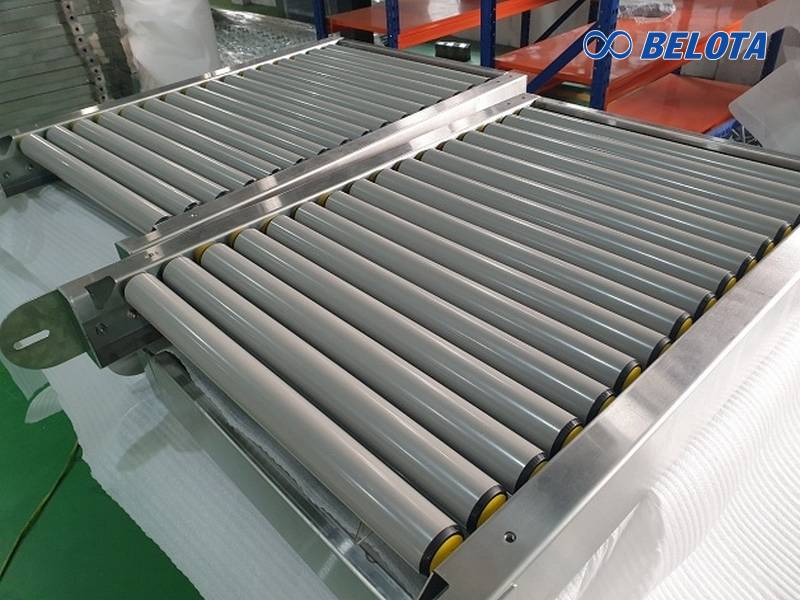
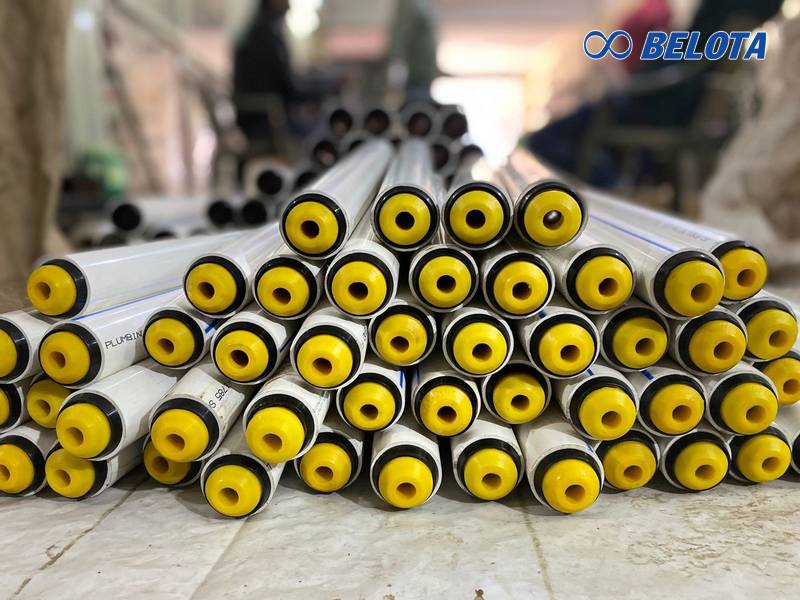
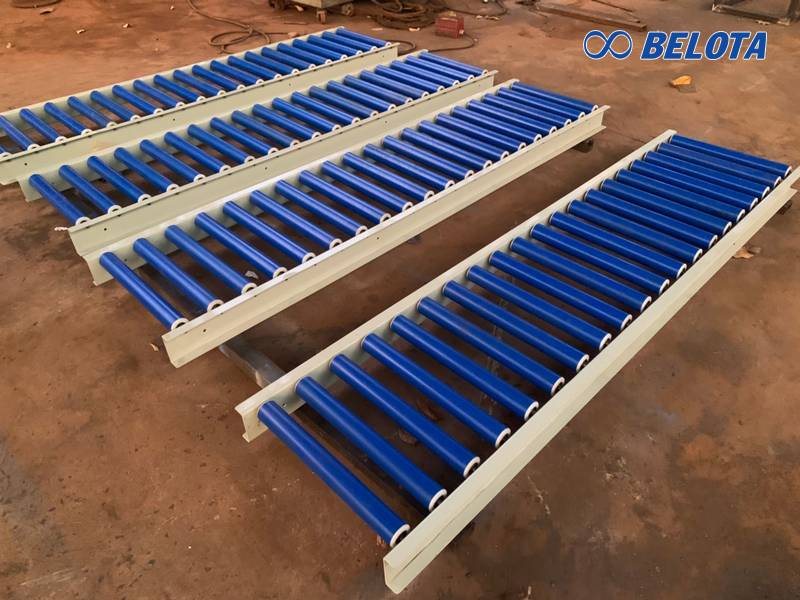
Plastic rollers are an ideal alternative to metal rollers in demanding environments such as wet areas, chemical plants, or facilities requiring low-noise operation. Thanks to their lightweight design and excellent corrosion resistance, they are widely used in light manufacturing, food processing, and electronics industries. Below, Belota provides a comprehensive guide to help you choose the right plastic conveyor roller for your application.
What Is a Plastic Conveyor Roller?
A plastic conveyor roller is a cylindrical component manufactured from engineering plastics such as PVC, PU, HDPE, POM, or Nylon. It is widely used in conveyor systems and industrial machinery to support, guide, and transport products.
With advantages including lightweight construction, smooth operation, low friction, corrosion resistance, and cost efficiency, plastic rollers are particularly suitable for wet environments, hygienic production lines, and chemical applications.
Plastic Conveyor Roller Structure
Plastic conveyor rollers are assembled from precision-engineered components to ensure reliable performance in demanding operating environments.
- Roller Tube: Manufactured from high-performance engineering plastics such as POM, PVC, PP, HDPE, or UHMW-PE, providing excellent wear resistance, chemical resistance, and load-bearing capability.
- Shaft: Made from galvanized steel, stainless steel (SUS304), or aluminum, the shaft supports the roller and minimizes vibration during operation.
- Bearings: High-precision bearings reduce friction, ensuring smooth, quiet operation while extending service life.
- Bearing Housing: Typically manufactured from molded plastic or metal, the bearing housing keeps the bearings accurately aligned with the shaft throughout operation.
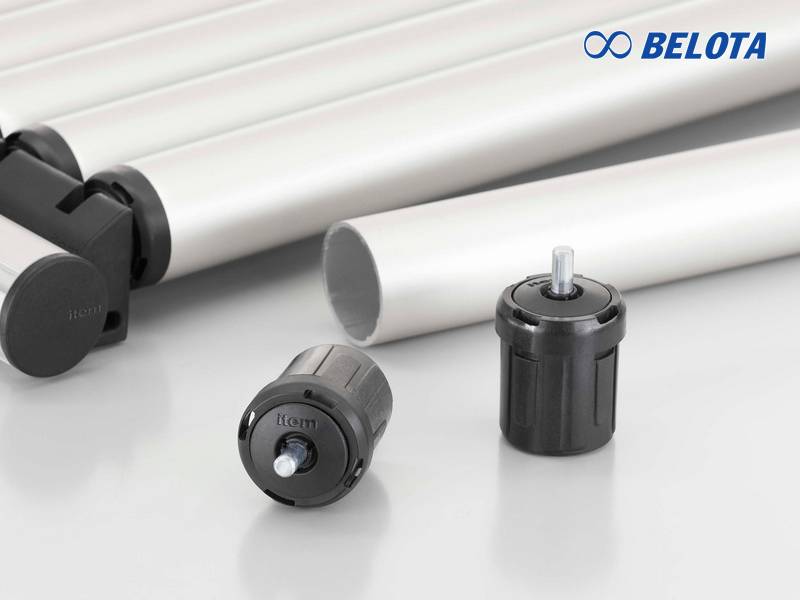
- Dust Seal System: Zigzag seals or enclosed end caps prevent dust, moisture, and contaminants from entering the bearing assembly.
- Optional Components Depending on the application, rollers can be equipped with:
- Spring-loaded shafts
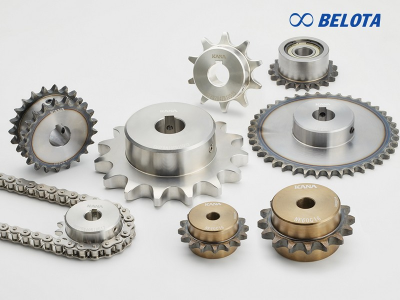
- Sprockets
- Spacer washers
- Other customized mounting accessories
Standard Technical Specifications
- Roller Diameter: Ø20 mm to Ø150 mm
- Roller Length: 100 mm to 1,500 mm (customizable)
- Tube Material: POM, PVC, PU, PP, HDPE, UHMW-PE
- Shaft Material: Galvanized steel, SUS304 stainless steel, or reinforced plastic
- Bearing Type: High-precision, self-lubricating bearings
- Maximum Load Capacity: Up to 500 kg per roller (depending on model)
- Operating Temperature: -40°C to 100°C
- Coefficient of Friction: Approximately 0.2
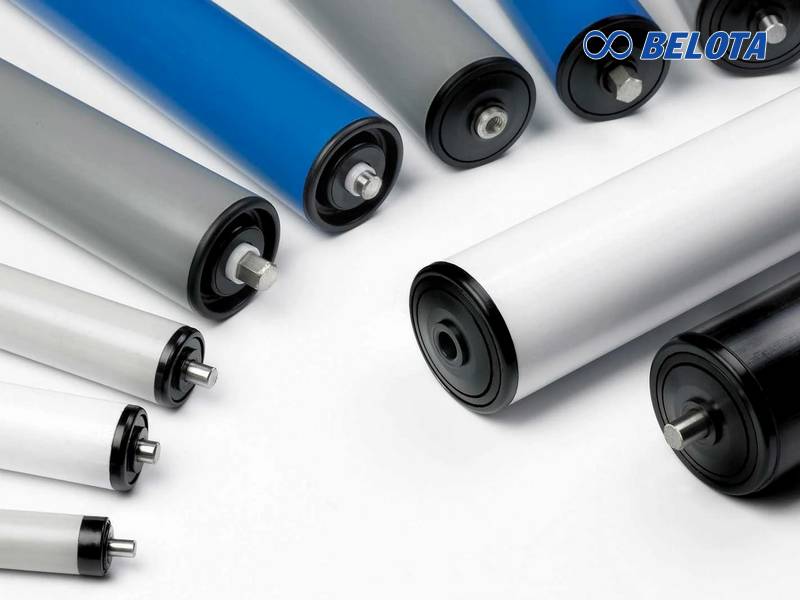
- Available Colors: White, Black, Blue, or customized
Types of Plastic Conveyor Rollers by Material
PVC Plastic Rollers
PVC rollers are the most economical and commonly used option. Typically available in gray or blue, they offer lightweight construction, excellent moisture resistance, and electrical insulation, making them ideal for conveying cartons, packaging, and lightweight products.
POM Plastic Rollers
POM rollers feature a smooth surface, high hardness, and an extremely low coefficient of friction. Their self-lubricating properties and superior wear resistance make them ideal for food processing and seafood production, helping prevent product jams and surface damage.
Nylon (PA) Plastic Rollers
Nylon offers outstanding mechanical strength, excellent impact resistance, and exceptional wear resistance. These rollers are designed for heavy loads and high-speed conveyor systems where standard plastics may not perform adequately.
PTFE (Teflon) Plastic Rollers
PTFE rollers are designed for the most demanding environments. Their outstanding heat resistance, non-stick surface, and exceptional chemical resistance make them ideal for drying ovens, painting lines, and chemical processing equipment.
Polyurethane (PU) Rollers
PU rollers combine the elasticity of rubber with superior mechanical durability. They provide excellent shock absorption, noise reduction, abrasion resistance, and oil resistance, making them suitable for transporting delicate or fragile products.
HDPE / UHMW-PE Rollers
These ultra-durable plastics offer excellent impact resistance, moisture resistance, and long service life. They are widely used in mining, heavy industry, and wet processing environments.
Types by Drive Method
- Gravity Plastic Rollers: Free-spinning rollers driven manually or by gravity.
- Belt-Driven Plastic Rollers: Designed with O-ring grooves for belt-driven conveyor systems.
- Sprocket Plastic Rollers: Equipped with plastic or steel sprockets for chain-driven conveyors.
Types by Application
- Heat-Resistant Rollers: Manufactured from high-temperature engineering plastics for drying and heating applications.
- Guide Rollers: Designed to keep conveyor belts properly aligned and prevent belt misalignment.
- Heavy-Duty Rollers: Built with reinforced tubes and heavy-duty shafts for carrying large loads.
- Anti-Static Rollers: Made from conductive engineering plastics to eliminate static electricity in electronics manufacturing and hazardous environments.
Key Advantages of Plastic Conveyor Rollers
- Excellent Corrosion Resistance: Unlike steel rollers, plastic rollers do not rust, making them ideal for wet and humid environments.
- Lightweight Design: Weighing only about one-third as much as stainless steel or steel rollers, they reduce motor load, simplify installation, and improve energy efficiency.
- Quiet Operation: Plastic absorbs vibration effectively, significantly reducing operating noise at high speeds.
- Cost-Effective: More affordable than stainless steel conveyor rollers while still offering excellent corrosion resistance for many industrial applications.
Typical Applications
Plastic conveyor rollers are widely used in:
- Food & Beverage Industry: Transporting bakery trays, bottles, dairy products, and packaged foods using food-grade POM or Nylon rollers.
- Electronics Industry: Handling printed circuit boards (PCBs), electronic components, and lightweight products, including anti-static applications.
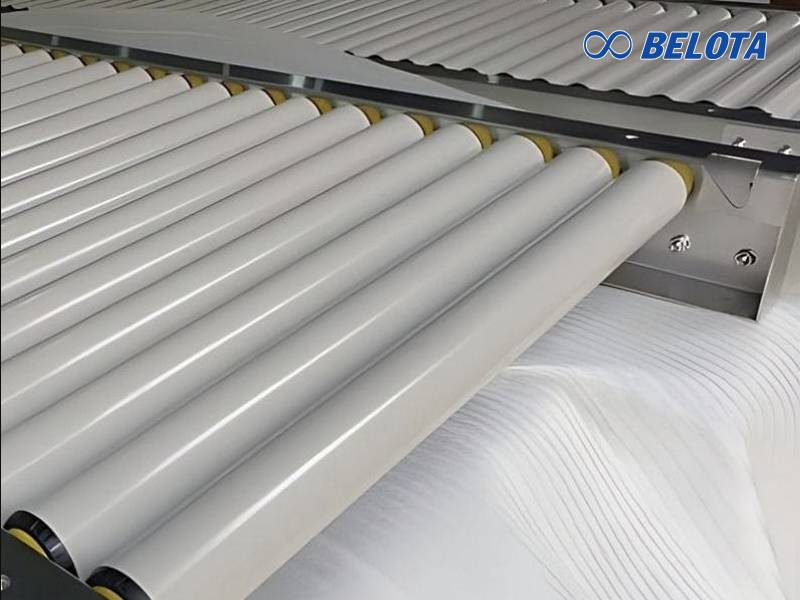
- Packaging Industry: Conveying cartons, paper boxes, and lightweight packaged goods.
- Chemical Industry: Used in fertilizer plants, chemical processing facilities, and detergent manufacturing where corrosion resistance is essential.
Plastic conveyor rollers provide an efficient and economical alternative to metal rollers, especially in applications requiring corrosion resistance, lightweight construction, quiet operation, and long service life.
Contact Belota
Looking for replacement plastic conveyor rollers or custom-manufactured rollers to your specifications? Contact Belota today for expert consultation and a fast quotation.
Hotline / Zalo: +84 917 657 946