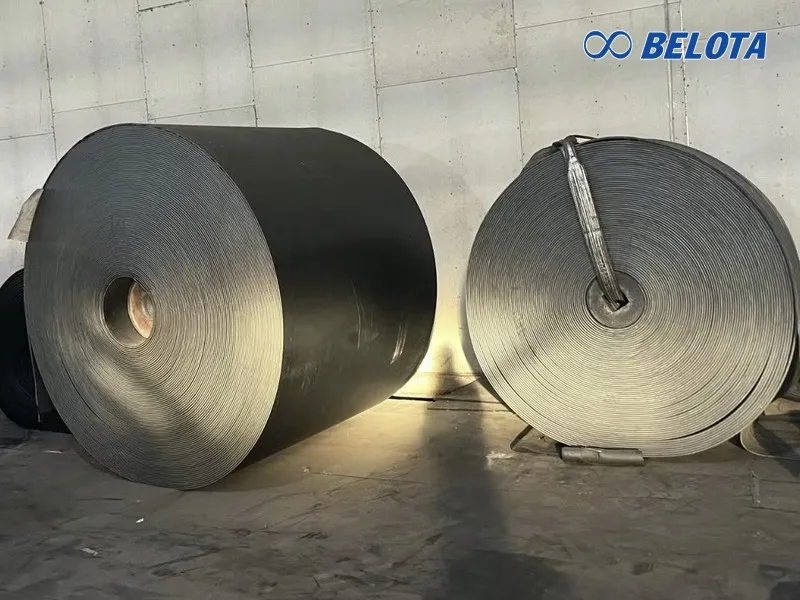
In heavy industry, the demand for conveyor systems capable of transporting large volumes of bulk materials over long distances at high speeds continues to grow. The steel cord rubber conveyor belt (Steel Cord Conveyor Belt – ST) has established itself as a key technology for these demanding applications. Designed to overcome the limitations of traditional fabric-reinforced conveyor belts, steel cord belts offer exceptionally high tensile strength, superior operational stability, and extended service life. They are widely used in mining, thermal power plants, and the metallurgical industry.
Structure of a Steel Cord Rubber Conveyor Belt
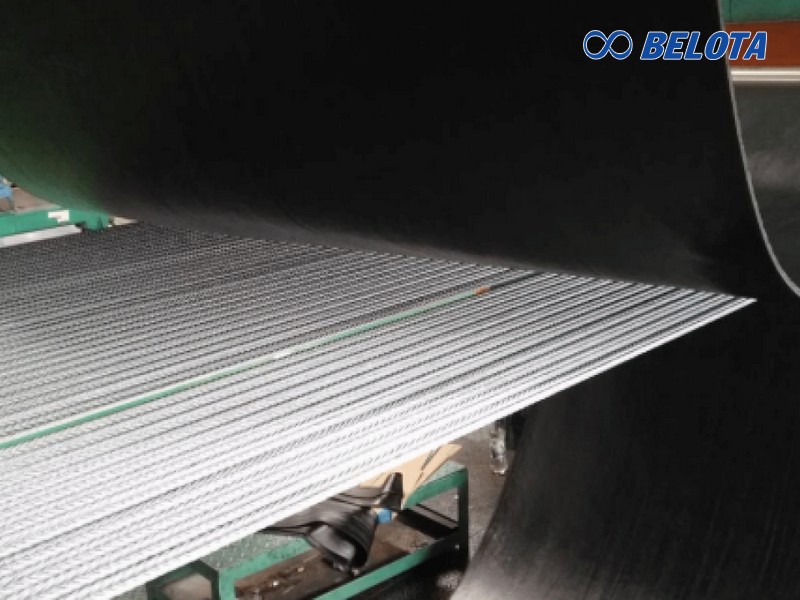
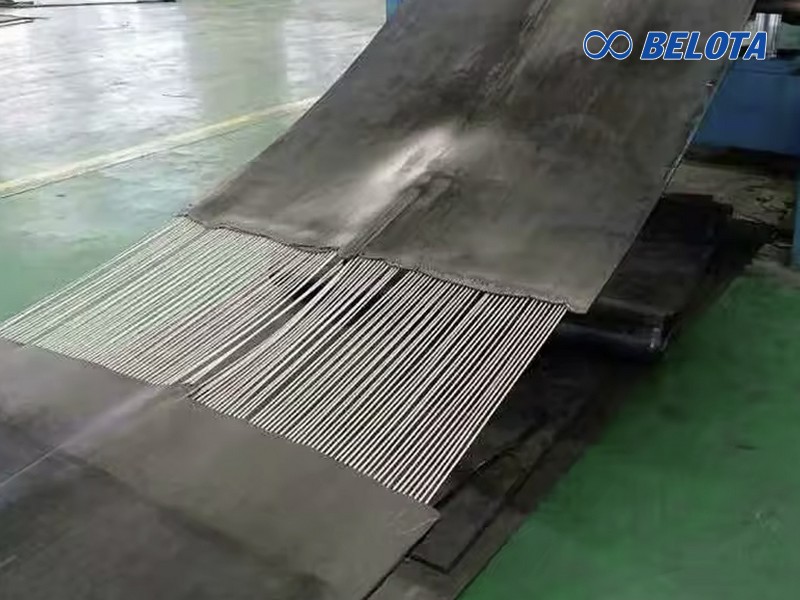
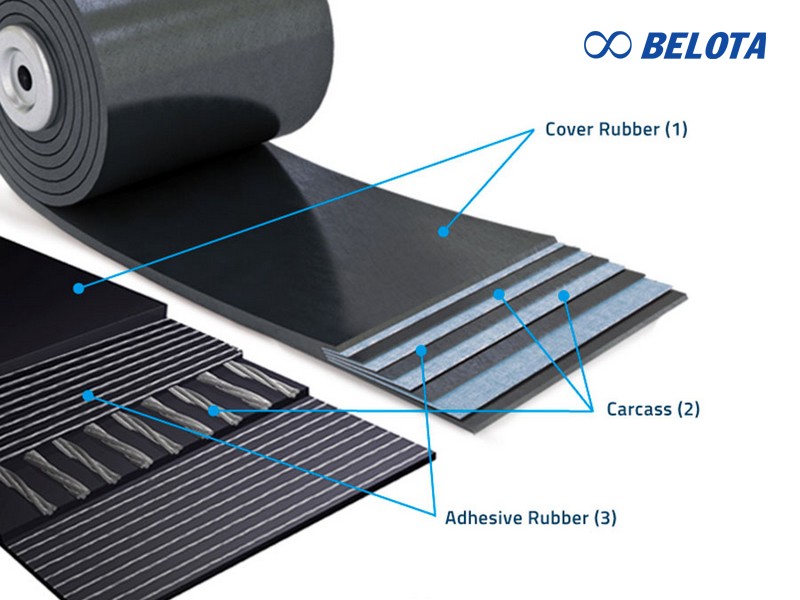
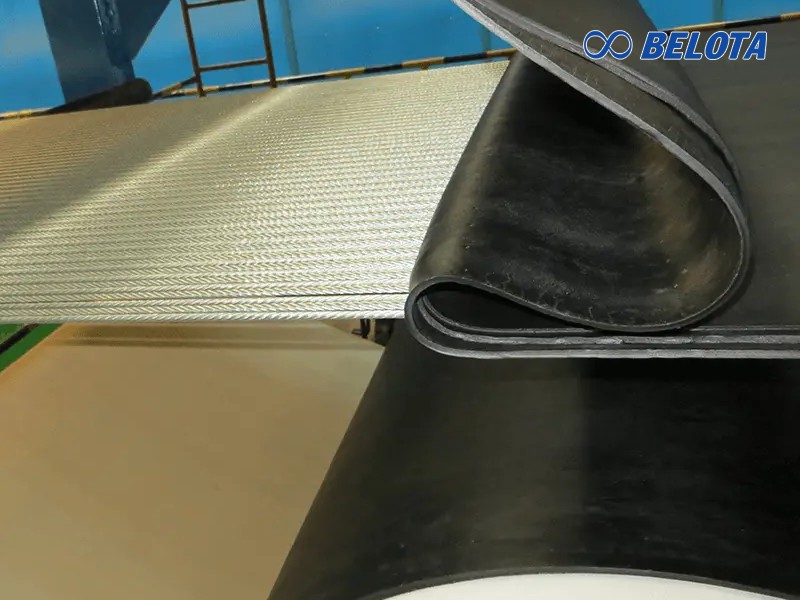
A steel cord rubber conveyor belt combines a load-bearing steel cord carcass with protective rubber layers. The steel cords are arranged parallel to the belt's longitudinal direction, typically spaced approximately 10–15 mm apart. The upper and lower rubber covers surround the steel cord carcass, providing high tensile strength and reliable performance. This type of rubber conveyor belt is designed for heavy-duty material handling systems that require high load capacity and stable operation.
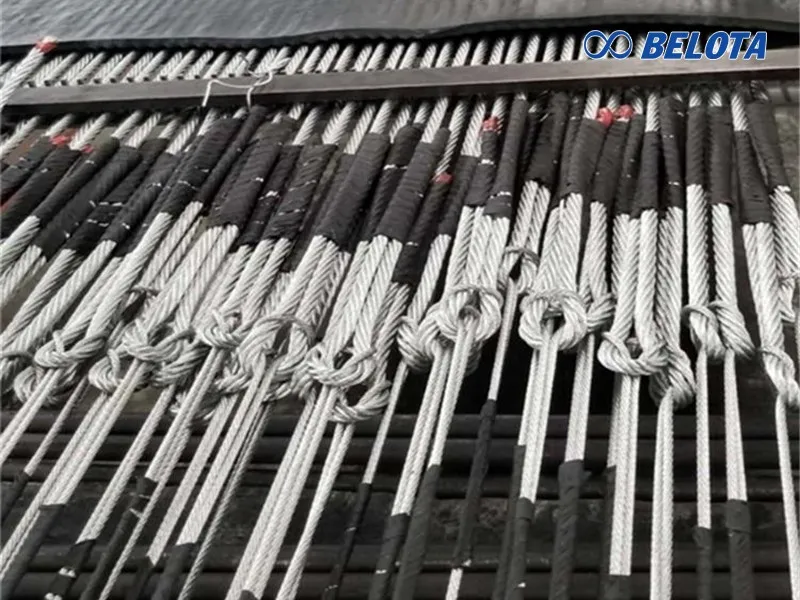
- Steel Cord Carcass: Consists of steel cords with diameters of approximately 3–10 mm, arranged parallel at regular intervals of 10–15 mm. The cords carry the main tensile load and maintain belt stability during operation.
- Top Rubber Cover: Typically 6 - 12 mm thick, providing resistance to impact and abrasion.
- Bottom Rubber Cover: Typically 3 - 5 mm thick, designed to withstand friction against conveyor rollers.
- Skim Rubber: Located between the steel cords and the rubber covers, ensuring strong adhesion and structural integrity.
The steel cords are bonded to the surrounding rubber using specialized manufacturing processes to improve adhesion and reduce the risk of separation during operation. The overall belt thickness can reach approximately 50 mm, depending on the belt construction and load requirements.
Basic Technical Specifications of Steel Cord Conveyor Belts
| Specification | Typical Values |
|---|---|
| Belt width | 500–2,200 mm |
| Overall thickness | 8–25 mm |
| Steel cord belt rating | ST1000–ST5400 (N/mm) |
| Nominal tensile strength | 1,000–5,400 N/mm |
| Top cover thickness | 4–10 mm |
| Bottom cover thickness | 2–6 mm |
| Operating temperature | -20°C to +80°C (standard); special grades up to 200°C |
| Rubber hardness | 60 ± 5 Shore A |
| Abrasion resistance | Less than 120 mm³ (DIN 22102, grades X/Y) |
| Splicing method | Hot vulcanization |
Steel Cord Layer Specifications
The transverse steel layer (Steel Cord Breaker) reinforces the conveyor belt structure, improving resistance to longitudinal tearing and heavy impact while increasing stability when transporting heavy materials.
| No. | Specification | Unit | Type 1 | Type 2 | Type 3 | Type 4 |
|---|---|---|---|---|---|---|
| 1 | Steel cord construction | — | 2+2×0.35 HT | 3×4×0.22 HT | 3×7×0.20 HE | 3×7×0.22 HE |
| 2 | Steel cord breaking force | N | 1,000 | 1,000 | 1,360 | 1,650 |
| 3 | Steel cord spacing | mm | 8 | 8 | 6.4 | 5.5 |
| 4 | Steel cord diameter | mm | 1.0 ± 0.1 | 1.18 ± 0.1 | 1.39 ± 0.1 | 1.52 ± 0.1 |
| 5 | Polyester cord construction | — | 1100 DTEX 1×2 | 1100 DTEX 1×2 | 1100 DTEX 1×2 | 1100 DTEX 1×2 |
| 6 | Polyester cord breaking force (longitudinal) | N | 140 | 140 | 140 | 140 |
| 7 | Longitudinal polyester cord spacing | mm | 12.5 | 12.5 | 12.5 | 12.5 |
| 8 | Longitudinal polyester cord diameter | mm | 0.3 | 0.3 | 0.3 | 0.3 |
Common Rubber Cover Specifications for Steel Cord Conveyor Belts
Steel cord conveyor belts use specialized rubber covers to improve abrasion resistance, withstand impact, and maintain reliable operation under different working conditions.
| Group | Rubber Cover Grade | Tensile Strength (MPa) | Elongation (%) | Abrasion Loss (mm³) | Hardness (Shore A) | Application |
|---|---|---|---|---|---|---|
| 1 | X | ≥ 25 | ≥ 450 | ≤ 120 | — | Very high abrasion and impact resistance for severe operating conditions |
| 1 | W | ≥ 18 | ≥ 400 | ≤ 90 | — | Applications requiring high abrasion resistance |
| 2 | Y | ≥ 20 | ≥ 400 | ≤ 150 | — | General abrasion and impact resistance |
| 3 | 068 | ≥ 15 | ≥ 350 | ≤ 150 | 60 ± 5 | Standard steel cord conveyor belt applications |
| 4 | 438 | ≥ 15 | ≥ 350 | ≤ 150 | 67 ± 5 | Applications requiring a harder rubber surface |
Common Types of Steel Cord Conveyor Belts
Based on their construction and application requirements, steel cord conveyor belts can be divided into several common types.
1. Longitudinal Steel Cord Conveyor Belt
This is the standard configuration, in which all steel cords run parallel to the longitudinal direction of the belt.
Key features
- Extremely high tensile strength and very low elongation (less than 0.5%).
- Uniform load distribution and smooth operation.
- Good fatigue and impact resistance.
- Suitable for conveyor systems extending hundreds of meters.
- Longitudinal steel cord conveyor belt with cords arranged parallel to the belt direction
2. Longitudinal Steel Cord Belt with Fabric Reinforcement
This design combines longitudinal steel cords with one or two fabric plies positioned above or below the steel cord layer to improve overall belt strength.
Key features
- Improves belt stability and helps limit deformation.
- Enhances resistance to transverse stretching.
- Provides stable operation under continuous heavy loads.
- Can improve overall belt performance depending on the fabric and cover construction.
3. Longitudinal Steel Cord Belt with Transverse Steel Reinforcement
This type combines longitudinal steel cords with transverse steel reinforcement to improve resistance to tearing and impact.
Key features
- Enhanced resistance to longitudinal tearing caused by sharp materials.
- High load-bearing capability.
- Reduces localized damage when heavy materials fall onto the belt.
- Improves overall durability and service life.
4. Longitudinal Steel Cord Belt with Transverse Steel and Fabric Reinforcement
This configuration combines longitudinal steel cords, transverse steel reinforcement, and fabric plies to provide additional structural reinforcement for demanding applications.
Key features
- Robust construction for demanding operating conditions.
- Suitable for high-capacity material handling systems, depending on the belt specification and conveyor design.
- Improved resistance to tearing and heavy impact.
- Good abrasion resistance and operational stability.
- Suitable for long-distance conveyor systems and challenging terrain.
- Steel cord conveyor belts offer excellent durability
Key Advantages of Steel Cord Conveyor Belts
Steel cord conveyor belts are considered a high-performance material handling solution for mining, cement production, thermal power generation, and construction materials manufacturing. Their reinforced steel cord construction provides reliable performance under heavy loads, continuous operation, and harsh working conditions while meeting the demanding technical requirements of modern conveyor systems.
- High load capacity: Excellent tensile strength makes these belts suitable for transporting heavy materials such as rocks, ores, and cement.
- Long conveying distances and high operating speeds: Ideal for long-distance conveyor systems with high throughput requirements.
- High durability and extended service life: Compared with conventional fabric-reinforced rubber conveyor belts, steel cord belts offer higher tensile strength and lower elongation, particularly in heavy-duty, continuous-operation applications.
- Low elongation: Minimizes belt stretching during operation, reduces tension adjustment requirements, and helps maintain system stability.
- Resistance to demanding operating conditions: Specialized grades are available with oil resistance, heat resistance, or flame-retardant properties for different industrial environments.
Industrial Applications of Steel Cord Conveyor Belts
Steel cord conveyor belts are widely used across multiple industries because of their high tensile strength, operational stability, and ability to perform in demanding environments. Common applications include:
- Mining: Transporting ores, coal, and limestone.
- Cement industry: Handling clinker and raw materials.
- Steel and metallurgy: Conveying iron ore and steel-related materials.
- Seaports: Handling large volumes of bulk cargo.
- Thermal power plants: Transporting coal and ash.
Steel cord conveyor belts are used in a wide range of industrial applications
Reliable Steel Cord Conveyor Belt Supplier
Belota provides steel cord conveyor belt solutions for industrial applications that demand durability, reliable performance, and high conveying capacity. Our team supports customers in selecting suitable belt specifications and configurations based on operating conditions and system requirements.
- Quality and reliability: Materials selected to support consistent performance and durability.
- Optimized performance: Appropriate belt selection helps manage wear, improve operational efficiency, and reduce maintenance requirements.
- Flexible specifications: Belt width, length, surface cover, tensile rating, and other requirements can be evaluated according to the conveyor design.
- Technical consultation: Recommendations based on material characteristics, operating conditions, and application requirements.
- Installation and maintenance support: Assistance with installation, maintenance, and conveyor belt servicing.
- Specialized rubber compounds: Options may be available for applications requiring resistance to heat, oil, or other challenging conditions.
- Custom solutions: Belt selection and processing according to project requirements and equipment specifications.
Contact Belota at 0917 657 946 for technical consultation and assistance in selecting a suitable steel cord conveyor belt for your industrial conveyor system.