In modern manufacturing and logistics systems, optimizing factory space and material flow plays a critical role in operational efficiency. Curved roller conveyors were developed to solve the challenge of changing product direction flexibly while still maintaining smooth and stable transportation. In this article, Belota will help you better understand this versatile conveyor solution.
What is a Curved Roller Conveyor?
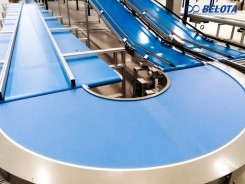
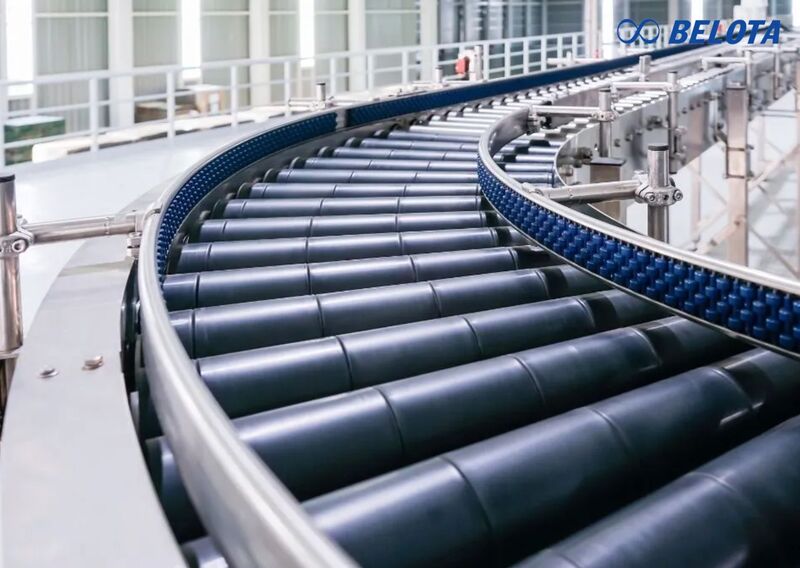
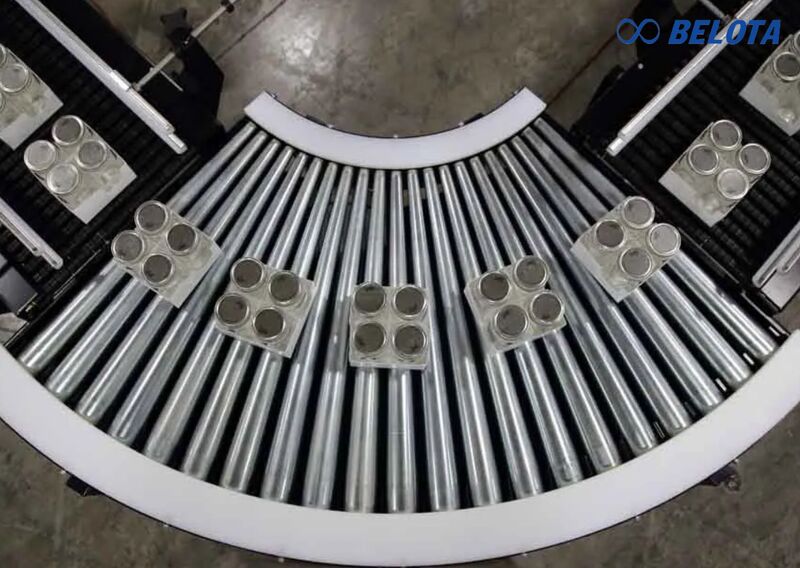
A curved roller conveyor is a conveyor system that uses rollers arranged along a curved path to redirect products during transportation. These systems are commonly designed with turning angles such as 45°, 90°, or 180°, making them suitable for connecting multiple production areas within the same conveyor line.
This type of conveyor is widely used for transporting cartons, pallets, and products with flat bottom surfaces. Thanks to its curved design, the system helps optimize factory space, especially in areas with limited installation space or where products need to change direction while maintaining continuous and stable movement.
Structure of a Curved Roller Conveyor
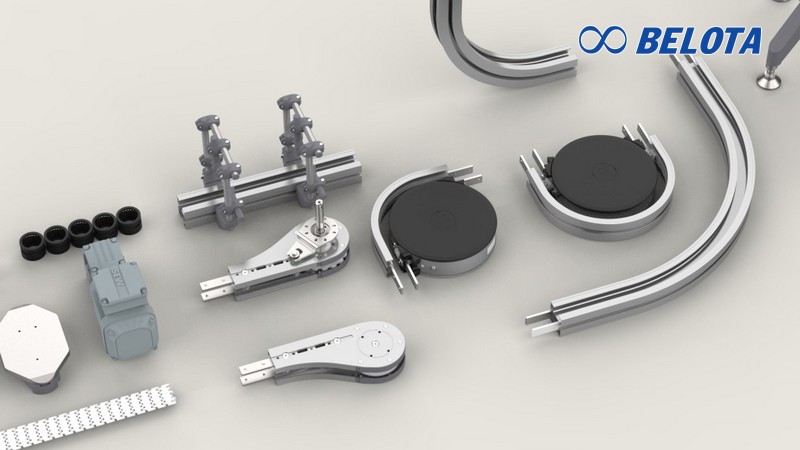
A curved roller conveyor consists of several interconnected components that ensure stable operation within the production system.
Conveyor Frame
The frame is typically made from powder-coated steel or stainless steel to provide high rigidity and load-bearing capacity. In some applications, aluminum profiles are used to reduce weight and simplify installation.
Rollers
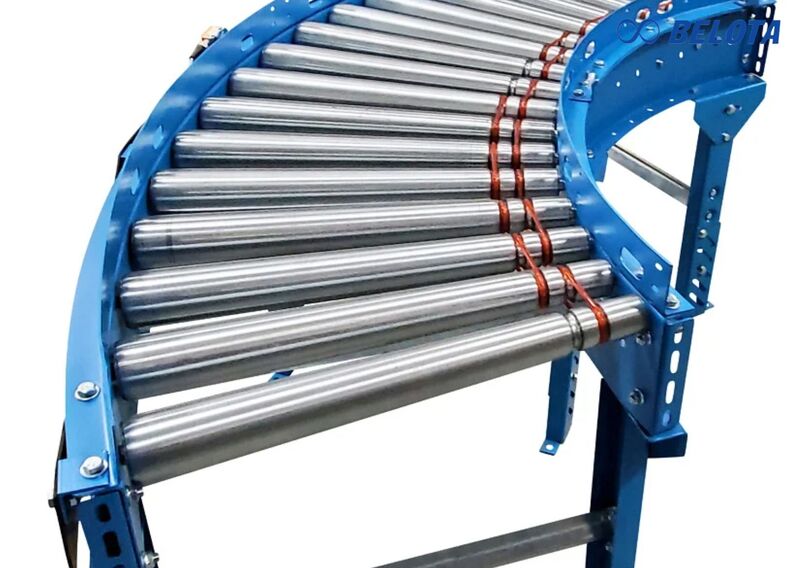
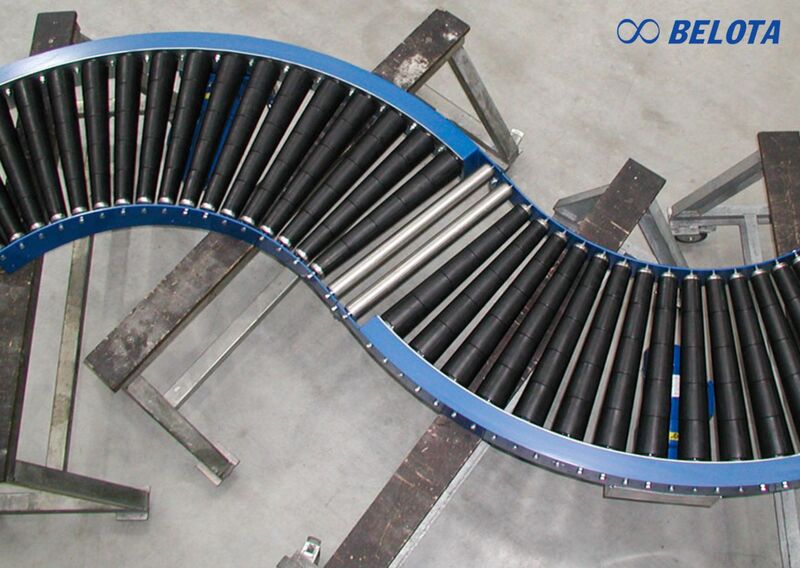
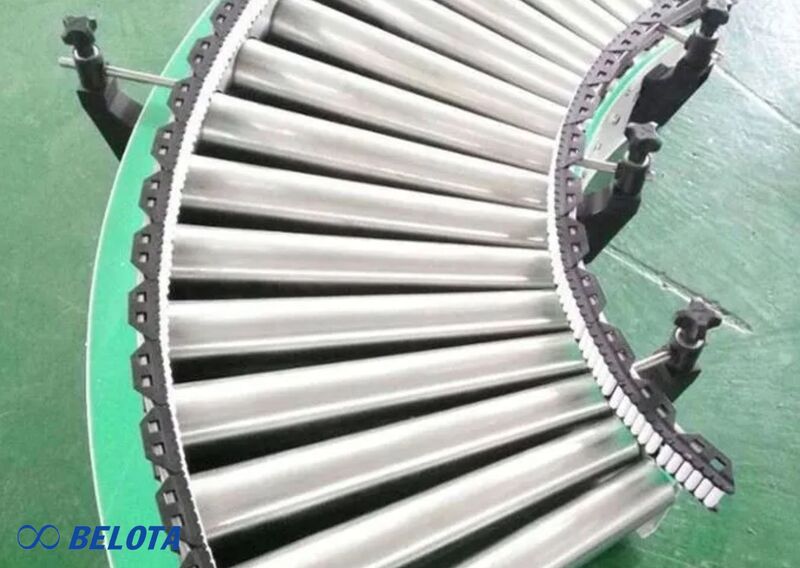
The rollers can be manufactured from galvanized steel, stainless steel, or engineering plastic depending on the working environment. For curved sections, tapered rollers are commonly used to create speed differences between the inner and outer edges of the curve, helping products move smoothly without drifting or jamming.
Support Legs
Support legs can be fixed or equipped with caster wheels for easier relocation inside the factory depending on operational requirements.
Drive System
The drive system includes a motor and gearbox that regulate conveyor speed and ensure stable, consistent product movement.
Working Principle of a Curved Roller Conveyor
A curved roller conveyor operates through the transmission mechanism between the geared motor, roller system, and frictional contact with the conveyed products. When the motor runs, driving force rotates the rollers uniformly along the designed curved path, allowing products to move continuously and change direction smoothly.
In this system, tapered rollers play an important role in balancing rotational speed between the inner and outer edges of the curve. Thanks to their varying diameter design, products such as cartons or pallets maintain stable movement and minimize the risk of misalignment or jamming when passing through curved sections.
The conveyor frame supports the entire roller assembly and withstands operational loads throughout the conveying process. Depending on load requirements and environmental conditions, the system can integrate galvanized steel, stainless steel, or engineering plastic rollers to ensure durability and continuous operation in automated production lines.
Technical Specifications of Curved Roller Conveyors
- Turning angle: 45°, 90°, 180°
- Conveyor width: 300 – 1,200 mm
- Roller diameter: Ø38 – Ø76 mm
- Roller type: tapered rollers, straight rollers
- Roller material: galvanized steel, stainless steel, engineering plastic
- Load capacity: 30 – 200 kg/m
- Operating speed: 5 – 30 m/min
- Drive system: geared motor or gravity type
- Conveyor frame: powder-coated steel, stainless steel, aluminum profile
- Curve radius: 600 – 2,000 mm
- Conveyor height: 500 – 1,000 mm
Key Advantages of Curved Roller Conveyors
- Flexible product redirection while optimizing factory floor space and reducing the need for additional transfer equipment
- Stable operation that minimizes product jams, misalignment, or falling during curved transportation
- Precision-engineered rollers ensure smooth and controlled product flow
- Easy integration with straight conveyors, PVC conveyors, and workstations to create continuous production lines
- Simple structure for convenient maintenance and component replacement
- Reduced downtime and lower long-term operating costs for businesses
Common Types of Curved Roller Conveyors
Currently, the market mainly offers two types of curved roller conveyors: gravity type and motorized type.
Gravity Curved Roller Conveyor
This type is suitable for lightweight products and applications that do not require high conveying speeds. Products move naturally through the conveyor using gravity and slope, resulting in lower operating costs and simple installation.
Motorized Curved Roller Conveyor
This type is designed for industrial production lines requiring stable speed and high load capacity. Powered by a motor, the system provides better speed control and ensures continuous operation efficiency.
Applications of Curved Roller Conveyors
Logistics and Warehousing
Curved roller conveyors are widely used in warehouses, distribution centers, and sorting systems. They help redirect products flexibly between receiving, storage, and shipping areas, improving order processing efficiency and reducing operational time.
Food and Beverage Industry
In food and beverage factories, curved roller conveyors transport cartons, bottles, trays, and packaged products through processes such as packaging, inspection, and labeling. The smooth roller design ensures stable product movement while maintaining hygiene standards.
Electronics and Mechanical Industry
These conveyors are used to transport components, circuit boards, and semi-finished products between assembly stations. They help maintain continuous production flow while reducing impacts and improving handling precision.
Packaging Industry
In packaging production lines, curved roller conveyors assist in moving cartons, plastic trays, and packaged goods through printing, cutting, sealing, and finishing stages. The system helps maximize factory space and improve production efficiency.
Important Considerations When Choosing a Curved Roller Conveyor
When selecting a curved roller conveyor, businesses should clearly identify the type of products, load weight, and product dimensions to ensure the system is designed appropriately.
Environmental factors such as humidity, temperature, and dust levels should also be considered when choosing roller and frame materials. In addition, accurately calculating the curve radius and operating speed is essential to ensure stable operation and prevent product misalignment during transportation.
Conclusion
Curved roller conveyors are an efficient solution for improving material handling performance, optimizing factory space, and enhancing automation in modern production systems. With flexible operation, high durability, and easy integration into various conveyor lines, this equipment has become a preferred choice for many industries. Investing in the right conveyor system not only increases productivity but also helps businesses reduce long-term operating costs.