A PVC 2-tier conveyor belt is an effective solution for optimizing factory space and improving material handling efficiency. However, investing in an unsuitable system or purchasing cheap used conveyors can easily lead to design mismatches, installation difficulties, and costly repairs later on.
For this reason, businesses should prioritize custom-designed conveyor solutions to ensure stable operation, compatibility with the factory layout, and suitability for actual production needs. This is also the approach Belota has been implementing with many industrial clients today.
What Is a PVC 2-Tier Conveyor Belt?
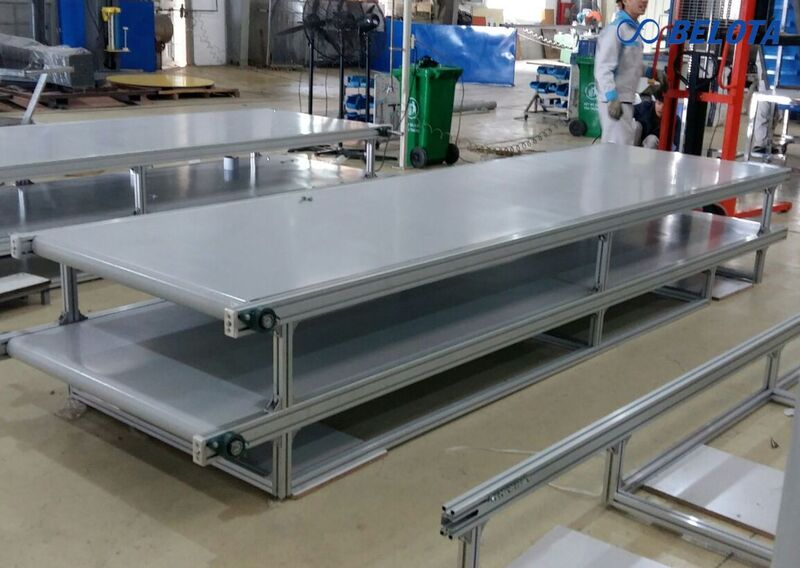
A PVC 2-tier conveyor belt is an industrial conveyor system consisting of two PVC conveyor levels vertically arranged on the same structural frame. This design helps businesses maximize vertical space instead of expanding factory floor area.
During a recent factory survey in May 2026, several customers shared with our team that productivity increased by approximately 1.5–2 times compared to a single-tier conveyor system, even when using the same speed, belt length, and motor type. The additional upper level allowed factories to integrate secondary processes such as inspection, processing, or packaging without installing a separate conveyor line.
Operating Principle of a PVC 2-Tier Conveyor System
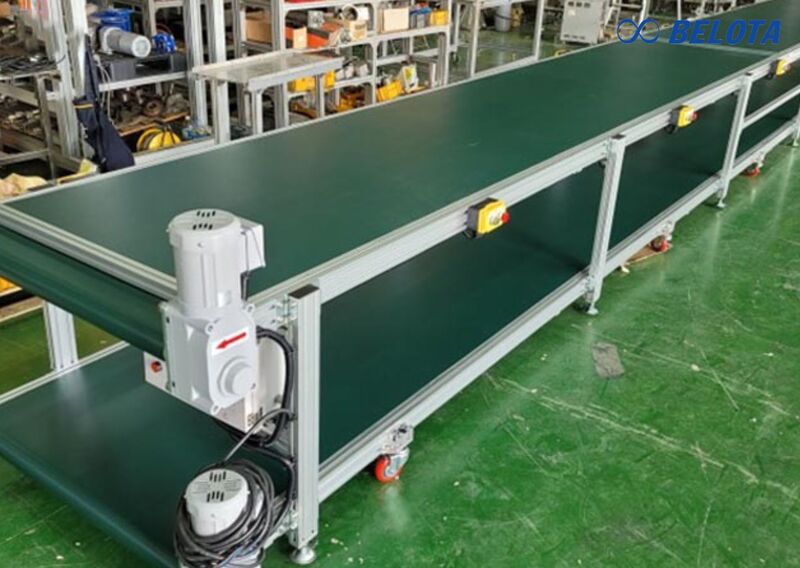
In practice, PVC 2-tier conveyors are commonly designed in two operating configurations:
Both Tiers Running in the Same Direction
The upper and lower conveyors transport products in the same direction, helping increase throughput and improve product flow efficiency throughout the production line.
Independent or Opposite Direction Operation
Each tier performs a different function. For example:
- The upper tier transports finished products to the output area.
- The lower tier returns raw materials, trays, or empty pallets to the starting point.
Belota frequently applies this design in electronics assembly lines, automated packaging systems, and closed-loop production processes where material flow optimization is critical.
Basic Structure of a PVC 2-Tier Conveyor Belt
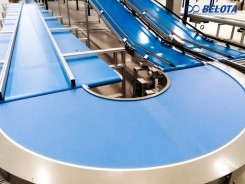
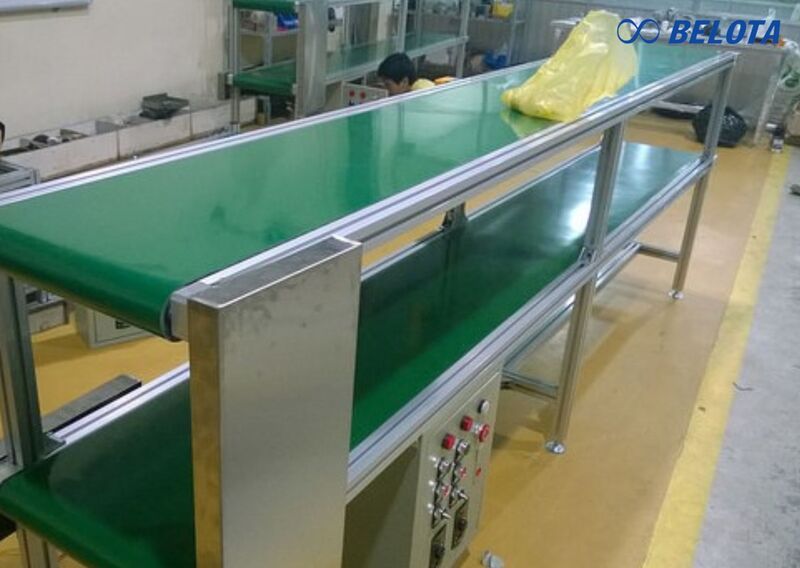
A standard PVC 2-tier conveyor system typically includes four main components: the conveyor frame, PVC belt, drive system, and support structure. Each component directly affects operational efficiency, stability, and system lifespan. In many modern production lines, the system can also integrate solutions such as a 90-degree PVC curved conveyor to optimize product direction changes and save factory space.
Conveyor Frame
The frame is the main load-bearing structure and is commonly fabricated from:
- Aluminum profiles: lightweight, corrosion-resistant, suitable for electronics and food industries.
- Stainless steel 304/316: excellent anti-rust properties for hygienic environments.
- Powder-coated steel: cost-effective solution for logistics and mechanical industries.
PVC Conveyor Belt
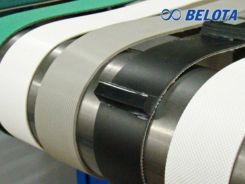
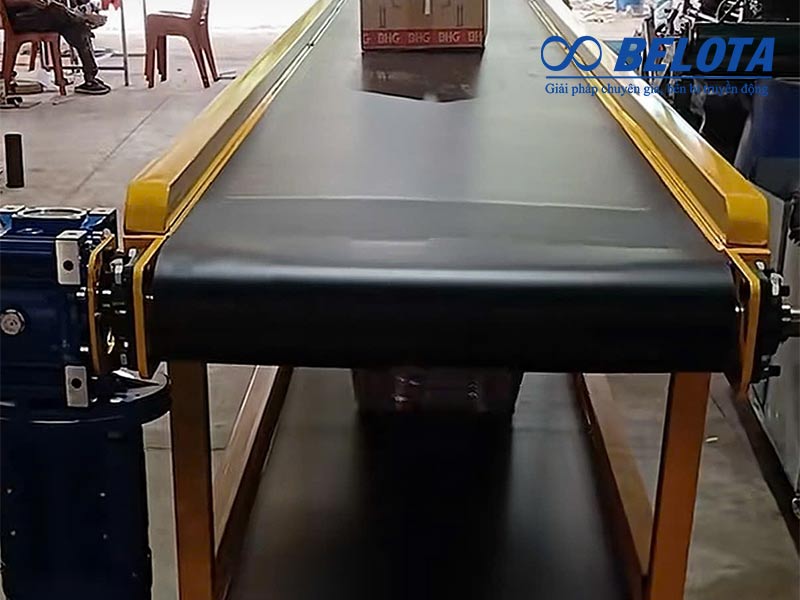
The belt directly contacts the product and commonly features:
- Thickness from 1.5–5 mm,
- Green, white, or black colors,
- Smooth or anti-slip patterned surfaces,
- Optional oil-resistant, anti-static, or heat-resistant properties.
Drive System
Includes:
- Gear motors for stable operation,
- Drive and driven pulleys for belt transmission,
- Inverters for flexible speed adjustment according to production requirements.
Support Leg System
Typically equipped with:
- Adjustable feet for balancing the system,
- Lockable caster wheels (optional) for easier relocation and factory layout adjustments.
Technical Specifications and Selection Guide
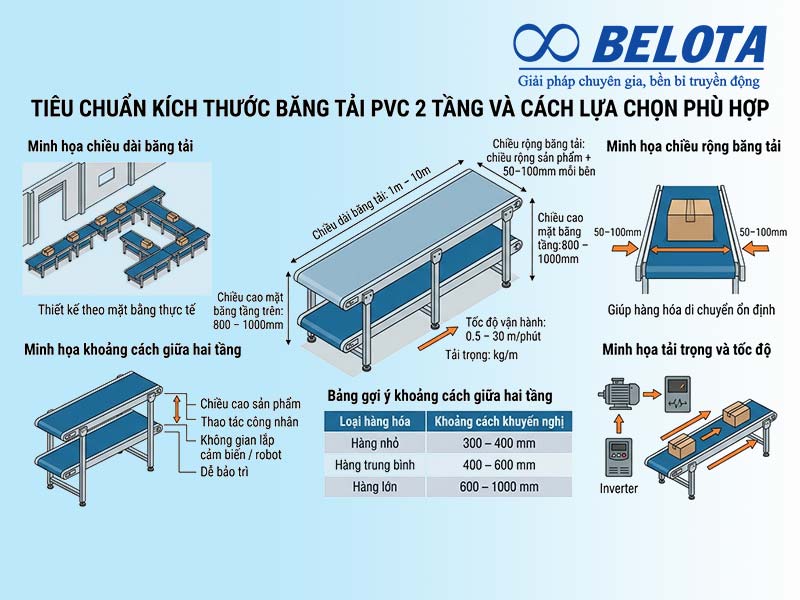
- Width of each tier: 300–1,000 mm (can be extended up to 1,500–2,000 mm)
- Length: 3,000–6,000 mm (up to 6–10 m depending on layout)
- Height: 700–1,500 mm with adjustable legs
- Distance between tiers: 500–1,500 mm
- Frame material: powder-coated steel, stainless steel 201/304, or aluminum profiles 30×60 / 40×80 mm
- PVC belt: 2–5 mm thick, smooth or V-pattern surface, green/gray/white colors
- Load capacity: 0–50 kg/m
- Speed: 5–30 m/min, adjustable by inverter
- Rollers: Ø32–89 mm, galvanized steel, stainless steel, or HDPE
- Electrical system:
- Motor power: 0.37–2.2 kW
- Voltage: single-phase 220V or three-phase 380V
- Controls: inverter, Start/Stop buttons, emergency stop, optional PLC/HMI integration
- Tier operation: same direction or opposite direction
Key Advantages of PVC 2-Tier Conveyor Belts
- Space Optimization: Maximizes vertical space and increases transport capacity without expanding factory floor area.
- Improved Productivity: Allows simultaneous transportation of multiple product flows, reducing production time.
- Reduced Labor Costs: Minimizes manual transportation between production stages.
- Efficient Product Flow Separation: Separates raw materials and finished products to reduce congestion in the production line.
- Easy Automation Integration: Compatible with robots, packaging machines, and modern automated production systems.
From Belota’s practical experience, independent or reverse-direction dual-tier systems significantly reduce operator movement and physical workload because materials and empty trays automatically return to the starting point. This also helps clearly separate finished products and waste materials, reducing confusion and improving workplace safety during long operating shifts.
Recommended Tier Distance Based on Product Size
| Product Type | Recommended Distance |
|---|---|
| Small items (components, small boxes) | 300–400 mm |
| Medium items (small cartons, large components) | 400–600 mm |
| Large items (large boxes, small pallets) | 600–1,000 mm |
Overall Conveyor Height
The total height of the PVC 2-tier conveyor depends on ergonomic operating positions and integration with other equipment in the production line. Typical configurations include:
- Upper conveyor surface height: 800–1,000 mm from the floor
- Total height adjusted according to tier spacing and factory requirements
- Load Capacity and Operating Speed
- Load capacity and operating speed should be determined based on actual production requirements to ensure stable and durable performance.
- Load capacity: calculated in kg per meter, depending on product weight and frame structure
- Operating speed: typically ranges from 0.5–30 m/min and can be flexibly adjusted using an inverter
Industrial Applications of PVC 2-Tier Conveyor Belts
Thanks to their space-saving and flexible transportation capabilities, PVC 2-tier conveyor systems are widely used across various industries:
- Electronics industry: transporting circuit boards, components, and semi-finished products between assembly, inspection, and packaging stations.
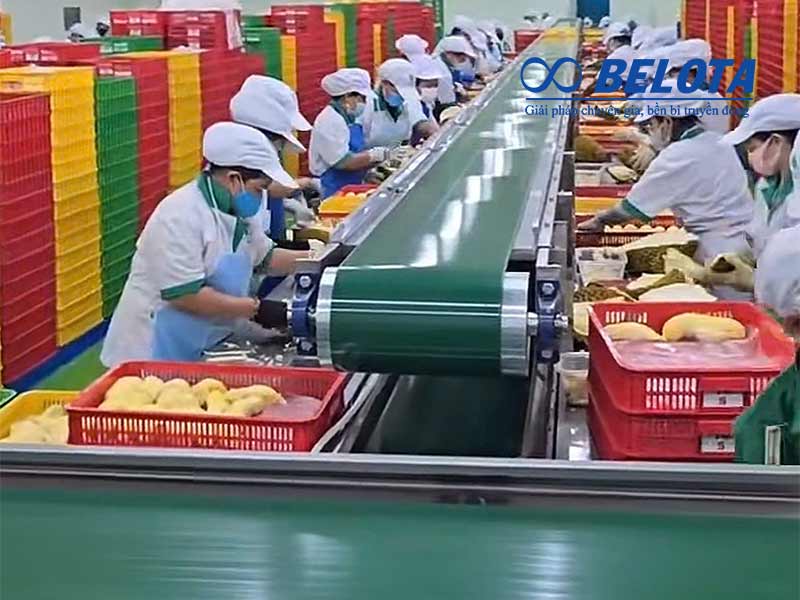
- Food industry: using hygienic PVC belts for packaged product transportation.
- Pharmaceutical industry: suitable for clean environments with stainless steel or corrosion-resistant aluminum frames.
- Logistics & warehousing: supporting sorting and product transfer while optimizing warehouse space.
- Garment industry: transporting semi-finished products between sewing processes to reduce manual handling.
- Mechanical & assembly industry: transporting components between workstations in automated production lines.
Frequently Asked Questions
Can the two conveyor tiers operate at different speeds?
Answer: Absolutely. At Belota, we can install separate motors and inverters for each tier, allowing businesses to independently adjust conveyor speeds according to different transportation requirements.
Does the PVC conveyor belt stretch over time?
Answer: Like all conveyor belts, PVC belts experience a certain level of stretching during the initial operating period. However, our systems include belt tension adjustment mechanisms to ensure smooth operation without slipping or misalignment.
Why should businesses avoid buying cheap used 2-tier conveyors?
Answer: Used conveyor systems are usually designed for the previous owner’s layout and product specifications. When installed in a new factory, businesses often encounter:
- Dimension mismatches causing installation difficulties,
- High repair costs for worn motors or old belts,
- No warranty or technical support in case of production issues.
Conclusion
Today’s market offers many PVC 2-tier conveyor solutions, ranging from low-cost products to used equipment, giving businesses various investment options. However, not every system is suitable for actual operational needs and factory technical requirements.
Choosing the right consulting and design partner from the beginning helps businesses avoid unnecessary modification costs while ensuring stable and long-lasting operation. Contact Belota for a site survey and consultation on the most suitable conveyor solution for your production line.