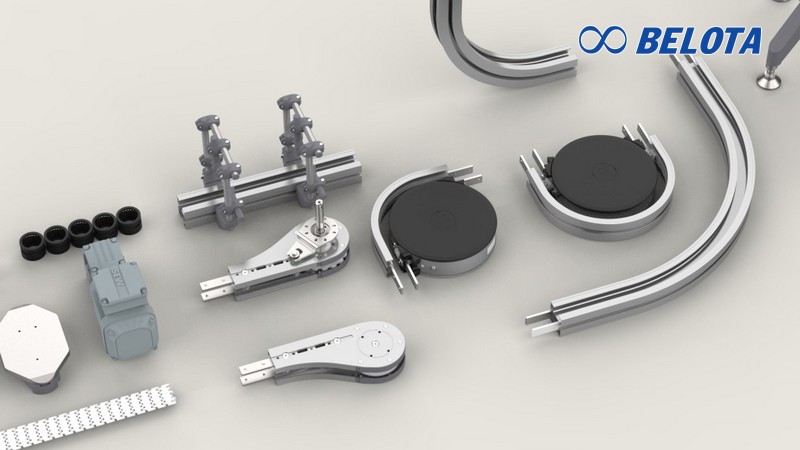
In the trend of production automation, mini conveyor systems are becoming an optimal transportation solution for production lines that require space saving, handling of small products, and high flexibility. With a compact design but various configuration options, these systems are widely used in electronics, food processing, pharmaceuticals, and packaging industries. This article helps businesses better understand the structure, technical specifications, and how to choose the right mini conveyor system for practical operational needs.
What Is a Mini Conveyor? A Flexible Transport Solution for Modern Production Lines
A mini conveyor is a compact conveyor system designed to transport lightweight products, small components, semi-finished goods, or packaged items in production areas with limited space. It is an efficient solution that helps businesses shift from manual handling to automation at a lower investment cost compared to large industrial conveyor systems.
Thanks to its flexible design and easy customization, mini conveyors are especially suitable for companies upgrading existing production lines, expanding manufacturing capacity, or gradually implementing automation solutions.
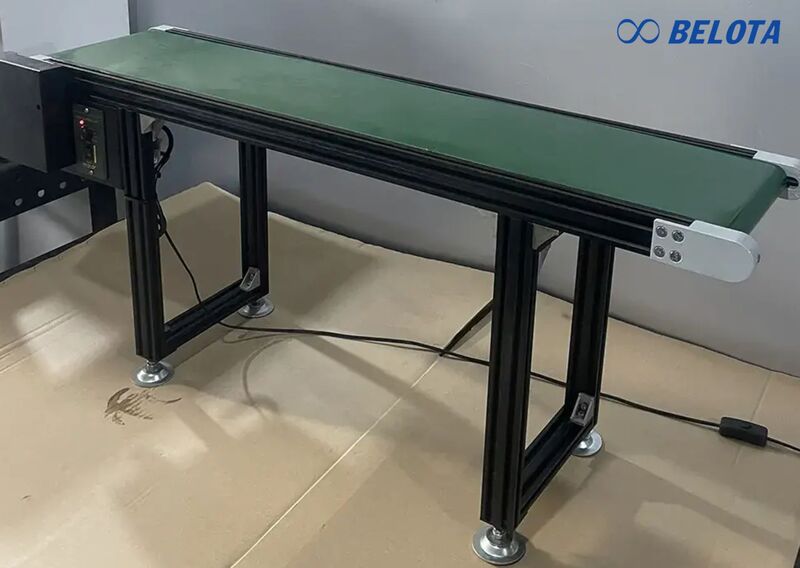
Structure of a Mini Conveyor
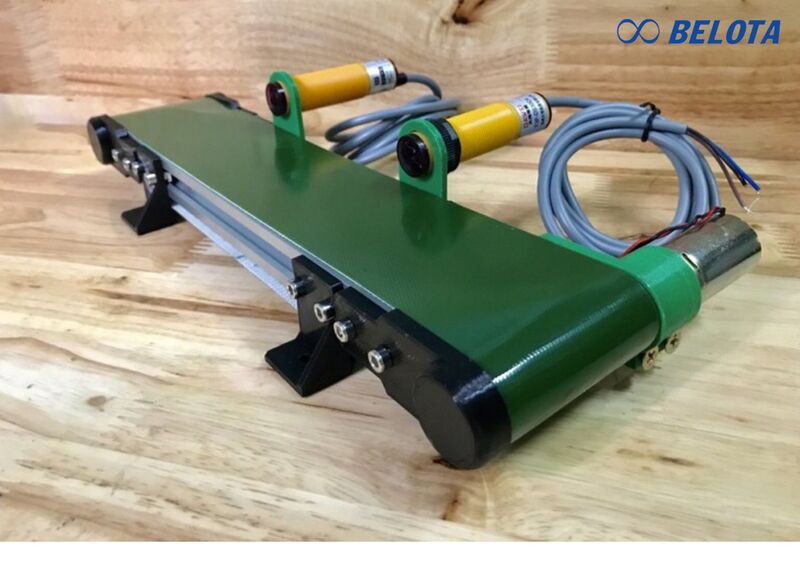
Although compact in size, mini conveyors still include all essential mechanical and electrical components to ensure stable operation and meet diverse production requirements.
- Conveyor Frame: Usually made from aluminum profiles, stainless steel 304, or powder-coated steel. The frame acts as the main load-bearing structure and determines the durability of the entire system.
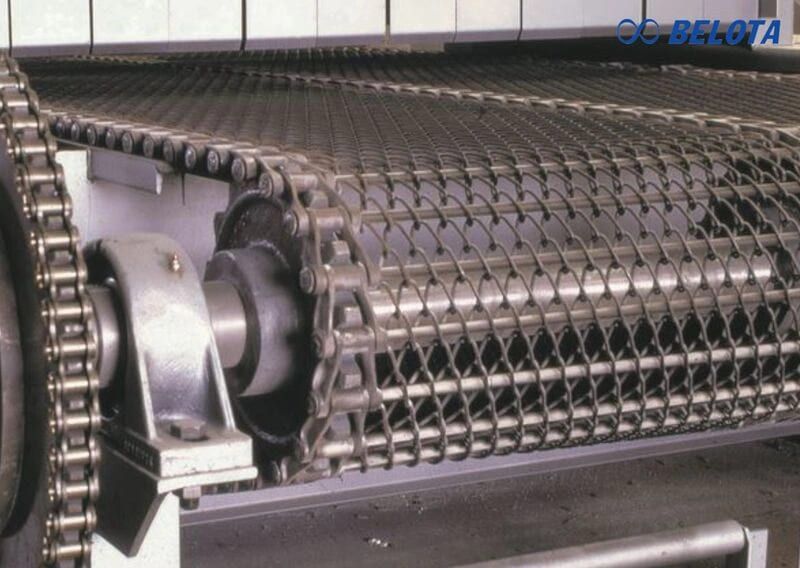
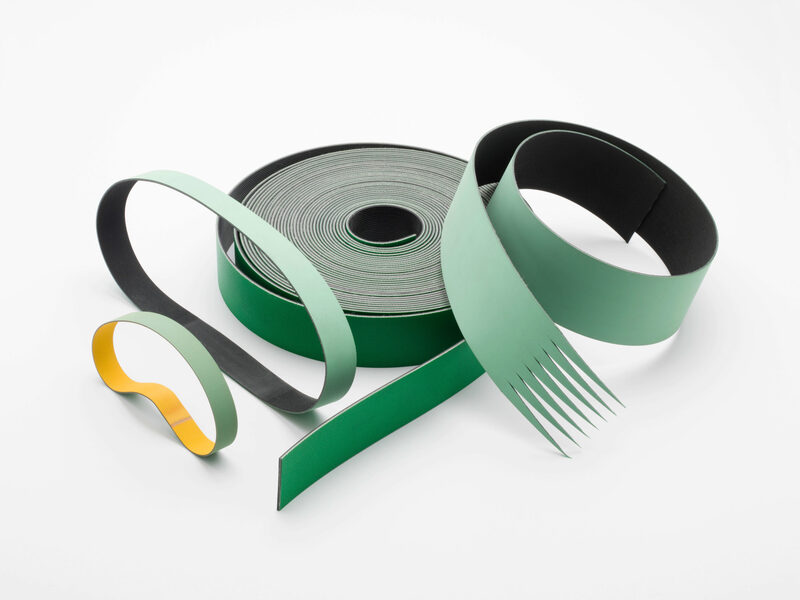
- Conveyor Belt: This is the part directly in contact with the product. Common materials include PVC, PU, rubber, or mesh belts. The choice depends on load requirements, friction, and hygiene standards.
- Rollers and Drive Drums: Help the conveyor operate smoothly, reduce vibration, and extend belt lifespan.
- Drive Motor: Typically uses AC motors, DC motors, or geared motors with customizable power depending on load and operating speed.
- Control System
Can range from basic switches to integrated inverters, sensors, or PLC systems, allowing businesses to upgrade from semi-automatic to fully automated operations.
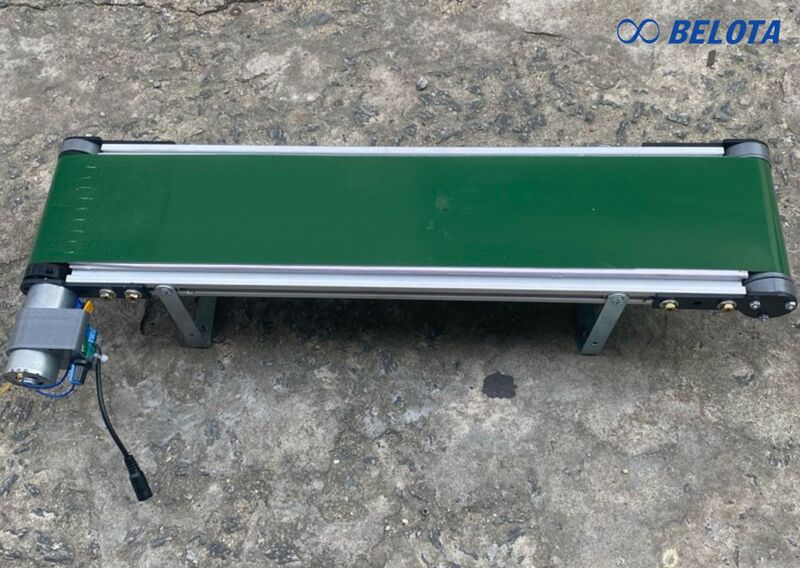
Common Technical Specifications of Mini Conveyors
| Specification | Reference Value |
|---|---|
| Conveyor Length | 0.5m – 10m |
| Conveyor Width | 50mm – 500mm |
| Frame Height | 300mm – 1200mm |
| Load Capacity | 5 – 100kg |
| Operating Speed | 5 – 30m/min |
| Voltage | 24V / 220V / 380V |
| Motor Power | 25W – 400W |
| Frame Material | Aluminum / Stainless Steel / Powder-Coated Steel |
| Belt Type | PVC / PU / Rubber / Mesh |
| Maximum Incline Angle | 0° – 30° |
| Operating Temperature | 0°C – 80°C |
Note: Actual specifications can be customized depending on product characteristics, installation space, and operational requirements.
Popular Types of Mini Conveyors
Depending on product characteristics, installation layout, and production requirements, mini conveyors are available in various configurations.
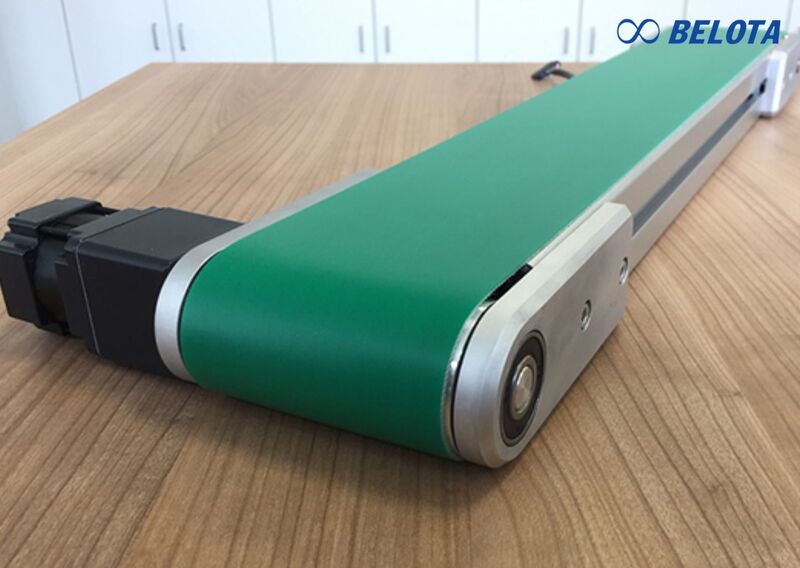
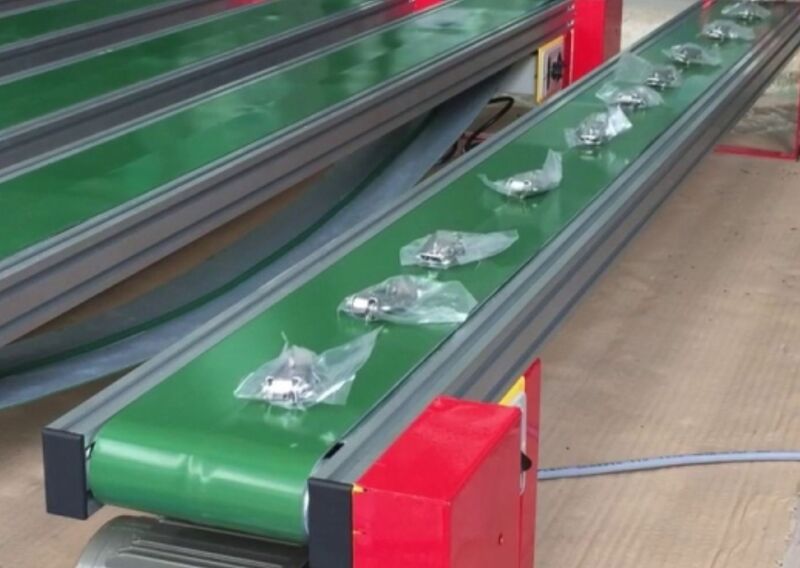
Mini Belt Conveyor: The most common type thanks to its high flexibility and wide application range. Usually equipped with PVC or PU belts for transporting lightweight products.
Mini Roller Conveyor: Suitable for transporting cartons, packages, and boxed products. Commonly used in warehouses, distribution centers, and logistics systems.
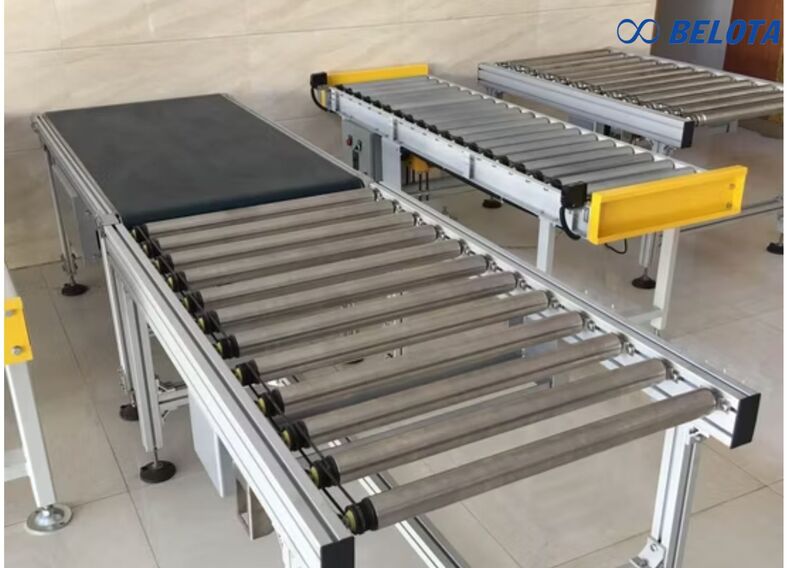
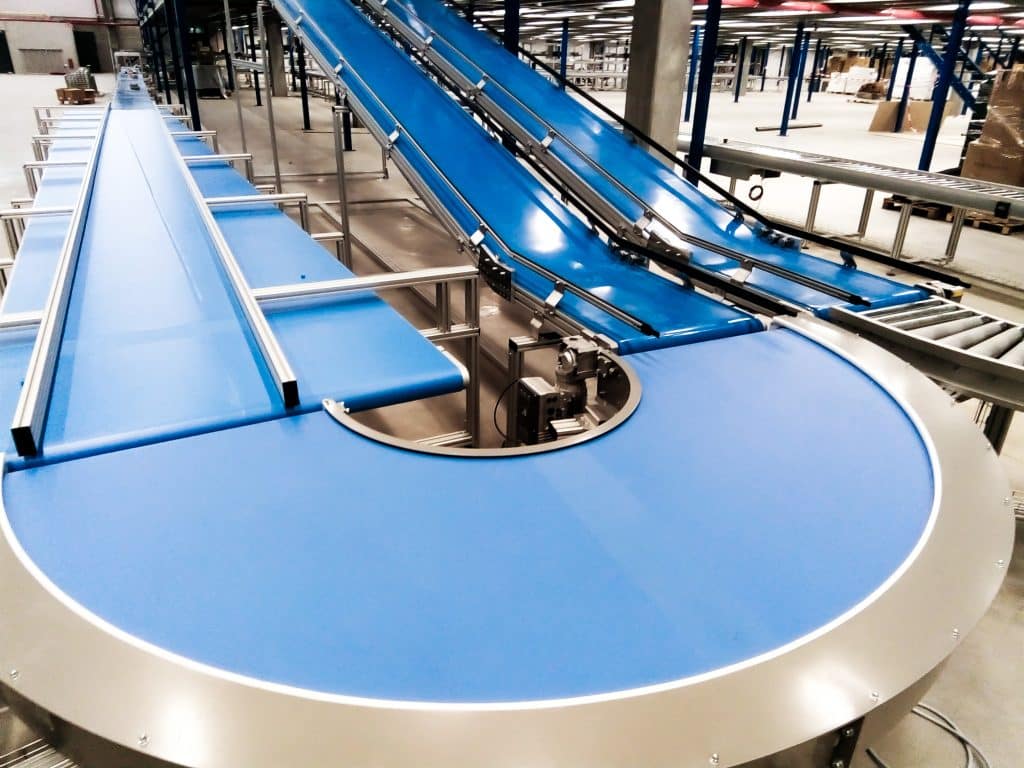
Inclined Mini Conveyor: Designed to transport products between different height levels, helping reduce manual handling and optimize internal logistics.
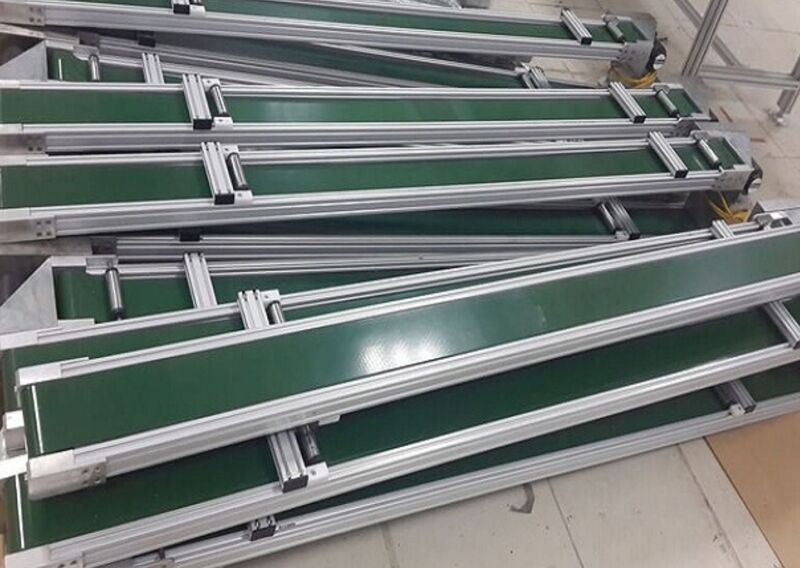
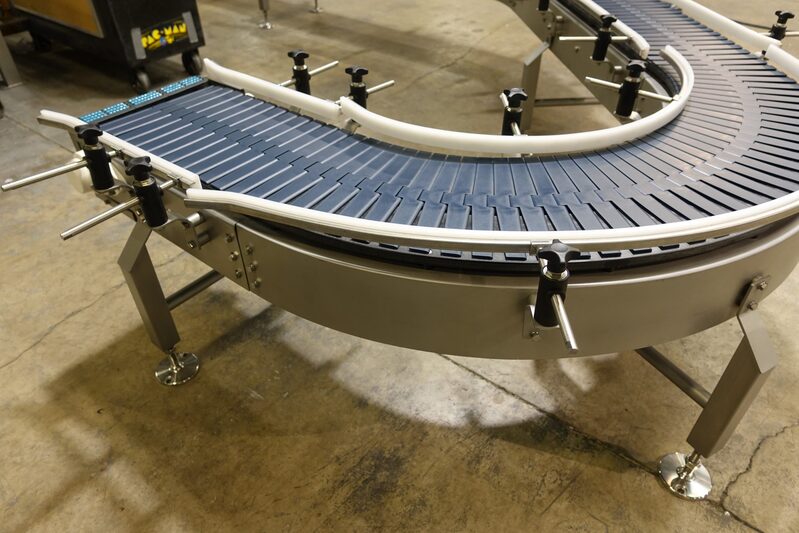
Curved Mini Conveyor: The curved design maximizes installation space, especially in factory layouts with multiple directional changes.
Customized Mini Conveyor: A tailor-made solution designed according to actual factory space, product characteristics, and operational requirements to optimize investment efficiency and integration with existing production lines.
Advantages and Limitations of Mini Conveyors
Key Advantages
- Compact design, ideal for limited spaces
- Flexible installation and easy relocation
- Lower investment cost compared to large conveyor systems
- Easy maintenance and replacement of components
- Improved operational productivity by reducing manual labor
Limitations to Consider
- Not suitable for heavy-duty products or large continuous loads
- Conveyor length is limited, requiring multiple connected sections for long production lines
- Performance depends heavily on selecting the correct belt type and configuration
- Improper installation may cause vibration or belt misalignment
Applications of Mini Conveyors in Modern Industries
Thanks to their compact and flexible design, mini conveyors are widely used across many industries.
- Electronics Industry: Used for transporting PCB boards, electronic components, and supporting precision assembly processes.
- Food Industry: Applied in transporting, inspecting, and packaging confectionery, beverages, and packaged foods. PU belts or food-grade materials are commonly preferred.
- Pharmaceutical Industry: Suitable for handling medicine boxes, bottles, and medical packaging in hygienic environments, often using stainless steel frames.
- Garment Industry: Supports transportation of accessories, semi-finished goods, and finished products between production stages.
- Warehousing & Logistics: Used in sorting systems, product transfer, and warehouse handling to improve operational speed and management efficiency.
Important Factors When Choosing a Mini Conveyor
- Product Characteristics: Businesses should determine product size, weight, fragility, and surface conditions to choose suitable belts and structures.
- Working Environment: Environmental conditions such as humidity, temperature, and hygiene requirements will affect frame and belt material selection.
- Operating Intensity: The system’s operating hours and production shifts should be considered when selecting motors and control systems.
- Installation Space: Factory layout and product movement direction will determine suitable conveyor types such as straight, inclined, or curved systems.
- Future Expansion Capability: If there are plans to upgrade or integrate additional automation equipment, businesses should choose flexible systems that support future expansion.
What Factors Affect Mini Conveyor Pricing?
Most mini conveyors are custom-designed, so pricing depends on several factors:
- Overall system dimensions
- Frame material
- Conveyor belt type
- Motor power and control systems
- Design complexity and integration requirements
For accurate pricing, businesses should conduct site surveys and technical consultations before selecting a suitable investment solution.
Frequently Asked Questions
Does Belota Support Custom Mini Conveyor Design and Manufacturing?
Yes. Since each factory has different layouts and product sizes, Belota specializes in site surveys, technical consulting, and 2D/3D custom conveyor design according to actual operational requirements.
Are Mini Conveyors Available for Immediate Delivery?
Most mini conveyors are custom-manufactured due to varying factory layouts and product dimensions. However, components such as aluminum frames, geared motors, inverters, and PVC/PU belts are always available in stock. Production and delivery time is usually 15–20 working days after design approval.
Does Belota Provide Replacement Parts After Long-Term Use?
Yes. All mini conveyor systems from Belota come with a 6-month warranty. After the warranty period, Belota continues to provide replacement parts such as PVC/PU belts, geared motors, rollers, bearings, and technical support for quick maintenance.
Conclusion
With their compact design, flexibility, and wide application possibilities, mini conveyors are an ideal solution for businesses aiming to optimize operations and increase automation levels. Belota is ready to support businesses in consulting, designing, and manufacturing customized conveyor systems tailored to actual production requirements.