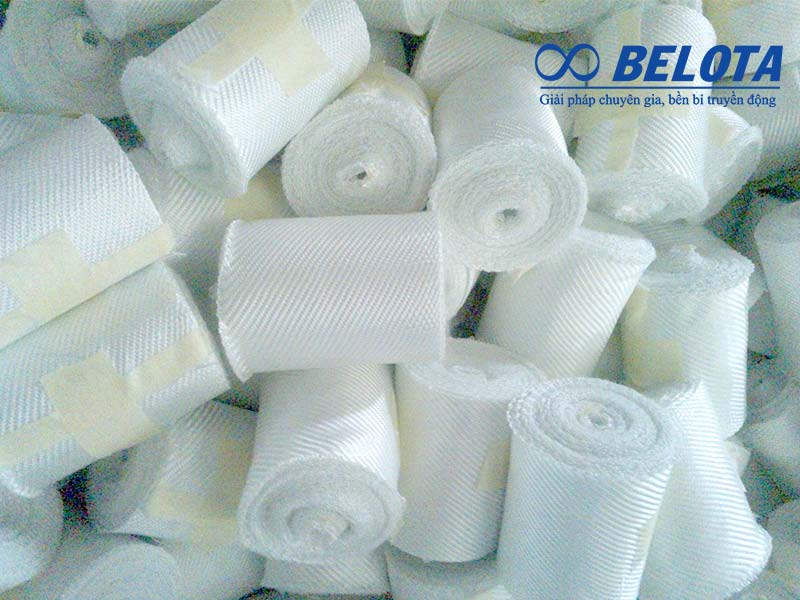
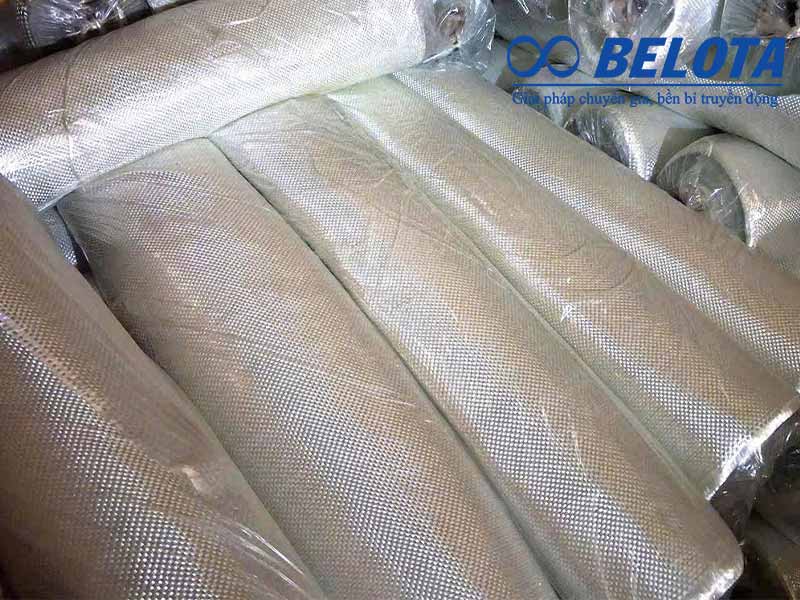
Fiberglass conveyor belts are an ideal solution for systems operating in high-temperature environments, corrosive chemical conditions, and continuous-duty applications. In practice, conventional conveyor belts often degrade quickly, causing production downtime, increased maintenance costs, and delivery delays. In this article, Belota explores the characteristics, advantages, and industrial applications of fiberglass conveyor belts.
What Is a Fiberglass Conveyor Belt?
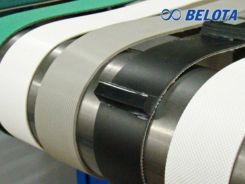
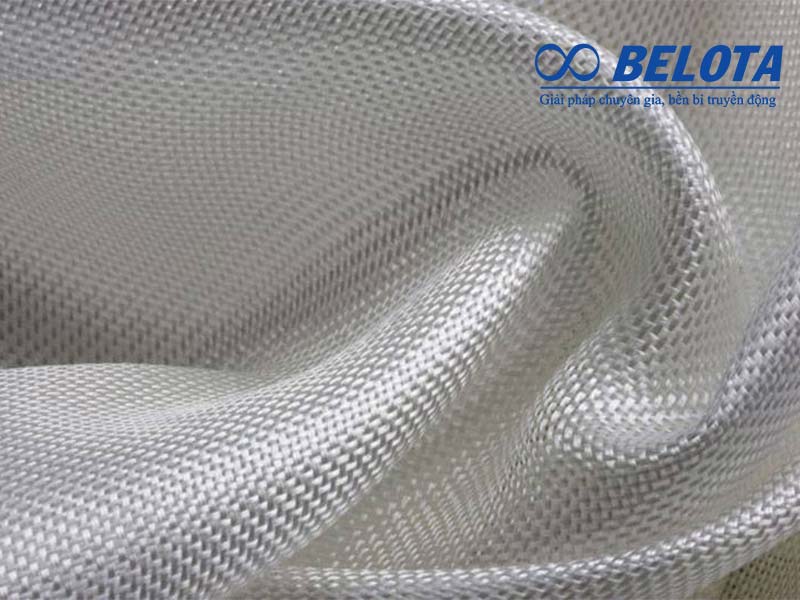
A fiberglass conveyor belt is an engineered conveyor belt manufactured from high-strength inorganic fiberglass yarns, most commonly E-glass (electrical-grade) and C-glass (chemical-resistant). These fibers are woven into a stable fabric structure, providing excellent mechanical strength and reliable performance in demanding environments.
The key difference lies in the surface coating. Most fiberglass conveyor belts are coated with PTFE (Polytetrafluoroethylene, commonly known as Teflon), which provides a unique combination of properties, including high-temperature resistance, non-stick performance, and exceptional chemical resistance.
As a result, fiberglass conveyor belts are widely used in industries that require strict operating conditions, such as food processing, printing, textile manufacturing, and thermal processing applications.
Standard Technical Specifications of Fiberglass Conveyor Belts
| Specification | Details / Value |
|---|---|
| Thickness | 0.13 mm – 1.5 mm (depending on model) |
| Surface Weight | Approximately 200 – 500 g/m² |
| Width Range | 100 mm – 3,000 mm (custom fabrication available) |
| Continuous Operating Temperature | Up to 260°C (PTFE-coated models) |
| Short-Term Temperature Resistance | Up to 300°C |
Important Technical Note
Some market references mention temperature resistance of up to 550°C. However, this figure only applies to uncoated fiberglass fibers. In practical industrial applications, PTFE-coated fiberglass conveyor belts, the most common configuration, have a recommended continuous operating temperature of approximately 260°C and a short-term resistance of around 300°C. Understanding these limits is essential to selecting the correct material and preventing premature belt degradation or operational risks.
Advantages of Fiberglass Conveyor Belts
Excellent Heat Resistance
Fiberglass conveyor belts can operate continuously at temperatures up to 260°C, significantly outperforming standard PVC and rubber conveyor belts. This makes them ideal for industrial ovens, drying tunnels, and heat-treatment systems where conventional belts would deform or deteriorate.
High Dimensional Stability
Fiberglass has an extremely low thermal expansion coefficient. Even under repeated temperature fluctuations, the belt maintains its dimensions, minimizing belt tracking issues and reducing the need for frequent adjustments.
Superior Chemical Resistance
The PTFE coating creates a chemically inert surface capable of resisting oils, weak acids, alkalis, and many industrial solvents. This makes the belt suitable for chemical processing plants, surface treatment systems, and demanding manufacturing environments.
Non-Stick Surface and Food Safety Compliance
PTFE provides excellent release properties, preventing food products, molten plastics, adhesives, and other materials from sticking to the belt surface. Additionally, PTFE-coated fiberglass belts comply with FDA food-contact requirements, making them suitable for food production lines.
Limitations of Fiberglass Conveyor Belts
While highly versatile, fiberglass conveyor belts have certain limitations:
- Lower load-bearing capacity than stainless steel mesh belts and metal chain conveyors.
- Susceptible to damage from sharp or pointed objects.
- Higher initial investment cost compared to standard PVC conveyor belts.
- Less suitable for heavy-impact applications.
- Proper installation and belt alignment are essential to prevent tracking issues.
Common Weave Patterns of Fiberglass Conveyor Belts
Belota supplies fiberglass conveyor belts in three primary weave styles to suit various industrial requirements.
Plain Weave
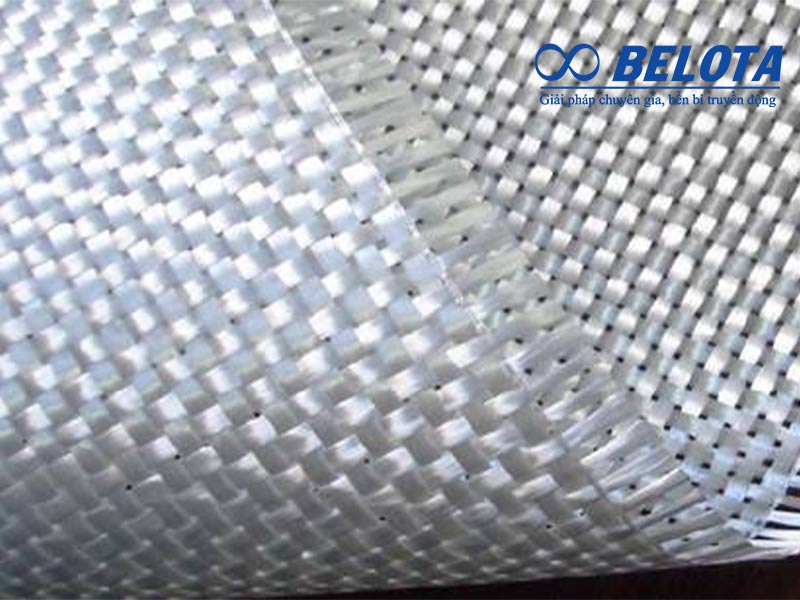
Plain weave features a simple over-under weaving pattern that provides balanced mechanical strength in both directions. The structure offers excellent dimensional stability and edge retention, making it a cost-effective option for standard conveying and industrial surface protection applications.
Open Mesh Fiberglass
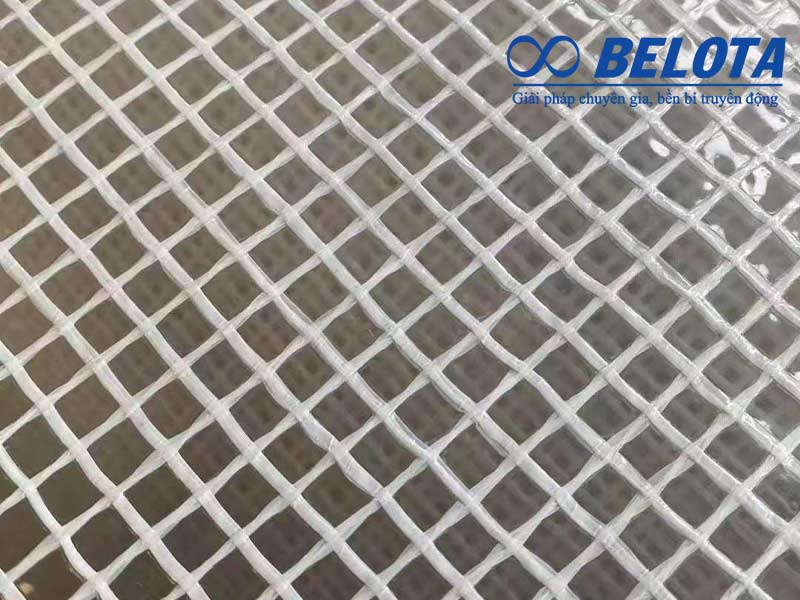
Open mesh fiberglass is a variation of plain weave featuring square or rectangular openings. This design promotes superior airflow and heat transfer, allowing faster cooling and drying while reducing heat accumulation.
It is commonly used in food drying lines, industrial drying systems, and lightweight conveying applications.
Leno Weave
Leno weave incorporates twisted yarn intersections that lock fibers in place, preventing distortion and maintaining structural integrity even with larger mesh openings and heavier loads.
This design is ideal for wide conveyor systems and applications requiring enhanced structural stability.
Industrial Applications of Fiberglass Conveyor Belts
Food and Beverage Industry
Fiberglass conveyor belts are widely used in bakery ovens, biscuit production lines, mooncake manufacturing, and food drying systems. Their heat resistance, non-stick properties, and FDA-compliant materials help maintain product quality while simplifying cleaning and sanitation procedures.
Packaging and Textile Industry
In packaging operations, fiberglass conveyor belts are commonly installed on bag sealing machines, shrink-wrapping systems, and heat-labeling equipment. Their stable surface and non-stick characteristics contribute to consistent sealing quality and reliable production performance.
Heavy Industrial Applications
Heat-transfer printing, fabric lamination, composite molding, and thermal forming processes frequently utilize fiberglass conveyor belts. Their dimensional stability under elevated temperatures helps improve product consistency and manufacturing efficiency.
Storage and Handling Guidelines
To maximize service life and maintain performance, fiberglass conveyor belts should be stored and handled properly.
- Storage temperature: 5°C to 35°C.
- Relative humidity: 35% to 65%.
- Avoid direct sunlight and nearby heat sources.
- Recommended shelf life: Within 12 months from the manufacturing date.
- Keep belts in original protective packaging until installation.
- Follow manufacturer recommendations for belt tensioning.
- Avoid bending the belt below the minimum bend radius to prevent damage to the PTFE coating.
- Store in a dry environment to preserve fiberglass and PTFE coating performance.
Reliable Fiberglass Conveyor Belt Supplier
Belota specializes in industrial conveyor solutions, including fiberglass conveyor belts for food processing, packaging, textile manufacturing, electronics, and industrial material production. Products are fabricated according to actual production line requirements and designed to meet specific demands for temperature resistance, non-stick performance, and long-term durability.
Belota supplies and delivers conveyor systems throughout Vietnam's major manufacturing hubs, including Ho Chi Minh City, Binh Duong, Dong Nai, Long An, Tay Ninh, Ba Ria–Vung Tau, Can Tho, Da Nang, Bac Ninh, Hai Phong, and Hanoi.
With extensive technical expertise and application-specific consulting, Belota helps manufacturers select the most suitable fiberglass conveyor belt based on operating temperature, load requirements, and production conditions, improving both operational efficiency and equipment lifespan.
Frequently Asked Questions
Are PTFE-coated fiberglass conveyor belts safe for food processing?
Yes. The PTFE coating used on Belota fiberglass conveyor belts complies with FDA requirements for food-contact applications. It is non-toxic, highly non-stick, and easy to clean, making it ideal for bakery ovens, drying systems, and food processing lines.
Can I order custom-sized fiberglass conveyor belts?
Yes. Belota provides custom fabrication, cutting, and belt splicing services. Belt widths can range from 100 mm to 3,000 mm to match existing production systems.
Why choose a fiberglass conveyor belt instead of a heat-resistant PVC belt?
The primary advantage is temperature resistance. Standard heat-resistant PVC belts typically operate below 80–100°C, whereas PTFE-coated fiberglass conveyor belts can continuously operate at 260°C. Fiberglass also offers superior dimensional stability and significantly less thermal expansion compared to PVC.
Conclusion
A fiberglass conveyor belt is more than just a replacement component, it is a long-term investment in production efficiency. Selecting the right conveyor belt can reduce downtime, extend equipment lifespan, improve product consistency, and help manufacturers meet delivery schedules.
With extensive experience in industrial conveyor systems and power transmission components, Belota provides tailored fiberglass conveyor belt solutions based on thickness, weave style, and surface coating requirements. Contact Belota for technical consultation and a customized quotation that matches your production needs.