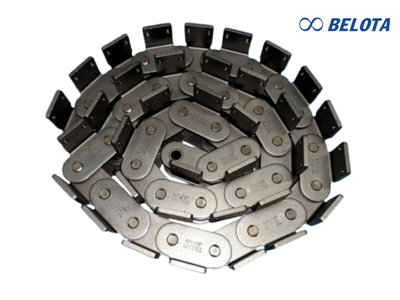
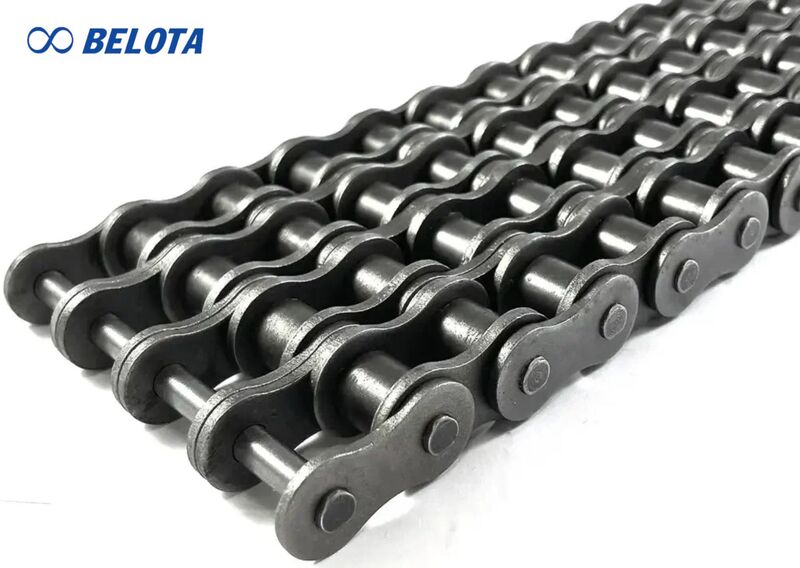
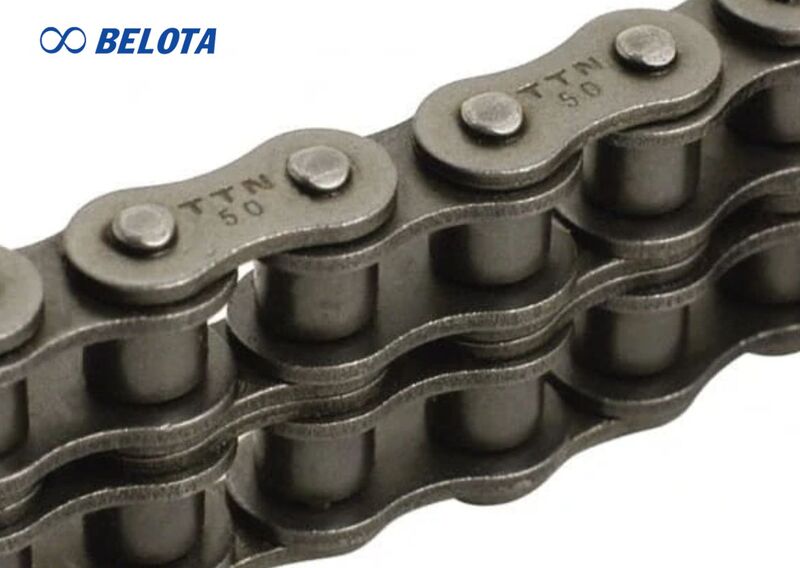
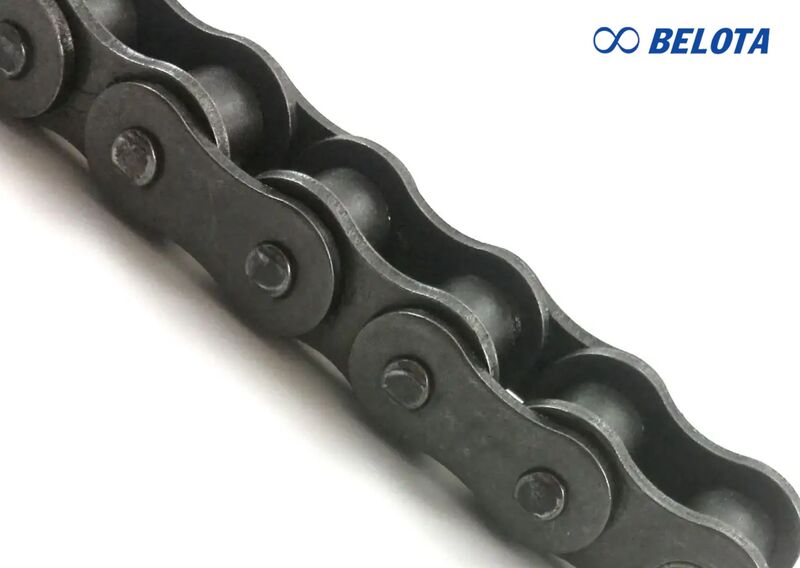
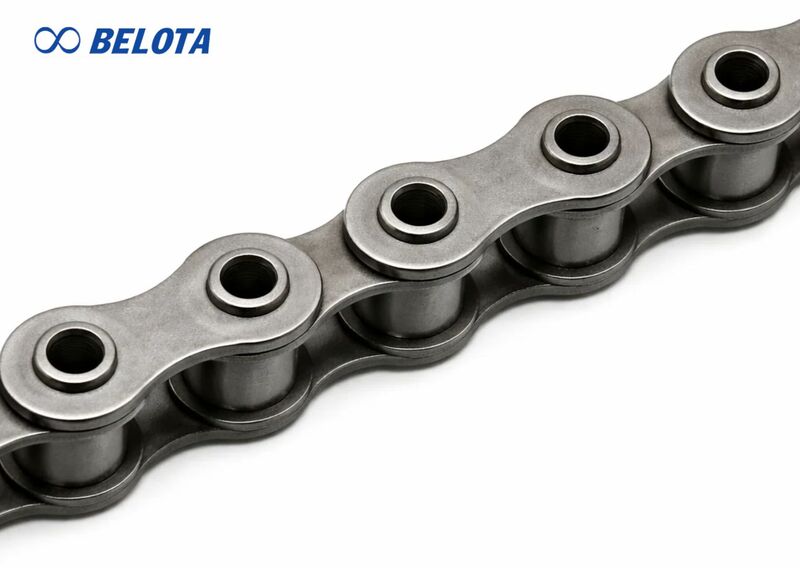
ANSI 50 roller chain is a type of industrial roller chain with a pitch of 15.875 mm (5/8 inch), commonly used in power transmission systems and chain conveyors. It consists of inner and outer plates, pins, bushings, and rollers connected together to provide stable power transmission between sprockets. ANSI 50 roller chains are available in various configurations, including simplex, duplex, triplex, and multiple-strand types, to meet different load requirements in industrial applications.
What Is ANSI 50 Roller Chain?
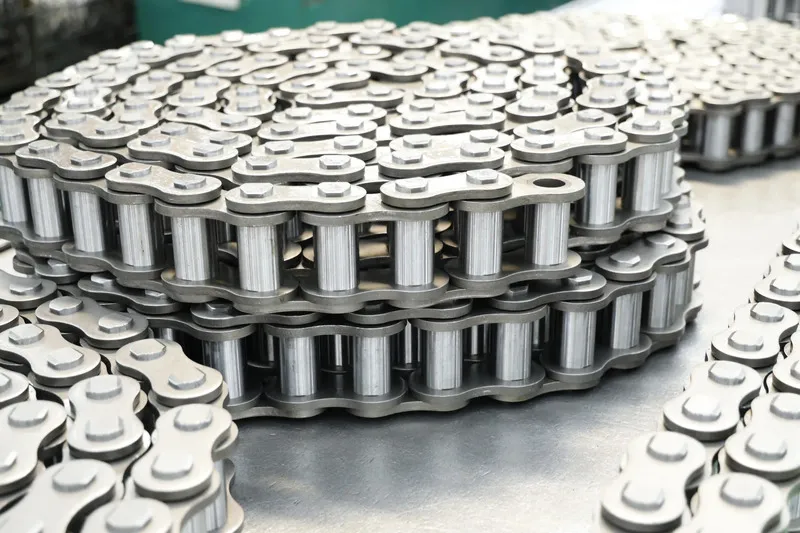
ANSI 50 roller chain, also known as No. 50 chain, is a type of ANSI standard roller chain with a pitch of 15.875 mm. It is a mechanical power transmission chain that uses the engagement between rollers and sprocket teeth to transfer motion and pulling force from the driving shaft to the driven shaft.
The chain consists of interconnected links, including inner plates, outer plates, pins, bushings, and rollers. During operation, the rollers engage with the sprocket teeth to transmit power and maintain a consistent transmission ratio. In addition to power transmission, ANSI 50 chain can also be used for product conveying when combined with attachments, support bars, or specialized conveyor structures.
ANSI 50 Roller Chain Specifications
The following table shows the reference specifications of ANSI 50 roller chain according to ANSI/ISO 10A standards. Dimensions and load capacity may vary depending on the manufacturer, number of strands, and product series.
| Specifications | Reference Values |
|---|---|
| Standard | ANSI 50 / ISO 10A |
| Chain Pitch (P) | 15.875 mm |
| Roller Diameter (D) | 10.16 mm |
| Pin Diameter (d) | 5.09 mm |
| Inner Width (W) | 9.53 mm |
| Plate Height (H) | Approximately 14.6 mm |
| Material | Steel |
| Number of Strands | 1, 2, 3, 4, or 5 strands, depending on configuration |
| Maximum Allowable Tensile Load | Approximately 6.37 kN for certain single-strand models |
| Supply Forms | Chain rolls, cut-to-length chains, or closed-loop chains |
Note: The allowable tensile load should be verified against each manufacturer's catalogue. A single load rating should not be applied to all ANSI 50 chains, especially when using multiple-strand configurations.
Common Types of ANSI 50 Roller Chain
ANSI 50 roller chains are available in several configurations, mainly classified by the number of chain strands. A greater number of strands can increase power transmission capacity, but the chain must be selected to match the sprocket and operating conditions.
ANSI 50-1R - Simplex Roller Chain
ANSI 50-1R features a single row of rollers, with a compact structure that is widely used in mechanical power transmission systems. It is suitable for industrial machinery, packaging equipment, processing machines, and other drive systems with moderate load requirements.
ANSI 50-2R - Duplex Roller Chain
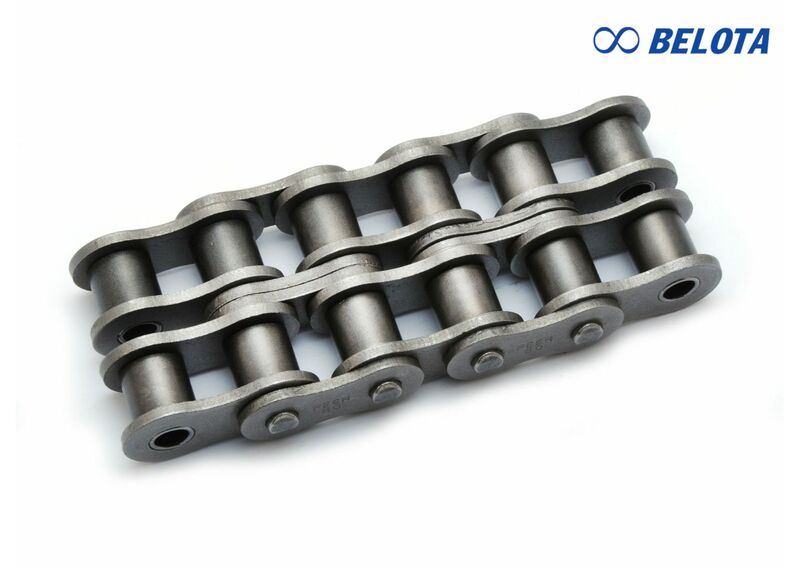
ANSI 50-2R consists of two parallel rows of rollers connected by common pins. This configuration provides greater power transmission capacity than a single-strand chain when properly designed and installed.
ANSI 50-3R - Triplex Roller Chain
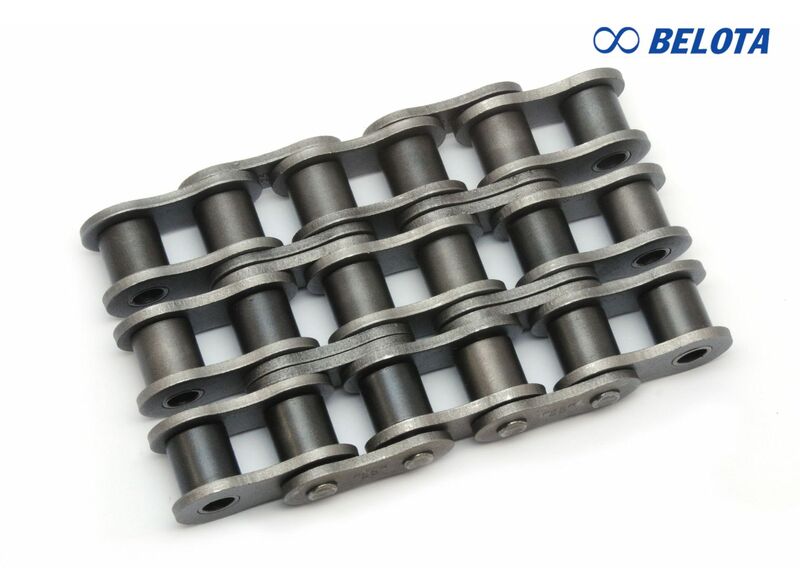
ANSI 50-3R features three rows of interconnected links. It is suitable for systems requiring higher transmission capacity or load distribution across multiple strands. This type is commonly used in industrial machinery operating under demanding conditions.
ANSI 50-4R and ANSI 50-5R - Multiple-Strand Roller Chains
ANSI 50-4R and ANSI 50-5R feature four and five rows of rollers, respectively. These multiple-strand configurations are designed for specialized power transmission systems requiring higher load capacity and compatible multi-strand sprockets.
When using multiple-strand chains, it is important to check strand alignment, sprocket alignment, and lubrication to prevent uneven load distribution.
Advantages of ANSI 50 Roller Chain
- Stable power transmission: The roller-and-sprocket engagement ensures accurate motion transmission and minimizes slippage compared with certain friction-based drive systems.
- Good load-bearing capacity: Compared with ANSI 40 roller chain, ANSI 50 chain has a larger pitch (15.875 mm compared with 12.7 mm) and a larger overall structure, making it suitable for systems requiring higher transmission capacity.
- Multiple configurations: Available in simplex, duplex, triplex, and other multiple-strand configurations to accommodate different load requirements.
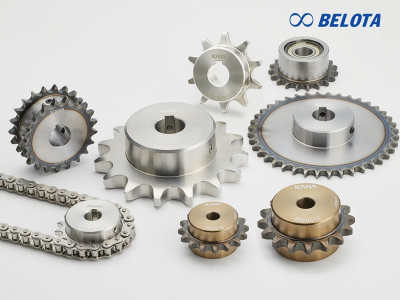
- Compatible with sprockets: Can be installed with matching standard sprockets to create a complete power transmission system.
- Versatile applications: In addition to power transmission, the chain can be fitted with attachments and accessories for product conveying in industrial production lines.
Industrial Applications of ANSI 50 Roller Chain
Thanks to its robust construction and positive engagement mechanism, ANSI 50 roller chain is used in various types of machinery and production systems.
- Machinery drive systems: Connects motors, gearboxes, and drive shafts in industrial machines, packaging equipment, and processing machinery.
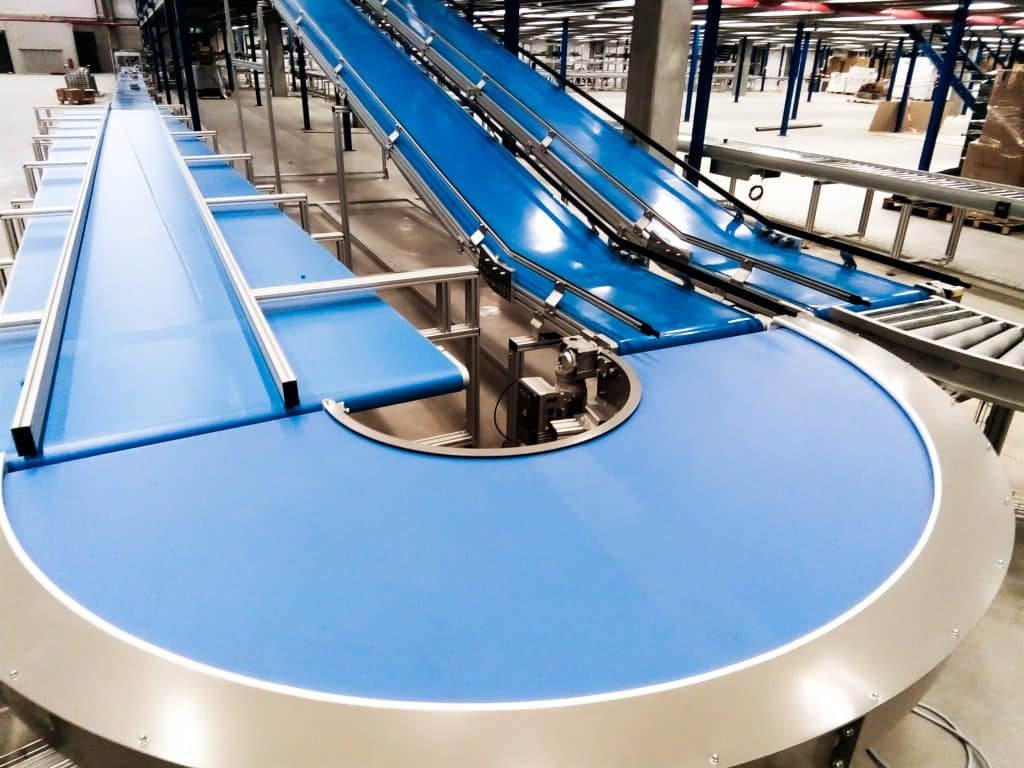
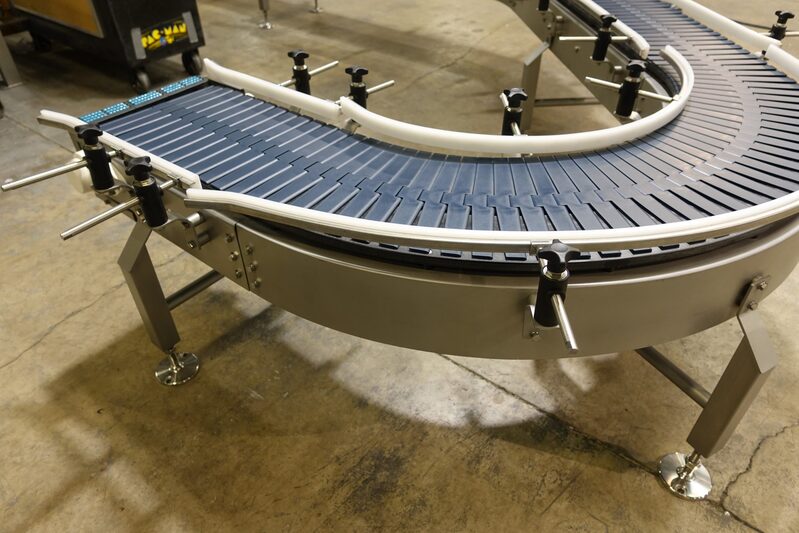
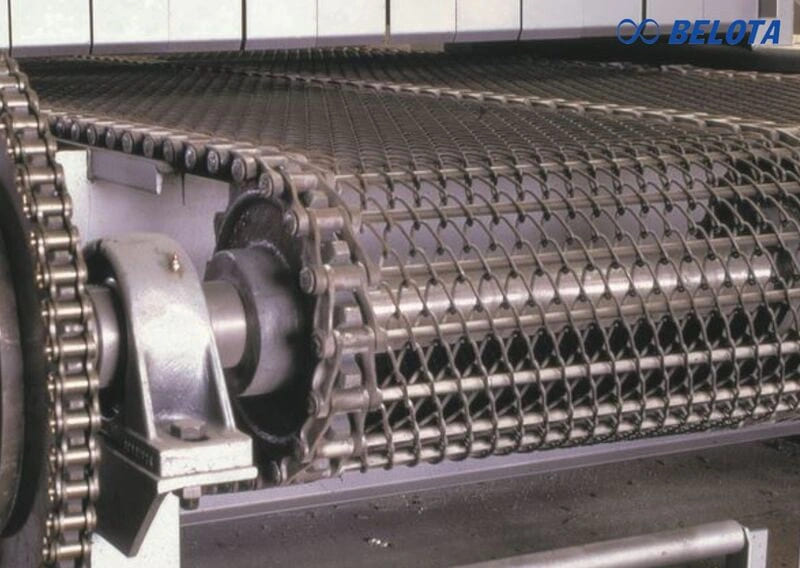
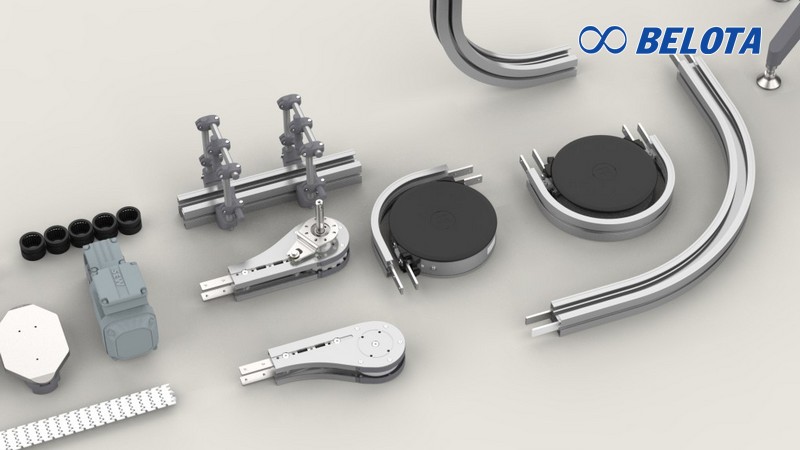
- Chain conveyors: Used as a drive component or combined with support bars and attachments to convey products.
- Food and beverage industry: Applied in the drive mechanisms of filling machines, packaging equipment, and food processing machinery.
- Packaging industry: Used in carton sealing machines, packaging machines, and product conveying lines.
- Mechanical engineering and manufacturing: Suitable for machining equipment, material handling systems, and automated power transmission applications.
How to Choose the Right ANSI 50 Roller Chain
To select the correct ANSI 50 roller chain, check the specifications of the existing system and its actual operating conditions.
- Check the chain pitch: ANSI 50 chain has a pitch of 15.875 mm. Measure and verify the dimensions carefully to avoid confusion with other chains of similar sizes.
- Determine the number of strands: Identify whether the system uses ANSI 50-1R, ANSI 50-2R, ANSI 50-3R, or another multiple-strand configuration.
- Select compatible sprockets: ANSI 50 / ISO 10A chains must be used with sprockets of the corresponding standard. Do not combine them with 10B sprockets solely because they have the same pitch.
- Calculate the load requirements: Consider pulling force, motor power, rotational speed, starting conditions, and operating frequency.
- Consider the operating environment: Temperature, dust, moisture, and chemicals can affect chain service life. Select suitable materials and lubrication methods based on these conditions.
- Determine the required chain length: Check the number of links, shaft center distance, and connecting-link arrangement to ensure the chain fits the system.
Popular ANSI 50 Roller Chain Brands
Many manufacturers produce ANSI 50 standard roller chains for applications ranging from general-purpose power transmission to heavy-duty industrial machinery.
Some brands to consider include:
- KANA: A Japanese industrial chain brand offering various roller chains and power transmission accessories.
- Tsubaki: A manufacturer specializing in drive chains, conveyor chains, and industrial power transmission solutions.
- DID: A Japanese chain brand offering roller chains for machinery and industrial equipment.
- SENQCIA: Supplies chains and mechanical power transmission equipment.
- IZUMI: Offers chain products for mechanical power transmission applications.
- Donghua: A manufacturer of industrial chains in various types and configurations.
- DBC, CHC, Diamond, and Star: Brands offering roller chains and power transmission accessories in different markets.
When selecting a brand, consider not only its origin and price but also dimensional standards, load capacity, durability, and product warranty conditions.
Belota - Supplier of ANSI 50 Roller Chains and Industrial Power Transmission Accessories
Belota supplies industrial roller chains, including ANSI 50 chains in various configurations such as 50-1R, 50-2R, 50-3R, and multiple-strand types according to application requirements. These products are suitable for machinery drive systems, chain conveyors, and industrial production lines.
In addition to roller chains, Belota provides support in selecting compatible sprockets, determining chain length, and recommending installation options based on equipment specifications. Customers can provide an existing chain sample, product code, or technical information to receive assistance in identifying the correct replacement.
Conclusion
ANSI 50 roller chain is a roller chain with a 15.875 mm pitch, widely used in industrial power transmission and conveying systems. Available in configurations ranging from simplex to multiple-strand designs, it can accommodate different load requirements and operating conditions. When selecting a chain, it is essential to check the chain standard, number of strands, sprocket specifications, and allowable tensile load to ensure compatibility and reliable operation. Belota supplies ANSI 50 roller chains and provides technical support in selecting suitable power transmission accessories for industrial machinery.