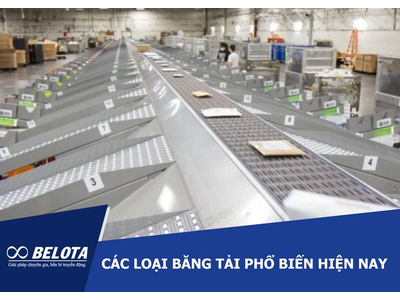
In modern industrial conveyor systems, PVC conveyor belts are among the most widely used solutions thanks to their flexibility and high operational efficiency. From food processing and electronics to pharmaceuticals, packaging, and assembly lines, PVC belts consistently meet requirements for durability, hygiene, and cost-effectiveness.
So, what is PVC material, what are its key advantages, and why is it so widely used? Let’s explore in detail with Belota in the article below.
What is PVC Material?
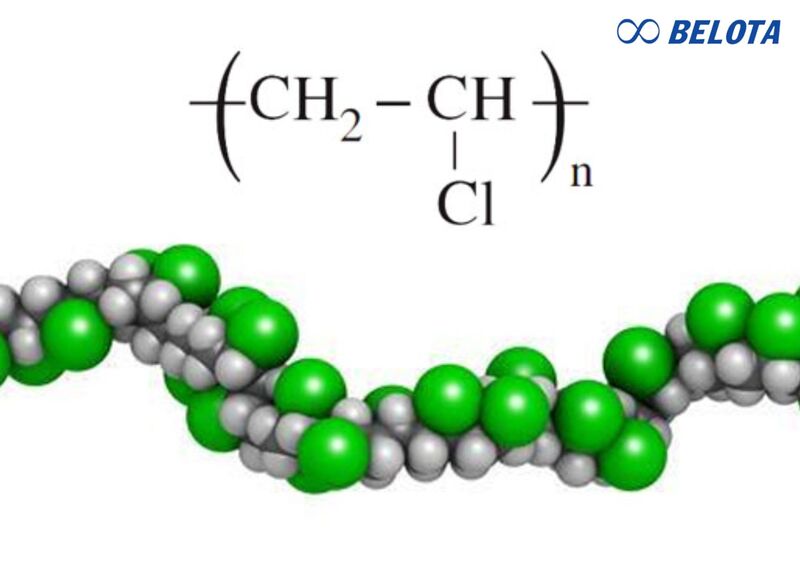
According to Wikipedia, PVC stands for Polyvinyl Chloride, a synthetic thermoplastic polymer produced through the polymerization of vinyl chloride monomer (CH₂=CHCl). It is one of the most commonly used materials worldwide due to its low production cost, flexible processing capabilities, and suitability for modern industrial applications.
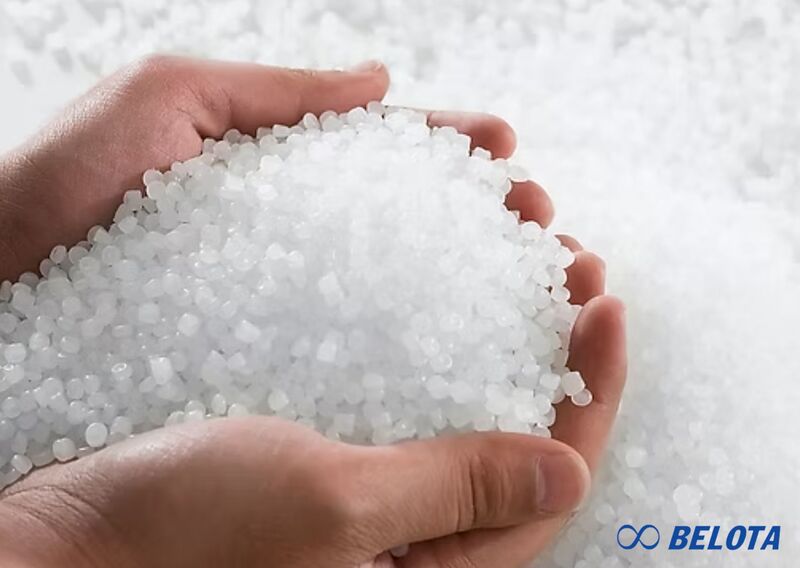
Initially, PVC was rigid and difficult to process. However, since 1926, with the addition of plasticizers, PVC became more flexible and easier to shape, enabling its widespread use in industries such as construction, electronics, healthcare, interior design, and especially in PVC conveyor belt manufacturing.
Physical Properties of PVC
To better understand what PVC material is, it is essential to examine its key physical properties. These characteristics determine its durability, safety, and adaptability in various working environments:
- Excellent chemical resistance: PVC resists corrosion from acids, alkalis, oils, and many common chemicals, ensuring stable performance in harsh industrial environments.
- Good electrical insulation: PVC is a non-conductive material, providing safety in systems involving electrical components. This makes PVC conveyor belts suitable for electronics manufacturing and assembly lines.
- Fire resistance: Due to its high chlorine content, PVC is self-extinguishing and more flame-resistant than many other plastics.
- High mechanical strength: PVC offers good load-bearing capacity, maintains structural stability, and can be enhanced further with specialized additives.
- High flexibility: PVC can be produced in rigid, flexible, or foam forms depending on formulation, making it adaptable for various applications.
Advantages and Disadvantages of PVC Material
Advantages
- Low production cost: More economical than many engineering materials while maintaining good performance
- Easy processing and shaping: Can be cut, bonded, heat-welded, and formed into various shapes
- Water-resistant and wear-resistant: Performs well in humid and demanding environments
- Safe when properly manufactured: Non-toxic when produced according to standard regulations
Disadvantages
- Limited heat resistance: Performance decreases at temperatures above 120°C
- Lower abrasion resistance compared to some materials: In high-friction environments, PVC may be less durable than PU materials or specialized rubber
- Requires proper disposal: Improper burning can release harmful gases, so recycling and correct handling are necessary
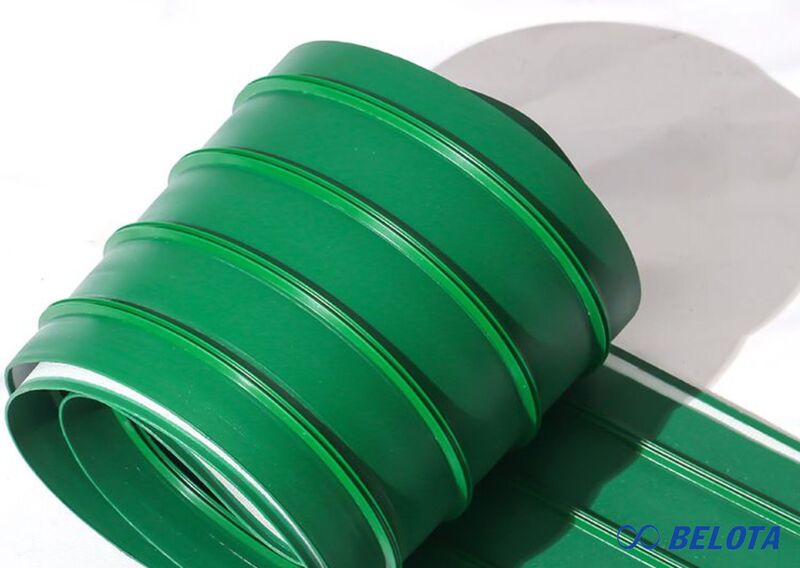
Common Types of PVC
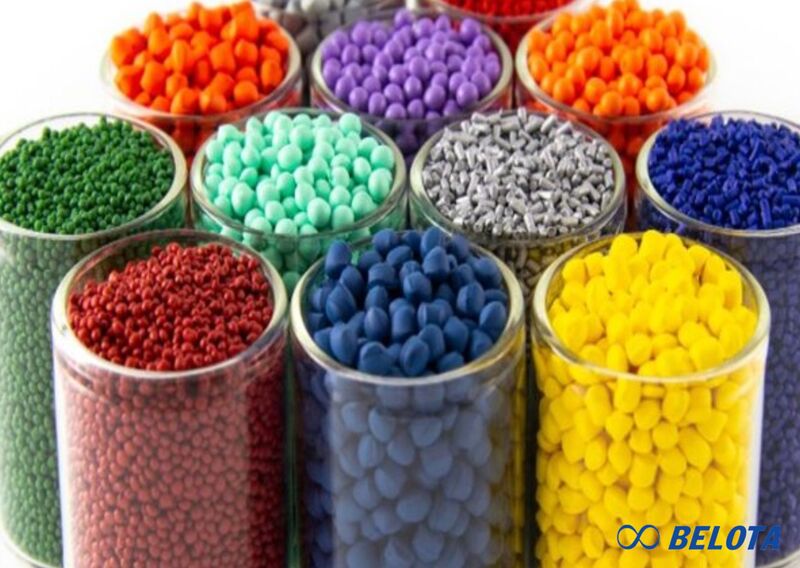
- Rigid PVC: High stiffness, used for pipes, doors, panels, and industrial equipment
- Flexible PVC: Contains plasticizers, used for hoses, cables, packaging, and conveyor belts
- PVC Foam: Lightweight with good sound insulation, used in advertising, signage, and interior design
Applications of PVC in Conveyor Systems
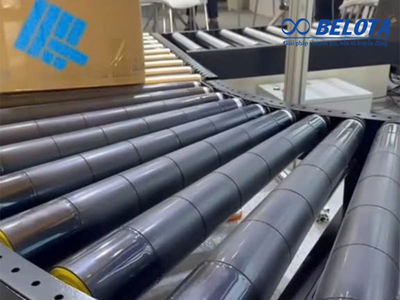
In industrial conveyor systems, PVC is considered one of the most versatile materials due to its adaptability to various operating conditions. With its durability, lightweight structure, and cost efficiency, PVC conveyor belts can be customized in structure and surface design to meet different application needs.
PVC conveyor belts typically have thicknesses ranging from 0.8 mm to 5 mm, with smooth or rough surfaces, and can be enhanced with antistatic or anti-slip properties depending on requirements.
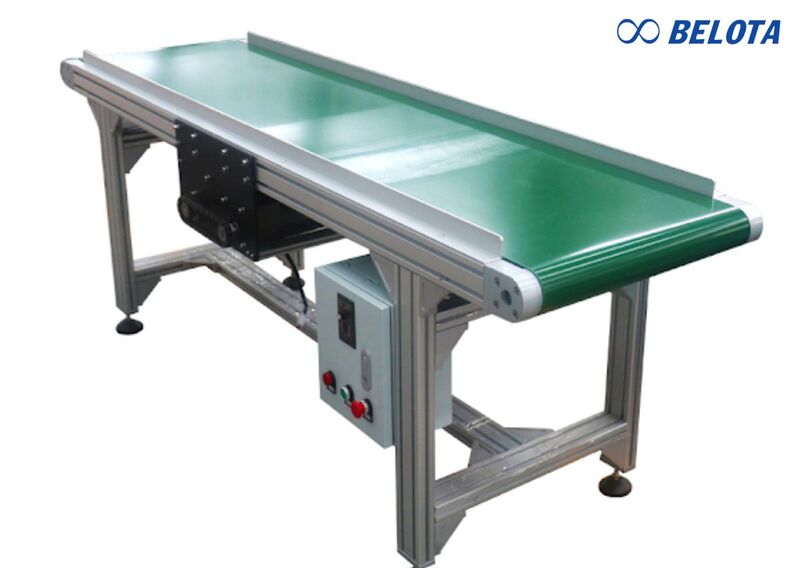
Common colors include green, white, and black.
Applications:
- Food industry: Transporting fruits, vegetables, confectionery, meat, seafood, and packaged goods
- Electronics industry: Used in assembly lines for components, circuit boards, and devices
- Pharmaceutical industry: Handling medicines, packaging, and hygienic products
- Packaging industry: Moving products to automated packaging stations
- Textile and wood industries: Transporting fabrics, fibers, wood panels, and finished products
Conclusion
This article has explained what PVC material is and provided a comprehensive overview of its properties and applications in industrial production. With advantages such as durability, chemical resistance, ease of processing, and cost efficiency, PVC plays a crucial role in conveyor belt manufacturing and many other industries.
If your business is looking for a suitable conveyor solution, BELOTA is ready to provide expert consultation and high-quality products tailored to your operational needs.