In industrial conveyor systems, conveyor belt speed is an extremely important parameter that directly affects productivity, operational stability, and the lifespan of the entire production line. Proper speed calculation helps businesses select the right motor, gearbox, and conveyor design suitable for each type of material or product. In this article, Belota will guide you through the simplest and easiest way to calculate conveyor belt speed.
What Is Conveyor Belt Speed?
Conveyor belt speed refers to the distance the conveyor belt travels within a certain period of time, commonly measured in:
- meters per minute (m/min)
- meters per second (m/s)
This parameter determines how fast products move along the conveyor during operation.
Depending on production requirements and material characteristics, the conveyor speed can be adjusted accordingly:
- Faster conveyor speed → higher conveying capacity
- Slower conveyor speed → better product control and reduced spillage or damage
Basic Conveyor Belt Speed Formula
The most common and practical formula for calculating conveyor speed is:
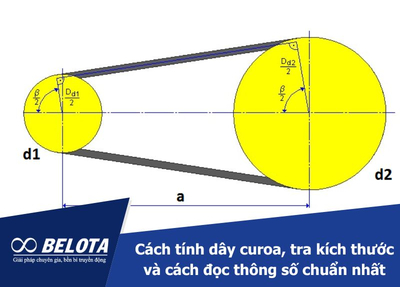
V=π×D×N
Where:
- V = Conveyor speed (m/min)
- π (Pi) ≈ 3.14
- D = Drive pulley diameter (m)
- N = Pulley rotational speed (RPM)
To convert the result into m/s, simply divide by 60.
Step-by-Step Guide to Calculating Conveyor Speed
Step 1: Determine Pulley Diameter
Measure the pulley directly or obtain the specification from the manufacturer.
If the unit is in millimeters (mm), convert it to meters by dividing by 1000.
Step 2: Calculate Pulley Circumference
Pulley circumference formula: C=π×D
Step 3: Calculate Conveyor Speed
Conveyor speed formula:
V=C×N
Example of Conveyor Speed Calculation
Assume:
- Pulley diameter: D = 0.5 m
- Rotational speed: N = 120 RPM
Pulley circumference
C=3.14×0.5=1.57 m
Conveyor speed
V=1.57×120=188.4 m/min
Convert to m/s
188.4÷60≈3.14 m/s
Therefore, the products move on the conveyor at approximately 3.14 meters per second.
Factors Affecting Conveyor Speed
In real operating conditions, conveyor speed is influenced by several factors:
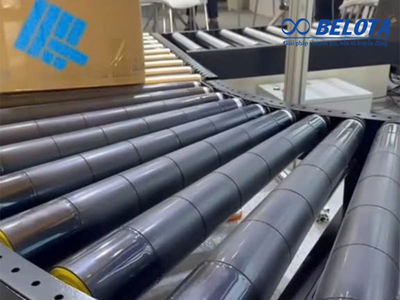
1. Pulley Diameter and Quantity
- Larger pulleys → larger circumference → higher speed
- Multiple intermediate rollers → increased transmission loss → lower actual speed
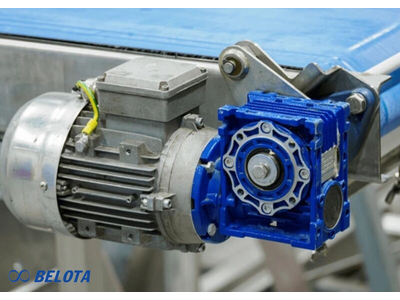
2. Gearbox Reduction Ratio
A higher reduction ratio significantly affects output shaft speed and is one of the main factors controlling conveyor speed.
3. Conveyor Inclination
The conveyor incline directly affects conveying performance and load capacity.
When the incline angle increases:
- Gravity force on materials becomes greater
- Products may slip backward or lose stability
- Motor load increases
- Conveyor speed efficiency decreases
4. Friction and Environmental Conditions
High humidity or dusty environments can alter the friction coefficient between the belt and pulleys.
Unstable friction may cause:
- Belt slipping
- Inaccurate operating speed
- Reduced system efficiency
5. Product Load
Heavier loads require greater motor force.
If the conveyor system is not properly designed, actual speed may decrease under heavy loads.
Effective Ways to Adjust Conveyor Speed
To ensure the conveyor operates according to production requirements, speed can be adjusted using the following methods:
Select the Proper Gearbox
The gearbox reduction ratio should match both the load capacity and required operating speed.
Use an Inverter (VFD)
Variable Frequency Drives (VFDs) allow:
- Flexible speed adjustment
- Energy savings
- Better motor protection during continuous operation
Control Product Load
Overloading the conveyor can:
- Reduce actual speed
- Cause belt slipping
- Shorten system lifespan
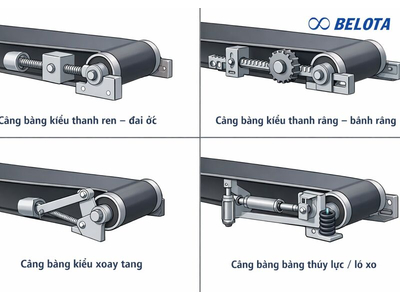
Optimize Conveyor Design Parameters
Important factors include:
- Pulley diameter
- Conveyor length
- Belt tension
- Incline angle
These directly determine operating speed.
Perform Real-World Testing and Calibration
In actual projects, Belota engineers often measure conveyor speed after installation and fine-tune the system to match production conditions instead of relying solely on theoretical calculations.
Common Conveyor Speed Problems
During operation, conveyor speed may become unstable due to common issues such as:
- Belt misalignment causing increased friction
- Insufficient motor power
- Material blockage at transfer points
- Product spillage obstructing movement
- Incorrect inverter settings
If the conveyor runs slower than normal or operates unevenly, businesses should inspect and resolve issues promptly to avoid production downtime.
How Conveyor Speed Affects System Performance
Conveying capacity is directly related to conveyor speed.
The commonly used conveying capacity formula is: Q=A×V×γ×s
Where:
- Q = Capacity (tons/hour)
- A = Material cross-sectional area on the belt (m²)
- V = Conveyor speed (m/s)
- γ = Material density (tons/m³)
- s = Inclination coefficient
From the formula, increasing speed increases productivity — but only if other system parameters are properly designed.
Why Excessive Conveyor Speed Is Not Recommended
If Speed Is Too High
- Increased material spillage
- Product slipping
- Faster belt and pulley wear
- Reduced stability on inclined conveyors
If Speed Is Too Low
- Lower productivity
- Material congestion
- Motor power inefficiency
Practical Engineering Experience
In real conveyor design and installation projects, Belota determines the optimal conveyor speed based on:
- Product type
- Conveyor incline
- Operating duration
- Actual factory conditions
rather than simply maximizing theoretical capacity.
This approach helps conveyor systems operate more stably, last longer, and reduce maintenance costs.
For every project, Belota’s engineering team conducts on-site factory surveys to ensure the conveyor system design best matches operational requirements and working environments.
Conclusion
Understanding how to calculate conveyor belt speed accurately not only helps optimize system performance but also ensures motors, gearboxes, and the entire conveyor system operate smoothly and reliably. This knowledge is essential for conveyor manufacturers, system designers, and maintenance technicians alike. If you need support calculating conveyor speed or selecting suitable conveyor components, contact Belota via Hotline 0917657946 for free technical consultation.