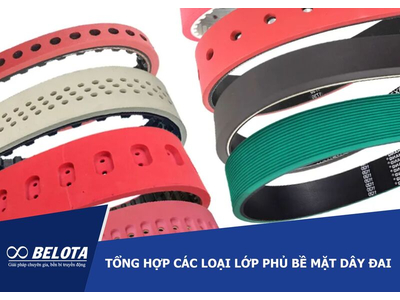
During production, machine maintenance, or when working with Chinese suppliers, many businesses face difficulties using the correct technical terminology. One of the most common questions is: What is “industrial belt” in Chinese, and how is this term used in manufacturing and trading?
In this article, Belota will help you clearly understand the meaning, terminology, classifications, and applications of industrial belts in Chinese in a simple and practical way.
What Is “Industrial Belt” in Chinese?
In Chinese, an industrial belt is commonly called 皮带 (pídài), which generally means a transmission belt used to transfer motion and power between machine components.
In the mechanical and industrial field, 皮带 is widely used as a general term for different types of transmission belts such as V-belts, timing belts, and flat belts. Depending on the specific belt type, there are also more detailed technical names.
Understanding the Chinese term for industrial belts helps businesses:
- Communicate more effectively with Chinese suppliers
- Read and understand technical drawings and catalogues
- Avoid ordering mistakes and incorrect spare part replacements
Common Types of Industrial Belts and Their Chinese Names
What Is a V-Belt in Chinese?
A V-belt in Chinese is called 三角带 (sānjiǎodài).
This type of belt has a V-shaped cross-section and is commonly used in:
- Electric motors
- Industrial machinery
- Mechanical transmission systems
The main advantages of V-belts include strong power transmission, simple structure, and cost efficiency.
What Is a Timing Belt in Chinese?
A timing belt is called 同步带 (tóngbùdài), which literally means “synchronous belt.”
This belt features teeth that mesh directly with pulleys, helping to:
- Provide accurate transmission
- Prevent slipping
- Maintain high synchronization
Timing belts are commonly used in:
- CNC machines
- Automated production lines
- Packaging and electronics industries
What Is a Flat Belt in Chinese?
A flat belt in Chinese is called 平皮带 (píng pídài).
This type has a flat surface and is widely used in:
- Conveyor systems
- Light-duty transmission machines
- Material handling systems
Flat belts are suitable for applications requiring smooth and stable operation.
PU Belts and Rubber Belts in Chinese
- PU belt: 聚氨酯皮带 (jù ān zhǐ pídài)
- Rubber belt: 橡胶皮带 (xiàngjiāo pídài)
These terms are commonly found in material catalogues and help distinguish belts based on construction materials.
Summary Table: Belt Terminology in Chinese and English
| English Name | Chinese Name | Pinyin | Technical Meaning | Key Specifications |
|---|---|---|---|---|
| Industrial Belt (General) | 皮带 | pídài | Transmission belt | Material |
| V-Belt | 三角带 | sānjiǎodài | V-shaped belt | Belt section (A, B, C...) |
| Timing Belt | 同步带 | tóngbùdài | Synchronous belt | Pitch, number of teeth |
| Flat Belt | 平皮带 | píng pídài | Flat transmission belt | Thickness |
| Multi-Rib Belt | 多沟带 | duōgōudài | Multi-groove belt | Groove type (PJ, PK, PL...) |
| Double-Sided Timing Belt | 双面齿同步带 | shuāngmiànchǐ tóngbùdài | Double-sided toothed belt | Belt code (DA, DB) |
| Variable Speed Belt | 变速带 | biànsùdài | Variable speed belt | Speed ratio |
| Round Belt | 圆带 | yuándài | Round belt | Diameter |
This terminology table is especially useful for technical, purchasing, and import departments.
Why Should Businesses Know Chinese Belt Terminology?
Understanding industrial belt terminology in Chinese brings many practical benefits:
- Communicate accurately with Chinese manufacturers
- Reduce the risk of ordering the wrong belt type
- Save time when comparing quotations
- Improve maintenance and equipment replacement efficiency
For companies importing industrial components, this knowledge is almost essential.
Important Notes When Using Chinese Belt Terminology
- Do Not Rely Only on the Name: Always verify the belt code, dimensions, material, and technical standards to avoid selecting the wrong type.
- Be Careful with General Terms: Many suppliers use broad or simplified names, so it is important to cross-check drawings and catalogues before placing orders.
- Avoid Using Machine Translation Alone: Technical terminology is highly specialized. It is best to combine Chinese names with international belt codes for maximum accuracy.
Understanding the correct Chinese terminology from the beginning helps avoid technical misunderstandings, reduces purchasing risks, and ensures stable and durable transmission system performance.
Frequently Asked Questions
Why Is This Terminology Table Important for Technical and Purchasing Departments?
- Answer: This summary table helps:
- Technical teams: Identify the correct replacement belt based on professional terminology
- Purchasing & import teams: Communicate accurately with Chinese suppliers and avoid confusion between similar-looking belt types
How Can You Distinguish Different Belt Types by Name?
Answer: You can identify belt types based on shape and application:
- V-Belt: 三角带 (sānjiǎodài) — triangular belt
- Flat Belt: 平皮带 (píng pídài) — flat belt
- Timing Belt: 同步带 (tóngbùdài) — synchronous belt
- What Is the General Chinese Term for Industrial Belts?
Answer: The general Chinese term for industrial belts is 皮带 (pídài). It refers to transmission belts made from leather, rubber, or synthetic materials.
Conclusion
Understanding what industrial belts are called in Chinese helps businesses become more proactive in production, maintenance, and equipment import activities. Knowing the correct terminology not only minimizes mistakes but also optimizes cost and communication efficiency with suppliers. For the best results, businesses should combine technical knowledge with consultation from professional industrial belt suppliers when selecting and using belts.