

Sludge dewatering belt is a specialized mesh conveyor belt used to retain sludge, drain water, and support the dewatering process in wastewater treatment systems. Depending on the machine type and sludge characteristics, the belt can feature woven Polyester mesh, spiral mesh, or reinforced spiral mesh structures, with different sizes and air permeability levels. This article explains the structure, technical specifications, common mesh types, and how to select the right belt for a sludge dewatering machine.
What Is a Sludge Dewatering Belt?
A sludge dewatering belt is a specialized filter belt installed in a belt filter press. It is designed to retain and transport sludge through the pressing zones while allowing water to pass through, reducing the moisture content of the sludge. As the belt comes into direct contact with sludge and is exposed to pressing forces, it needs good permeability, dimensional stability, abrasion resistance, and chemical resistance suitable for the operating environment.
Unlike conventional conveyor belts used for material transportation, Polyester mesh conveyor belts are primarily designed for filtration and dewatering. Therefore, belt selection should be based on the machine type, belt dimensions, sludge characteristics, and wastewater conditions.
Structure and Operating Principle of a Sludge Dewatering Belt
Structure
A sludge dewatering belt consists of the filter belt and supporting components for guiding, tensioning, pressing, and driving. Each component performs a specific function and works together to ensure stable belt operation in the sludge dewatering machine.
- Filter belt: Made from Polyester, Nylon, or other synthetic fibers, with openings that allow water to pass through while retaining solid particles in the sludge.
- Guide rollers: Control the belt path, helping the belt run in the correct position and reducing belt misalignment.
- Press rollers: Apply pressure to the sludge layer to support the dewatering process.
- Belt tensioning system: Maintains the appropriate belt tension and helps prevent slackness or slipping.
- Drive mechanism: Provides continuous movement, transporting sludge from the feeding area to the dewatered sludge discharge point.
- Belt joint: Connects the two ends of the belt into a continuous loop, depending on the belt structure and machine design.
Operating Principle
During operation, conditioned sludge is evenly fed onto the surface of the belt. As the belt moves, free water is initially released by gravity through the openings in the mesh.
The sludge then enters the pressing zone, where two filter belts run together or a roller system gradually increases the applied pressure. This pressure further removes water from the sludge, while the solid portion is compressed into a dewatered sludge cake with a higher solids content.
After the pressing process, the sludge cake is separated from the belt. The belt then returns to the washing system for cleaning before entering the next operating cycle. The entire process is continuous and suitable for wastewater treatment systems that require long-term operation.
Key Advantages of Sludge Dewatering Belts
- Efficient water drainage: The specialized mesh structure helps remove water quickly and increases the dryness of the dewatered sludge cake.
- High resistance to pressing forces: Strong, low-stretch fibers are suitable for continuous sludge dewatering systems.
- Good chemical resistance: Provides stable operation in wastewater environments containing acids, alkalis, and treatment chemicals.
- Stable operation: Smooth belt running and reduced misalignment help minimize operating problems.
- Easy cleaning and maintenance: The belt surface is less prone to sludge buildup, while the washing system helps maintain long-term performance.
- Long service life: With proper belt selection and operation, the service life can range from 15–20 months, helping reduce replacement costs.
- Easy replacement: The belt can be manufactured to match the machine dimensions and replaced when the existing belt becomes worn, damaged, or loses filtration performance.
Common Polyester Mesh Types for Sludge Dewatering Machines
Woven Polyester Mesh Belt
Flat woven Polyester mesh belts are woven from Polyester monofilament yarns, creating a relatively flat surface with evenly distributed mesh openings. This structure allows the belt to support and transport sludge while providing openings for water, liquids, or air to pass through during processing.
In addition to sludge dewatering machines, flat woven Polyester mesh is also used in filtration, washing, drying, and wet-material processing systems, especially in applications that require simultaneous material conveying and liquid or air drainage.
Polyester Spiral Mesh Belt
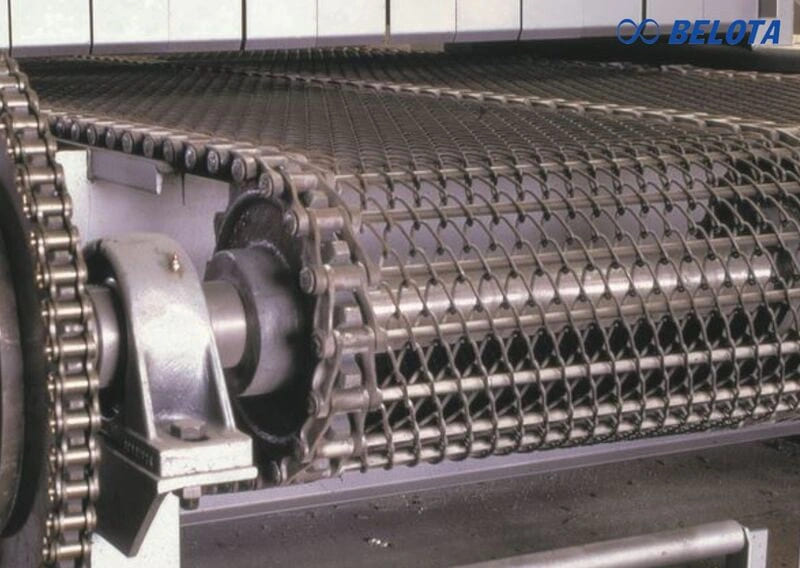
Polyester spiral mesh belts are made from flat Polyester monofilament yarns spiraled into interconnected loops and joined with connecting rods, creating an open and stable mesh structure. This design provides high air permeability and good water drainage, making the belt suitable for continuous filtration, drying, and processing systems.
Reinforced Polyester Spiral Mesh Belt
Reinforced Polyester spiral mesh belts are specially designed for sludge dewatering machines. They consist of Polyester monofilament spiral loops connected by rods, with reinforcement yarns incorporated into the structure. This design helps the belt maintain its shape, preserve sufficient permeability for water drainage, improve solids retention, and withstand tension and pressing forces during continuous wastewater treatment operations.
Polyester Mesh Belt with Sealed Edges
Polyester mesh belts with sealed edges feature reinforced and sealed edges made from TPU or PVC. This design helps reduce fraying and fiber separation along the belt edges while improving stability and durability during continuous operation.
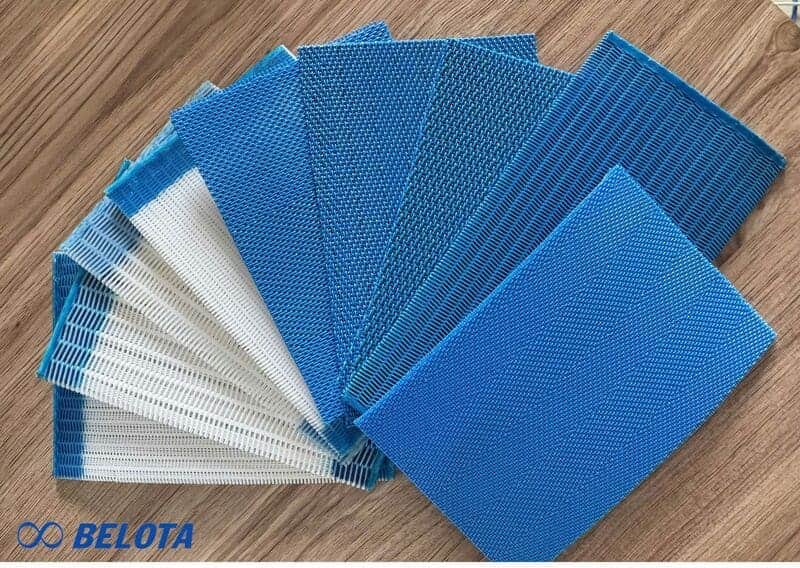
In addition to the mesh structures above, Belota also offers various other mesh weaving patterns, as shown below. To select the most suitable mesh for your machine and operating conditions, contact us at Hotline 0917 657 946 for detailed technical advice.
Technical Specifications of Sludge Dewatering Belts
- Belt width: 750 mm / 800 mm / 1000 mm / 1250 mm / 1500 mm / 2000 mm
- Thickness: 1.5 - 2 mm
- Mesh type: Woven mesh / standard spiral mesh / reinforced spiral mesh
- Material: PP, PE
- Air permeability: 4,000 - 4,200 (L/m²/s at Pa 127) – Taiwan/China
- Tensile strength: 2,000 N/cm
- Temperature resistance: Up to 150°C
- Import sources: Taiwan / China / ...
- Manufacturing standard: Modern production lines, European standards
- Operating performance: High pressure resistance, good water drainage, stable operation, suitable for continuous sludge dewatering systems
Applications of Sludge Dewatering Belts
- Municipal wastewater treatment systems: Used to dewater sludge at municipal wastewater treatment plants, reducing sludge volume before further transportation or treatment.
- Industrial wastewater treatment plants: Used in textile dyeing, food processing, paper, chemical, electroplating, and other industries where large amounts of sludge are generated and continuous dewatering is required.
- Food and beverage industry: Supports sludge dewatering after production processes, helping maintain clean and stable system operation.
- Seafood processing and livestock facilities: Used to process organic sludge, helping reduce odor and sludge storage and transportation costs.
- Centralized sludge treatment facilities: Suitable for high-capacity, continuous sludge dewatering systems that require high durability and effective water drainage.
How to Choose the Right Sludge Dewatering Belt
- Identify the sludge dewatering machine: Selecting the correct specifications helps the belt run smoothly and reduces the risk of belt misalignment.
- Consider sludge characteristics: Sludge containing fibers, fine particles, or chemicals may require different mesh structures and drainage performance.
- Select the appropriate material: For chemical environments, Polyester or PP belts with good chemical resistance should be considered.
- Evaluate operating intensity: For continuous operation and high-capacity systems, high-strength multi-layer woven belts can improve durability and reduce replacement costs.
- Choose a supplier with technical expertise: An experienced supplier can help select the appropriate belt, manufacture it to the correct dimensions, and provide technical support during installation.
In addition, each machine capacity may require different belt dimensions. For the most suitable selection, contact Belota's technical team for detailed consultation.
Why Buy Sludge Dewatering Belts from Belota?
With years of experience in on-site inspection, design, fabrication, and installation of sludge dewatering belts, Belota can provide recommendations based on the machine model, belt dimensions, and actual operating conditions. All products are imported from overseas suppliers, with a wide range of models, mesh patterns, and belt structures suitable for most common belt filter press systems in Vietnam.
Belota's technical team can compare belt samples, dimensions, and filtration requirements to help select the appropriate belt for specific sludge characteristics. Belts can be manufactured according to technical drawings or actual samples, inspected before delivery, and supported by technical assistance during installation, replacement, and operation.
Frequently Asked Questions
What is the sludge dewatering process using a belt?
It is a process of removing water from sludge by passing the sludge through filter belts, combining mechanical pressure with drainage to produce a drier sludge cake.
Are sludge dewatering belts resistant to chemicals?
Yes. Sludge dewatering belts are commonly made from Polyester, PP, or PE and can provide resistance to acids, alkalis, and wastewater treatment chemicals under standard operating conditions.
What is the average service life of a sludge dewatering belt?
The service life typically ranges from 15–20 months, depending on operating conditions, sludge characteristics, and maintenance practices.
Can sludge dewatering belts be manufactured to order?
Yes. Belts can be manufactured according to the required width, length, mesh structure, and joint type for different sludge dewatering machines.
Conclusion
Sludge dewatering belts play an important role in wastewater sludge treatment, directly affecting dewatering efficiency, system stability, and long-term operating costs. Selecting the right belt according to the machine type, sludge characteristics, and operating conditions can help maintain reliable operation, reduce downtime, and optimize replacement costs. With practical experience and custom fabrication capabilities, Belota provides sludge dewatering belt solutions for businesses looking for efficient and stable wastewater treatment operations.