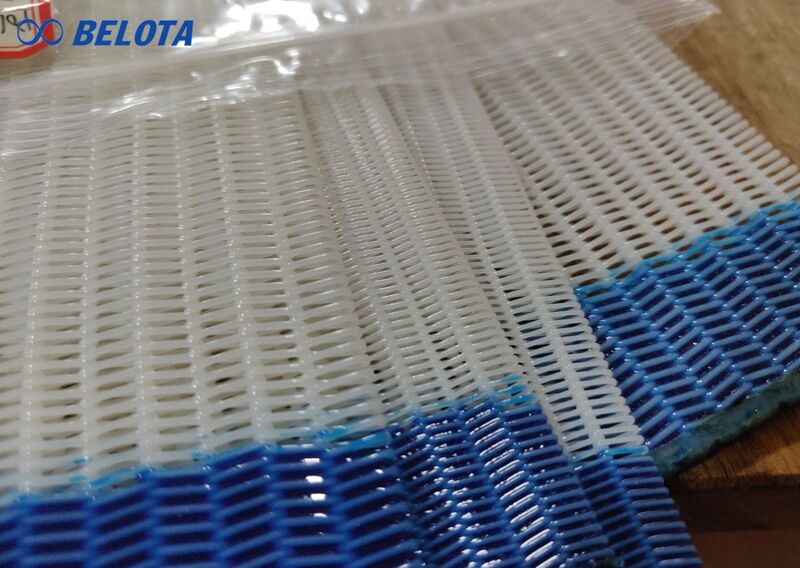
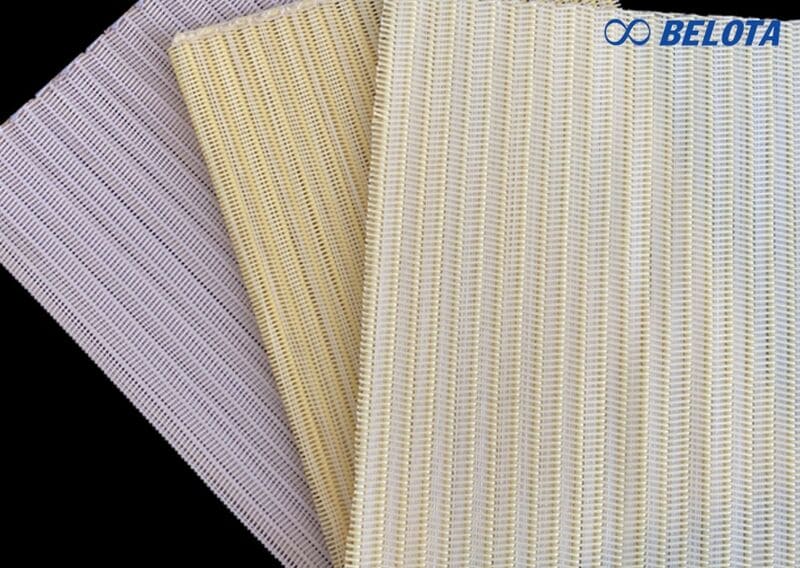
Polyester Spiral Mesh Belt is a type of mesh conveyor belt widely used in drying, washing, cooling, filtration, and material processing systems. Its spiral structure provides high air permeability, allowing air and water to pass easily through the belt surface while reducing material adhesion and making the belt easier to clean. Depending on the operating temperature and working environment, the belt can be manufactured in different configurations to suit specific applications. In this article, let’s take a closer look at the Polyester Spiral Mesh Belt and its common characteristics with Belota.
What is a Polyester Spiral Mesh Belt?
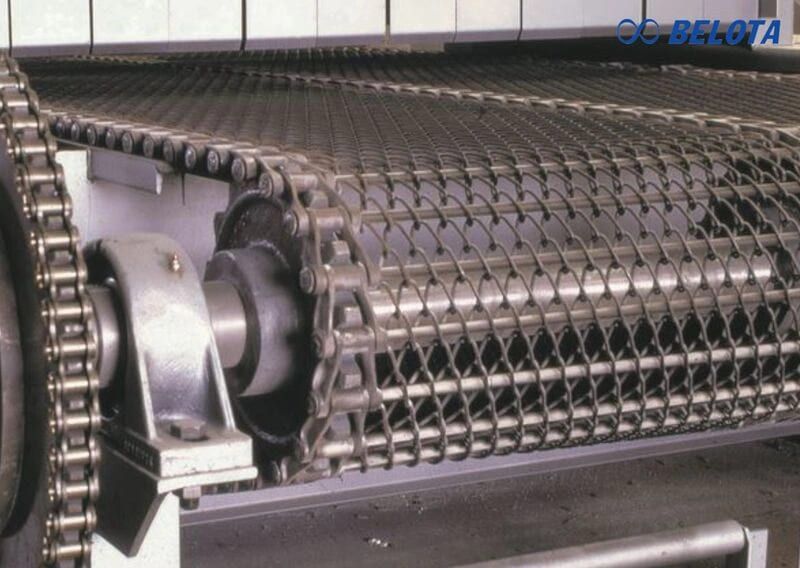
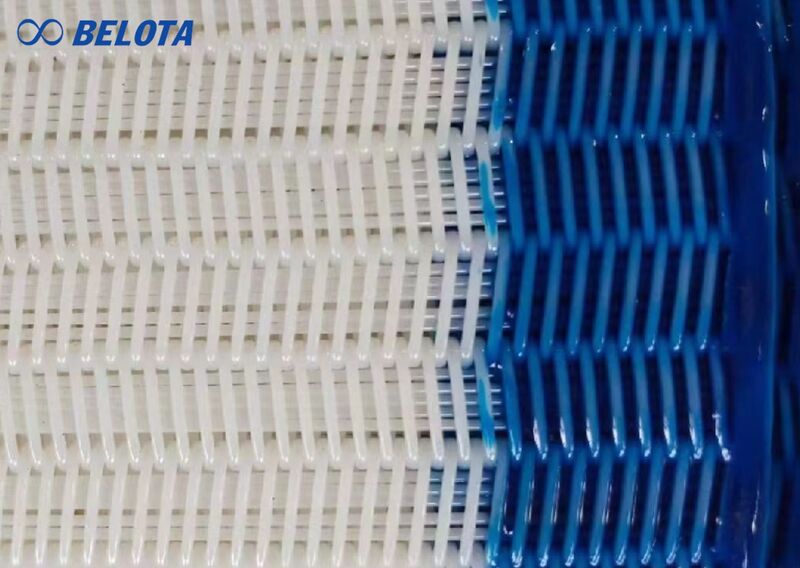
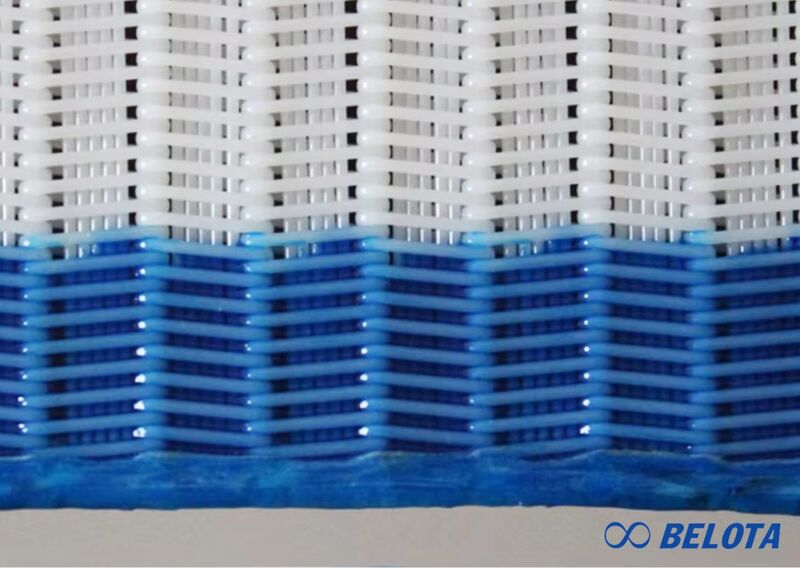
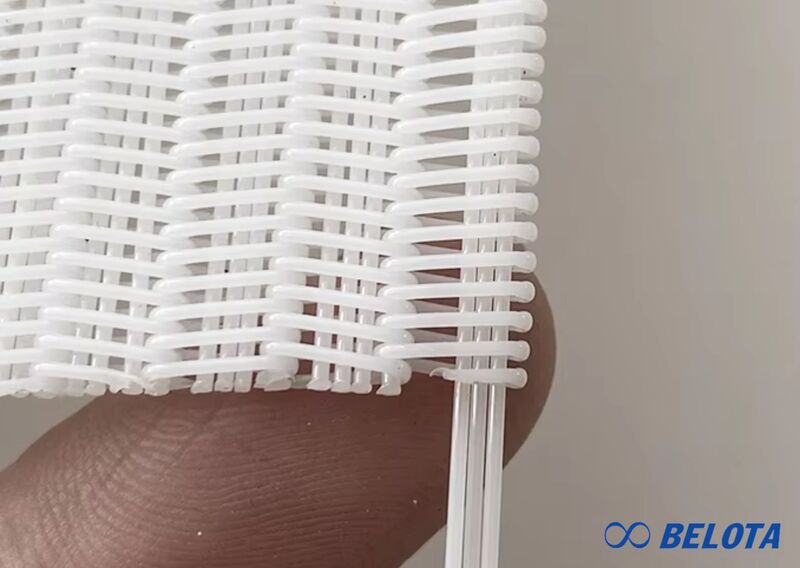
Polyester Spiral Mesh Belt is made from flat monofilament Polyester fibers twisted into spiral loops and interconnected with connecting rods, creating an open and stable mesh surface. Compared with conventional woven Polyester mesh belts, the spiral structure provides high air permeability and good drainage, making it suitable for continuous drying and processing applications.
One notable feature of this belt is that there are no transverse seams across the belt surface, helping provide relatively consistent airflow and reducing the possibility of leaving marks on products. If a section of the belt is damaged, the connecting rod can be removed to replace the damaged section without necessarily replacing the entire belt.
Technical Specifications of Polyester Spiral Mesh Belt
- Material: Polyester (PET), PPS
- Filament diameter: 0.5 - 1.2 mm
- Tensile strength: 1,800 - 2,600 N/cm
- Air permeability: 4,480 - 10,000 m³/m²·h
- Belt width: 100 - 10,000 mm
- Length / circumference: Manufactured according to requirements
- Continuous operating temperature: PET up to approximately 150°C; PPS up to approximately 240°C
- Food-contact compliance: PET options available to meet FDA and EC requirements and BPA-free specifications
- Belt edges: Adhesive reinforcement or other edge treatments according to requirements
Advantages and Features of Polyester Spiral Mesh Belt
- High air permeability: The spiral mesh structure allows air to pass through the belt surface, making it suitable for drying, cooling, washing, and filtration.
- Good drainage: The open mesh structure allows water and liquid to pass through easily, reducing liquid accumulation on the belt surface.
- Flexible mesh opening: Spiral loop dimensions can be selected according to the required opening and product. For applications requiring precise and uniform openings, a Flat Woven Polyester Mesh Belt can be considered.
- Low adhesion: The smooth filament surface helps reduce product and residue buildup, making the belt easier to clean.
- Suitable for food processing: Polyester options are available to meet FDA and EC requirements, making them suitable for applications involving direct food contact.
- High tensile strength: Some configurations offer tensile strength of up to 2,600 N/cm, suitable for demanding drying and filtration systems.
- Moisture and chemical resistance: Polyester provides good moisture resistance and can withstand many common chemicals. PPS is more suitable for high-temperature and chemically aggressive environments.
- Dimensional stability: Heat-setting helps minimize shrinkage, elongation, and deformation during operation.
- Partial repair: When a section is damaged, the connecting rod can be removed and the damaged mesh section replaced instead of replacing the entire belt.
- Application-specific customization: Spiral loop size, filament diameter, connecting rods, and air permeability can be selected according to the product and conveyor system requirements.
Comparison of PET and PPS Materials for Polyester Spiral Mesh Belt
Polyester Spiral Mesh Belt can be manufactured from Polyester (PET) or PPS depending on the operating temperature and working environment. The two materials differ significantly in temperature resistance and chemical resistance:
| Criteria | Polyester (PET) | PPS |
|---|---|---|
| Continuous operating temperature | Up to approximately 150°C | Up to approximately 240°C |
| Heat-setting temperature | Approximately 200°C | Approximately 290°C |
| Chemical resistance | Good for common operating environments | Excellent resistance to acids, alkalis, and solvents |
| Food-contact applications | FDA/EC options and BPA-free specifications available | Not the primary choice for conventional food-contact applications |
| Suitable applications | Food drying, nonwoven production, UV printing, washing, and filtration | High-temperature drying, chemical filtration, and harsh environments |
| Cost | Generally more economical | Higher |
Should You Choose Polyester or PPS?
- Choose Polyester (PET) when the belt operates at moderate temperatures and is used for food-contact applications or conventional drying, washing, and filtration processes.
- Choose PPS when the system operates at high temperatures or is frequently exposed to strong chemicals, acids, alkalis, or solvents.
Joint and Edge Configurations
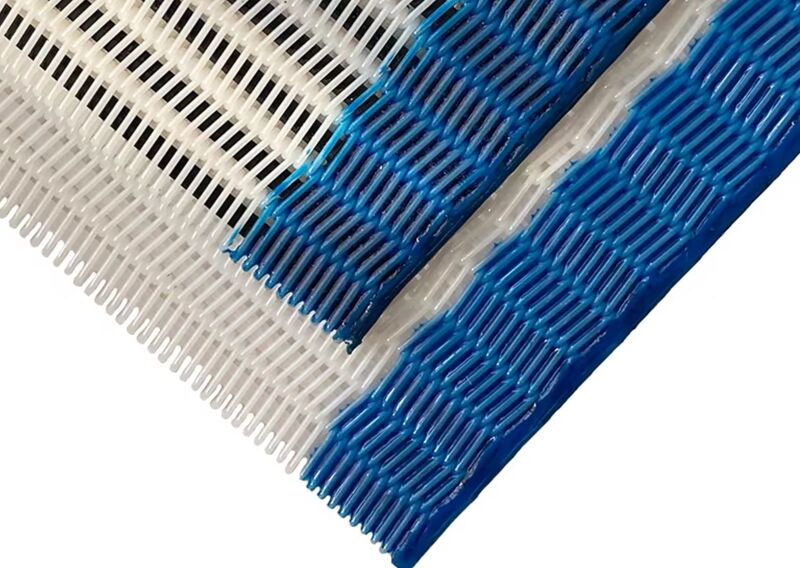
Polyester Spiral Mesh Belt is constructed from continuous spiral loops interconnected by connecting rods, creating a continuous mesh surface without transverse seams across the belt. The belt edges can be reinforced with adhesive or other treatments to improve edge stability and reduce fraying during operation.
Continuous Spiral Mesh Structure
The spiral loop structure creates a continuous mesh surface without transverse sewn seams. This helps maintain a consistent belt surface, supports airflow through the mesh, and reduces raised seam areas that may affect product handling.
Adhesive-Reinforced Edges
Both belt edges can be coated with adhesive or reinforced with other treatments to reduce fraying, improve belt stability during operation, and extend service life.
Applications of Polyester Spiral Mesh Belt
Thanks to its open structure, good drainage, low-adhesion surface, and temperature resistance, Polyester Spiral Mesh Belt is used in various drying, cooling, washing, forming, and industrial filtration systems.
Food Processing and Drying
- Drying and sterilizing pasta and noodle products.
- Washing, draining, and conveying vegetables and fruits.
- Dairy filtration and whey separation.
- Conveying and processing fish, shrimp, squid, and other seafood products.
Nonwoven Fabric Production
- Forming and drying nonwoven fabrics.
- Spunbond, meltblown, and spunlace production lines.
- Wet-laid and air-laid nonwoven manufacturing processes.
Wood Processing
- Drying veneer, MDF, and particleboard.
- Material conveying in drying systems.
- Heating and drying wood chips.
Building Material Production
- Drying gypsum boards and fiber cement boards.
- Drying mineral panels and insulation materials.
- Material conveying through thermal drying lines.
Flatbed UV Printers
- Conveying paper, plastic sheets, and other substrates through flatbed UV printing systems.
- Conductive belt configurations can help dissipate static electricity and reduce material movement during printing.
- The flat mesh surface helps maintain stable substrate positioning during conveying.
Industrial Filtration
- Sludge dewatering and wastewater treatment.
- Liquid filtration and solid-liquid separation in industrial processes.
- PPS material can be used when higher temperature resistance and chemical resistance are required.
Belota - Polyester Spiral Mesh Belt Supplier
Belota supplies Polyester Spiral Mesh Belt for drying, washing, cooling, filtration, and material conveying systems across various industries. The belt can be selected according to the material, spiral loop size, air permeability, and actual operating conditions of each conveyor system.
Depending on the application, Belota can recommend Polyester (PET) or high-temperature and chemically resistant PPS configurations to suit different operating temperatures and environments. Belt width, length, mesh opening, filament diameter, and edge treatment can also be manufactured according to specific requirements.
Belota provides:
- Consulting on the appropriate mesh configuration based on temperature, load, and product characteristics.
- Belt fabrication according to the dimensions and structure of the existing conveyor system.
- Edge treatment to improve belt stability and reduce edge fraying.
- Replacement belts for drying, filtration, and production systems.
- Technical support during belt installation, replacement, and operation.
For an accurate belt configuration, it is recommended to provide the belt dimensions, operating temperature, conveyed product, and application process rather than selecting the belt based on dimensions alone.
Conclusion
Polyester Spiral Mesh Belt is a suitable choice for conveyor systems requiring high air permeability, good drainage, and stable operation, such as food drying, cooling, washing, nonwoven fabric production, and industrial filtration. To select the right belt, it is important to consider operating temperature, load, air permeability, product characteristics, and conveyor structure together. If you are unsure which belt configuration is suitable, provide the belt dimensions, operating temperature, conveyed product, and application process so Belota can recommend the appropriate configuration instead of selecting the belt based solely on size.