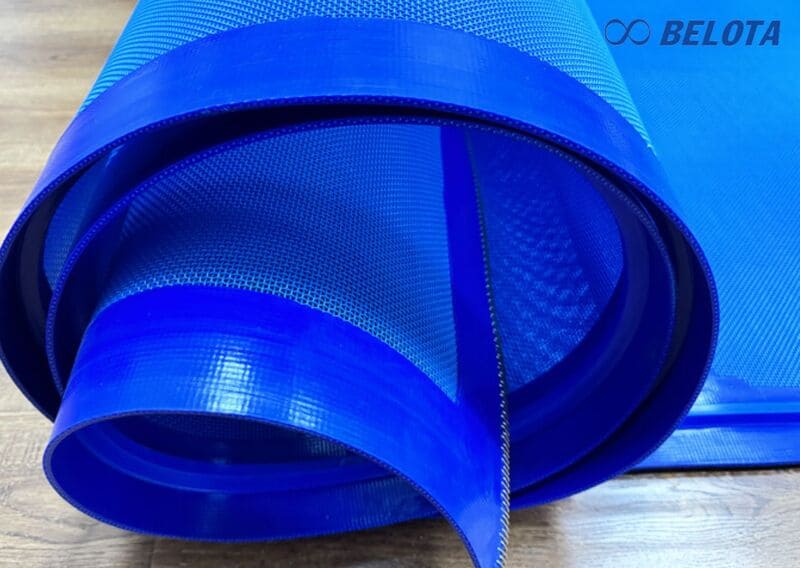
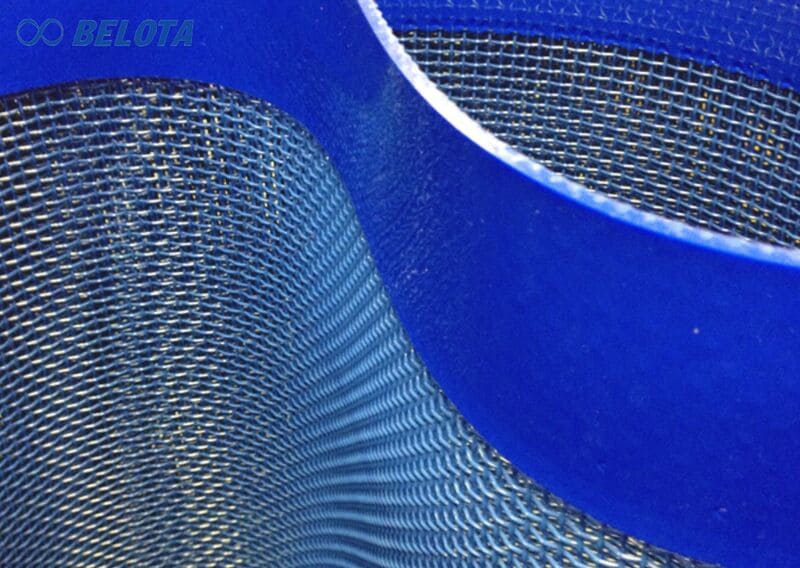
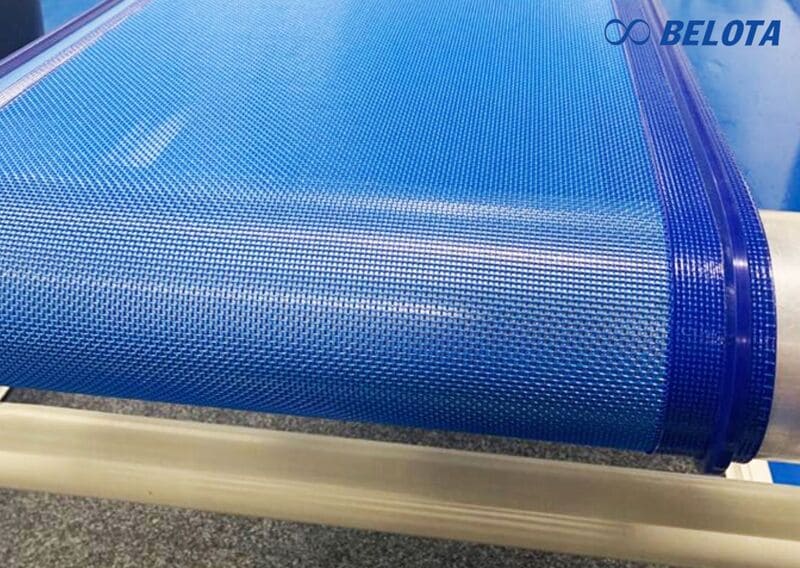
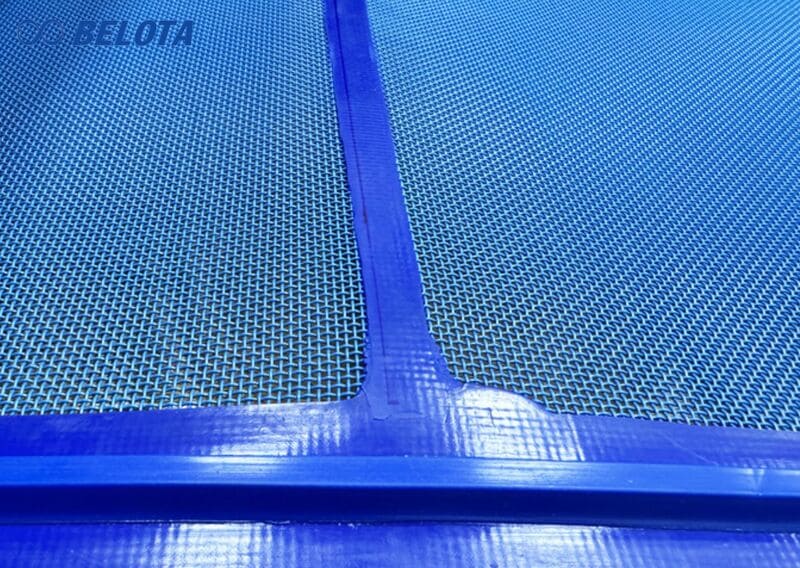
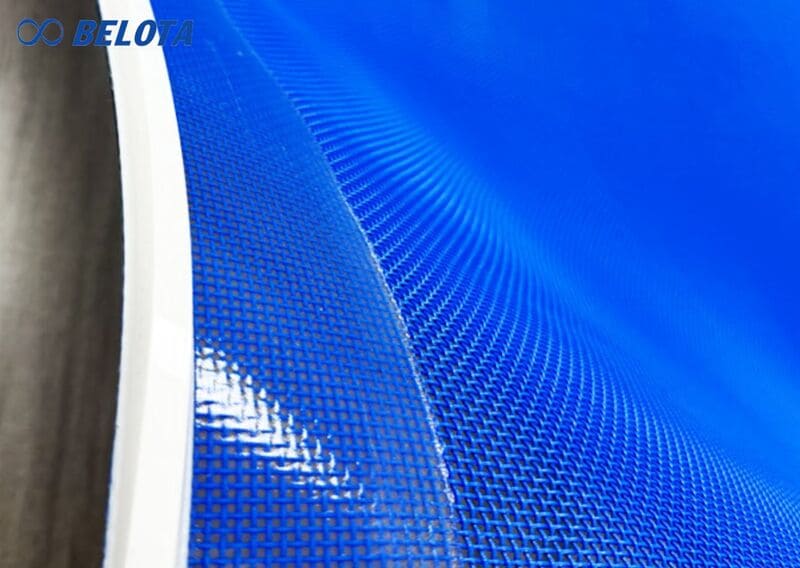
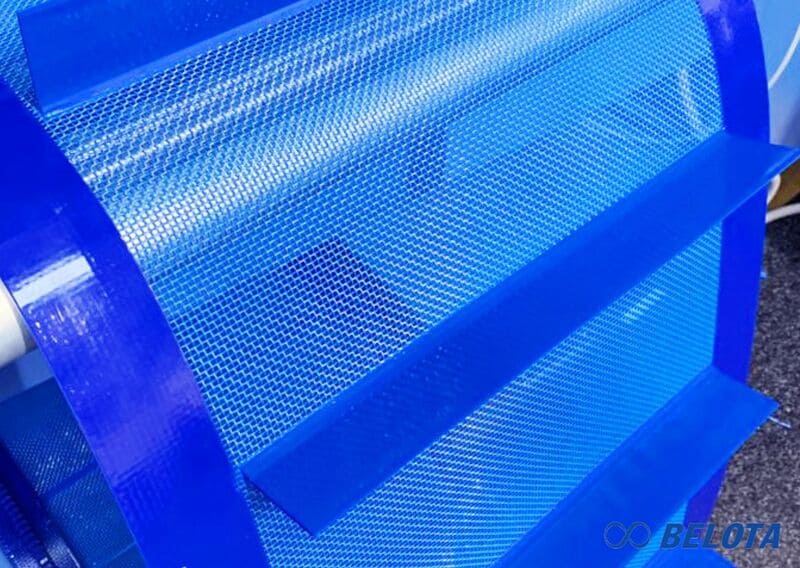
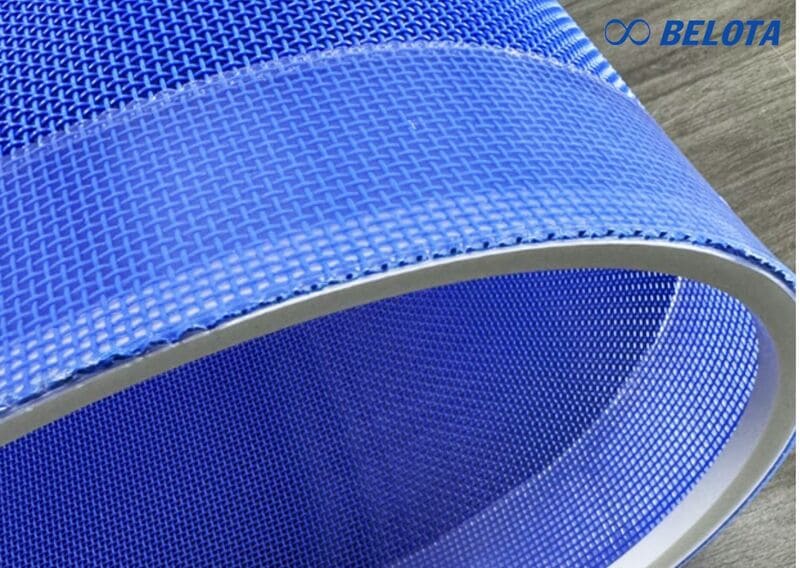
The enclosed edge polyester mesh conveyor belt is made from polyester monofilament mesh with heat-sealed TPU or PVC edges, helping reinforce the belt edges, reduce fraying and provide efficient drainage. With an open, breathable structure and flexible customization options, this type of mesh conveyor belt is suitable for food processing, washing, dewatering and industrial applications. So, what is an enclosed edge polyester mesh conveyor belt, how is it constructed, and where is it used? Let’s take a closer look below.
What Is an Enclosed Edge Polyester Mesh Conveyor Belt?
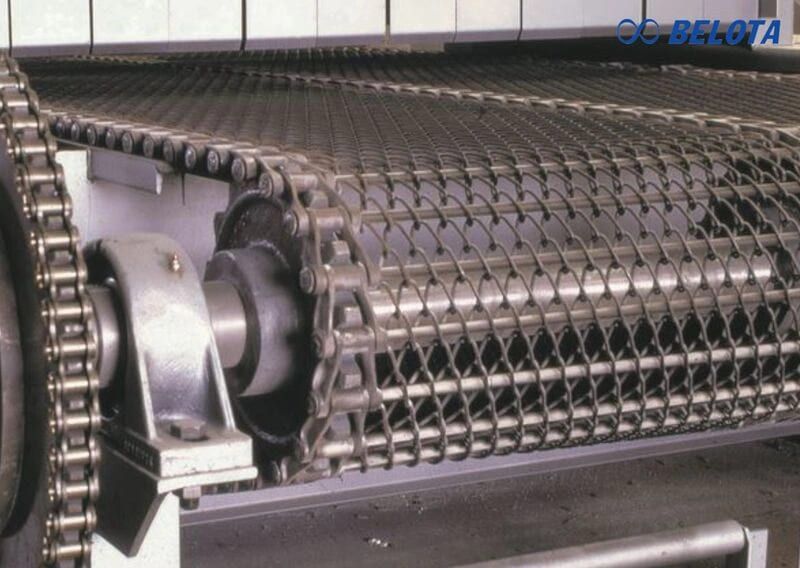
An enclosed edge polyester mesh conveyor belt is a conveyor belt woven from polyester monofilament yarn in an open mesh structure, with the belt edges reinforced and sealed with TPU or PVC. This design helps prevent fraying and loose fibers along both edges while improving dimensional stability and durability during continuous operation.
Thanks to its good drainage performance, breathable surface and flexible construction, this polyester mesh conveyor belt is widely used for washing fruits and vegetables, food dewatering, seafood processing, food production, sludge filtration and wastewater treatment.
Construction of an Enclosed Edge Polyester Mesh Conveyor Belt
An enclosed edge polyester mesh conveyor belt typically consists of:
- Polyester monofilament mesh: Woven in an open structure to allow water drainage, filtration and airflow.
- TPU or PVC sealed edges: Heat-sealed along both belt edges to reduce fraying, reinforce the belt and support hygienic cleaning.
- Crosswise reinforcement: Available as an option to improve tear resistance and dimensional stability.
- Custom accessories: V-guides can be added for tracking, while cleats help hold products on inclined conveyors.
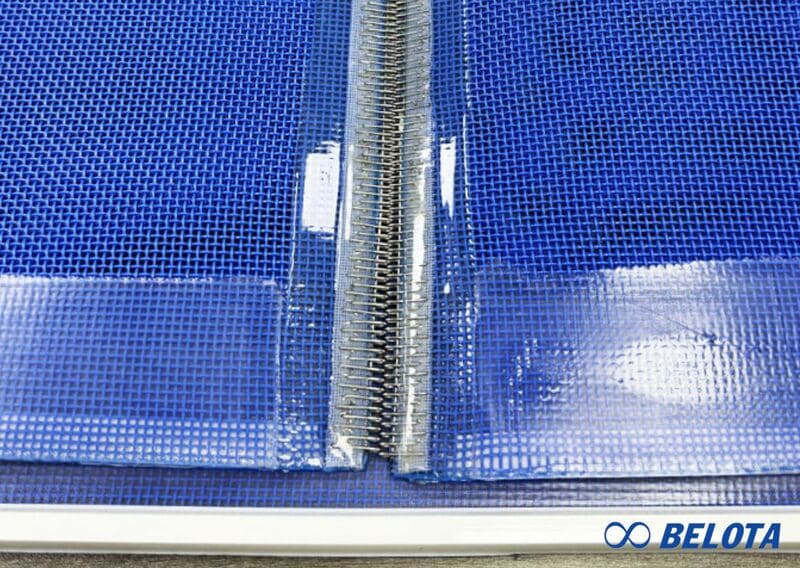
- Belt joining: Available as an endless belt or with mechanical joining systems, depending on installation requirements.
Benefits of Heat-Sealed Belt Edges
Heat-sealed TPU or PVC edges protect the edges of the polyester mesh belt, helping reduce damage and making the belt easier to maintain and clean.
- Helps prevent contamination: The sealed edge reduces the penetration of moisture, oil, dirt and other contaminants into the belt edge.
- Reduces fraying and loose fibers: The exposed yarn ends are enclosed, minimizing the risk of fibers becoming loose during operation.
- Supports drainage and cleaning: The reinforced edges work with the open mesh structure to facilitate washing and drainage.
- Maintains flexibility: The sealed edge can flex with the belt as it runs around pulleys and rollers, helping reduce cracking or peeling during continuous operation.
Technical Specifications
- Mesh material: Polyester monofilament
- Edge material: TPU or PVC
- Edge reinforcement: Heat sealing
- Surface structure: Open mesh
- Yarn diameter: 0.45–1.0 mm
- Standard mesh configurations: 21 types
- Belt width: 300–12,000+ mm
- Longitudinal tensile strength: Up to 1,600 N/cm
- Transverse tensile strength: Approx. 650 N/cm
- Air permeability: Up to 32,000 m³/m²/h
- Open area: Depends on mesh design and opening size
- Joining options: Endless, finger splice or mechanical splice
- Available options: Cleats, V-guides and crosswise reinforcement
Advantages of an Enclosed Edge Polyester Mesh Conveyor Belt
- Efficient drainage: The open mesh structure provides air and liquid permeability of up to 32,000 m³/m²/h, supporting efficient dewatering and drying.
- Reduced fraying: TPU or PVC edge sealing protects the belt edges and minimizes loose or frayed fibers.
- Good durability and stability: Polyester monofilament provides good dimensional stability for continuous conveyor operation.
- Easy to clean: The open mesh surface allows water and cleaning solutions to pass through easily, helping simplify routine washdown.
- Flexible customization: Mesh opening, belt width, edge material and joining method can be customized to suit different conveyor systems.
- Suitable for food applications: TPU-edged versions can meet applicable food-contact requirements under FDA 21 CFR and EC 1935/2004.
- Wide range of applications: Suitable for filtration, washing, dewatering, cooling and conveying in food processing and industrial applications.
Common Types of Enclosed Edge Polyester Mesh Conveyor Belts
Enclosed edge polyester mesh conveyor belts can be classified by edge material, mesh construction and application. Common configurations include:
Polyester Mesh Conveyor Belt with TPU Edges
This type uses heat-sealed TPU edges along both sides of the belt. TPU offers good flexibility and helps reduce edge fraying, making it well suited to hygienic applications such as fruit and vegetable washing, food processing, seafood and dairy production.
Polyester Mesh Conveyor Belt with PVC Edges
This version features PVC-reinforced edges with good rigidity and resistance to oils and grease. It is commonly used for dewatering, filtration, wastewater treatment and general industrial conveying.
Polyester Mesh Conveyor Belt with Crosswise Reinforcement
In addition to sealed edges, crosswise reinforcement can be added to improve tear resistance and dimensional stability. This configuration is particularly useful for wide belts and higher-tension conveyor systems.
Polyester Mesh Conveyor Belt with V-Guides
A V-guide is attached to the underside of the belt to help maintain proper tracking and reduce lateral belt movement during operation.
Polyester Mesh Conveyor Belt with Cleats
Cleats are added to the belt surface to help retain products and prevent them from sliding backward when conveying on inclined sections.
Applications of Polyester Mesh Conveyor Belts with Sealed Edges
Polyester mesh conveyor belts with sealed edges are used for filtration, washing, dewatering, drainage, drying and cooling. Their open mesh structure, combined with TPU or PVC edge reinforcement, makes them suitable for food processing, water treatment and general industrial applications.
Fruit and Vegetable Processing
- Washing whole or cut fruits and vegetables.
- Removing excess water after washing, soaking or blanching.
- Draining and drying produce before packaging.
- Sorting and conveying fresh produce on horizontal or inclined conveyors.
Pasta, Bakery and Ready-to-Eat Foods
- Drying pasta and noodles.
- Cooling bread, biscuits and baked goods.
- Conveying products through proofing, baking or cooling processes.
- Use in cooling and freezing conveyor systems.
Fish and Seafood Processing
- Conveying products through washing and brine-soaking processes.
- Removing excess water after ice soaking or washing.
- Conveying products through smoking, drying or cooling stages.
- Thawing and chilling frozen seafood on production lines.
Dairy and Food Processing
- Dewatering during cheese production.
- Filtering whey and other dairy by-products.
- Conveying products in areas requiring frequent hygienic cleaning.
- Processing butter, ice cream and yogurt.
Environmental and Wastewater Treatment
- Dewatering and filtering industrial sludge.
- Drainage in wastewater treatment systems.
- Filtering industrial wastewater and leachate.
- Drainage applications in mining and mineral washing.
General Industrial Applications
- Drying, cooling and industrial heat-treatment processes.
- Screening and conveying particles, flakes and powdered materials.
- Washing and draining industrial components.
- Dewatering aggregates, gravel, stone and minerals after washing.
Frequently Asked Questions
What is the difference between TPU-edged and PVC-edged polyester mesh conveyor belts?
TPU edges offer better flexibility, hydrolysis resistance and suitability for hygienic applications, particularly in food processing. PVC edges are generally more rigid and cost-effective, making them suitable for dewatering, filtration and general industrial applications. Both options are heat-sealed to help prevent edge fraying.
Can the belt size be customized?
Yes. The belt can be customized in terms of width, length, mesh opening, weave density and edge material. Additional options such as cleats, V-guides, crosswise reinforcement and different joining methods can also be specified to suit the conveyor system.
What joining methods are available?
Depending on the application, the belt can be supplied as an endless belt, finger-spliced belt or mechanically joined belt. For applications with strict hygiene requirements, endless or non-metallic joining methods are often preferred. Mechanical splices can be useful where quick installation and belt replacement are important.
How should the polyester mesh conveyor belt be cleaned and maintained?
The smooth monofilament surface and open mesh structure make the belt easy to clean with water, brushes or a CIP system, depending on the application. Regularly inspect the sealed edges, splice areas and accessories such as V-guides for signs of peeling, wear or damage.
Belota Supplies Enclosed Edge Polyester Mesh Conveyor Belts
Belota supplies enclosed edge polyester mesh conveyor belts made with polyester monofilament mesh and TPU or PVC reinforced edges for filtration, washing, dewatering, drainage, drying and cooling applications. The heat-sealed edges help minimize fraying, reinforce the belt edges and support easier cleaning during operation.
The belts can be customized with different mesh openings, widths, lengths, edge materials and joining methods, as well as V-guides, cleats and crosswise reinforcement. Belota provides suitable configurations for food processing, seafood, dairy, fruit and vegetable processing, wastewater treatment and general industrial applications.
Conclusion
Enclosed edge polyester mesh conveyor belts offer efficient drainage, good dimensional stability and reinforced edges that help reduce fraying and contamination. With customizable mesh sizes, edge materials and belt configurations, they can be adapted to a wide range of food processing, wastewater treatment and industrial conveying applications.