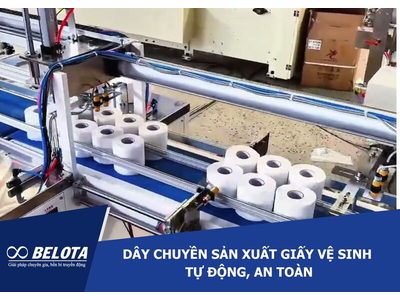
Conveyor transfer mechanisms help change the movement direction of products continuously, smoothly, and in synchronization with the entire production line. In real-world operations, choosing the right transfer solution not only affects material handling speed but also determines factory layout optimization, automation capability, and long-term operating costs.
In this article, Belota provides a detailed technical overview of conveyor transfer mechanisms, including working principles, common types, selection criteria, and practical implementation experience to help businesses make more informed investment decisions.
What Is a Conveyor Transfer Mechanism?
A conveyor transfer mechanism is a combination of mechanical and control devices used to change the moving direction of products within a conveyor system. This mechanism connects production processes, distributes products between lines, and optimizes factory operation layouts.
Depending on the system design, transfer mechanisms can handle different angles such as 30°, 45°, 90°, or 180°. Common solutions today include roller transfers, curved belt conveyors, ball transfer tables, rotary transfer systems, and automated transfer mechanisms integrated with PLC controllers and sensors.
Working Principle of Conveyor Transfer Mechanisms
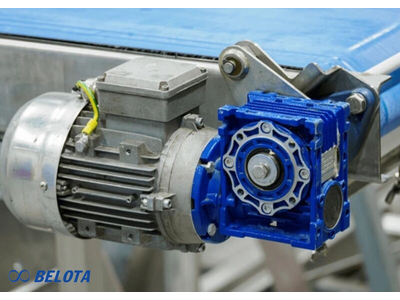
Conveyor transfer systems operate through drive motors combined with guiding components such as rollers, pulleys, or curved belts to redirect product movement.
During operation, the system must control speed, traction force, and product stability to prevent misalignment or product falling at transfer points. In automated production lines, photoelectric sensors and PLC systems help detect products, synchronize conveyor speeds, and ensure accurate transfer control.
Why Businesses Need Conveyor Transfer Systems
Optimizing Factory Space
Transfer conveyor systems help businesses maximize production floor space, especially in areas with limited layouts or dead corners. U-shaped, L-shaped, or curved conveyor layouts reduce overall conveyor length while maintaining continuous product flow.
Connecting Production Processes
In modern manufacturing, products must move continuously between processes such as machining, inspection, packaging, and shipping. Conveyor transfer mechanisms connect these operations, reduce manual handling, minimize congestion, and improve overall system stability.
Automatic Product Sorting & Merging
Besides changing direction, conveyor transfer systems can also sort and merge products between multiple production lines. This solution is widely used in warehousing, logistics, packaging lines, and automated sorting systems.
Common Types of Conveyor Transfer Mechanisms
Roller Conveyor Transfer
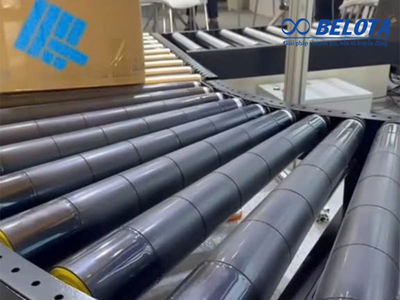
Roller transfer systems use tapered rollers to automatically center products while moving through curved sections.
Advantages:
- High load capacity
- Durable structure
- Easy maintenance
Applications: Pallets, heavy cartons, industrial warehouse systems.
Limitations: Not suitable for soft-bottom or very small products.
Curved Belt Conveyor
Curved belt conveyors use PVC or PU belts running along curved frames to transfer products smoothly and continuously.
Advantages:
- Stable product handling
- Quiet operation
- Reduced product shifting
Applications: Food processing, electronics, cosmetics, and high-speed production lines.
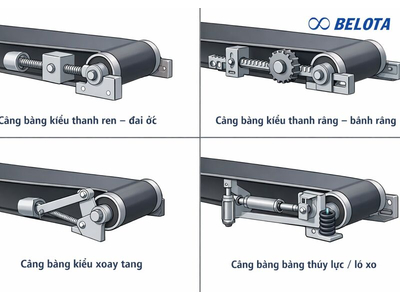
During design, factors such as belt tension, anti-misalignment systems, and turning radius must be carefully calculated.
Ball Transfer Mechanism
Ball transfer systems allow products to move flexibly in multiple directions.
Advantages:
- Flexible manual movement
- Easy product repositioning
Applications: Sorting areas, technical workstations, parcel handling, and packing zones.
Best suited for flat-bottom and lightweight products.
Rotary Transfer System
Rotary transfer mechanisms use servo-driven rotating platforms to turn entire conveyor sections at angles such as 90°, 180°, or 360°.
Advantages:
- Precise transfer positioning
- Full automation capability
- Integration with robots and AGV systems
Applications: Highly automated manufacturing lines.
Automatic Diverter System
Automatic diverter systems use pneumatic pushers or servo-controlled arms to transfer products from the main line to secondary lines.
Advantages:
- Fast response time
- Easy PLC integration
- Efficient product sorting
Applications: Logistics systems, inspection lines, and automated sorting systems.
Omni Wheel Transfer Mechanism
Omni wheel systems use multidirectional wheels to redirect products without stopping product flow.
Advantages:
- Smooth multidirectional movement
- Suitable for high-speed lines
- Fully automated operation
Applications: E-commerce warehouses and high-speed sorting centers.
Comparison of 6 Common Conveyor Transfer Mechanisms
| Transfer Mechanism | Load Capacity | Speed | Cost | Automation Level | Typical Applications |
|---|---|---|---|---|---|
| Roller Conveyor Transfer | Medium – High | Low – Medium | Low | Simple mechanical | Cartons, heavy pallets |
| Curved Belt Conveyor | Low – Medium | Medium – High | Medium | Semi-automatic | Food, pharmaceutical |
| Ball Transfer Mechanism | Low | Very low | Very low | Manual | Inspection & packing areas |
| Rotary Transfer System | Very high | Medium | High | Fully automatic | Robots, AGV integration |
| Automatic Diverter | Medium | Medium | Medium | Automated | Basic product sorting |
| Omni Wheel Mechanism | Low – Medium | Very high | High | Fully automatic | E-commerce warehouses |
Important Technical Factors in Conveyor Transfer Design
Proper Turning Radius Calculation
The turning radius directly affects product stability and belt lifespan. If the radius is too small, products may shift, friction increases, and belt wear accelerates. The radius must be calculated based on conveyor width, product size, and operating speed.
Centrifugal Force Control
At high speeds, centrifugal force can cause products to shift or fall from the conveyor. Solutions include reducing speed at curves, increasing turning radius, and installing side guides.
Belt Tracking & Anti-Misalignment Solutions
Belt misalignment is a common issue in conveyor transfer systems. Common solutions include:
- V-guide tracking systems
- Crown pulleys
- Uniform belt tension adjustment
Speed Synchronization Between Conveyor Lines
Differences in conveyor speed can cause product accumulation or interruptions. Many systems use inverters and encoders to synchronize conveyor speeds, especially in continuous production lines.
How to Choose the Right Conveyor Transfer Mechanism
Choosing the right transfer mechanism depends on product characteristics, industry requirements, and future automation plans.
- Lightweight or soft-bottom products are better suited for PVC/PU curved belt conveyors.
- Heavy products such as pallets or large cartons are more suitable for roller transfers or rotary systems.
Each industry also has different material and operational requirements:
- Food industry: Stainless steel frames and hygienic PU belts
- Electronics industry: Anti-static materials
- Logistics industry: High-speed sorting capability
Businesses should also consider future automation expansion, including PLC integration, robots, and AGV systems.
In addition to initial investment costs, long-term maintenance expenses, component lifespan, and operational stability should also be evaluated.
Common Problems in Conveyor Transfer Systems
- Product Jamming at Transfer Points: Usually caused by speed differences between conveyor lines or large transfer gaps. Speed synchronization and optimized transition design help prevent jams.
- Belt Misalignment at Curves: Often caused by uneven belt tension, incorrect turning radius, or worn guide components. Regular inspection and maintenance are essential.
- Product Falling During High-Speed Transfers: High centrifugal force at curves may cause products to shift or fall. Common solutions include speed reduction and side guide installation.
- Excessive Wear at Transfer Sections: Transfer zones experience high friction and are more prone to wear. Regular inspection of rollers, belts, and sliding components is necessary to maintain system lifespan.
Belota – Custom Conveyor Transfer Solutions
Belota provides custom conveyor transfer design, fabrication, and integration solutions based on the actual operational requirements of each business.
Our solutions include:
- Roller transfer conveyors
- Curved belt conveyors
- Automatic diverter systems
- Rotary transfer tables
- Lift-and-transfer systems
All systems are synchronized with existing production lines to ensure stable operation and optimized factory layouts.
Besides design and installation, Belota also supports businesses with operational cost evaluation, equipment lifespan optimization, and reduced production downtime.
Frequently Asked Questions
Does an automatic transfer system require sensors?
Answer: Yes. Systems such as automatic diverters and rotary transfers require photoelectric sensors to detect product positions and send signals to the PLC controller.
How can product falling be minimized during high-speed transfers?
Answer: Three important factors should be considered:
- Install strong side guides
- Use inverters to reduce speed at transfer points
- Design sufficient turning radius to reduce centrifugal force
How long does it take Belota to install a conveyor transfer system?
Answer: Depending on system complexity, the average implementation time ranges from 2 to 4 weeks from site survey to full operation. Belota is committed to minimizing production downtime during installation.
Conclusion
Choosing the right conveyor transfer solution helps businesses optimize production space, maintain stable product flow, and improve overall automation efficiency. Each solution should be evaluated based on load capacity, operating speed, product characteristics, and future scalability.
Belota provides consultation, design, and integration of conveyor transfer systems tailored to each factory’s actual operating conditions. Contact Belota today for a customized conveyor transfer solution that fits your business needs.