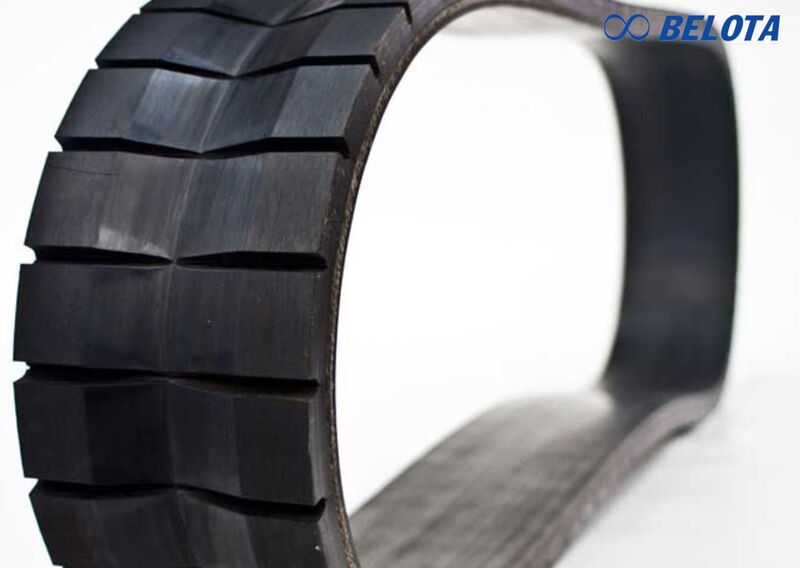
Cable Haul-off Belts are essential components in the pulling units of cable manufacturing, plastic pipe extrusion, and profile extrusion lines. Designed to grip and continuously pull products through friction, these belts must provide reliable traction, high tensile strength, and excellent wear resistance. In this article, Belota explores the construction, technical advantages, specifications, and applications of these specialized industrial belts.
What Is a Cable Haul-off Belt?
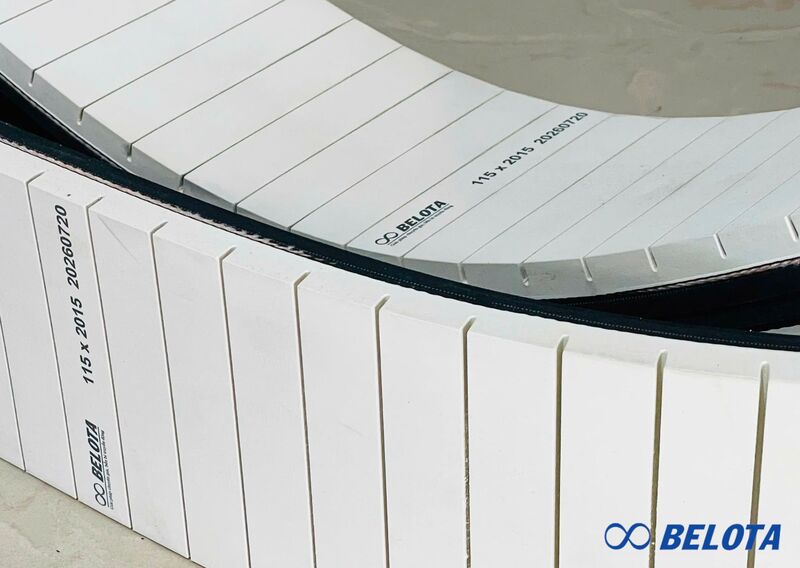
A Cable Haul-off Belt, also known as a Cable Puller Belt or Extrusion Haul-off Belt, is a specialized industrial belt installed in the haul-off or puller unit of cable manufacturing and plastic extrusion lines.
These belts are typically installed in opposing pairs to grip and continuously pull products after extrusion or forming. This helps maintain a consistent line speed, minimize slippage, and ensure smooth product movement throughout the production process.
Construction of Cable Haul-off Belts
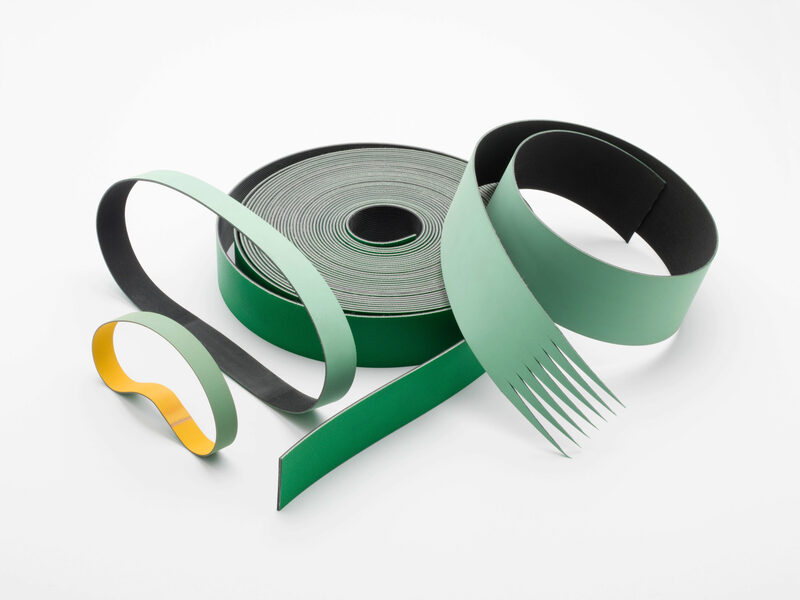
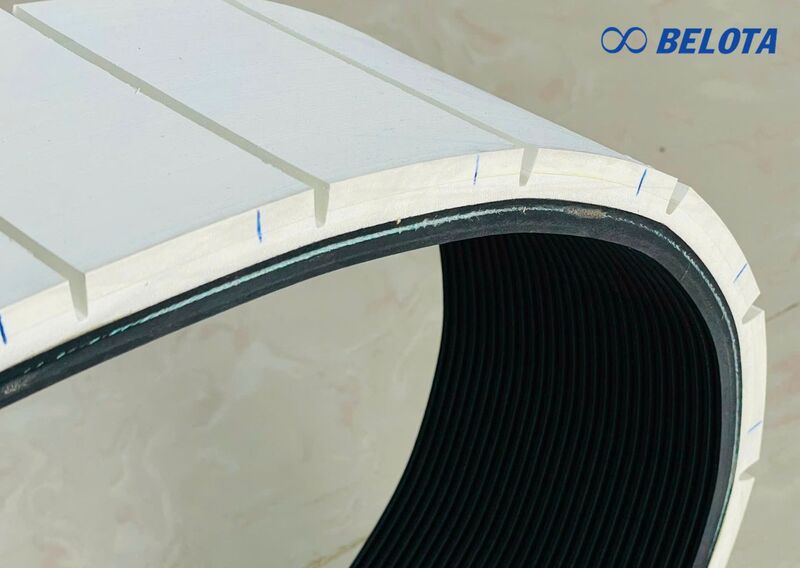
Cable haul-off belts typically consist of an outer cover and an internal reinforcement carcass. Each component serves a specific purpose, providing traction, tensile strength, and operational stability.
- Cover Layer: Usually made of synthetic rubber or polyurethane (PU), the cover comes into direct contact with cables, pipes, or extruded profiles to provide friction and prevent slippage.
- Reinforcement Carcass: Made from polyester, nylon, aramid fibers, or steel cords, depending on the belt design. It provides tensile strength and minimizes elongation during operation.
- Bonding and Reinforcement Layers: Some belts use Thermal Bonding technology to improve adhesion between the cover and carcass. The belt edges may also be fabric-wrapped to prevent fraying.
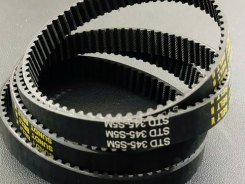
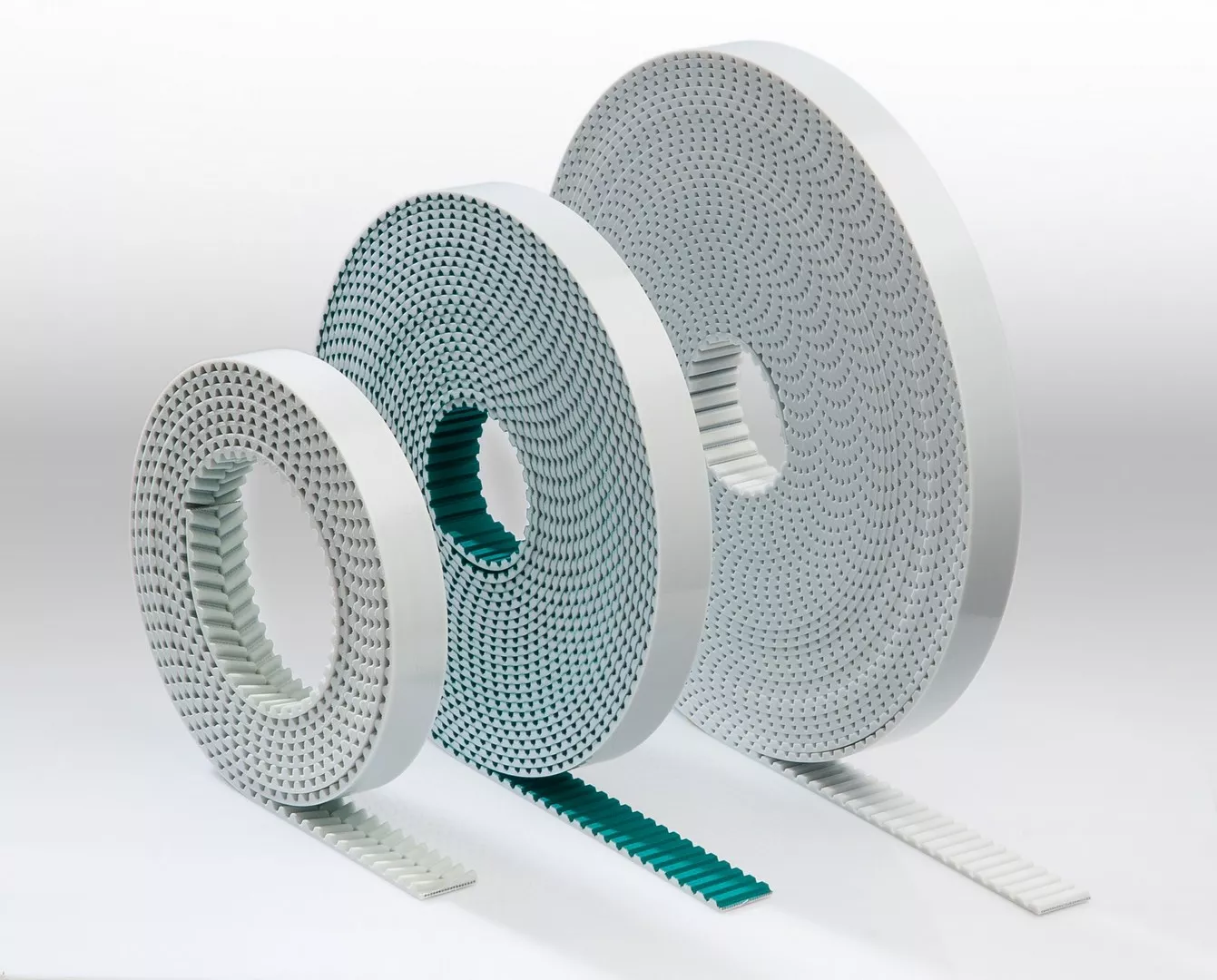
- Belt Profile: Available in flat, timing, Poly-V, or multi-rib configurations, depending on the puller design and traction requirements.
- Truly Endless Construction: Certain belt types are manufactured as seamless, molded endless belts without joints or adhesive splices, eliminating potential weak points at the joint.
Technical Advantages of Cable Haul-off Belts
- Reliable Traction and Heat Resistance: Synthetic rubber or urethane covers provide friction against cables and plastic pipes while offering wear and heat resistance, depending on the material.
- High Tensile Strength and Low Elongation: Reinforcement materials such as steel cords, aramid, or polyester combined with nylon help withstand high pulling forces and maintain dimensional stability at high operating speeds.
- Improved Edge Protection and Longitudinal Stability: Fabric-wrapped edges and specialized reinforcement fabrics help prevent edge fraying and longitudinal splitting under high compressive loads.
- Strong Cover-to-Carcass Bonding: Thermal Bonding technology improves adhesion between the rubber or urethane cover and the belt carcass, reducing the risk of cover delamination.
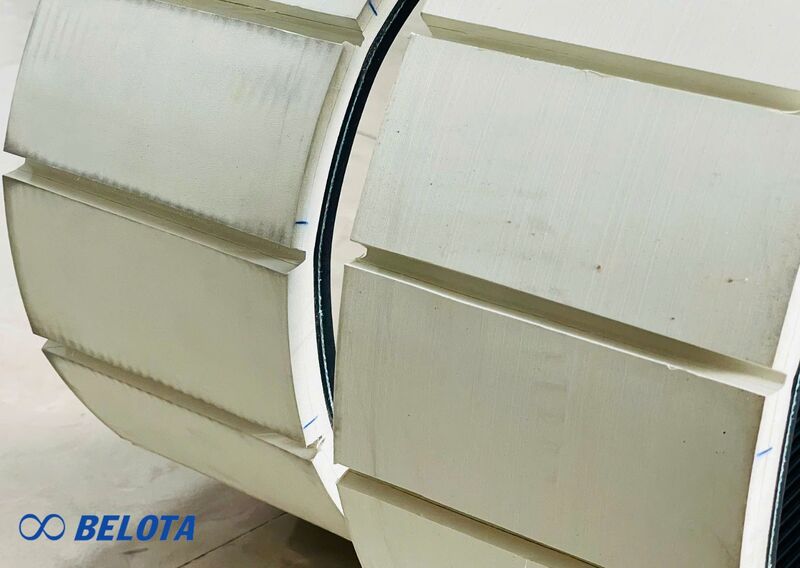
- Precision-Engineered Surface: Belts can be precision-ground, grooved, or custom-profiled to improve contact with the product being pulled.
- Flexible Belt Configurations and Dimensions: Available with flat, timing, Poly-V, or banded V-belt constructions. Belt width, thickness, and length can be customized to suit individual haul-off units.
Technical Specifications of Cable Haul-off Belts
Cable haul-off belt specifications vary depending on the pulling unit design, required pulling force, and product type. The following are typical reference specifications:
- Cover Material: Grey/black synthetic rubber or urethane.
- Reinforcement Material: Steel cords, aramid, polyester, or nylon-reinforced fabric.
- Hardness: 55–65 Shore A.
- Belt Width: 10–550 mm or custom-made.
- Belt Thickness: 8–25 mm or according to design.
- Operating Temperature: Up to approximately 120°C, depending on the belt type.
- Belt Types: Flat, Timing, Poly-V, Micro-V, and Banded V belts.
- Construction: Spliced or Truly Endless.
- Surface Finish: Precision-ground, textured, grooved, or custom-profiled.
Note: These specifications are for reference only. Actual values depend on the manufacturer, belt construction, and operating conditions.
Applications in Extrusion and Cable Pulling Lines
Depending on the production process, product type, and operating requirements, cable haul-off belts are used in various industrial applications:
- Plastic Pipe Extrusion Lines: Pull PVC, PE, and HDPE pipes after the extrusion die and cooling tank, maintaining a consistent pulling speed while minimizing pipe deformation and dimensional variations.
- Electrical Cable Extrusion Lines: Pull electrical wires, copper conductors, and aluminum conductors through insulation and jacketing processes, ensuring continuous product movement.
- Wire and Metal Drawing Lines: Assist in pulling metal wires and conductors through processing stages, depending on the machine configuration and required pulling force.
- Plastic Profile Extrusion Lines: Pull extruded profiles such as plastic window frames, trims, and other shaped plastic products, helping maintain line speed and product shape.
Belota - Supplier of Quality Cable Haul-off Belts at Competitive Prices
Belota supplies specialized cable haul-off belts for plastic extrusion machines, cable pulling machines, and industrial production lines. Various options are available in cover materials, reinforcement structures, hardness levels, and surface profiles to meet different pulling force requirements and operating conditions.
When sourcing cable haul-off belts from Belota, customers receive support with:
- Product Selection: Technical consultation based on machine models, belt dimensions, and the characteristics of the products being pulled.
- Custom Belt Fabrication: Support in selecting belt length, width, thickness, and construction to suit specific machine requirements.
- Multiple Belt Configurations: A range of belt materials and designs to meet different industrial applications.
- Clear Quotations: Suitable solutions based on operating requirements and budget.
Belota focuses on supplying suitable belt solutions for each machine system, helping customers optimize replacement costs and maintain stable production operations.
Contact Belota via Hotline/Zalo at 0917 657 946 for technical consultation and a quotation based on your actual belt specifications.
Conclusion
Cable Haul-off Belts play an important role in maintaining consistent pulling force and operating speed in plastic extrusion, electrical cable manufacturing, and metal wire drawing lines. Selecting the right cover material, reinforcement carcass, hardness, and dimensions helps minimize slippage, reduce wear, and meet the requirements of each machine. Contact Belota for technical advice and a quotation for cable haul-off belts tailored to your application.