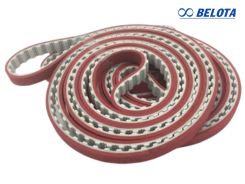
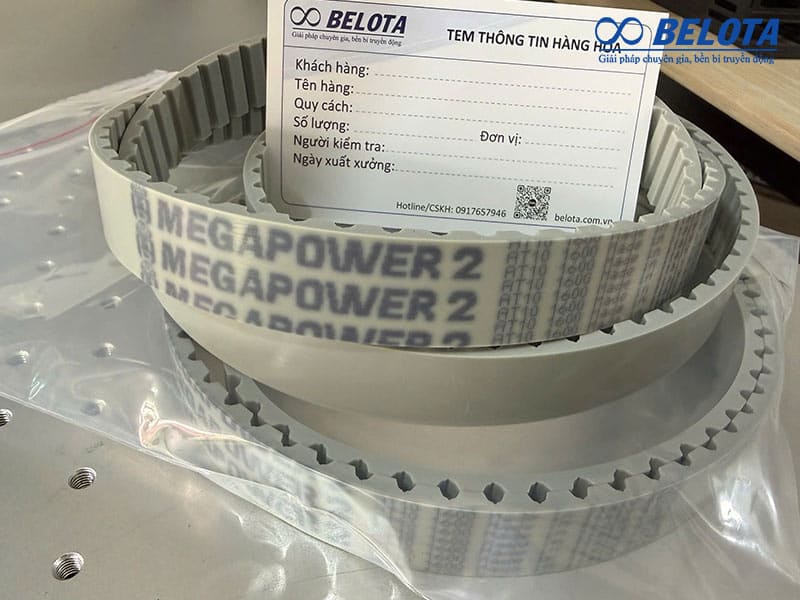
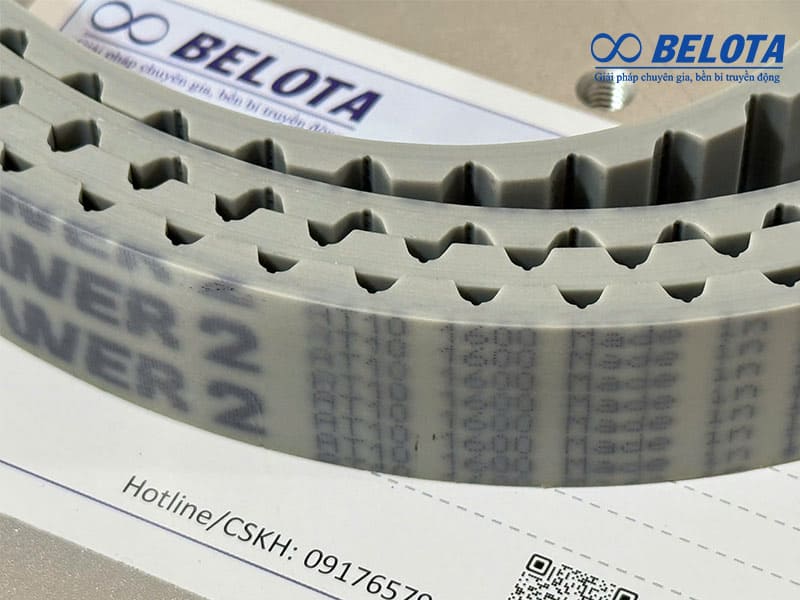
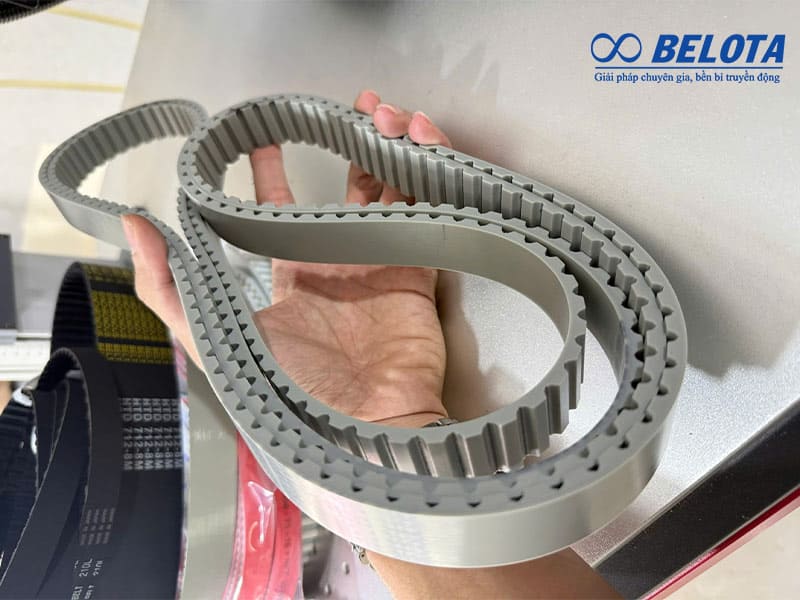
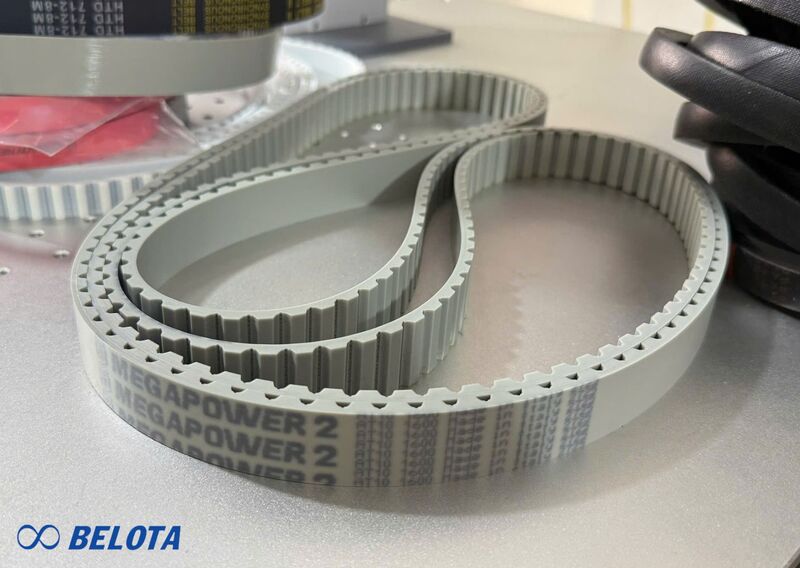
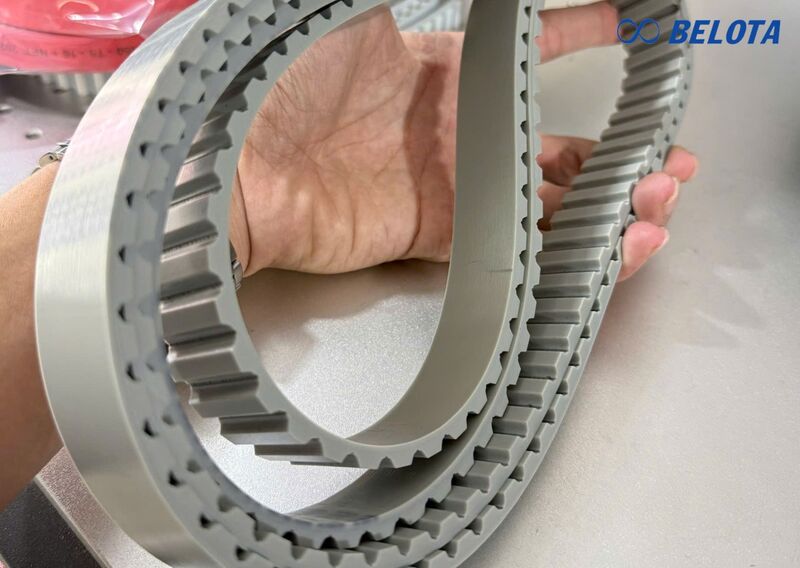
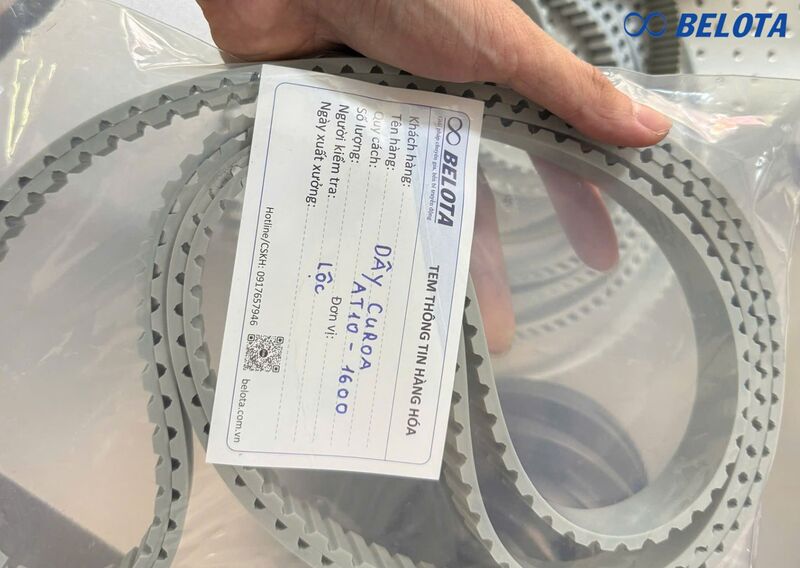
AT10 timing belt is a Metric-standard PU timing belt with a 10 mm tooth pitch, specifically designed for precise power transmission in machinery systems requiring high synchronization and heavy load capacity. Thanks to its improved trapezoidal tooth profile combined with high-strength tensile cords, the AT10 belt has become one of the most widely used solutions in industrial conveyors, CNC machines, packaging systems, and automation equipment in Vietnam.
What Is an AT10 Timing Belt?
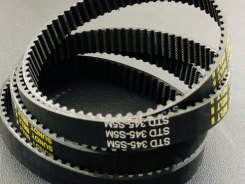
The AT10 timing belt belongs to the Metric PU timing belt series (AT Series), where the number “10” represents a 10 mm tooth pitch. The AT profile was developed as an improved version of the T10 series, featuring a wider tooth geometry that increases the contact surface between the belt teeth and the pulley. This design significantly improves torque transmission, load capacity, and operational stability.
With this optimized structure, AT10 drive systems provide more accurate motion transmission, reduce slippage, and maintain a stable transmission ratio. In many industrial applications, traditional V-belts or flat belts can be replaced by AT10 timing belts and synchronous pulleys to eliminate slipping and ensure synchronized movement throughout the production line.
Structure of the AT10 Belt
The AT10 timing belt is constructed with multiple material layers to ensure durability, load resistance, and stable performance during operation.
Belt Body Material
The belt body is commonly manufactured from synthetic rubber or polyurethane (PU). These materials offer high mechanical strength, excellent wear resistance, and the ability to withstand various working environments.
Thanks to their suitable elasticity, these materials help maintain stable operation in continuous industrial applications.
Tensile Cord Layer
Inside the belt is a tensile cord layer that increases pulling strength and minimizes elongation during operation. Common tensile materials include:
- Steel cords
- Fiberglass cords
- Kevlar cords
The tensile layer plays a crucial role in maintaining transmission accuracy, especially in systems requiring high synchronization. For heavy-duty and highly synchronized applications, PU Steel Cord Timing Belt is commonly used in CNC machines, synchronized conveyors, and industrial automation systems.
Tooth Profile
The belt teeth are designed in a trapezoidal shape with a 10 mm pitch. This structure increases the contact area between the belt and pulley, improving power transmission efficiency while reducing wear during operation.
How to Read AT10 Belt Specifications
A standard AT10 belt code (example: AT10 – 50 – 1000) can be interpreted as follows:
| Component | Example | Detailed Meaning | Technical Notes |
|---|---|---|---|
| Tooth Profile | AT10 | Metric timing belt profile with 10 mm pitch | Wider trapezoidal tooth shape provides higher load capacity than T10 |
| Width | 50 | Belt width is 50 mm | Common widths: 16 mm, 25 mm, 32 mm, 50 mm, 75 mm, 100 mm |
| Length | 1000 | Total belt circumference is 1000 mm | For endless PU timing belts, this refers to the total loop length |
| Material | PU | Polyurethane material, usually white | Often reinforced with steel cords or Kevlar for higher durability and anti-stretch performance |
Understanding these specifications helps engineers and purchasing departments select the correct belt for their machinery systems.
Comparison Between AT10, T10, and HTD 10M Belts
| Criteria | T10 Series | AT10 Series | HTD 10M Series |
|---|---|---|---|
| Tooth Pitch | 10 mm | 10 mm | 10 mm |
| Tooth Profile | Trapezoidal | Improved trapezoidal | Curved (round profile) |
| Tooth Height | 3.5 mm | 4.5 mm | 4.3 mm |
| Load Capacity | Medium | High | High |
| Transmission Accuracy | Medium | Very High | Medium |
| Noise Level | Medium | Low | Low |
| Approximate Cost | Lowest | Medium | Highest |
| Interchangeability | No | No | No |
Important Technical Note
Although all three belt types share the same 10 mm pitch, they cannot be used interchangeably.
The reason is that each belt has a completely different tooth geometry.
Therefore, the pulley must be specifically designed to match the tooth profile of the corresponding belt type. For example, an AT10 belt can only operate correctly with an AT10 pulley.
Advantages of AT10 Timing Belts
Precise Power Transmission
AT10 timing belts transmit power through direct tooth engagement with the pulley, eliminating slippage commonly found in friction-based belt systems. This is especially important in applications requiring synchronized motion.
High Load Capacity
The wider tooth profile and reinforced tensile structure enable AT10 belts to withstand high pulling forces, making them suitable for heavy-duty industrial applications.
High Durability and Long Service Life
High-quality materials and multi-layer construction provide excellent wear resistance and stable long-term performance.
Stable and Quiet Operation
Compared with many conventional transmission systems, AT10 belts operate smoothly with reduced vibration and lower noise levels.
Industrial Applications of AT10 Timing Belts
Thanks to their precise transmission characteristics and durability, AT10 timing belts are widely used in various industrial machines and production systems.
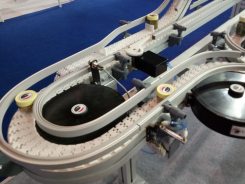
- Industrial conveyors: Used in synchronized conveyor systems to ensure stable transmission between shafts and continuous production line operation.
- CNC machines and automation equipment: Provide precise movement and synchronization for stable machining performance.
- Packaging machinery and production lines: Help synchronize machine components to maintain speed and operational efficiency.
- Printing and precision processing equipment: Commonly applied in industrial printers, cutting machines, and precision manufacturing systems requiring stable movement and high accuracy.
Criteria for Selecting the Right AT10 Timing Belt
- Determine System Load Requirements: Businesses should calculate pulling force and transmission torque to select a belt with suitable load capacity.
- Consider Working Environment: Environmental conditions such as oil exposure, dust, humidity, or high temperatures can affect belt lifespan. Selecting the appropriate belt material is essential for durability.
- Choose Proper Belt Dimensions: The belt length and width must match the pulley design and shaft center distance within the transmission system.
Conclusion
AT10 timing belts provide stable transmission performance, high durability, and compatibility with a wide range of industrial machinery systems. Selecting the correct specifications helps businesses optimize operational efficiency while minimizing maintenance costs. If your business needs technical consultation or a reliable supplier for AT10 timing belts, contact Belota for professional support and fast quotations.