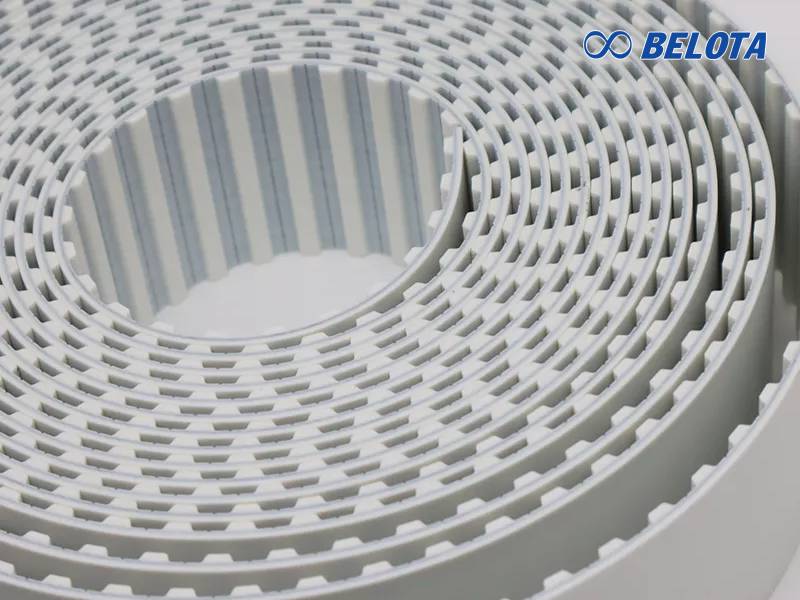
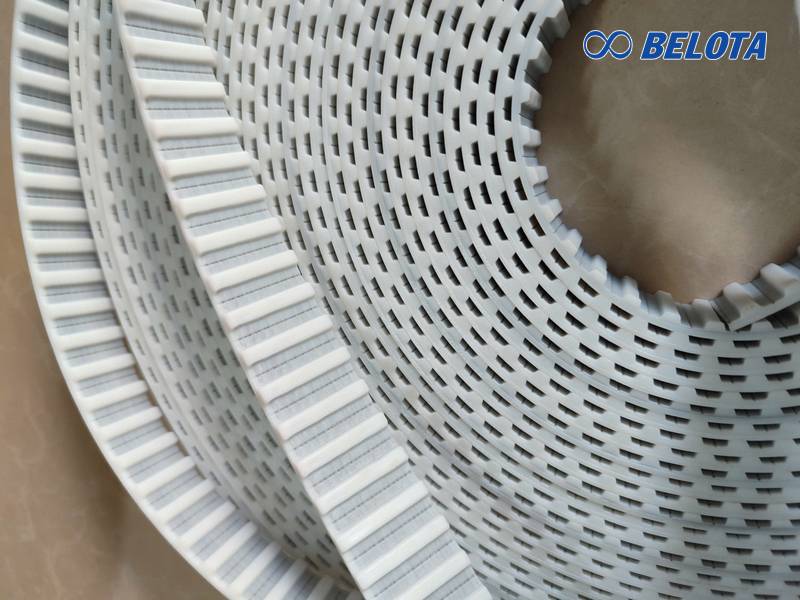
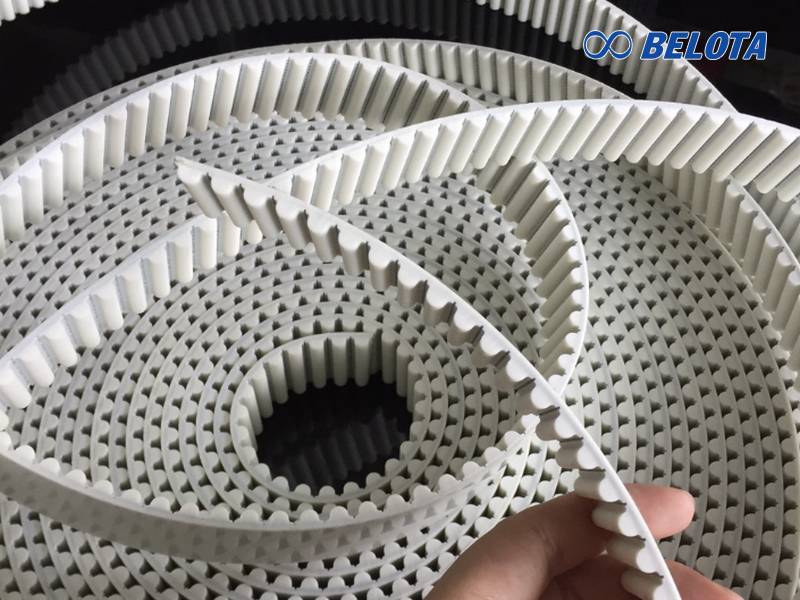
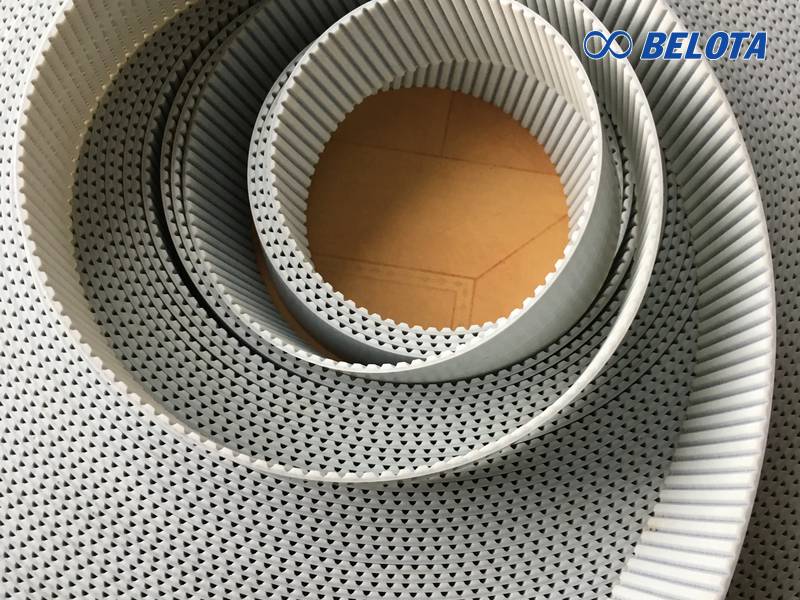
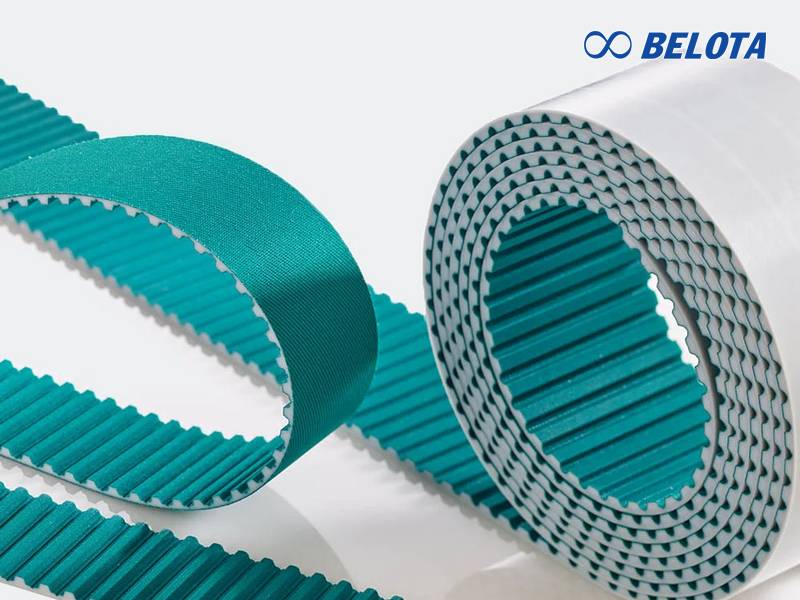
An open-end PU timing belt is a highly versatile power transmission belt that can be cut to virtually any required length, making it ideal for custom machinery and automation systems. Manufactured from wear-resistant thermoplastic polyurethane (PU) reinforced with steel or Kevlar tensile cords, this belt delivers exceptional dimensional stability, high positioning accuracy, and reliable performance in applications such as CNC machines, automated equipment, large-format printers, and automatic doors.
In this article, Belota explores the construction, advantages, technical specifications, and real-world applications of open-end PU timing belts, as well as why choosing a genuine product can significantly improve machine performance and service life.
What Is an Open-End PU Timing Belt?
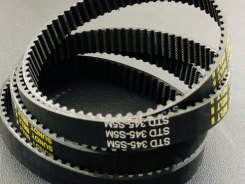
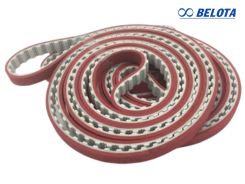
An open-end PU timing belt is a type of PU timing belt specifically designed for precision linear motion and synchronous power transmission. Unlike endless timing belts, this version features two open ends, allowing it to be cut to virtually any required length or fabricated into customized assemblies.
The belt is manufactured from thermoplastic polyurethane (PU) reinforced with high-strength steel, Kevlar (aramid), or polyester tensile cords, providing excellent wear resistance, minimal elongation, and outstanding transmission accuracy.
Because of its flexibility and customizability, open-end PU timing belts are widely used in automated machinery, packaging equipment, CNC systems, robotics, and linear positioning applications.
Key Advantages
Flexible Length Customization
The belt can be cut precisely to match machine requirements without being limited to pre-molded endless belt sizes. For example, a machine requiring a 30-meter belt can be produced directly from a continuous roll.
High Positioning Accuracy
Reinforced with steel or Kevlar tensile members, the belt offers extremely low elongation, ensuring accurate positioning in applications requiring precise linear movement, such as printers, CNC machines, robotics, and automation systems.
Versatile Installation Options
The belt can be clamped at both ends for linear motion systems or welded into an endless loop for conveyor applications, providing excellent flexibility across different industrial uses.
Excellent Durability
Thermoplastic polyurethane provides outstanding resistance to abrasion, oils, grease, and many mild industrial chemicals, significantly outperforming conventional rubber timing belts in demanding environments.
Technical Specifications
Belt Material: Thermoplastic Polyurethane (PU)
Tensile Cord Options:
- Steel Cord: Highest load capacity with minimal elongation; the most commonly used reinforcement.
- Kevlar (Aramid) Cord: Lightweight, corrosion-resistant, and non-magnetic, making it ideal for food processing, medical equipment, and cleanroom applications.
Tooth Profiles
Trapezoidal Profiles
- T5
- T10
- T20
Heavy-Duty Trapezoidal Profiles
- AT5
- AT10
- AT20
Curvilinear Profiles
- HTD 3M
- HTD 5M
- HTD 8M
- HTD 14M
Belt Widths
Available in custom widths, including:
- 10 mm
- 15 mm
- 20 mm
- 25 mm
- 30 mm
- 50 mm
- 100 mm
- Other widths upon request
Operating Temperature: -5°C to +80°C
Optional Surface Coatings
To meet specialized application requirements, Belota also offers PU timing belts with various engineered surface coatings.
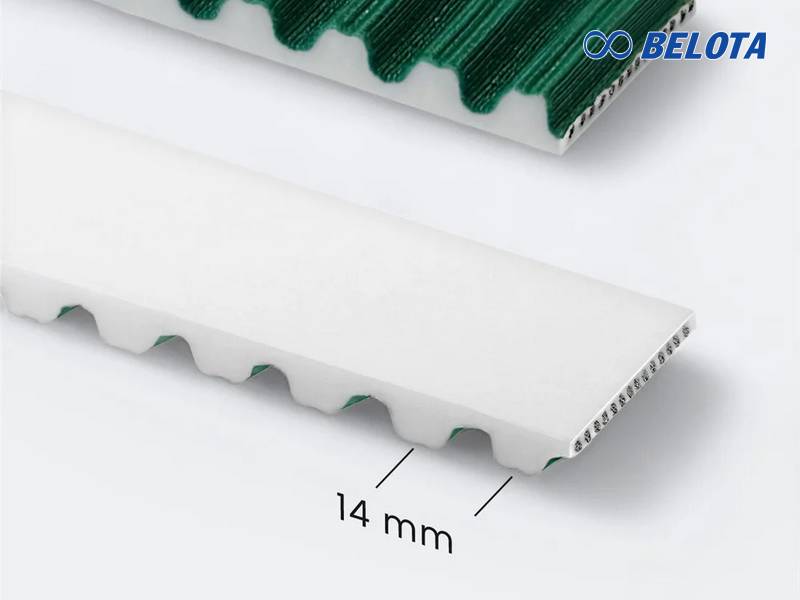
Green Tooth Fabric (NFT / PAZ)
A nylon fabric bonded to the tooth surface reduces friction, minimizes operating noise, and extends belt life in high-speed applications.
Green Back Fabric (NFB / PAR)
A low-friction nylon fabric applied to the back of the belt reduces sliding resistance when operating over guide rails or support surfaces.
Red Linatex Rubber Covering
A high-friction natural rubber coating applied to the belt back improves product grip, making it ideal for packaging machines, conveying systems, and product handling applications.
Typical Applications
Open-end PU timing belts are widely used across numerous industries.
- Automatic Door Systems: Used as drive belts for sliding glass doors, commonly utilizing S8M or 8M tooth profiles.
- Printing Equipment" Provides precise positioning of print heads in wide-format printers, digital printing machines, and photocopiers.
- CNC & Laser Machines: Drives X-Y linear motion systems in CNC routers, laser cutting machines, engraving machines, and 3D printers.
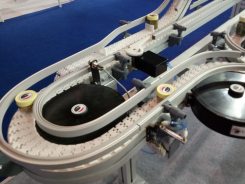
- Conveyor Systems: Can be welded into endless belts for lightweight conveyor applications requiring accurate synchronization.
- Glass & Ceramic Manufacturing: Used for conveying glass panels and ceramic tiles, often with T10 or AT10 profiles fitted with high-friction rubber coverings.
Where to Buy Open-End PU Timing Belts
If you're looking for high-quality open-end PU timing belts, whether supplied by the roll or cut to length, Belota offers a comprehensive range of premium products for industrial power transmission.
Belota distributes belts from globally recognized manufacturers, including:
- Megadyne
- Bando
- Optibelt
- Mitsuboshi
Why Choose Belota?
- Genuine products manufactured to international quality standards
- Premium polyurethane with high-strength steel or Kevlar tensile cords
- Large inventory of popular profiles including T5, T10, AT5, AT10, HTD 3M, 5M, and 8M
- Custom fabrication services, including cut-to-length belts, endless belt welding, rubber lagging, and cleat installation
- Fast nationwide delivery throughout Vietnam
- Professional technical consultation and after-sales support
Conclusion
An open-end PU timing belt offers an ideal combination of precision, durability, and flexibility for modern industrial automation. Its customizable length, excellent wear resistance, and minimal elongation make it the preferred solution for CNC machinery, robotics, printing equipment, automatic doors, and precision conveyor systems.
Whether you need standard belt rolls or custom-engineered solutions, choosing a genuine PU timing belt from a trusted supplier like Belota ensures reliable performance, longer service life, and lower maintenance costs over the lifetime of your equipment.