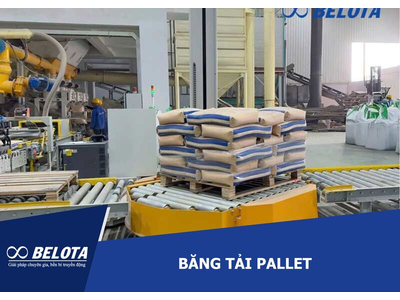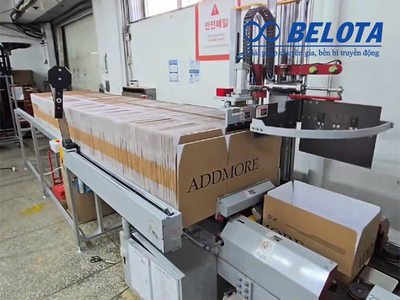
In today's manufacturing environment, accurately tracking production output is essential for inventory control, productivity monitoring, and on-time order fulfillment. However, manual counting methods often lead to human error, inconsistent results, and increased labor costs, especially as production volumes continue to grow. To overcome these challenges, many manufacturers are turning to automated product counting conveyor systems. By combining conveyor technology with advanced sensors and control systems, these solutions provide real-time product tracking, accurate counting, and seamless integration with factory automation platforms.
In this article, Belota explores how product counting conveyor systems work, their key advantages, practical applications, and important considerations when selecting the right solution for your production line.
What Is a Product Counting Conveyor System?
A product counting conveyor system is a conveyor-based automation solution equipped with sensors and control devices that automatically detect, count, and record products as they pass through a designated inspection point on the production line.
Depending on operational requirements, the system can perform various functions, including:
- Total product counting
- Batch counting
- Product grouping and classification
- Quantity target alerts
- Signal output to downstream equipment
These systems are widely used in food processing, beverage production, pharmaceuticals, electronics manufacturing, packaging operations, and distribution centers where accurate production tracking is critical.
Why Replace Manual Product Counting?
Many factories still rely on manual counting procedures. While this approach may work for low-volume operations, it becomes increasingly inefficient as production output grows. Compared with manual counting, an automated counting conveyor offers significant advantages in terms of accuracy, processing speed, data management, labor efficiency, and scalability.
| Comparison Criteria | Manual Counting | Automated Counting Conveyor |
|---|---|---|
| Accuracy | Prone to human error due to fatigue and distractions. | High accuracy with consistent performance and minimal human intervention. |
| Processing Speed | Limited by operator capability and workload. | Designed for continuous operation on high-speed production lines. |
| Continuous Operation | Depends on workforce availability and shift schedules. | Supports 24/7 operation across multiple production shifts. |
| Data Management | Requires manual recording and verification of data. | Automatically collects, stores, and updates data in real time. |
| Production Traceability | Difficult to retrieve and analyze historical production records. | Enables easy production tracking and reporting by shift, batch, or date. |
| System Integration | Limited or no integration with factory management systems. | Supports integration with PLC, HMI, SCADA, MES, and ERP systems. |
| Labor Cost | Requires dedicated personnel for repetitive counting tasks. | Significantly reduces labor requirements and operational costs. |
| Scalability | Challenging to accommodate increasing production volumes. | Easily expandable to support future automation and production growth. |
As production facilities continue to modernize, investing in a product counting conveyor system not only improves counting accuracy but also provides valuable production data that supports operational efficiency and future digital transformation initiatives.
How Does a Product Counting Conveyor Work?
A product counting conveyor operates through the integration of conveyor equipment, sensors, and a control system. Products are transported to a counting station where they are automatically detected and recorded in real time.
- Product Transportation: The conveyor transports products at a controlled speed to the sensor detection area. Conveyor speed can be adjusted to maintain appropriate spacing between products and maximize counting accuracy.
- Product Detection: As products pass the counting point, sensors detect their presence and send signals to the control system. Depending on product characteristics, the system may utilize photoelectric sensors, laser sensors, or proximity sensors.
- Signal Processing and Counting: The PLC or dedicated counting controller processes incoming sensor signals and records product counts. For high-speed production lines, high-speed counter (HSC) functions are commonly used to prevent missed counts.
- Data Display and Production Monitoring: Counting results are displayed on an HMI touchscreen, allowing operators to monitor production in real time. Data can also be transmitted to manufacturing management systems for reporting, order tracking, and production analysis.
Main Components of an Automated Product Counting System
A complete product counting conveyor system typically consists of the following key components:
Conveyor Frame
The conveyor frame serves as the structural foundation of the entire system. Depending on the operating environment, it is commonly manufactured from powder-coated steel or stainless steel to ensure durability and long-term performance.
Conveyor Belt
The conveyor belt transports products to the counting station. Common belt materials include PVC, PU, modular plastic belts, and stainless steel mesh belts, selected according to product characteristics and operating conditions.
Drive Motor and Transmission System
The motor and drive system provide the force required to move products at a consistent speed, ensuring stable operation and accurate counting performance.
Product Detection Sensors
Sensors detect products as they pass through the counting point and send signals to the control system. Sensor selection plays a critical role in determining the overall accuracy of the counting process.
PLC Controller
The PLC receives and processes sensor signals, performs counting functions, and manages communication with other equipment within the production line.
HMI Touchscreen
The Human-Machine Interface (HMI) allows operators to monitor product counts, adjust settings, and oversee system performance in real time.
Practical Experience in Designing and Operating Product Counting Conveyors
Based on numerous installation projects, Belota has found that counting accuracy depends not only on sensors and PLC programming but also on product characteristics, conveyor design, operating speed, and environmental conditions.
Selecting the Right Conveyor Type
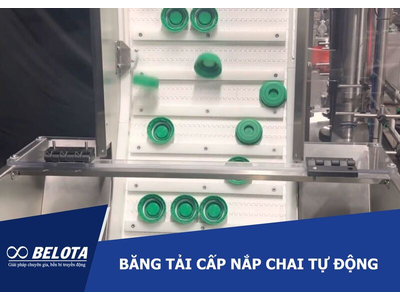
In many cases, counting errors are caused by unstable product movement rather than sensor performance. Small products such as bottle caps, plastic components, and electronic parts typically perform best on PVC or PU conveyors, which help maintain consistent positioning through the detection area. For cartons and plastic trays, roller conveyors often provide a more cost-effective and stable solution.
Choosing the correct conveyor type from the beginning significantly improves counting accuracy and reduces commissioning time.
Small Product Applications
Products such as electronic components, pharmaceutical tablets, bottle caps, and plastic fittings often require extremely precise counting. For these applications, laser sensors generally provide more reliable detection than standard photoelectric sensors, particularly when product spacing is minimal.
High-Speed Production Lines
When products move at high speeds, the system should utilize PLCs equipped with High-Speed Counter (HSC) functionality to ensure every sensor signal is accurately recorded. This helps prevent missed counts and improves overall system reliability.
Products Positioned Too Close Together
Insufficient spacing between products may cause sensors to interpret multiple items as a single continuous signal, resulting in undercounting.
Recommended Solution: Adjust conveyor speed to increase product spacing or install a product separation mechanism before the counting station.
Dusty Operating Environments
Facilities such as wood processing plants, animal feed factories, and construction material manufacturers often experience heavy dust accumulation, which can interfere with sensor performance.
Recommended Solution: Select sensors with appropriate IP protection ratings and implement regular cleaning and maintenance schedules.
Reflective Product Surfaces
Aluminum cans, metal containers, and foil packaging materials can create light reflection issues that interfere with photoelectric sensor operation.
Recommended Solution: Adjust sensor mounting angles and positions to minimize direct reflections. In many cases, proper sensor placement resolves the issue without requiring equipment replacement.
Improper Sensor Installation
Incorrect sensor positioning can significantly reduce detection reliability, especially when handling small or uniquely shaped products.
Recommended Solution: Verify the sensor detection zone and perform calibration before commissioning the system.
PLC Programming Optimization
Improper signal filtering parameters or counting logic can lead to double-counting or missed products, particularly in high-speed applications.
Recommended Solution: Optimize PLC programming based on actual operating conditions and conduct thorough testing before system handover.
Integration with Automated Packaging Systems
When a product counting conveyor is integrated with packaging machines or automated sorting systems, all equipment should be designed and programmed as a synchronized solution. This ensures accurate quantity control before products proceed to the next production stage.
Key Benefits of Product Counting Conveyors
- Improved Counting Accuracy: Automated counting minimizes human error and delivers highly accurate results, even in high-volume production environments.
- Increased Productivity: The system performs continuous counting at production-line speeds without requiring additional labor resources.
- Reduced Labor Costs: By eliminating repetitive manual counting tasks, businesses can lower labor expenses and allocate personnel to higher-value activities.
- Real-Time Production Data: Product counting systems can be integrated with PLC, SCADA, MES, and ERP platforms, providing real-time visibility into production performance.
- Better Data Management: Production data is automatically stored and archived, simplifying reporting, auditing, and production planning processes.
How to Choose the Right Product Counting System
Before investing in a product counting conveyor, manufacturers should evaluate several factors:
- Product Characteristics: Product dimensions, weight, shape, and material determine the most suitable conveyor and sensor technologies.
- Production Line Speed: Line speed directly influences sensor selection, PLC specifications, and counting system configuration.
- Operating Environment: Temperature, humidity, and dust levels affect material selection and equipment protection requirements.
- System Integration Requirements: The solution should be compatible with existing automation infrastructure, including PLC, SCADA, MES, and ERP systems.
- Future Expansion: Selecting a scalable system allows businesses to add automation features and accommodate future production growth.
Industrial Applications of Product Counting Conveyors
Product counting conveyors are widely used across various industries due to their accuracy and automation capabilities.
- Food and Beverage Industry: Counting bottles, cans, cartons, and packaged products before case packing and shipment.
- Pharmaceutical Manufacturing: Verifying product quantities during packaging operations to ensure consistency and regulatory compliance.
- Electronics Industry: Counting components, circuit boards, and finished products throughout automated assembly processes.
- Warehousing and Logistics: Supporting inventory verification, order fulfillment, sorting, and shipping operations.
- Automated Packaging Lines: Integrating with packaging machines, carton packers, and sorting equipment to create fully automated production systems.
Frequently Asked Questions
Can an Existing Conveyor Be Upgraded with a Counting System?
Yes. In most cases, existing conveyors can be retrofitted with sensors, PLC controls, and HMI displays without replacing the entire conveyor system. This approach significantly reduces investment costs while improving operational efficiency.
What Types of Products Can Be Counted?
Product counting conveyors are ideal for clearly defined items such as bottles, cans, cartons, electronic components, packaged goods, bags, and boxes. Bulk materials are typically counted after being packaged into individual units.
How Can Double Counting or Missed Counts Be Prevented?
If counting errors occur, the following troubleshooting steps are recommended:
- Clean the sensor lens and detection area.
- Verify product spacing and adjust conveyor speed if necessary.
- Review PLC filtering parameters and sensor response settings.
Conclusion
A product counting conveyor system is an effective automation solution for manufacturers seeking greater accuracy, improved productivity, and better production visibility. By selecting the appropriate conveyor design, sensor technology, and control system, businesses can significantly enhance operational efficiency while reducing labor costs and counting errors. For expert consultation and customized solutions, contact Belota's engineering team to discuss your production requirements and receive a tailored product counting conveyor proposal.