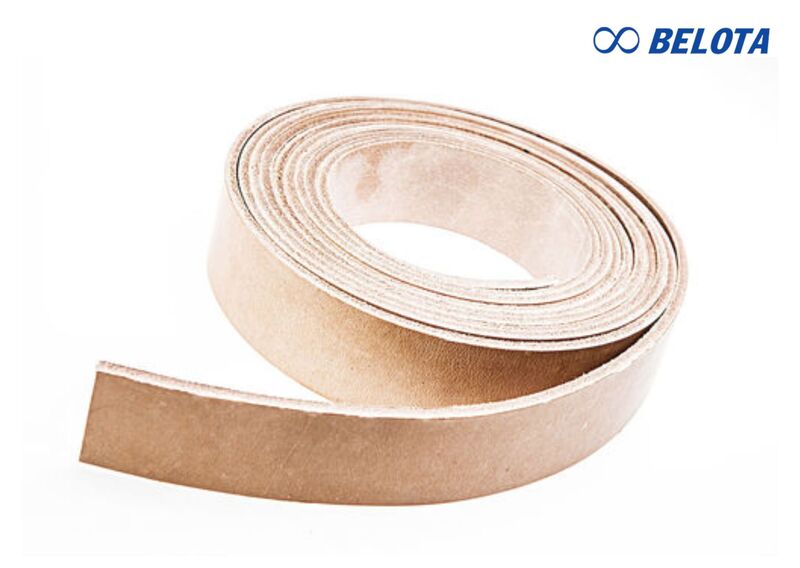
Leather transmission belts are a type of flat belt manufactured from natural cowhide leather. They offer excellent friction against pulleys, high tensile strength, and stable power transmission. These belts are used in various types of machinery across the textile, printing, woodworking, and agricultural industries. This article explores their construction, technical specifications, advantages, and applications.
What Is a Leather Transmission Belt?
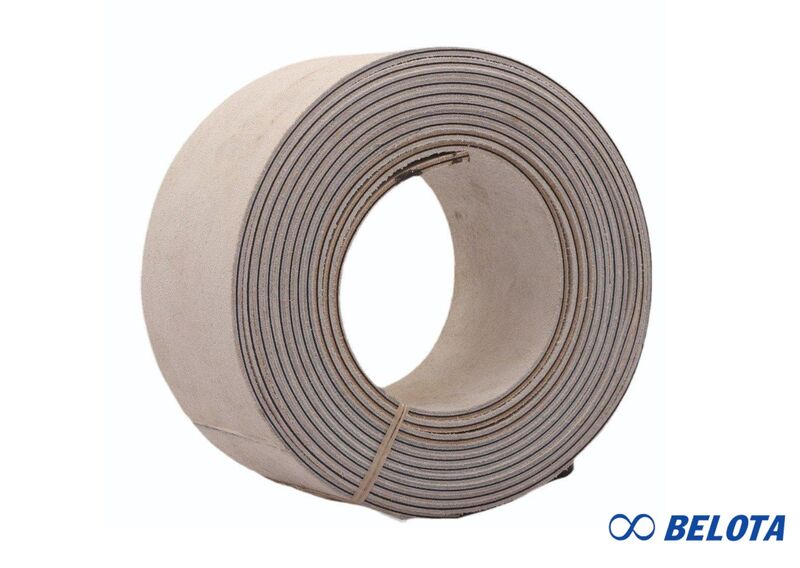
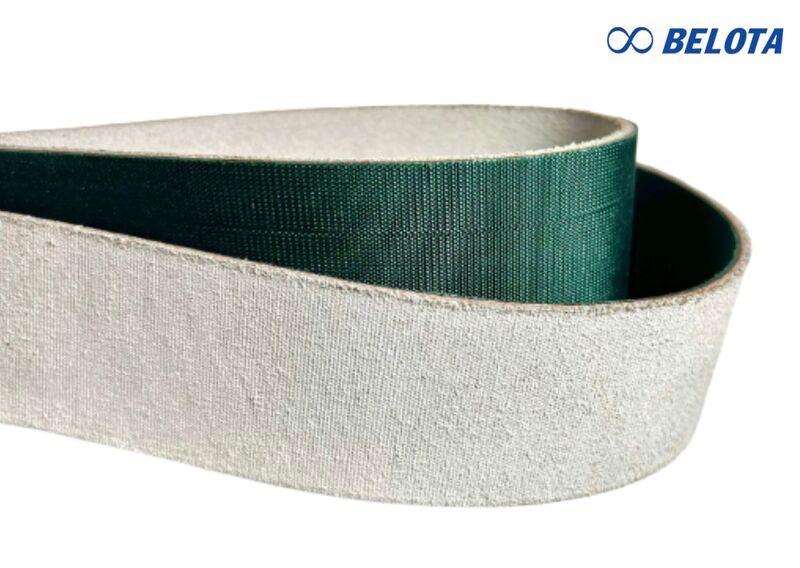
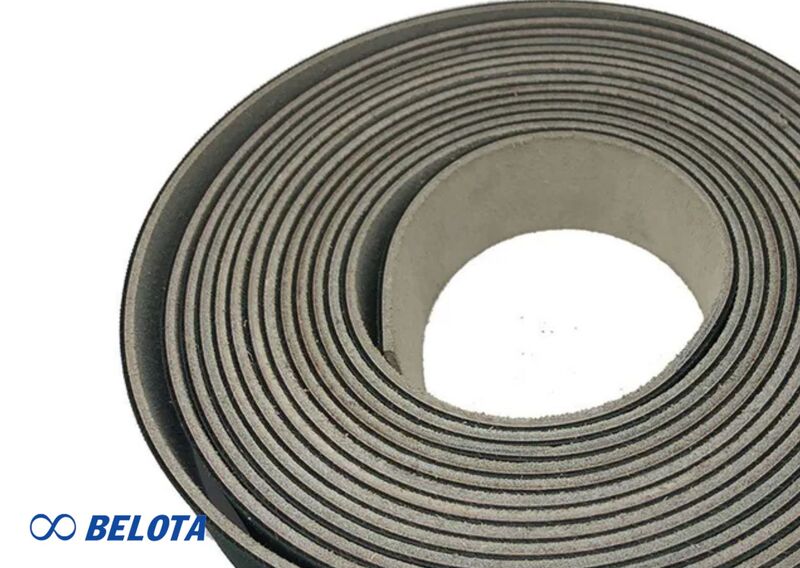
A leather transmission belt is a type of power transmission belt made from tanned cowhide leather. It transfers motion and power from a motor to machine components through a pulley system. Thanks to the strong natural fiber structure of leather, these belts offer good tensile strength, abrasion resistance, and excellent grip on pulley surfaces, ensuring stable power transmission.
Leather transmission belts are used in various industrial machines, including weaving machines, spinning machines, printing machines, paper-cutting machines, saws, and paper core winding machines. They are particularly suitable for transmission systems requiring stable power transfer, durability, and continuous operation.
Construction of Leather Flat Belts
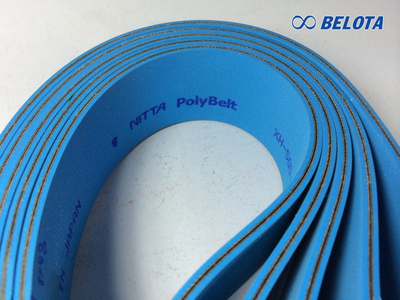
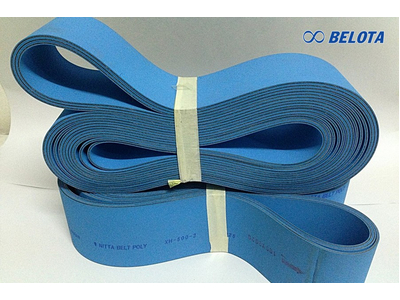
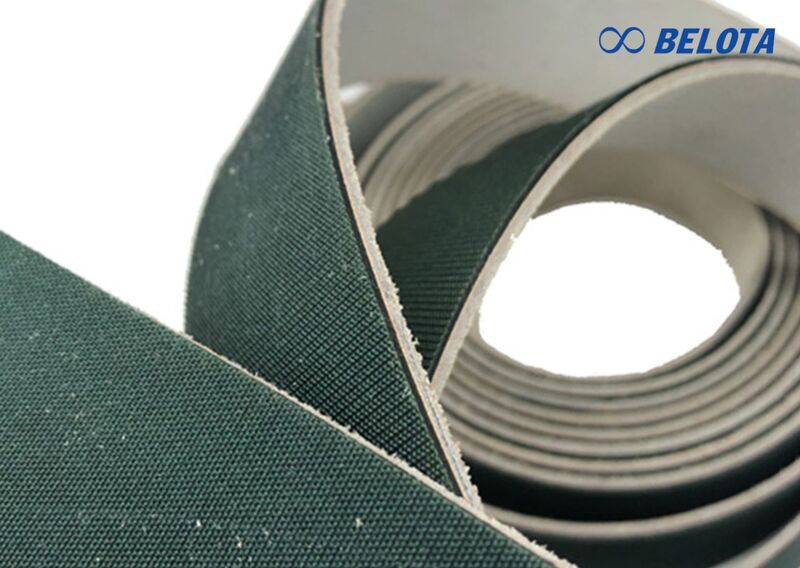
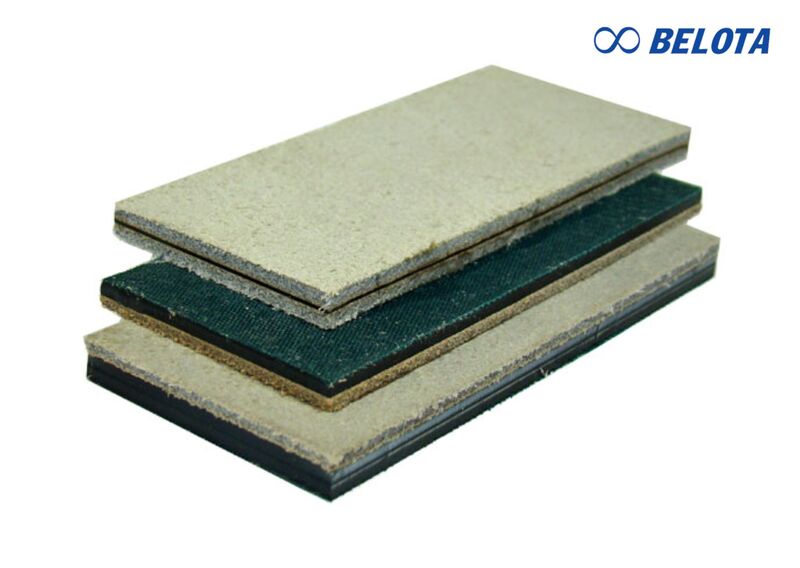
Leather transmission belts typically consist of several bonded material layers designed to provide reliable power transmission and maintain operational stability. Depending on the design, the belt may feature natural cowhide leather on one or both surfaces, combined with a reinforced core.
- Natural cowhide leather layer: Located on the belt surface, this layer increases friction against pulleys, reduces slippage, and supports stable power transmission. Depending on the design, leather may be applied to one or both sides.
- Reinforcement core: Made from nylon, polyamine, or synthetic fibers, the core increases tensile strength and helps prevent stretching and deformation during operation.
- Bonding layer: Specialized adhesive is used to bond the material layers together, creating a strong belt structure.
- Surface treatment: Some products use treated chrome leather to improve resistance to oil, grease, and mild chemicals, depending on the operating conditions.
Technical Specifications of Leather Flat Belts
- Product name: Leather transmission belt.
- Surface material: Natural cowhide leather.
- Construction: Single-sided or double-sided leather.
- Reinforcement core: Nylon, polyamine, or synthetic fibers.
- Belt type: Flat belt.
- Surface treatment: Chrome leather (depending on the product).
- Oil and grease resistance: Available in treated chrome leather versions.
- Splicing methods: Heat bonding or stainless steel fasteners.
- Transmission configurations: Straight, crossed, twisted, or reverse-direction drives.
- Applications: Weaving machines, printing machines, woodworking machines, agricultural machinery, and paper core winding machines
Advantages of Leather Transmission Belts
- High transmission efficiency: Can achieve efficiency of up to 99%, approximately 2.5 - 3% higher than V-belts.
- Excellent grip: The natural leather surface provides high friction, helping minimize slippage during operation.
- Quiet and low-vibration operation: Ensures stable system performance and reduces noise, making it suitable for machinery requiring high precision.
- High durability: Offers good tensile strength and low elongation, making it suitable for continuous operation.
- Versatile applications: Can be used in straight, crossed, twisted, or reverse-direction transmission configurations.
Applications of Leather Transmission Belts
Thanks to their tensile strength, excellent grip, and stable transmission performance, leather transmission belts are widely used in industrial machinery across various sectors.
- Textile industry: Used in weaving machines, spinning machines, dyeing machines, and fabric finishing machines to transfer motion between motors and machine components.
- Footwear industry: Installed in leather cutting machines, sewing machines, and stamping machines to support product processing and finishing operations.
- Printing industry: Used in printing machines, paper-cutting machines, and post-press processing equipment, providing stable power transmission during production.
- Woodworking industry: Applied in saws, planers, and wood drilling machines to transfer power from motors to processing components.
- Agricultural industry: Used in harvesting machines, rice threshers, and other equipment requiring mechanical power transmission during harvesting operations.
- Paper core manufacturing: Installed in paper core winding machines to maintain stable movement during winding and product forming processes.
Classification of Leather Transmission Belts
Leather transmission belts are available in different constructions to meet the transmission requirements of various types of machinery. Based on their material structure and design, they can be classified as follows:
Classification by Number of Leather Surfaces
|
Belt type |
Characteristics |
Applications |
|---|---|---|
|
Single-sided leather belt |
One surface is covered with natural cowhide leather, while the other uses a base material or reinforcement layer. |
Transmission systems where friction and contact are primarily required on one belt surface. |
|
Double-sided leather belt |
Both surfaces are covered with natural cowhide leather, providing increased contact and friction with pulleys. |
Transmission systems that require both belt surfaces for power transmission. |
Classification by Material Construction
- Solid leather belts: Use natural cowhide leather as the primary material, taking advantage of its natural grip and mechanical properties.
- Reinforced leather belts: Combine leather layers with a nylon, polyamine, or synthetic fiber core to increase tensile strength and reduce belt elongation.
- Classification by Splicing Method
- Heat-bonded leather belts: The two belt ends are joined using a heat-bonding method to form a closed transmission loop.
- Stainless steel fastener leather belts: Use stainless steel fasteners to connect the two ends, allowing convenient removal and replacement during maintenance.
Comparison of Leather Belts with Other Belt Types
|
Criteria |
Leather transmission belts |
PU/PVC belts |
V-belts |
|---|---|---|---|
|
Grip |
Excellent |
Moderate |
Good |
|
Transmission efficiency |
~99% |
High |
Lower |
|
Operating smoothness |
High |
High |
Moderate |
|
High-speed operation |
Very suitable |
Suitable |
Limited |
|
Oil resistance |
Good (chrome leather type) |
Good |
Good |
Considerations When Choosing Leather Transmission Belts
To ensure effective operation and suitable service life, consider the following factors when selecting a leather transmission belt:
- Choose the appropriate belt thickness based on the load requirements.
- Select a single-sided or double-sided leather belt according to the application.
- Check the operating environment, including exposure to oil, temperature, and humidity.
- Perform regular maintenance to extend belt service life.
- Choose a reliable leather transmission belt supplier.
Buy Leather Transmission Belts at Belota
Belota supplies leather transmission belts for replacement and installation in industrial machinery systems. The products feature natural cowhide leather on one or both surfaces, combined with a reinforced core depending on the specifications, meeting the transmission requirements of various manufacturing industries.
When purchasing leather transmission belts from Belota, customers receive support with:
- Product selection: Assistance in identifying the appropriate belt type, construction, and materials for specific machinery.
- Specification consultation: Support in selecting belt width, thickness, and length according to system requirements.
- Splicing method consultation: Guidance on choosing a suitable heat-bonding or stainless steel fastener connection.
- Quotation: Pricing based on product specifications and order quantity.
For consultation and quotations, please contact Belota through the following channels:
- Hotline/Zalo: +84 917 657 946
- Email: info@belota.com.vn
- Website: https://belota.com.vn
When contacting Belota, customers are encouraged to provide the dimensions of the existing belt, pulley specifications, or photos of the machinery system. This information helps Belota check compatibility and recommend suitable belt specifications.
Conclusion
Leather transmission belts are a durable and reliable power transmission solution for various industrial applications. With excellent grip, high transmission efficiency, and smooth operation, they help businesses improve production performance and reduce long-term operating costs.