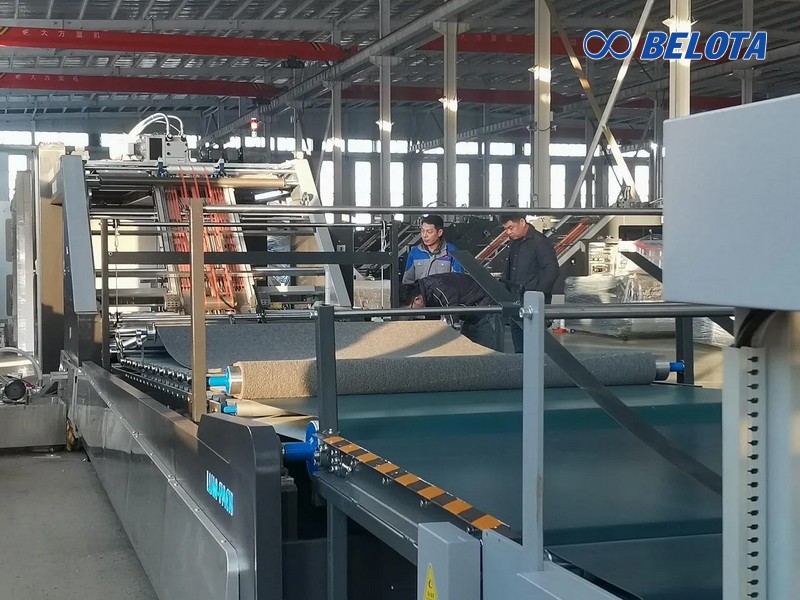
In modern corrugated packaging production, the laminating process - bonding a printed offset sheet to corrugated board - plays a critical role in determining both the appearance and structural strength of the finished carton. To ensure these two materials are aligned with millimeter-level precision at high production speeds, the conveyor belt system in an automatic laminating machine acts like a set of "guiding fingers," gripping and feeding the sheets smoothly through the pressure rollers.
In this article, Belota takes a closer look at the technical characteristics of laminating machine conveyor belts - an essential wear component that has a significant impact on packaging production efficiency.
Overview of Automatic Laminating Machine Conveyor Belts
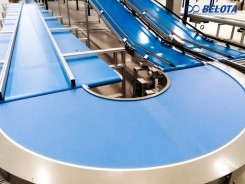
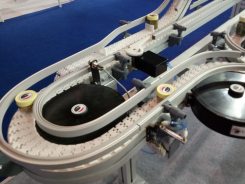
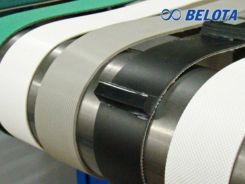
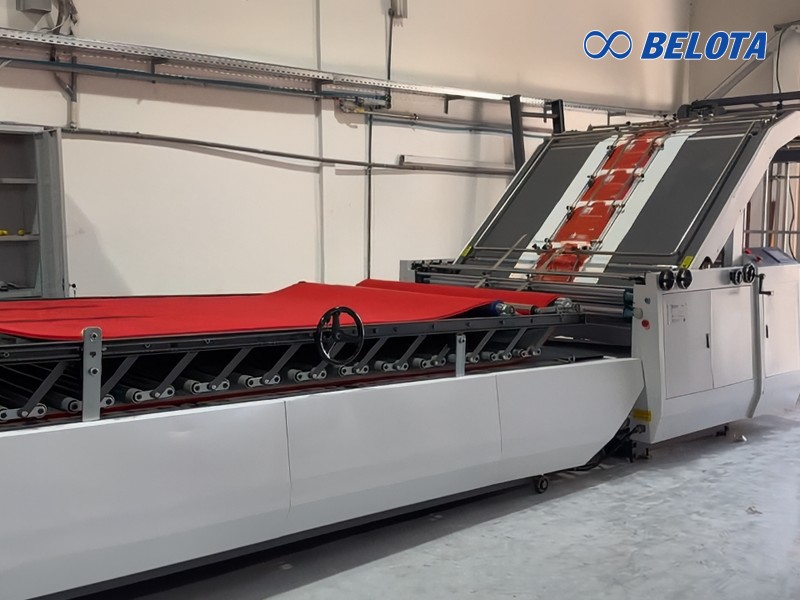
Automatic laminating machine conveyor belts are specially designed transmission and conveying belts used in sheet laminating machines. They are also one of the most widely used products in the packaging belt industry, serving carton box, paperboard, and paper packaging production lines.
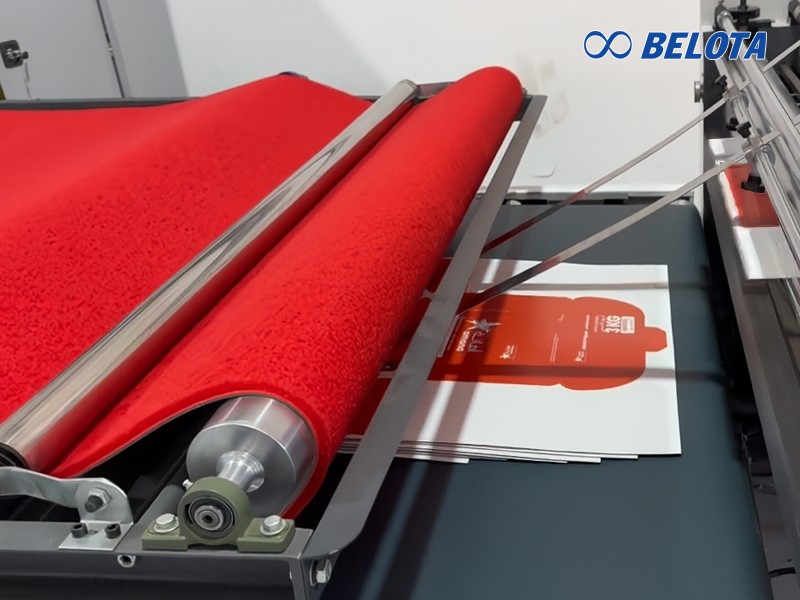
These belts operate in demanding environments filled with paper dust and adhesive residue. Their primary function is to synchronize the feeding of the top sheet and the bottom corrugated sheet into the laminating rollers.
When conveyor belts begin to slip, wear excessively, or lose grip, common production issues include sheet misalignment, paper wrinkling, and, in severe cases, continuous paper jams that result in costly machine downtime.
Key Performance Requirements
To keep pace with today's high-speed laminating machines operating at 8,000–12,000 sheets per hour, conveyor belts must deliver the following performance characteristics:
High-Friction Surface
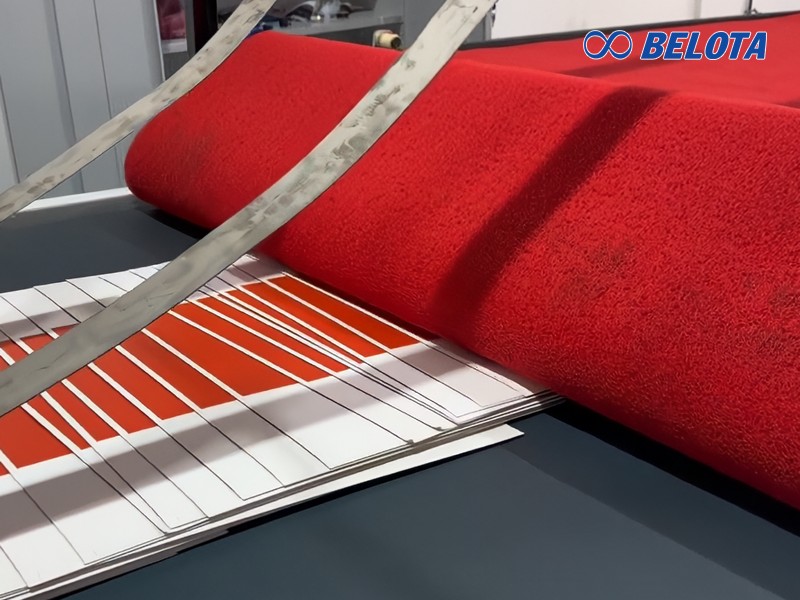
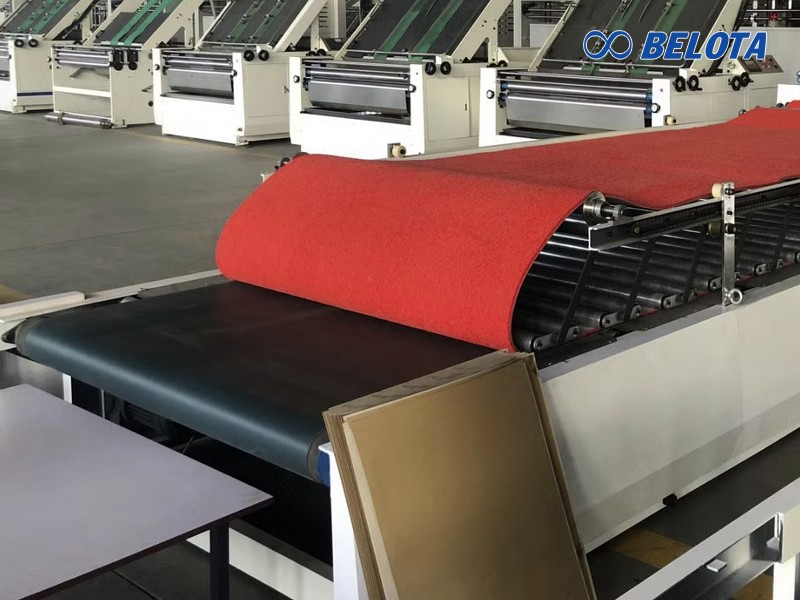
The belt surface is typically coated with red rubber or other high-grip materials to provide consistent traction when feeding printed sheets.
Vacuum Holding Capability
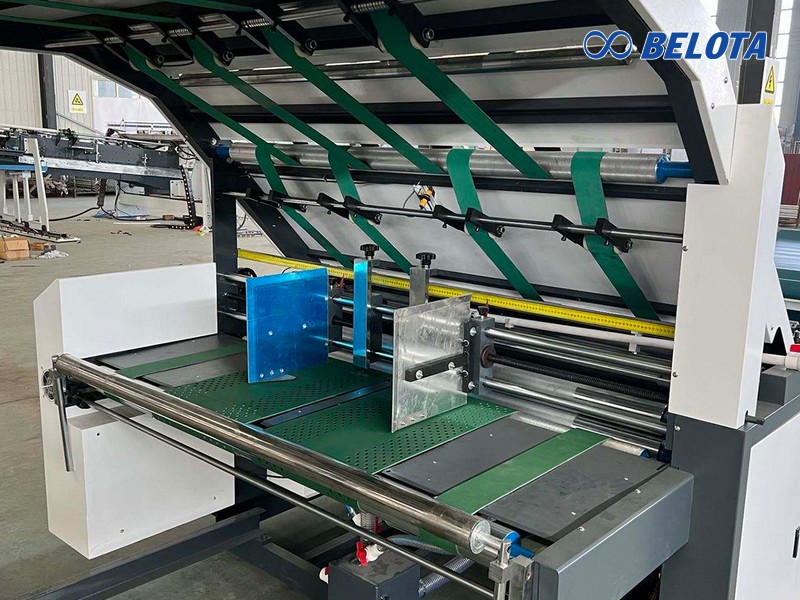
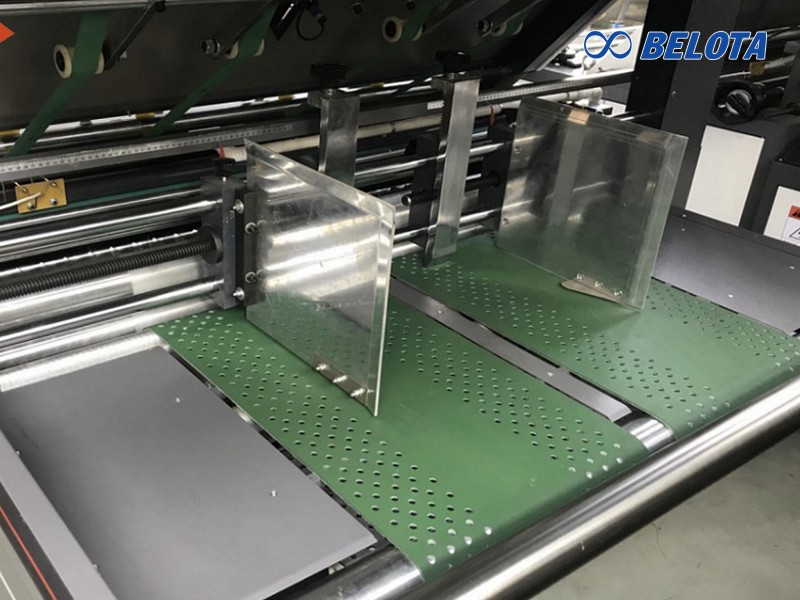
Most corrugated sheet feeding belts feature precision-punched holes that allow the vacuum system beneath the conveyor to securely hold corrugated boards flat throughout the conveying process.
Flexibility
The belt must maintain sufficient flexibility to prevent marking or damaging delicate offset-printed surfaces while ensuring smooth product transfer.
Excellent Wear Resistance
Since the belts are continuously exposed to abrasive corrugated cardboard and paper dust, high abrasion resistance is essential for long service life.
Types of Laminating Machine Belts
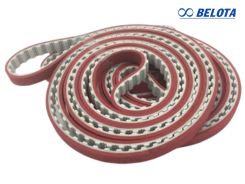
Rubber-Covered Timing Belts
Position: Top sheet feeding section
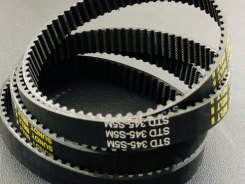
Construction: A timing belt reinforced with precision teeth for synchronized movement, covered with a 6 - 10 mm layer of red or yellow rubber. Rubber thickness can be customized according to machine models and grip requirements.
Function: Provides strong friction to accurately feed individual printed sheets into the laminating machine.
Perforated Flat Belts
Position: Corrugated sheet feeder and bridge conveyor section
Construction: Flat belts made from Polyamide (PA) or NBR, with precisely punched hole patterns arranged in single-row, double-row, or staggered configurations according to machine specifications.
Function: Works together with the machine's vacuum system to hold E-flute, B-flute, C-flute, 3-ply, and 5-ply corrugated boards firmly in place while transporting them to the pressure rollers.
Foam Belts / Press Belts
Position: Post-laminating pressing section
Construction: Manufactured with a soft foam or thick felt surface.
Function: Applies gentle, even pressure to ensure proper adhesive bonding without crushing the corrugated flutes or damaging the printed surface.
Typical Applications
Belota's laminating machine conveyor belts are compatible with most laminating machines widely used throughout the Vietnamese packaging industry, including:
High-speed automatic laminating machines, including popular Chinese brands such as Fengchi, BZJ, and TMZ, as well as Japanese and German equipment.
Semi-automatic laminating machines
Processing materials ranging from Duplex and Ivory paperboard to 3-ply, 5-ply, and 7-ply corrugated boards.
Conclusion
High-quality laminating machine conveyor belts do far more than reduce operating noise and ensure smooth machine performance—they play a crucial role in minimizing production defects such as sheet misalignment and damaged corrugated boards. Investing in premium replacement belts is one of the smartest ways to improve productivity while reducing long-term operating costs.
Whether you're looking for replacement belts for automatic laminating machines, semi-automatic laminators, or other specialized packaging equipment, Belota offers complete conveyor belt solutions tailored to your production needs.
Why Choose Belota?
- Custom perforation patterns and red/yellow rubber coverings manufactured to your exact specifications.
- Professional technical consultation, including on-site measurement and machine inspection.
- Competitive pricing for factories, OEMs, and industrial distributors.
Contact Belota today at +84 917 657 946 for expert advice and a fast quotation on the ideal conveyor belt solution for your packaging production line.